


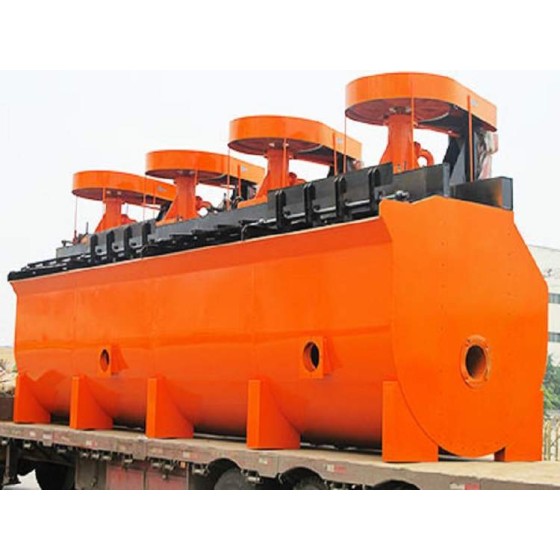
How to Process High-Arsenic Gold Ore? CIP/CIL Mineral Processing Methods and Complete Equipment Solutions
How to process high-arsenic gold ores is an unavoidable technical challenge in the field of difficult-to-process gold ores. Arsenopyrite consumes reagents, passivates surfaces, and coats gold particles in cyanide systems; the combined effect of these three factors makes direct leaching economically unfeasible.While the CIP/CIL mineral processing process is not a panacea, it remains the mainstream approach for achieving large-scale recovery from high-arsenic gold ores, provided effective pretreatment is carried out. This article outlines the key design considerations for CIP/CIL solutions for high-arsenic gold ores from three perspectives: process logic, route selection, and equipment configuration.
Key Conclusions
- When addressing high-arsenic gold ores, the first step is not to choose between CIP and CIL, but to confirm the state of arsenic occurrence and the encapsulation characteristics of gold through mineral phase analysis.
- CIL (carbon-in-leach) is generally better suited for high-arsenic systems than CIP (carbon-in-pulp), as competitive adsorption limits the window for secondary capture of dissolved gold.
- Aligning the processing capacities of the pretreatment and leaching stages is critical to the stable operation of the entire equipment solution for high-arsenic gold ore.
- Recovery rates and investment metrics vary from mine to mine; design proposals should be based on mine sample test data, and absolute guarantees should not be made.
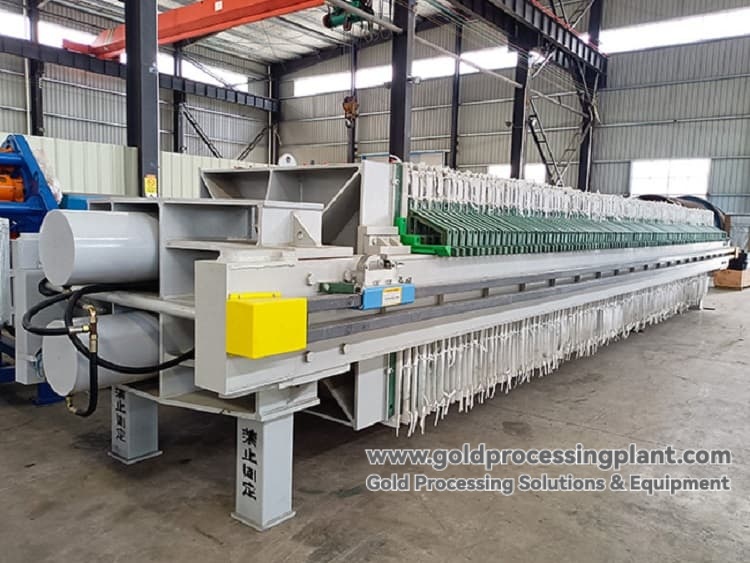
Processing Challenges in High-Arsenic Gold Ore: The Triple Interference of Arsenopyrite
The interference caused by arsenopyrite (FeAsS) in cyanide leaching is systemic. In terms of chemical consumption, arsenopyrite oxidizes and decomposes in alkaline cyanide solutions, consuming dissolved oxygen and cyanide ions, thereby driving up chemical costs.In terms of surface passivation, reaction products form a film on the mineral surface, hindering the mass transfer of cyanide ions to the internal gold particles. In terms of physical entrapment, some gold is embedded in the arsenopyrite crystal lattice at the fine-grain or submicron level, making it difficult to achieve complete single-particle liberation during grinding.
The combination of these three factors means that the leaching recovery rate for direct whole-ore cyanidation of high-arsenic gold ores is typically significantly lower than that of conventional oxidized ores.Although test results vary considerably across different ore bodies, they all point to the same conclusion: for high-arsenic gold ores, the processes preceding the leaching tank are more critical to success than the leaching tank itself. This is also the core starting point for addressing the challenge of processing high-arsenic gold ores.
Process mineralogical analysis should prioritize confirming three key aspects: the distribution ratios of gold in arsenopyrite, pyrite, and gangue; the occurrence state of arsenic and the proportion of sulfide forms; and the residual proportion of gold trapped at the target liberation fineness.These three data points form the basis for selecting a pre-treatment route and serve as input parameters for the subsequent CIP/CIL mineral processing design.
Pre-treatment Route Selection: Applicability Limits of Four Pathways
For arsenic removal in high-arsenic gold ores, there are four well-established pre-treatment routes within the industry. These routes differ significantly in terms of capital investment, operational complexity, and environmental compliance requirements; there is no universally optimal solution, only solutions tailored to the specific conditions of each mine site.
| Route | Core Mechanism | Applicable Conditions | Major Constraints |
|---|---|---|---|
| Roasting and Oxidation | High-temperature decomposition of arsenopyrite to release entrapped gold | Large-scale mines; strong support for gold prices | High investment and energy consumption for treating arsenic-containing flue gas |
| Pressurized Oxidation | High-temperature, high-pressure, high-acid oxidation of sulfides | Large-scale projects seeking high degree of dissociation | Strict requirements for equipment corrosion protection; complex operational management |
| Biological Oxidation | Microbial-catalyzed oxidation of sulfides | Tight environmental regulations; technical and management capabilities required | Long cycle times; bacterial activity is limited under high-arsenic conditions |
| Chemical passivation + whole-sludge leaching | Surface passivation to suppress gold leaching | Small- to medium-scale operations; rapid commissioning via a short process flow | Chemical compatibility requires verification using ore samples |
Roasting oxidation and pressurized oxidation are capital-intensive routes with high entry barriers. Roasting technology is highly mature and delivers relatively stable performance metrics; however, the investment required for arsenic recovery from arsenic-containing flue gas and for exhaust gas treatment systems is substantial, making it difficult for small- and medium-scale projects to absorb these costs.Pressurized oxidation excels in gold dissociation efficiency. Overseas arsenic-bearing sulfide gold projects that have adopted this pretreatment have seen significant improvements in leaching performance compared to traditional processes; however, reactor materials and the operational team\'s experience pose substantial barriers.
Biological oxidation takes a gentler approach. Bio-heap leaching pre-oxidation projects in the high-altitude, frigid regions of Xinjiang have demonstrated that this technology can improve leaching performance for difficult-to-process gold ores under high-altitude, extreme cold conditions. However, reaction cycles range from days to weeks, process parameters are sensitive, and microbial strains require specialized acclimatization to thrive in high-arsenic systems.
The logic behind the chemical passivation approach is different: rather than seeking to completely decompose arsenopyrite, it involves using specially formulated chemicals to form a selective passivation layer on the surface of the arsenopyrite, thereby inhibiting its ability to consume cyanide and adsorb dissolved gold.The process is short, requires no high-temperature, high-pressure, or bioreactor facilities, and is highly investment-friendly for small- and medium-scale high-arsenic gold ore projects. The compatibility of the chemical formulation with the ore must be confirmed through comparative leaching tests; universality cannot be assumed.
Decisions regarding the processing route for high-arsenic gold ore should be based ultimately on ore sample test reports. At least two sets of leaching comparisons for different pretreatment schemes should be completed; the report should include a list of equipment selections and preliminary investment estimates to ensure the process data is ready for engineering implementation.
The Logic Behind CIL vs. CIP: Why High-Arsenic Systems Favor Carbon-in-Leach
Only after pretreatment has suppressed arsenopyrite interference to an acceptable level does the design of the leaching and adsorption stages become a viable topic for discussion. The core difference between CIP (carbon-in-pulp) and CIL (carbon-in-leach) lies in the sequence of operations: CIP completes leaching before proceeding to the adsorption tank, whereas CIL performs leaching and adsorption simultaneously within the same tank system.
For high-arsenic gold ores, the engineering logic of CIL is more straightforward. In high-arsenic leaching systems, residual sulfides, carbonaceous materials, or other interfering components are always present; the longer dissolved gold is exposed in the liquid phase, the higher the risk of secondary adsorption or coprecipitation.In CIL, activated carbon is present in the pulp from the start of leaching; as soon as dissolved gold is generated, it enters a competitive adsorption pathway, effectively minimizing the window for loss. High-arsenic ores are often characterized by severe sludging and difficult solid-liquid separation; CIL eliminates the need for a separate solid-liquid separation step after leaching, thereby removing a potential bottleneck from the process.
| Comparison Criteria | CIP (Carbon-in-Pulp Process) | CIL (Carbon-in-Leach) |
|---|---|---|
| Leaching-Adsorption Sequence | Leaching followed by adsorption; separate-tank operation | Simultaneous leaching and adsorption in the same tank |
| Gold Exposure Time | Longer | Short |
| Adaptability to high-arsenic systems | Fair; wide interference window | Relatively better; competitive adsorption occurs promptly |
| Process Compactness | Requires a separate adsorption section | Integrated leaching and adsorption |
| Key operational control points | Seamless transition from leaching endpoint to adsorption start point | Matching carbon concentration with leaching time |
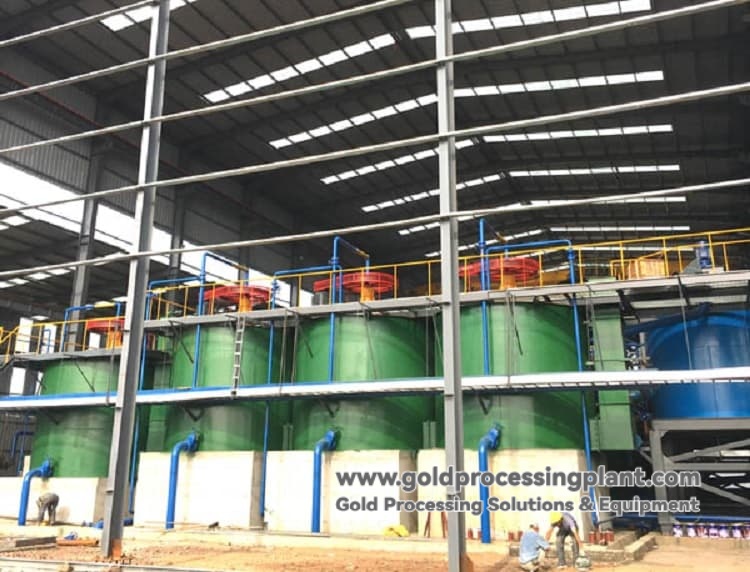
In terms of equipment configuration, the leaching and adsorption tanks in a CIL system are connected in series; the front section ensures the residence time required for gold dissolution, while the rear section achieves enrichment through countercurrent flow of activated carbon.The number of tanks and residence time must be determined based on experimental data; generic templates should not be applied indiscriminately. Activated carbon concentration also requires careful consideration: if too high, it increases wear and regeneration load; if too low, the adsorption driving force is insufficient. The selection of the CIP/CIL mineral processing process is, in essence, the result of matching ore leaching kinetics with adsorption kinetics.
Key Configuration Points for the Complete Equipment Solution
The fundamental difference between a CIP/CIL equipment design for high-arsenic gold ore and that for conventional gold ore projects lies in the inclusion of a pretreatment section. Whether pretreatment is batch or continuous, and the particle size and concentration of the output material, directly influence the feed design for the downstream leaching section. Mismatched processing capacities between these two sections are the most common source of problems during operation.
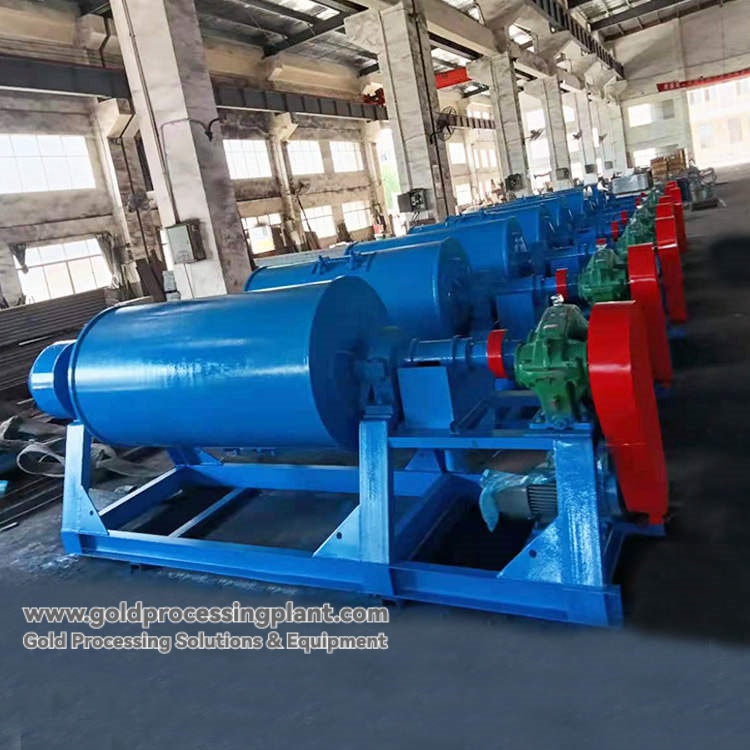
The crushing and grinding stage must be determined based on the target liberation fineness. The grinding fineness for high-arsenic ores is typically finer than that for conventional oxidized ores; however, over-grinding leading to slurry formation will increase reagent consumption and interfere with adsorption. If coarse-grained free gold is present in the grinding circuit, gravity separation equipment can be incorporated to recover it in advance, thereby reducing load fluctuations in the leaching stage.
The pre-treatment stage is configured according to the selected process route.The chemical passivation route primarily relies on dosing agitation tanks and precise dosing systems; the biological oxidation route requires aerated agitation reactors and temperature-controlled oxygen supply systems; the pressurized oxidation route centers on a high-pressure reactor, supported by flash evaporation and scrubbing stages. This stage is the primary source of investment variation and also the area where process risks are concentrated.
The leaching and adsorption stage is the core of the CIL system. The number of series-connected leaching and adsorption tanks, aeration methods, and agitation intensity must be matched to the ore leaching kinetics. The selection of activated carbon (iodine value, particle size) and the carbon transfer regime affect gold loading capacity and wear rates; these should be evaluated together during the pilot testing phase.
The desorption, electrolysis, and tailings treatment sections are configured conventionally; however, special attention must be paid to the disposal of high-arsenic tailings. If arsenic can be converted into a stable arsenate form during the pretreatment stage, the leaching toxicity of the tailings will be significantly reduced. Compliance with regulatory standards depends on the thoroughness of the pretreatment process, rather than on remedial chemical dosing in the tailings treatment section.
When evaluating equipment solutions for high-arsenic gold ore processing, the key criterion is not the price of individual units, but whether the pre-treatment and leaching stages are based on the same process logic.In projects where process design and equipment selection are disconnected, interface issues and capacity mismatches often only come to light during the commissioning phase, and the cost of rework far exceeds the investment required for integrated design in the early stages. The completeness of an equipment solution for high-arsenic gold ore is reflected in the seamless integration of the entire process chain, from arsenic removal to the desorption of gold-loaded carbon.
Common Technical Questions
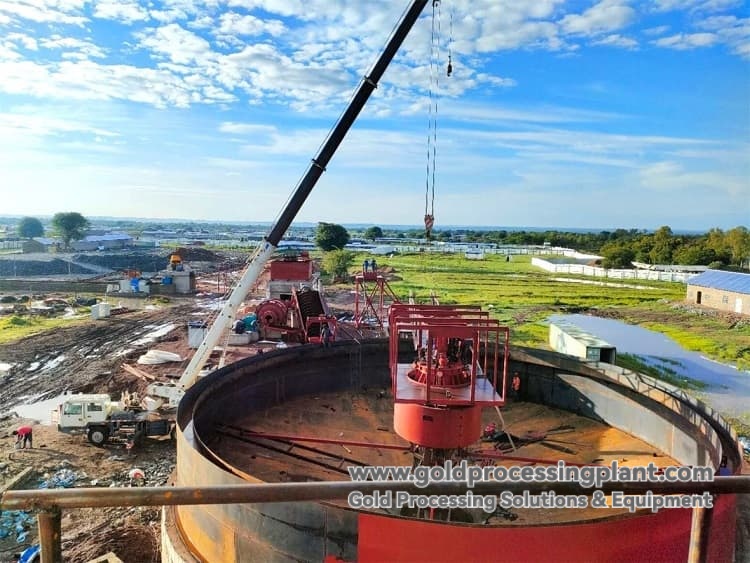
Practical Recommendations for CIP/CIL Schemes in High-Arsenic Gold Ore Processing
In the design of a high-arsenic gold ore processing plant, the selection of the process flow is far more critical than the selection of equipment. The quality of mineralogical analysis data, the depth of validation in pre-treatment testing, and the alignment of capacity between the pre-treatment and leaching stages—the thoroughness of these three aspects determines the actual performance of the project after it goes into operation.The answer to how to process high-arsenic gold ore does not lie in generic templates, but in the integration of ore sample data and engineering logic.
For project owners currently advancing high-arsenic gold ore projects, we recommend prioritizing resources for the pilot testing phase. A comprehensive pilot test report covering process mineralogy analysis, comparative evaluation of pre-treatment schemes, leaching tests, and verification of CIL/CIP suitability serves as a reliable basis for subsequent engineering design, equipment procurement, and performance target setting.Discussions of solutions divorced from ore sample data—no matter how detailed the equipment list may be—lack a foundation for engineering implementation.
If you wish to discuss CIP/CIL mineral processing routes and complete equipment solutions for a specific high-arsenic gold ore project, please submit the ore grade, arsenic content, sulfur content, and mineralogical analysis results to receive recommendations for a pretreatment route and an equipment configuration framework tailored to the ore\'s characteristics.