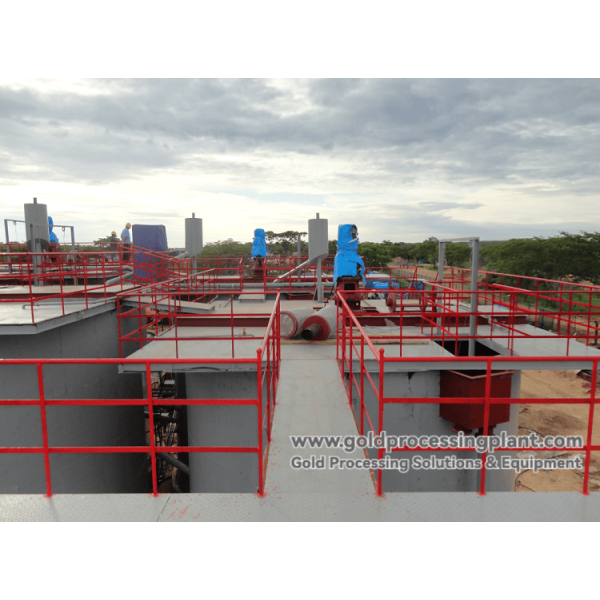
Combined Gold Processing Plant: Gravity, Flotation & CIL/CIP
A combined gold processing plant is essential when a single processing method cannot economically recover all the gold. By combining two or more methods based on ore characteristics, a combined flowsheet can sequentially recover coarse gold, gold-bearing sulphides, and fine gold locked in the matrix. Ores with mixed coarse/fine gold, sulphide ores containing coarse free gold, and complex ores where single processes fail to meet recovery targets all require combined process circuits. In the same combined plant, choosing the wrong integration point—such as where to place the gravity circuit in the grinding loop, or whether to regrind and leach the flotation tailings—can result in a massive difference in overall recovery. This article breaks down the combined gold processing plant from circuit logic, scheme combinations, and integration points, to equipment configuration and investment.
What is a Combined Gold Processing Plant?
A combined gold processing plant is a recovery strategy that combines two or more processing methods based on ore characteristics when a single method is no longer economically viable. Gold particles in ore often vary in size and occurrence state: coarse free gold is suited for gravity separation, gold-bearing sulphides require flotation, and fine locked gold demands cyanide leaching (CIL/CIP). Using only one method will always leave some gold behind—gravity cannot recover fine locked gold, flotation misses coarse free gold, and cyanidation is slow for coarse gold and prone to over-grinding losses.
The core logic of a combined gravity, flotation, and CIL/CIP plant is stage-wise recovery based on particle size and occurrence state. In the grinding circuit, gravity separation is used for "early recovery" of coarse gold. Flotation then recovers the gold-bearing sulphides. The flotation tailings or concentrate are sent to cyanidation for fine gold recovery. Common combinations include: Gravity + Flotation (gravity in the grinding circuit for coarse gold, flotation for sulphides), Gravity + Cyanidation (gravity for coarse gold, CIL/CIP for fine gold in tailings), and Flotation + Cyanidation (flotation produces a gold concentrate, which is then cyanide leached). The choice of integration points determines the overall recovery; the more complex the circuit, the higher the requirements for equipment configuration and operational control. Economic viability must be verified through test work.
GoldProcessingPlant Company Strength & Manufacturing Base
The successful implementation of a combined gold processing plant ultimately depends on the underlying process design and equipment manufacturing capabilities. GoldProcessingPlant is a full-service provider integrating process design, engineering, equipment manufacturing, and commissioning. We own two manufacturing bases in Shandong and Jiangxi, China, along with a dedicated technical team.
20+ YearsExperience in gold processing design and manufacturing
2 BasesOwn factories in Shandong and Jiangxi, approx. 50,000 m²
30–5000 TPDProject capacity covers hard rock, placer, refractory, and tailings
50+ CountriesEquipment export and cross-border project delivery experience
GoldProcessingPlant strictly follows the ISO9001 quality management system, with products CE certified. Our annual production capacity exceeds 500 sets. The team consists of mineral processing engineers, metallurgists, mechanical designers, and project managers, with core members possessing over 20 years of experience in major gold EPC projects. The advantage of our combined gold processing plant lies in the fact that gravity, flotation, and CIL/CIP equipment are all manufactured in-house, ensuring seamless integration between process and hardware.
Suitable Ore Types & Scenarios for Combined Processing Plants
A combined gold processing plant matches its combination methods based on ore characteristics and recovery challenges. The following four ore types are typical candidates for a combined gravity, flotation, and cyanidation circuit:
- Ores with coexisting coarse and fine gold—coarse gold is recovered by gravity, while fine gold is captured by flotation or CIL/CIP. Single processes fail to achieve target recovery.
- Sulphide ores with coarse free gold—gravity in the grinding circuit captures coarse gold, flotation recovers gold-bearing sulphides, and the concentrate is sent to smelting or cyanidation.
- Complex ores failing single-process targets—combinations like gravity + flotation or gravity + CIL/CIP provide stage-wise recovery for different gold occurrences.
- Quartz vein gold ores—where coarse gold coexists with sulphides, gravity + flotation is the standard combined processing plant configuration.
Combined Process Tip: A combined processing plant is not about adding as many processes as possible, but about selecting the right integration points. The more complex the circuit, the higher the demands on equipment configuration and operational control, and the higher the CapEx and OpEx. Mineral test work is required to verify whether the recovery gain of each combination justifies the added investment, avoiding "combining for the sake of combining."
Three Common Combined Gold Processing Schemes
Based on ore characteristics and recovery targets, there are three common schemes for a combined gold processing plant. The integration points and equipment configurations differ for each, requiring verification by actual ore samples.
Scheme 1: Gravity + Flotation Combined Plant
- Circuit Structure: Crushing & Grinding → Gravity separation in the grinding circuit (jig/centrifugal concentrator) for coarse free gold → Gravity tailings to flotation → Flotation recovers gold-bearing sulphides → Flotation concentrate to smelting or CIL/CIP.
- Application: Ores with coexisting coarse gold and gold-bearing sulphides, such as quartz vein gold ores. Gravity recovers coarse gold early to prevent over-grinding losses; flotation captures fine sulphides for further processing.
- Key Integration Point: The location of the gravity circuit in the grinding loop determines coarse gold recovery; the flotation grind size dictates sulphide liberation. Both must be designed in tandem.
Scheme 2: Gravity + CIL/CIP Combined Plant
- Circuit Structure: Crushing & Grinding → Gravity separation in the grinding circuit for coarse gold → Gravity tailings to cyanide leaching (CIL/CIP) → Carbon desorption & electrowinning → Gold sludge smelting.
- Application: Ores with coexisting coarse and fine gold, simple gangue, and no interfering elements. Gravity recovers coarse gold early, while CIL/CIP leaches fine gold from the tailings.
- Key Integration Point: The gravity location and grind size must balance coarse gold recovery and cyanidation requirements; the gravity tailings' density and pH must be adjusted before entering the CIL/CIP circuit.
Scheme 3: Flotation + CIL/CIP Combined Plant
- Circuit Structure: Crushing & Grinding → Flotation recovers gold-bearing sulphides → Flotation concentrate to cyanide leaching → Carbon desorption & electrowinning → Smelting. Alternatively, flotation tailings are cyanide leached to recover residual gold.
- Application: Sulphide-bearing and fine-disseminated gold ores. Cyanidation of the flotation concentrate improves recovery; if gold in the flotation tailings is relatively high, tailings cyanidation acts as a safety net.
- Key Integration Point: Whether to cyanide the concentrate or the tailings depends on the gold distribution. Concentrate cyanidation has a smaller volume and higher recovery; tailings cyanidation handles a larger volume but typically yields lower recovery. Economics must be compared through test work.
Combined Gold Processing Plant Flowsheet Details
Taking the Gravity + Flotation + CIL/CIP three-stage combination as an example, the combined gold processing plant flowsheet is divided into six stages. Each stage's function, equipment, and control points are detailed below, forming the basis for combined equipment selection and investment estimation.
Crushing & Grinding: Providing Suitable Liberation
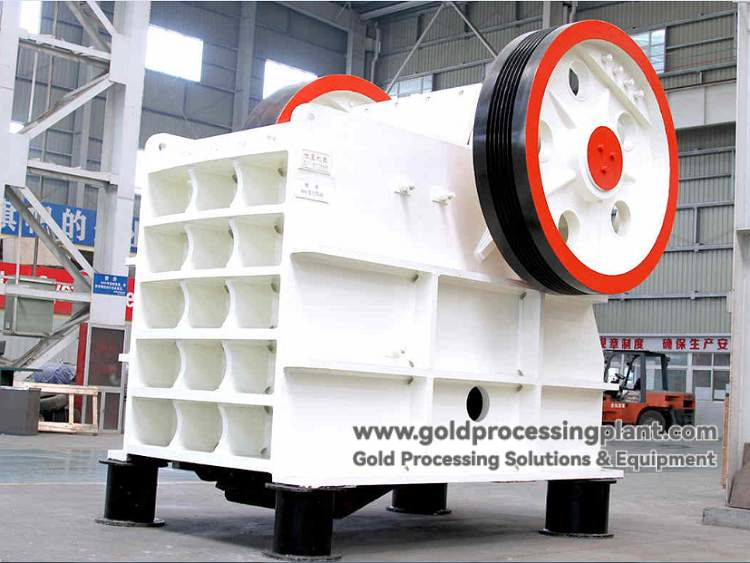
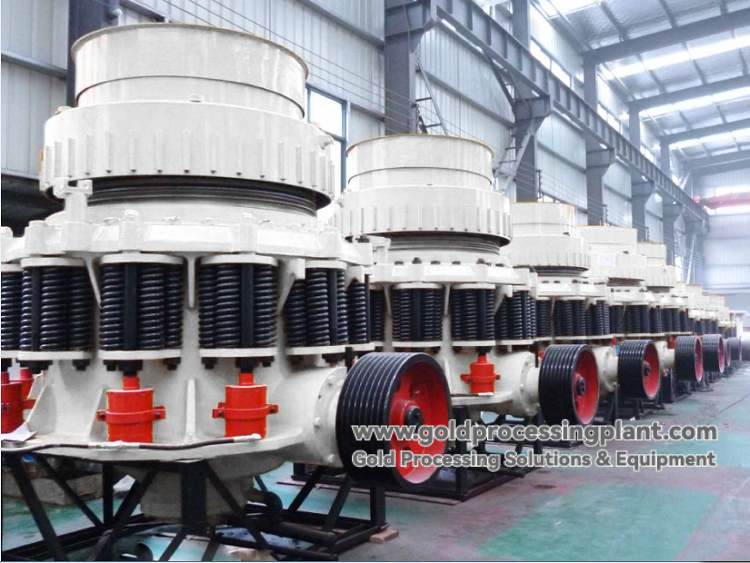
- Crushing: Jaw crusher + cone crusher for multi-stage crushing. Follow the "more crushing, less grinding" principle to reduce the load on the grinding circuit.
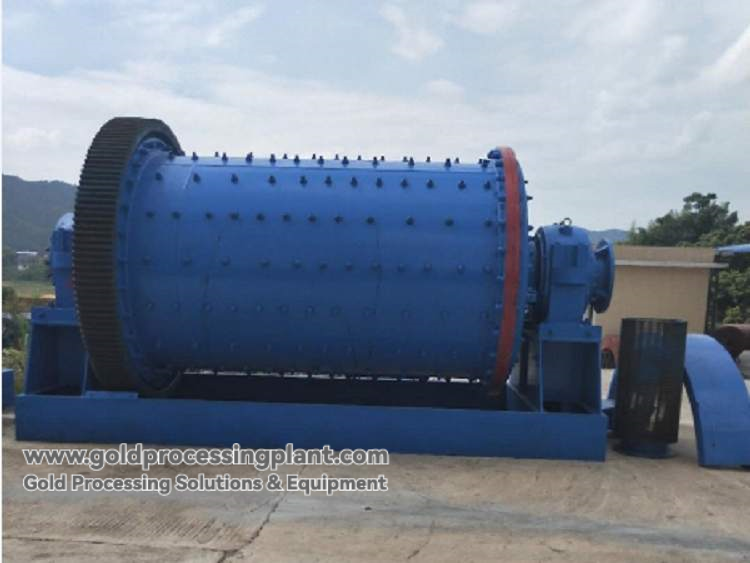
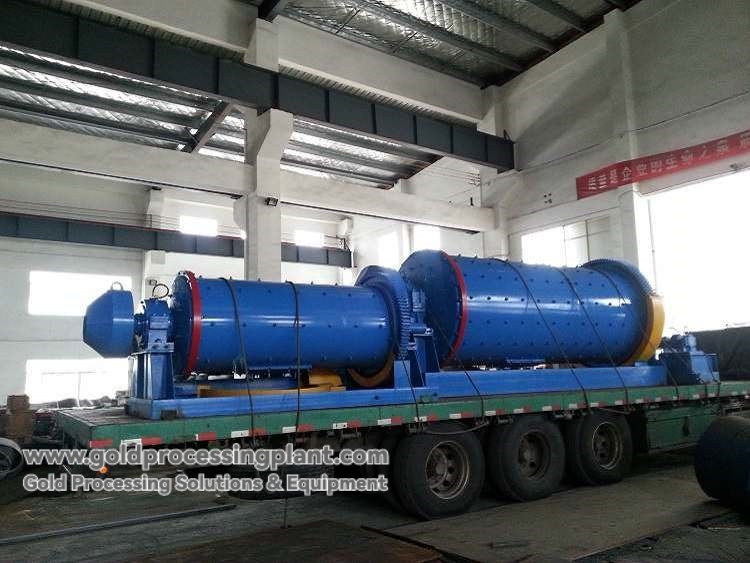
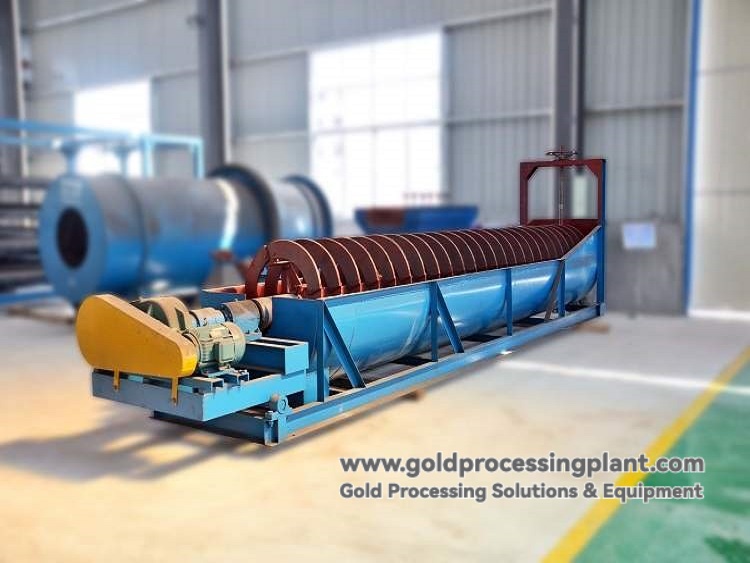
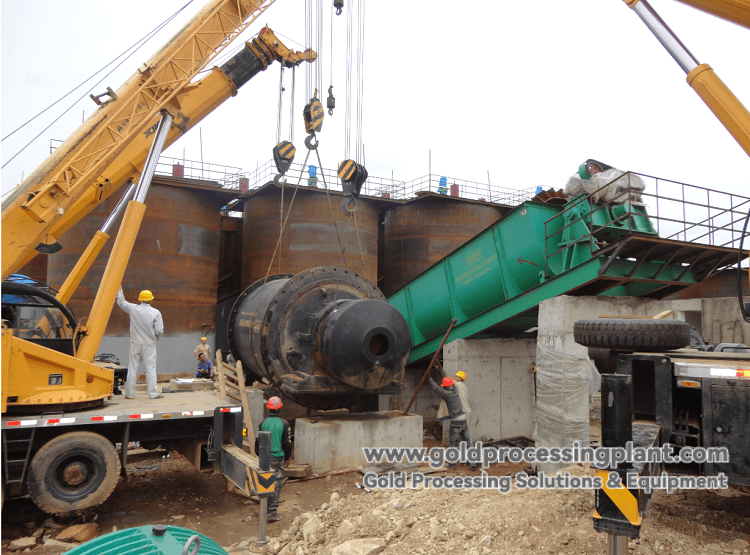
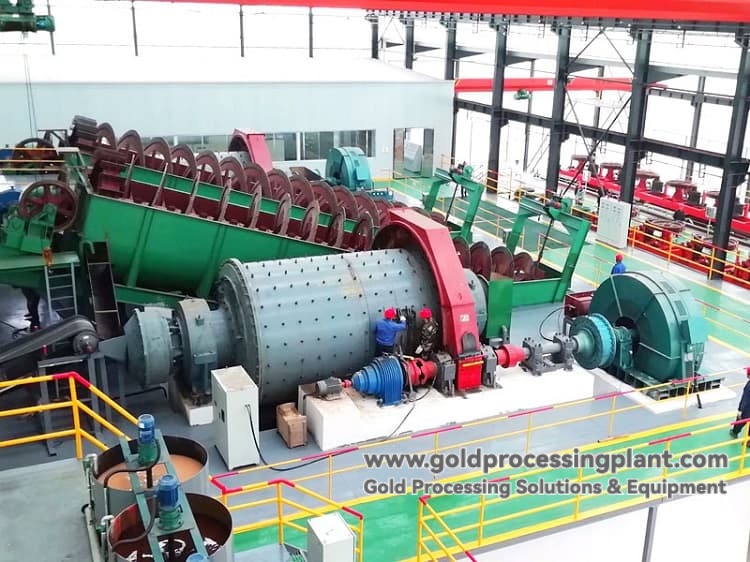
- Grinding & Classification: Ball mill + hydrocyclone/spiral classifier forming a closed-circuit grinding loop. The grind size in a combined plant must balance the requirements of gravity, flotation, and CIL/CIP—too coarse, and sulphides won't liberate for flotation and cyanidation; too fine, and coarse gold is over-ground, making it unrecoverable by gravity.
Gravity Circuit: Early Recovery of Coarse Gold
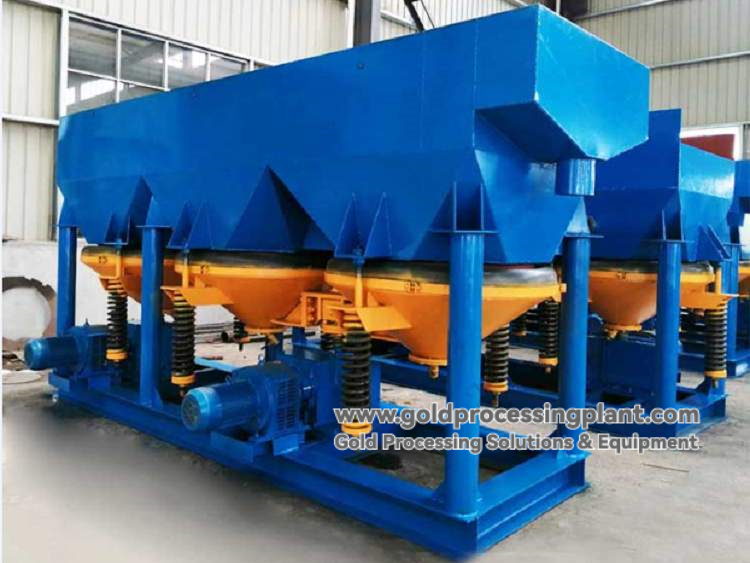
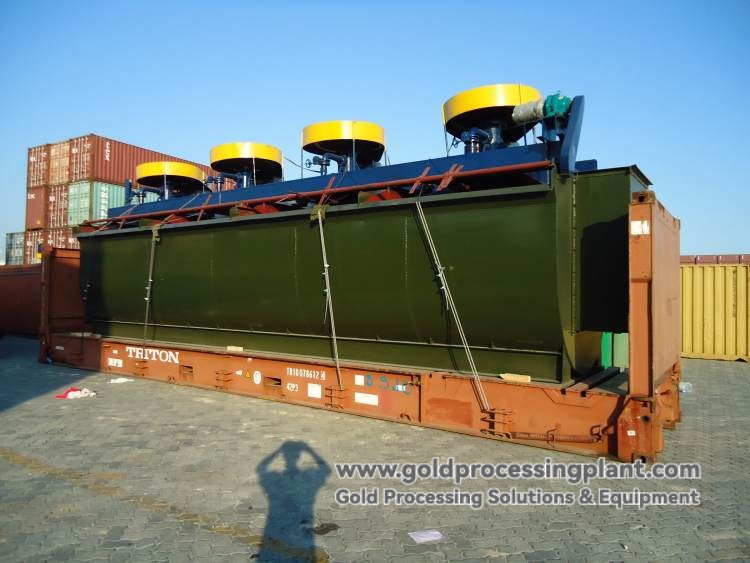
- Jigs / Centrifugal Concentrators: Installed at the ball mill discharge, classifier sand return, or cyclone underflow to recover coarse free gold before it gets over-ground. Jigs handle coarse fractions with high capacity, while centrifugal concentrators recover fine gold. They can be used in series or configured based on stage requirements.
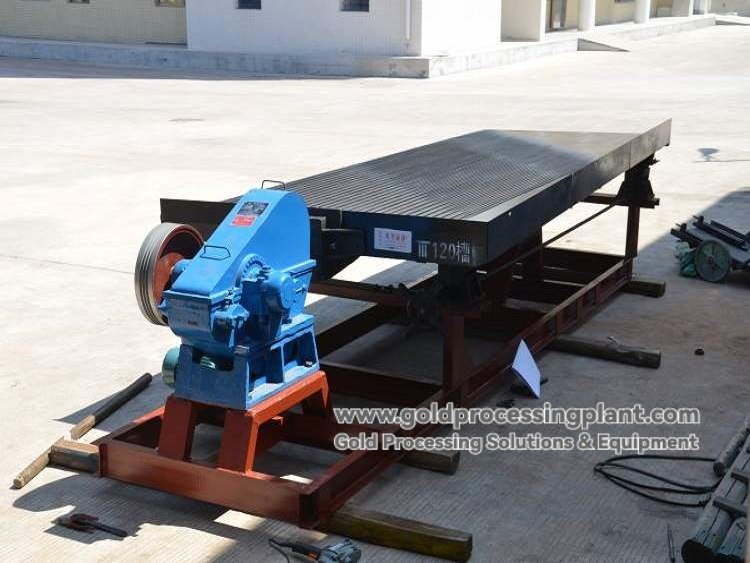
- Gravity Concentrate: Rougher concentrate is sent to a shaking table for cleaning to produce a high-grade gravity concentrate, which can be directly smelted or sold. Gravity tailings proceed to the flotation circuit.
Flotation Circuit: Recovering Gold-Bearing Sulphides
- Conditioning & Reagent Addition: Gravity tailings enter a conditioning tank, where density is adjusted, and pH modifiers, activators, collectors, and frothers are added.
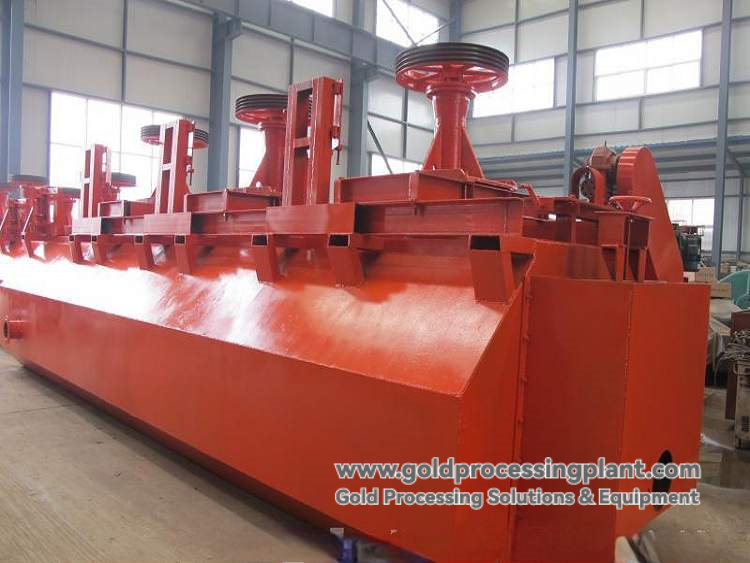
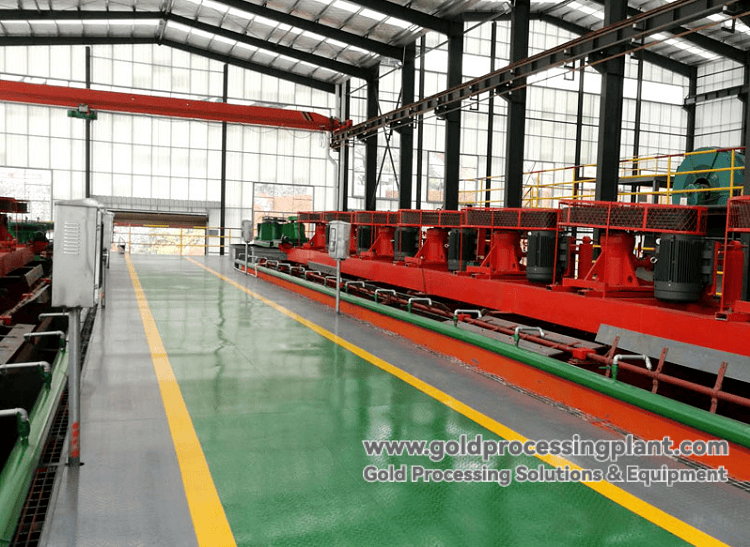
- Rougher, Scavenger, Cleaner: Flotation machines are combined into rougher, scavenger, and cleaner banks to recover gold-bearing sulphides. Common circuit structures range from 1-Rougher/2-Cleaner/2-Scavenger to 1-Rougher/3-Cleaner/3-Scavenger, depending on floatability and concentrate grade requirements.
- Concentrate Destination: The flotation concentrate is sent to smelting or to the CIL/CIP circuit for further gold recovery; flotation tailings go to CIL/CIP or tailings management.
CIL/CIP Circuit: Leaching Fine and Locked Gold
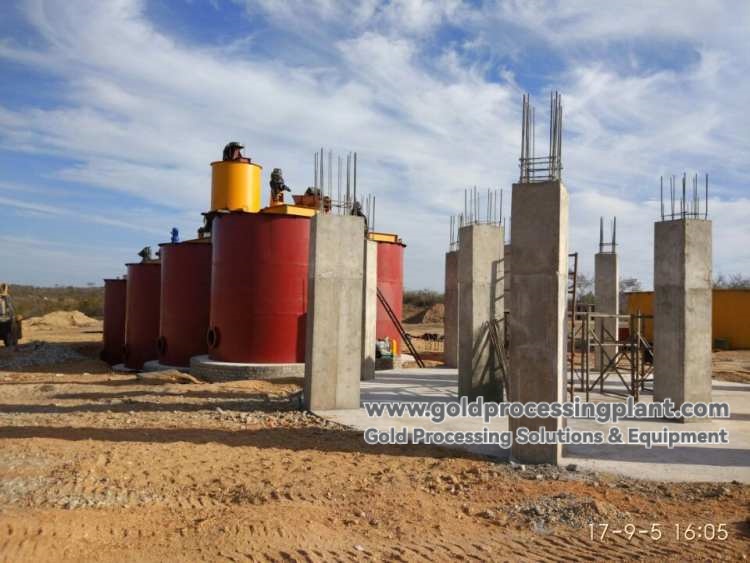
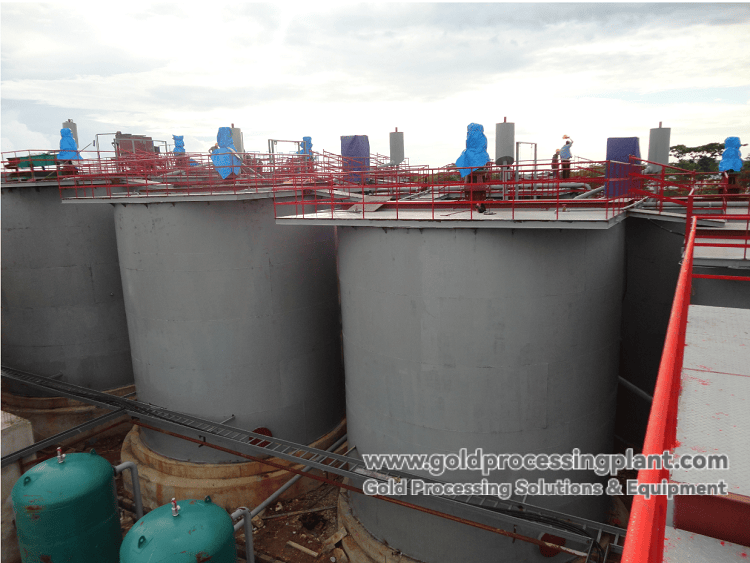
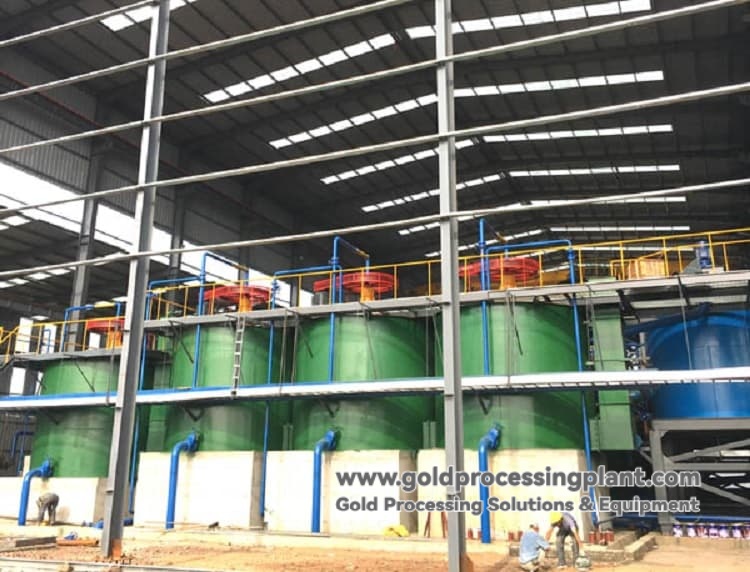
- Leaching & Adsorption: Flotation tailings or concentrate enter the CIL/CIP circuit. Cyanide dissolves the gold, which is adsorbed by activated carbon. CIL (Carbon-in-Leach) is more compact, while CIP (Carbon-in-Pulp) provides more leaching time. The choice depends on the ore's leaching kinetics.
- Loaded Carbon Treatment: Loaded carbon undergoes desorption and electrowinning, depositing gold as sludge, which is then smelted into doré bars. The desorption system can be atmospheric or high-temperature/high-pressure, depending on capacity and ore desorption difficulty.
Concentrate & Tailings Management: Stage-wise Product Collection
- Gravity Concentrate: Cleaned by shaking tables, then smelted or sold directly. High grade, low volume.
- Flotation Concentrate: Sent to smelting or CIL/CIP, depending on concentrate grade and impurity content.
- Cyanidation Tailings: Thickened and filtered for dry stacking, with process water recycled. Cyanide-containing wastewater must be treated before recycling or discharge.
Smelting: Gravity Concentrate & Gold Sludge to Doré Bars
- Gravity concentrate and cyanidation gold sludge are acid-washed to remove impurities, then smelted in a medium-frequency furnace to produce doré bullion. The smelting section handles two types of products, so the equipment configuration must account for both volumes.
Key Integration Points & Parameter Control in Combined Plants
The success of a combined gold processing plant is largely determined during the integration point selection stage. Below are the core points for node selection and parameter control in combined circuits:
Gravity LocationMill discharge, classifier return, or cyclone underflow—determined by coarse gold distribution.
Grind SizeBalances coarse gold recovery in gravity and liberation for flotation/CIL. The core trade-off.
Flotation Circuit1R/2C/2S to 1R/3C/3S, depending on floatability and concentrate grade.
Flotation Conc. RouteSmelting or CIL/CIP, based on grade and impurities.
Cyanidation TargetConcentrate or tailings cyanidation; different throughput and recovery.
CIL vs. CIPSelected based on leaching kinetics and plant capacity.
Reagent RegimeFlotation and cyanidation reagents must be controlled stage-wise to prevent interference.
Economic ValidationEvery added stage must justify its CapEx/OpEx with a recovery gain.
The integration points of a combined gold processing plant cannot be guessed—where to place the gravity circuit, whether to regrind and leach flotation tailings, and whether to cyanide the concentrate or tailings, all affect overall recovery and ROI. These must be determined through mineral test work and circuit surveys.
Technical Advantages of a Combined Gold Processing Plant
A combined gold processing plant shows clear advantages in complex ores and projects where single processes fail to meet recovery targets:
- Stage-wise Recovery, Higher Total Yield: Gravity for coarse gold, flotation for sulphides, CIL/CIP for locked fine gold. Different gold occurrences are recovered in their optimal stage, resulting in a higher total recovery than any single method.
- Customized Combinations, Not Off-the-Shelf: Gravity + flotation, gravity + CIL/CIP, or flotation + CIL/CIP—the combination and integration points are selected based on ore characteristics. Not every ore requires a three-stage plant.
- In-house Equipment, Seamless Integration: Gravity, flotation, and CIL/CIP equipment are all manufactured in-house. Process and mechanical engineers work in the same team, ensuring that stage-to-stage integration does not suffer from mismatched interfaces.
- Adaptable to Complex Ores: Coexisting coarse/fine gold, sulphide-hosted gold, refractory ores—a combined gold processing plant covers scenarios where single methods fall short.
Note on Recovery Rates: The recovery rate of a combined gold processing plant is determined by the ore's occurrence state, the selected combination scheme, and the node configuration. GoldProcessingPlant does not promise absolute numbers detached from reality. What we promise is to design the highest-recovery combination for your specific ore through rigorous test work and circuit surveys, and to strive for excellence in equipment selection and process control.
Key Equipment Configuration of a Combined Processing Plant
The equipment configuration of a combined gold processing plant is divided into different systems based on the selected scheme. Below is a typical configuration for a Gravity + Flotation + CIL/CIP three-stage plant. Actual selection depends on ore characteristics and the specific combination chosen:
| System |
Core Equipment |
Function |
| Crushing & Grinding |
Jaw crusher, cone crusher, ball mill, hydrocyclone/spiral classifier |
More crushing, less grinding; closed-circuit grinding to provide proper liberation for the three stages. |
| Gravity Circuit |
Sawtooth-wave jig, centrifugal concentrator, 6-S shaking table |
Early recovery of coarse gold in the grinding circuit; shaking table cleans the concentrate to high grade. |
| Flotation Circuit |
Conditioning tank, reagent system, SF/XCF/KYF flotation cells, thickener |
Recovers gold-bearing sulphides; rougher/scavenger/cleaner banks; concentrate to smelting or CIL/CIP. |
| CIL/CIP Circuit |
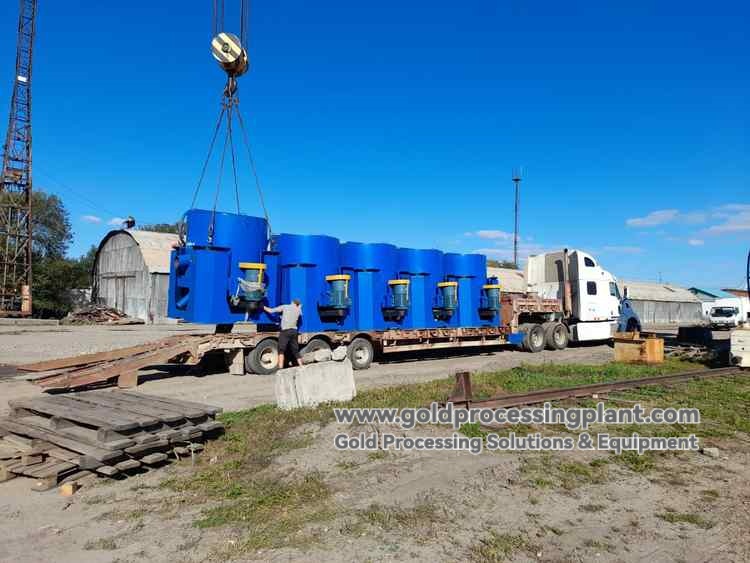
Leach tanks, activated carbon adsorption system, desorption & electrowinning, smelting furnace |
Leaches fine and locked gold; loaded carbon desorption & electrowinning; gold sludge smelting. |
| Tailings Management |
Thickener, filter press, cyanide wastewater treatment system |
Dry stacking of tailings; treatment of cyanide-containing wastewater. |
Combined Plant Equipment Supply Note: GoldProcessingPlant manufactures all gravity, flotation, and CIL/CIP equipment in-house, covering the entire flowsheet from crushing and grinding to gravity separation, flotation, cyanidation, and tailings management. We supply single units or complete sets, configured to your ore characteristics and combination scheme, not off-the-shelf. The integration between stages is managed by process and mechanical engineers in the same team, ensuring no mismatched interfaces. Custom materials, motor powers, and structural modifications are available for special conditions (cold, high altitude, corrosion, unstable power in Africa).
Equipment Investment & Quotation for Combined Plants
The equipment investment for a combined gold processing plant is directly related to the capacity, ore occurrence state, selected combination scheme (Gravity+Flotation, Gravity+CIL/CIP, Flotation+CIL/CIP, or three-stage), equipment specifications for each stage, and integration node configuration. A two-stage combined plant and a three-stage combined plant can differ significantly in equipment configuration and investment.
GoldProcessingPlant does not offer a "one-size-fits-all" price detached from ore characteristics. Instead, we quote based on test work results and actual configuration. Tell GoldProcessingPlant your daily capacity, ore type, gold occurrence state, and site conditions, and we can directly issue an equipment configuration list and quotation for the combined plant, making it easy for you to compare investments quickly.
The main variables affecting the investment in a combined gold processing plant include: processing capacity, ore occurrence state and combination scheme, gravity circuit location and equipment configuration, flotation circuit stages and cell specifications, cyanidation circuit choice (CIL/CIP) and desorption system selection, tailings dry stacking and cyanide wastewater treatment, as well as civil works and power infrastructure. Quotations based on actual configuration are the only ones with reference value.
Why Choose GoldProcessingPlant for Your Combined Gold Plant
Gold processing is not just about equipment; it requires a team that understands the ore, the process, and the machinery—and can integrate all three seamlessly. For combined plant projects, what sets GoldProcessingPlant apart is:
1
Customized Combinations, Not Templates
Whether it's Gravity+Flotation or Gravity+CIL/CIP, concentrate or tailings cyanidation, every integration point is derived from the ore's characteristics. A combined plant is not about adding more stages; it's about the right combination.
2
All Stages Manufactured In-House
Gravity, flotation, and CIL/CIP equipment are all manufactured by us. Process and mechanical engineers work in the same team. The biggest risk in combined plants is mismatched interfaces; we eliminate that by doing it all ourselves.
3
Test-Backed Integration Points
Where to place the gravity circuit, whether to regrind and leach the tailings—these decisions are made through mineral test work and circuit surveys, not guesswork or copying other projects.
4
Clear Scope of Delivery, Controlled Labor Costs
Under EPC, process design, equipment manufacturing, installation guidance, and commissioning training are handled by us. Civil works and general installation labor are organized locally by the client, with our engineers providing technical supervision.
5
Global Project Experience, Reliable Delivery
Projects across Africa, South America, Central Asia, and Southeast Asia, with capacities from 30 to 5,000 TPD. Combined plants are complex; our cross-border experience helps you avoid pitfalls.
6
Continuous Technical Support
Commissioning and reaching capacity is just the beginning. Parameters in combined plants affect each other. We provide systematic training to ensure your team can adjust each stage independently, backed by long-term spare parts and process optimization.
Related Gold Processing Solutions
In addition to the combined gold processing plant, GoldProcessingPlant's portfolio covers hard rock, placer, refractory ore, and tailings reprocessing. We match historical experience to your specific ore type:
EPC Turnkey Delivery Boundaries: Who Does What
GoldProcessingPlant provides EPC turnkey services for combined gold processing plants: from process design and engineering drawings to core equipment manufacturing, on-site installation guidance, commissioning, and personnel training—all coordinated by us, so you only need to deal with one team. However, a combined plant involves multiple stages (gravity, flotation, CIL/CIP) and covers civil works, equipment, installation, and commissioning. Each link has different requirements for qualifications, labor costs, and site conditions. If "who does what" is not clarified before signing the contract, disputes and delays are highly likely.
Therefore, the core principle of GoldProcessingPlant's EPC service is: what we are responsible for, we manage to the end; what the client needs to coordinate, we clarify in advance. The boundaries are listed below.
What GoldProcessingPlant is Responsible For
- Process Technology & Technical Scheme: Ore characterization, combined scheme determination, stage integration points, and reagent regime, with a proposal including equipment selection and preliminary quotation.
- Engineering Design & Drawings: Site layout, equipment arrangement, gravity-to-grinding circuit interface, flotation-to-CIL/CIP interface, civil works condition drawings, and complete technical handover.
- Core Equipment Manufacturing & Supply: Manufacturing gravity equipment, flotation cells, leach tanks, and desorption systems according to drawings, along with ancillary pumps, piping, and electrical controls, ensuring interfaces between the three stages match.
- On-site Installation Technical Guidance: Stationing engineers on-site to guide equipment positioning, piping connection, electrical and instrument installation, and the flow connection between stages.
- Integrated Commissioning & Training: Leading single-machine and full-circuit load commissioning, optimizing gravity, flotation, and CIL/CIP parameters stage by stage until overall targets are met, and training the client's team.
- After-sales & Spare Parts: Responsible for equipment quality during the warranty period, with long-term spare parts supply and process optimization recommendations.
What the Client is Responsible For
- Civil Works: Organize civil construction locally based on our civil works condition drawings. If complete structural drawings for the plant building or foundation reinforcement are required, they must be issued by a locally qualified design institute.
- Local Installation Labor: Equipment positioning, pipe welding, cable laying, etc., are performed by locally recruited workers. Our engineers guide how to install, and the client organizes the workforce.
- Site Basic Conditions: Responsible for "three connections and one leveling" (water, electricity, road, and site leveling), as well as preparing lifting equipment, water, electricity, and materials required for commissioning.
- Local Compliance: Responsible for local environmental, safety, and construction permits. Combined plants involve cyanide solutions, so environmental approvals must be obtained in advance.
Why is this division more cost-effective? Sending a large number of Chinese workers overseas or to remote sites incurs huge costs in flights, visas, accommodation, and high daily wages. By recruiting local general installation workers and having our engineers provide technical guidance, you can save at least half of the labor costs. Local workers also communicate more easily and adapt flexibly to site civil works progress, avoiding delays caused by waiting for visas or flights.
If the client truly cannot find a construction team locally, or wishes GoldProcessingPlant to handle both civil works and installation labor, we can discuss this separately based on the actual project location, and agree on the scope and cost in the contract.
FAQ: Combined Gold Processing Plant
+What ore types require a combined gold processing plant? ▼
Ores with coexisting coarse and fine gold, sulphide ores containing coarse free gold, and complex ores where single processes fail to meet recovery targets. Gravity recovers coarse gold, flotation captures sulphides, and CIL/CIP handles fine locked gold. Single processes always leave some gold behind. If the ore is simple, gold is mostly free, and there are no interfering elements, a single process is sufficient—don't combine for the sake of combining.
+How to choose between Gravity+Flotation and Gravity+CIL/CIP? ▼
It depends on the gold's occurrence state. If coarse gold coexists with gold-bearing sulphides and sulphide content is relatively high, Gravity+Flotation is more suitable, with the flotation concentrate sent to smelting or CIL/CIP. If coarse gold coexists with fine free gold, the gangue is simple, and there are no interfering elements, Gravity+CIL/CIP is more direct, with tailings cyanidation for fine gold. The final choice requires mineral test work to compare recovery and economics.
+Should the flotation concentrate or flotation tailings be cyanide leached? ▼
It depends on gold distribution between concentrate and tailings. If gold is mainly enriched in the sulphides, concentrate cyanidation has a smaller volume and higher recovery. If gold remains in the flotation tailings, tailings cyanidation acts as a safety net with a larger volume but typically lower recovery. Economics must be compared through test work, not generalized.
+How are the integration points determined? Where does the gravity circuit go? ▼
Common gravity locations are the ball mill discharge, classifier sand return, or cyclone underflow, aiming to recover gold before over-grinding. The specific location depends on coarse gold liberation characteristics and the grinding circuit structure. Whether to regrind and leach the flotation tailings, and whether to cyanide the concentrate or tailings, must be determined through test work and circuit surveys—never copied from other projects.
+How much does a combined gold processing plant cost? ▼
Investment depends on capacity, ore occurrence state, combination scheme (two-stage vs. three-stage), equipment specifications, and integration node configuration. There is no fixed price. Investment must be based on ore characteristics and site conditions, quoted per actual configuration. Tell GoldProcessingPlant your daily capacity, ore type, and gold occurrence state, and we can issue a configured equipment list and quotation.
+What is the project timeline from contract to production? ▼
Typically 8 to 15 months for a combined gold processing plant from process design to final production. Combined circuits involve multi-stage integration, so commissioning takes longer than single-process plants. Key milestones: Process design 7-15 days → Engineering 20-30 days → Equipment manufacturing 60-120 days → Logistics 30-60 days → Installation & commissioning 60-150 days. Reasonable overlapping can compress the schedule; overseas projects require extra customs buffer.
+What recovery rate can a combined gold plant achieve? ▼
Recovery depends on ore occurrence state, combination scheme, and node configuration. Under suitable conditions with a matched combined scheme, a complex gold project achieved high total recovery through gravity + flotation + CIL/CIP. However, this is actual data for that specific project, not a guaranteed figure for all ores. GoldProcessingPlant does not promise absolute numbers; we commit to designing the highest-recovery combination for your ore through test work and circuit surveys.
+Do reagents from different stages interfere with each other? ▼
Yes. Flotation reagent residues can affect subsequent CIL/CIP leaching, and cyanide reagents can impact upstream flotation. The reagent regime in a combined plant must be controlled stage-wise. The dosing points, reagent types, and dosages in the flotation and cyanidation stages must be designed collaboratively. If necessary, washing or de-reagentizing stages can be added between stages to reduce interference. This is why combined plants demand higher operational control than single-process plants.
+How to choose between two-stage and three-stage combinations? ▼
Look at ore complexity and recovery gain. If a two-stage combination (Gravity+Flotation or Gravity+CIL/CIP) meets recovery requirements, a three-stage plant is unnecessary—lower CapEx and OpEx. A three-stage combination is only considered when coarse gold, gold-bearing sulphides, and fine locked gold each account for a significant proportion and two stages cannot capture them all. Every added stage must justify its added investment through recovery gain.
+Can you provide process design only, without equipment purchase? ▼
Yes. Process design, equipment selection and quotation, engineering drawings, single equipment, complete equipment sets, installation supervision, and EPC turnkey are all available on demand. No mandatory bundling. Early-stage process design fees and drawing deposits can be fully deducted from equipment payments in subsequent orders or EPC contracts.
How to Select and Implement a Combined Gold Processing Plant
In the same combined plant, choosing the wrong integration points—where to place the gravity circuit, whether to regrind and leach the flotation tailings—can result in a massive difference in overall recovery. The core of a combined gold processing plant is stage-wise recovery based on the ore's occurrence state: gravity for coarse gold, flotation for gold-bearing sulphides, CIL/CIP for fine and locked gold. The integration points and parameters for each stage must be determined through test work. It's not about adding more processes; it's about the right combination.
GoldProcessingPlant's approach to combined plant projects is direct: understand the ore first, then configure the equipment. Tell us your daily capacity, ore type, and gold occurrence state, and we can first determine the combination scheme and integration points through test work, then issue a configured equipment list and quotation. Gravity, flotation, and CIL/CIP equipment are all manufactured in-house, ensuring seamless stage-to-stage interfaces.
If you are evaluating the feasibility of a combined gold processing plant, or if single-process recovery is insufficient and you struggle to balance coarse and fine gold, contact the GoldProcessingPlant engineering team. Provide your ore type, capacity, and gold occurrence state, and we will match the combined scheme, node configuration, and investment estimate based on our project experience.
From Combined Process Design to Equipment Quotation, All in One Place
GoldProcessingPlant provides customized solutions for combined gold processing plants globally. Single equipment, complete sets, engineering drawings, installation supervision, and EPC turnkey—combine as needed, with no mandatory bundling. Gravity, flotation, and CIL/CIP equipment are all manufactured in-house.
Contact us with your daily capacity, ore type, and gold occurrence state. The GoldProcessingPlant team will first match the combination scheme and integration points for you, then issue a configured quotation with an equipment list and budget.
Understand the ore first, then configure the equipment—GoldProcessingPlant maximizes the value of complex gold ores with you.