


Analysis of Gold Ore Beneficiation Technology for High-Arsenic Ore: High-Efficiency Gold Extraction Solutions Help Companies Reduce Costs and Improve Efficiency
Analysis of Gold Ore Beneficiation Technologies for High-Arsenic Deposits: High-Efficiency Gold Extraction Solutions Help Enterprises Reduce Costs and Improve Efficiency
High-arsenic gold ores are the most common type among difficult-to-process gold ores and pose a significant challenge for many mine operators. Gold is encapsulated within arsenopyrite and arsenic-bearing pyrite; during conventional cyanide leaching, arsenic compounds consume cyanide, and the encapsulated gold fails to leach out, resulting in leaching rates of often only 20–30 percent.However, high arsenic content does not mean the ore is hopeless—the key is to first determine the form in which arsenic is present and then select the appropriate pretreatment process. This article clearly explains the ore characteristics of high-arsenic gold deposits, gold extraction processes, and the logic behind reducing costs and improving efficiency.
I. Why Are High-Arsenic Gold Deposits Difficult to Process?
First, gold is encapsulated by arsenic-bearing minerals. In high-arsenic gold ores, gold is often present as fine-grained disseminations within arsenopyrite (FeAsS) and arsenopyrite. The gold particles are encapsulated within the crystal lattices of these arsenic-bearing minerals, making it difficult to achieve sufficient liberation through conventional grinding; as a result, the cyanide solution cannot reach the gold.
Second, arsenic compounds consume cyanide. During the cyanidation process, arsenopyrite and arsenic-bearing pyrite react with cyanide, consuming large amounts of reagents while simultaneously generating interferents such as thiocyanates, which further degrade the leaching environment.
Third, the environmental risks posed by arsenic. Arsenic is a toxic element, and the treatment of arsenic-containing tailings and wastewater is subject to strict environmental regulations; the solidification and stabilization of arsenic are critical hurdles that the project must overcome.
Fourth, low leaching rates and poor economic viability. Conventional direct cyanidation typically yields leaching rates of only 20–50 percent; with high reagent consumption and low recovery rates, the overall project is often not economically viable.
II. Gold Recovery Process Routes for High-Arsenic Gold Ore
There is no “one-size-fits-all” solution for high-arsenic gold ores; routes are categorized based on arsenic content and the form in which gold is present. The core logic in all cases is to treat the arsenic first and then recover the gold.
Route 1: Flotation Enrichment + Pretreatment + Cyanidation (Mainstream Route)
Suitable for ores where gold is encapsulated by arsenic-bearing minerals and can be concentrated by flotation.After grinding, flotation is performed to concentrate arsenic-bearing gold minerals—such as arsenopyrite and arsenic-bearing pyrite—into an arsenic-gold concentrate. Depending on the grade, the tailings may be re-processed. The arsenic-gold concentrate then undergoes pretreatment to release the encapsulated gold, followed by cyanidation to recover the gold.
The advantage of this route is that flotation first concentrates the arsenic-bearing minerals, and subsequent pretreatment is applied only to the concentrate, significantly reducing the processing volume and keeping costs under control.
Route 2: Roasting and Oxidation Pretreatment
The arsenic-gold concentrate is roasted; arsenic volatilizes as arsenic trioxide (requiring a dedicated arsenic recovery system), sulfur is removed as sulfur dioxide, and gold is exposed from its host minerals. The roasted ore is then subjected to cyanidation.The roasting process is well-established, but arsenic recovery and environmental treatment are critical; flue gas purification and arsenic product disposal must be integrated into the process.
Route 3: Bio-oxidation Pretreatment
Acidophilic bacteria are used to oxidize and decompose arsenopyrite and pyrite, releasing the gold from its host minerals; the oxidized residue is then subjected to cyanidation. Biological oxidation has relatively low costs and minimal environmental impact, but the oxidation cycle is long (typically ranging from several days to several weeks) and requires high standards of operational management; it is suitable for projects with sufficient space and time.
Route 4: Pressurized Oxidation Pretreatment
Arsenic minerals and sulfides are oxidized and decomposed using oxygen under high-temperature, high-pressure conditions; the exposed gold is then cyanidated. Pressurized oxidation features a fast reaction rate and thorough oxidation, making it suitable for large-scale projects; however, it requires high capital investment in equipment and strict operational standards.
Route 5: Chemical Oxidation/Proprietary Reagent Pretreatment
Chemical oxidants or customized reagent systems are used to break down the encapsulation of arsenic minerals, followed by cyanidation.GoldProcessingPlant offers proprietary chemical pretreatment solutions for difficult-to-process arsenic- and carbon-bearing ores. For ores where conventional leaching rates are insufficient, a customized chemical regimen is used to release entrapped gold; the chemical regimen and process parameters are determined through ore sample testing.
The specific route to be taken must be determined through testing using representative ore samples. Arsenic content, types of arsenic minerals, the degree of gold entrapment, and sulfur content all influence the selection and economic viability of the pretreatment method; test data serves as the basis for decision-making.
III. Equipment Configuration for High-Arsenic Gold Ore Processing Plants
Configuration follows the mainstream process flow (flotation enrichment + pre-treatment + cyanidation). List of core equipment:
Crushing and Grinding Section
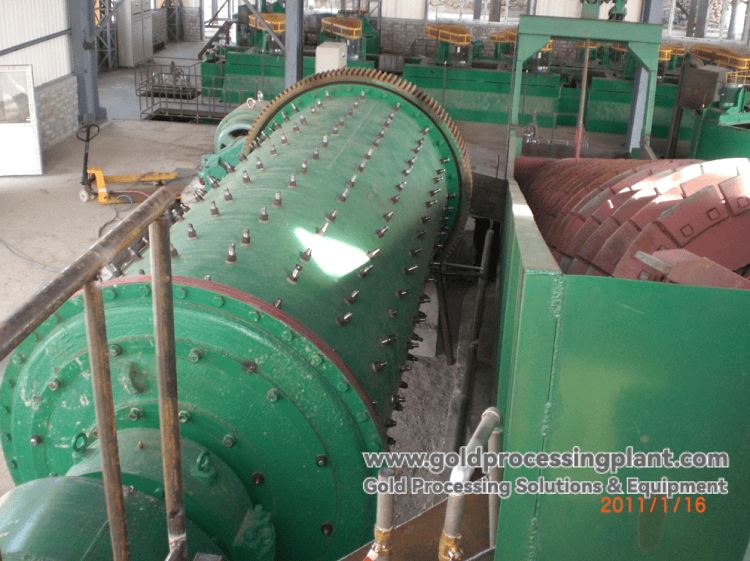
Jaw crusher (primary crushing), cone crusher (secondary and tertiary crushing), ball mill, spiral classifier or hydrocyclone. The grinding fineness must ensure the individual liberation of arsenic-bearing gold minerals and is determined based on test results.
Flotation Section
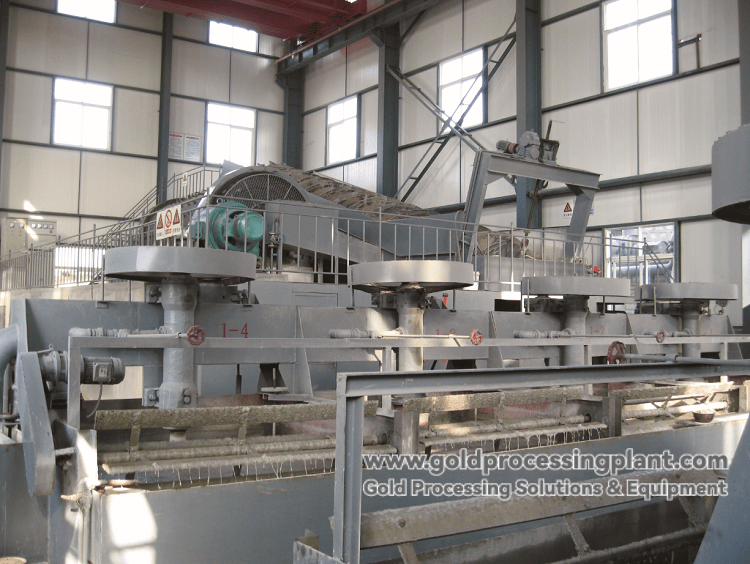
Floating machines (SF-type self-suction pulp, XCF/KYF-type aerated series), comprising roughing, scavenging, and concentrating units.The key to flotation of arsenic-bearing ores is the suppression of arsenopyrite or the separate flotation of arsenic-gold concentrate; the reagent regime (collectors, activators, inhibitors, pH adjusters) should be adjusted according to the properties of the ore.
Pre-treatment Section
Select a roasting furnace, biological oxidation tank, pressurized oxidation reactor, or chemical oxidation/chemical pretreatment system based on the process route.
Cyanidation Section
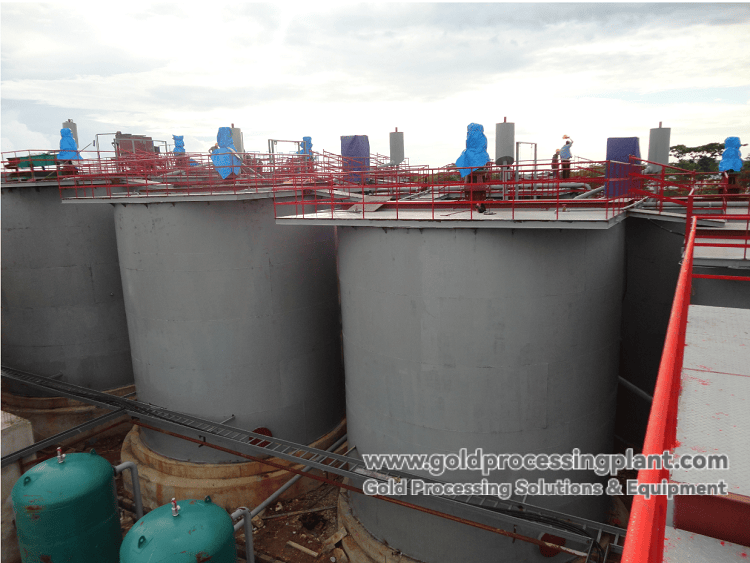
Leaching tanks, activated carbon adsorption systems (CIL/CIP), gold-bearing carbon separation screens, desorption and electrolysis equipment, and gold smelting furnaces.
Environmental Treatment Section
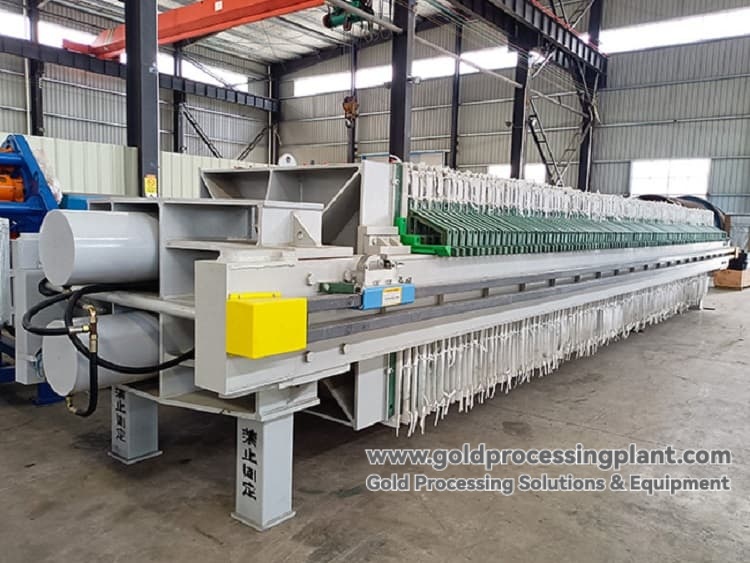
Solidification and stabilization treatment facilities for arsenic-containing tailings/wastewater; tailings filter press. Environmental treatment of arsenic is an indispensable component of high-arsenic gold ore projects.
Concentration and Dewatering Section
Thickener, filter press.
GoldProcessingPlant provides equipment covering the entire gold ore beneficiation chain: crushing and screening, grinding and classification, gravity separation, flotation, leaching and adsorption (CIL/CIP systems), desorption and electrolysis, concentration and dewatering, and feed conveying. We offer both individual units and complete turnkey solutions.
IV. Four Key Points for Cost Reduction and Efficiency Improvement in High-Arsenic Gold Ore Processing
- Key Point 1: First, thoroughly understand the form in which arsenic is present. Whether arsenic is present in arsenopyrite or arsenic-bearing pyrite, whether the gold is in the form of inclusions or fissure gold, and how deeply it is incorporated—these factors determine the choice of pretreatment methods. Installing equipment without conducting mineralogical analysis and experimental validation will likely result in a wasted investment.
- Key 2: Prioritize enrichment through flotation to reduce pre-treatment throughput. Pre-treatment costs are directly proportional to throughput. By using flotation to reduce the yield of arsenic-gold concentrate, pre-treatment is limited to processing only the concentrate—which may account for only a few percent to a dozen percent of the original ore volume—resulting in a significant reduction in costs.
- Key 3: Tailor the reagent regimen to the specific ore; do not rely on generic formulas. The selection of inhibitors for the flotation of arsenic-bearing ores and the reagents used in pre-treatment prior to cyanidation must be determined through testing based on the ore\'s properties. Generic reagent formulas may become ineffective when applied to a different ore.
- Key Point 4: Environmental treatment must be designed concurrently with the main process to avoid future complications. The solidification and stabilization of arsenic, as well as the treatment of arsenic-containing wastewater, must be designed simultaneously with the main process, and environmental approvals must be obtained in advance. If environmental procedures are only completed after equipment arrives on-site, the project schedule will be delayed repeatedly.
5. Why Choose GoldProcessingPlant for High-Arsenic Gold Ore Solutions
Specialized Capabilities for Difficult-to-Process Ores
We offer tailored combined processes and specialized solutions for difficult-to-process gold ores containing arsenic and carbon, fine-grained encapsulated gold, and polymetallic ores. Our exclusive chemical pretreatment solution breaks down encapsulated gold. For ores where conventional leaching rates are insufficient, we use customized chemical regimes to improve recovery rates, rather than applying a one-size-fits-all standard process to every gold deposit.
Process-First Approach: Letting Test Data Speak for Itself
We begin by conducting mineralogical analysis, flotation tests, pretreatment tests, and cyanide leaching tests on representative ore samples, using the data to determine the process route and reagent regimen. Test reports include a direct list of recommended equipment and a preliminary budget.
In-House Equipment Manufacturing: Process and Hardware Integrated
Crushers, ball mills, flotation cells, leaching tanks, activated carbon adsorption systems, desorption electrolysis equipment, and gold smelting furnaces are all manufactured in-house. Process engineers and mechanical engineers collaborate as part of the same team, and equipment is manufactured according to process drawings.With two major manufacturing bases and an annual production capacity exceeding 500 units, our products are exported to more than 50 countries and regions. We strictly adhere to the ISO 9001 quality management system, and our products are CE-certified.
Global Project Experience
Projects span major gold-producing regions including Ghana, Mali, and Tanzania in Africa; Peru and Colombia in South America; Russia and Kazakhstan in Central Asia; and Southeast Asia, with processing capacities ranging from 30 to 5,000 metric tons per day. We are well-versed in international logistics, customs clearance procedures, and construction standards across different countries.
Flexible Phased Implementation, No Mandatory Bundling
Clients may choose to conduct only mineral processing trials, purchase only process design and equipment selection proposals, procure only equipment, or hire engineers for on-site commissioning; alternatively, they may opt for an EPC turnkey solution. Fees paid in advance for mineral processing trials and design services can be fully offset against the equipment cost when subsequently signing an equipment or EPC contract.
Ongoing Technical Support
We assume responsibility for equipment quality during the warranty period and continue to supply spare parts, provide technical consultation, and offer process optimization recommendations long after the warranty expires.
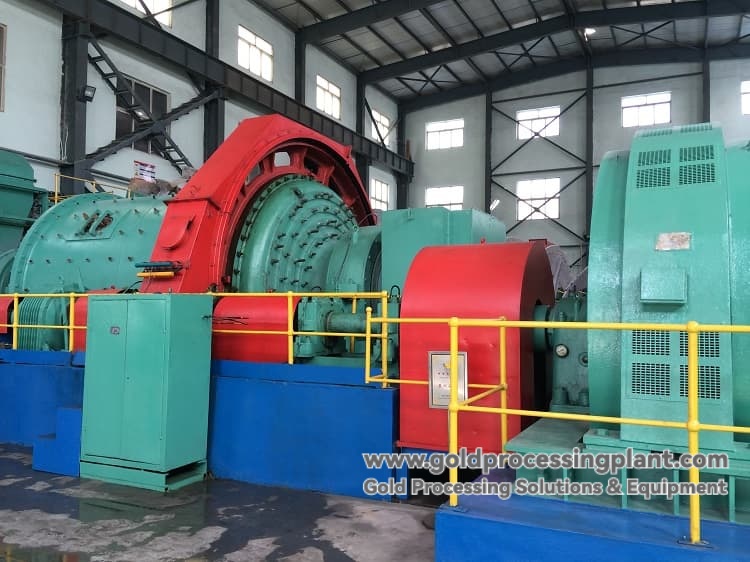
The challenge in processing high-arsenic gold ore lies not in individual pieces of equipment, but in whether the “form of arsenic—pre-treatment route—equipment configuration” are properly aligned.If the arsenic speciation is unclear, the pre-treatment route may be chosen incorrectly; if flotation fails to achieve sufficient enrichment, the pre-treatment throughput may be too high, making the project uneconomical; if a generic reagent regimen is applied without adaptation, leaching rates will remain low; if environmental treatment systems are not designed in sync, the project schedule will be delayed time and again—every decision error translates into an investment loss.
GoldProcessingPlant\'s approach is as follows: First, assess the ore type and the form in which arsenic is present; conduct mineralogical analysis and experimental validation to determine the process route; then configure equipment according to the process; and finally, dispatch engineers to the site to fine-tune operations until gold is recovered.For high-arsenic gold ores, the mainstream approach is flotation enrichment combined with pre-treatment and cyanidation; the specific pre-treatment method is selected based on test data. Following this approach ensures both high recovery rates and a solid return on investment.
Whether you are in the exploration phase, seeking to verify the processability of high-arsenic ore, or planning to build a new ore processing line, GoldProcessingPlant can provide professional consulting and comprehensive implementation plans.
The core principle of processing high-arsenic gold ore is “treat the arsenic first, then recover the gold”:First, mineral phase analysis is conducted to determine the occurrence state of arsenic and the degree to which it is associated with gold; then, a processing route is selected from options such as flotation enrichment + pretreatment + cyanidation (the mainstream approach), roasting and oxidation, bio-oxidation, pressurized oxidation, chemical oxidation, or proprietary chemical pretreatment;Equipment is configured to cover the entire process chain, including crushing and grinding, flotation, pretreatment, cyanide leaching and adsorption, desorption and electrolysis, environmentally sound treatment of arsenic-containing tailings, and concentration and dewatering.The key to reducing costs and improving efficiency lies in preliminary enrichment via flotation to reduce the volume of pre-treatment, tailoring the reagent regimen to the specific ore, and integrating environmental treatment into the design. The final solution will be based on test data from representative ore samples.