


How to Choose Between CIP and CIL Processes for Gold Ore? Professional Mineral Processing Solutions Help You Extract Gold Efficiently
How to Choose Between CIP and CIL Processes for Gold Ore? Professional Mineral Processing Solutions Help You Extract Gold Efficiently
CIP and CIL are the two mainstream processes for whole-ore cyanide gold extraction. Although their names differ by only one letter, choosing the wrong one can result in lower leaching rates and higher investment and operating costs. When mine owners acquire cyanide-leachable gold ore, their primary concerns are: What exactly is the difference between CIP and CIL? Which process is right for my ore? And how should the processing plant be configured?This article clearly explains the differences in the principles of CIP and CIL, the criteria for selection, and plant configuration.
I. What Are the Key Differences Between CIP and CIL?
Common features: Both are whole-ore cyanide gold extraction processes; both use a cyanide solution to dissolve gold into gold-cyanide complexes; both use activated carbon to adsorb gold from the slurry; and both involve subsequent desorption, electrolysis, and smelting. The core difference lies in the sequence of leaching and adsorption.
CIL (Carbon-in-Leach)
Leaching and adsorption occur simultaneously. Cyanide and activated carbon are added to the slurry in the leaching tank; gold is dissolved and adsorbed by the activated carbon at the same time—leaching and adsorption proceed concurrently.Activated carbon is added to the final tank and moves forward in a countercurrent flow, coming into contact with the pulp in the opposite direction. The advantages include a compact process, fewer tanks, and a small footprint; the disadvantage is that leaching and adsorption constrain each other, limiting the scope for parameter adjustment.
CIP (Carbon-in-Pulp)
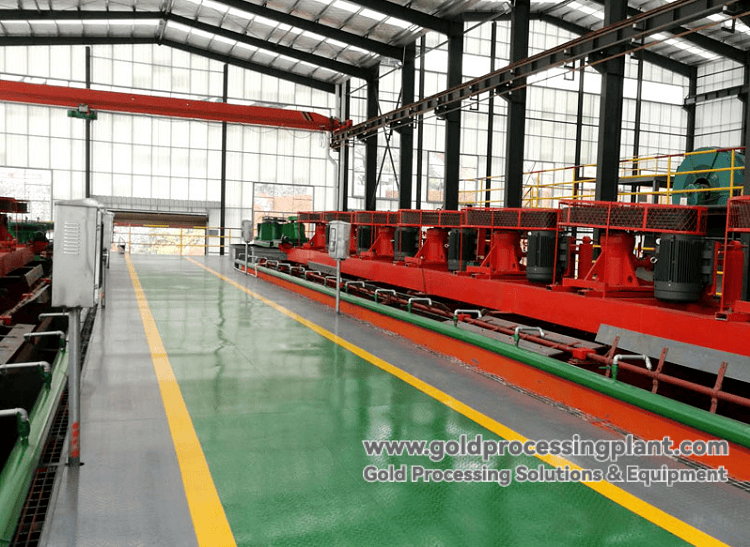
Leaching is completed first, followed by transfer to an adsorption tank where activated carbon is added. Leaching and adsorption occur in separate tanks, allowing for a more thorough leaching process and segmented control. Advantages include thorough leaching and flexible parameter adjustment, making it suitable for ores with slower leaching rates and large-scale processing plants; disadvantages include a larger number of tanks, a longer process flow, and relatively higher capital investment.
In a nutshell: CIL requires fewer tanks and features a compact process; CIP ensures thorough leaching and precise control.
II. How to Determine Whether to Choose CIP or CIL
The selection should be based on the leaching characteristics of the ore, not on a whim. There are four key factors to consider:
First, leaching rate. For ores with fast gold dissolution rates and short leaching times, CIL—which combines leaching and adsorption—is entirely sufficient, offering a compact process and lower capital investment. For ores with relatively slow leaching rates that require longer leaching times, CIP is a more reliable choice, as it ensures adequate leaching time and prevents incomplete leaching caused by the adsorption stage taking up too much time.
Second, fluctuations in ore properties. For ores with significant fluctuations in grade and properties, CIP allows for separate control of leaching and adsorption, providing greater flexibility for adjustment; in CIL, leaching and adsorption are coupled, so parameter adjustments affect each other—for highly variable ores, this can easily lead to one process being prioritized at the expense of the other.
Third, processing scale. For small and medium-sized processing plants, CIL requires fewer tanks, occupies less space, involves lower investment, and offers high cost-effectiveness; for large-scale plants, CIP provides ample leaching time and precise control, resulting in more stable long-term operating performance, which is why CIP is commonly used in large-scale operations.
Fourth, interfering elements. For difficult-to-process ores containing arsenic, carbon, or antimony, direct leaching recovery rates remain low regardless of whether CIP or CIL is used; such ores must first undergo pretreatment or flotation enrichment.Carbon-bearing ores contain carbonaceous matter that “sequesters gold” by adsorbing dissolved gold cyanide complexes; for such ores, the carbonaceous matter must first be suppressed or passivated before deciding between CIP and CIL.
The final decision must be based on comparative whole-slurry cyanidation (CIL/CIP) tests using representative ore samples, measuring leaching time curves, adsorption rates, carbon consumption, and gold recovery rates—let the data speak for itself. Test data is the sole basis for process selection; experience can only serve as a reference.
III. Once the Right Process Is Selected, How Should the Plant Be Configured?
The standard process flow for a CIP/CIL plant is: crushing and grinding → thickening and dewatering → leaching and adsorption → separation of gold-loaded carbon → desorption and electrolysis → smelting of gold slurry → tailings treatment.
Crushing and Grinding Section
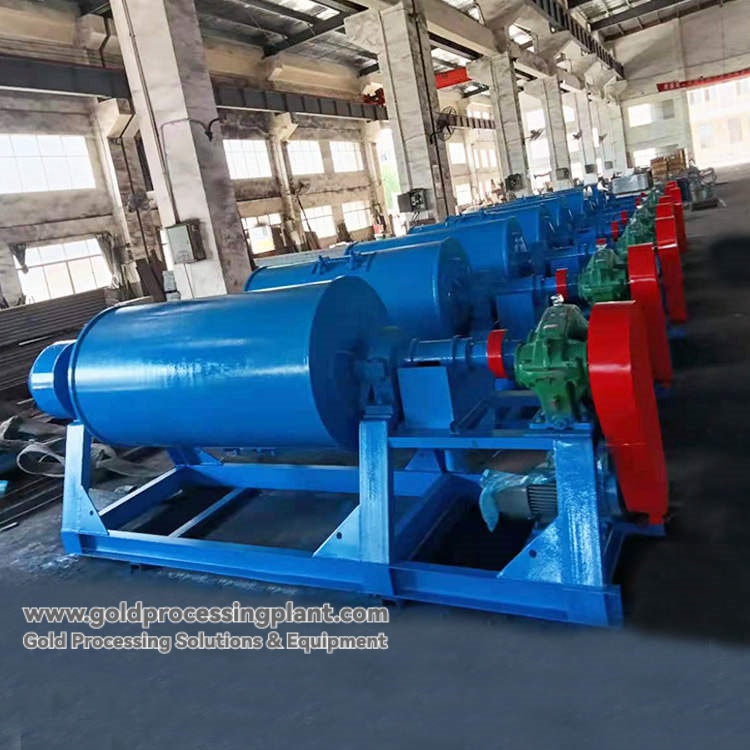
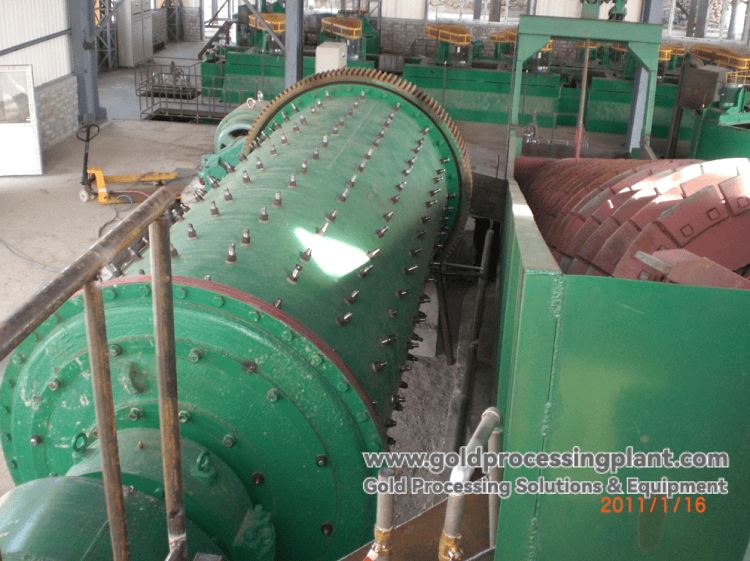
Coarse crushing is performed by a jaw crusher, medium and fine crushing by a cone crusher, and grinding by a ball mill, with a spiral classifier or hydrocyclone in a closed-circuit system. Follow the principle of “more crushing, less grinding”; the grinding fineness is determined based on liberation tests.
Thickening Section
Thickeners are used to dewater the slurry and increase its concentration; the overflow is recycled.
Leaching and Adsorption Section
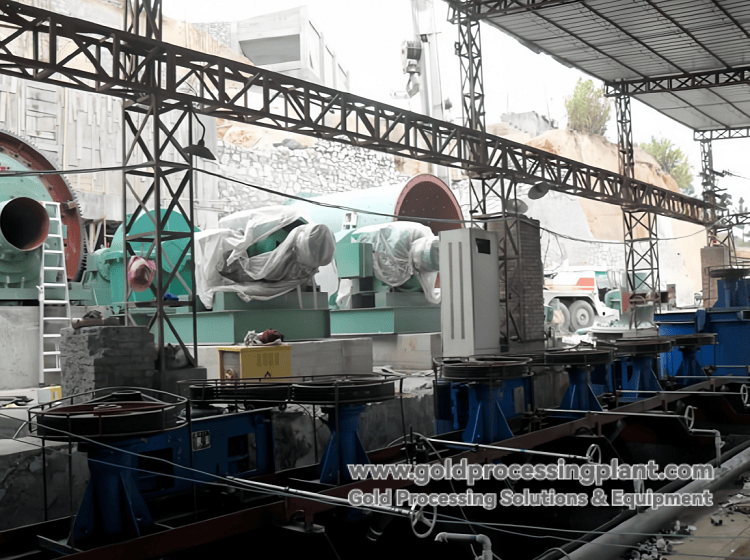
For CIL, a high-efficiency dual-impeller carbon-in-leach tank is used, with simultaneous leaching and adsorption; for CIP, multiple leaching tanks connected in series are used along with an adsorption tank. The system is equipped with a carbon-separating screen, a carbon-recovery unit, and an activated carbon feeding device.
Desorption and Electrolysis Section
Desorption at ambient temperature and pressure is suitable for conventional processing, while high-temperature, high-pressure desorption is more thorough and efficient, making it suitable for large-scale or hard-to-desorb ores. Gold slime is precipitated in the electrolysis cells.
Smelting Section
After acid washing, drying, and blending, the gold slime is smelted in a gold smelting furnace to produce refined gold.
Tailings Section
Dehydration is performed using filter presses; tailings are either dry-stacked or treated in accordance with environmental regulations, while the lean leachate is either recycled or sent for environmental treatment.
The core of the equipment configuration lies in determining the number of tanks, their volumes, and leaching times based on test data, rather than rigidly applying standard models.
IV. Four Common Pitfalls in CIP/CIL Selection
- Pit 1: Finalizing the process without conducting comparative tests. Decisions on whether to use CIP or CIL, the number of tanks required, and the leaching time must all be calculated based on leaching test data. Relying solely on experience and making arbitrary decisions will inevitably result in low leaching rates.
- Pitfall 2: Forcing whole-ore cyanidation despite severe gold entrapment. When gold is tightly bound by sulfides or silica, it cannot be released even with ultra-fine grinding; direct cyanidation yields such low leaching rates that the process is economically unfeasible. Flotation enrichment or pretreatment is required first; CIP/CIL cannot rescue gold that is entrapped in this manner.
- Pitfall 3: Failing to treat carbonaceous material in carbon-bearing ore. Carbonaceous material sequesters gold; dissolved gold is re-adsorbed, causing leaching rates to drop significantly. Carbonaceous material must first be suppressed or passivated, or a pretreatment process must be employed.
- Pitfall 4: Neglecting environmental approvals and tailings management. Environmental approvals for cyanide processes are a strict requirement; dry tailings disposal, treatment of lean leachate, and cyanide management must all be planned in advance—you cannot wait until the equipment arrives to complete the necessary paperwork.
V. Why Choose GoldProcessingPlant for CIP/CIL Solutions
Process-First Approach: Letting Experimental Data Speak for Itself
We do not offer “one-size-fits-all” solutions. Instead, we first conduct comparative whole-ore CIL/CIP leaching tests on representative ore samples, using leaching time curves, adsorption rates, and carbon consumption data to determine the process route and tank configuration. The test report includes a direct list of equipment selections and a preliminary budget.
In-House Equipment Manufacturing Ensures Seamless Integration of Process and Hardware
Leaching tanks, high-efficiency dual-impeller carbon-in-leach tanks, activated carbon adsorption systems, carbon-separating screens, carbon lifters, desorption electrolysis equipment (ambient temperature and pressure / high temperature and high pressure),and gold smelting furnaces are all manufactured in-house. Process engineers and mechanical engineers collaborate within the same team, and equipment is manufactured according to process drawings, thereby avoiding discrepancies such as “design drawings not matching equipment dimensions.”With two major manufacturing bases and an annual production capacity exceeding 500 units, our products are exported to more than 50 countries and regions. We strictly adhere to the ISO 9001 quality management system, and our products are CE-certified.
Specialized Capabilities for Difficult-to-Process Ores
For difficult-to-process gold ores containing arsenic and carbon, fine-grained encapsulated gold, and polymetallic ores, we offer corresponding pretreatment solutions and integrated processes. Our proprietary chemical pretreatment solution effectively liberates encapsulated gold, rather than applying a one-size-fits-all standard process to all gold ores.
Flexible Phased Implementation, No Mandatory Bundling
Customers may choose to conduct mineral processing tests only, purchase process design and equipment selection plans only, procure equipment only, or hire engineers for on-site commissioning only; alternatively, they may opt for an EPC turnkey solution. Upfront payments for mineral processing tests and design fees can be fully offset against the equipment cost when subsequently signing an equipment or EPC contract.
Global Project Experience
Projects span major gold-producing regions including Ghana, Mali, and Tanzania in Africa; Peru and Colombia in South America; Russia and Kazakhstan in Central Asia; and Southeast Asia, with processing capacities ranging from 30 to 5,000 metric tons per day. We are well-versed in international logistics, customs clearance procedures, and construction standards across different countries.We provide diesel generator sets to address unstable power supplies in Africa and offer hands-on training to local workers with limited technical skills.
Ongoing Technical Support
We assume responsibility for equipment quality during the warranty period and continue to supply spare parts, provide technical consultation, and offer process optimization recommendations long after the warranty expires. Since ore properties vary with mining depth, leaching and adsorption parameters must be adjusted accordingly—and we\'re always here to help.
When selecting between CIP and CIL processes for gold ore, it ultimately boils down to one principle: determine the process based on test data, and configure equipment according to the process. Leaching rate determines whether to choose CIP or CIL; the degree of mineralization determines whether flotation or pretreatment is required; processing capacity determines tank configuration; and environmental requirements determine the tailings management plan.Every decision is data-driven, ensuring the process is selected accurately.
GoldProcessingPlant\'s approach is as follows: First, we assess the ore type and occurrence conditions; then, we conduct CIL/CIP comparative tests to determine the process route; next, we select equipment based on the process; and finally, we dispatch engineers to the site to fine-tune the process until gold is recovered.
Whether you are in the exploration phase, seeking to verify the ore\'s cyanidability, or planning to build a CIP/CIL production line, GoldProcessingPlant can provide professional consulting and comprehensive implementation plans.
The core principle of selecting CIP/CIL processes for gold ore is “determining the process based on test data and configuring equipment according to the process”: CIL, with its simultaneous leaching and extraction and compact process flow requiring fewer tanks, is suitable for ore with fast leaching rates and small- to medium-scale operations;CIP, with its “leach first, absorb later” approach, allows for ample leaching time and flexible control, making it suitable for ores with relatively slow leaching rates, significant property fluctuations, and large-scale processing plants. Ores with high levels of encapsulated gold require prior flotation enrichment or pretreatment, while carbon-bearing ores require prior suppression or passivation of carbonaceous materials.Before selecting a process, it is essential to conduct comparative whole-ore cyanidation CIL/CIP tests using representative ore samples. Use leaching time curves, adsorption rates, and carbon consumption data to determine the process and tank configuration, thereby avoiding the following four common pitfalls: finalizing a process without testing; forcing whole-ore cyanidation on ore with heavily bound gold; failing to treat carbon-bearing ore;or neglecting environmental approval—all of which are common pitfalls.