


Comprehensive Solutions for Integrated Gold Ore Processing Systems; Production Lines Supplied Directly by Mineral Processing Equipment Manufacturers
Comprehensive Solutions for Integrated Gold Ore Processing Systems: Production Lines Supplied Directly by Mineral Processing Equipment Manufacturers
The most common misconception in gold ore processing plant construction is treating “purchasing equipment” and “building a production line” as two separate tasks. Equipment pieced together from different manufacturers often results in incompatible interfaces and reduced production capacity; when design institutes provide drawings, equipment manufacturers supply parts, and construction crews handle installation, problems lead to finger-pointing among the three parties, and ultimately, no one takes responsibility for meeting performance targets.The core logic of an integrated gold ore processing system is to have a single team responsible for process design, equipment manufacturing, installation, and commissioning, ensuring a seamless chain of responsibility. This article clearly explains the value, composition, and manufacturer-direct supply model of the integrated solution.
I. What Is an “Integrated Gold Mine Processing System”?
Integration does not simply mean packing all equipment into a single container; rather, it involves seamlessly integrating process, equipment, and commissioning into a complete production line. From raw ore feeding to tailings discharge—and from ore to refined gold—the interfaces, production capacity, and parameters of every stage are unified under a single set of process logic.
Specifically, it comprises four layers:
First Layer: Process Design Sets the Course. Based on the characteristics of the ore (deposition state, grain size distribution, clay content, and associated elements), the gold extraction process is determined—whether to use gravity separation, flotation, cyanidation, or a combined process. Decisions regarding grinding fineness, reagent formulation, and the placement of gravity separation within the grinding circuit are all grounded in the specific characteristics of the ore.
The second layer ensures implementation through equipment manufacturing. Core equipment—including crushers, ball mills, centrifugal separators, flotation cells, CIL/CIP leaching and adsorption systems, desorption and electrolysis equipment, thickeners, and filter presses—is manufactured according to process drawings. Equipment parameters are closely aligned with process requirements to avoid discrepancies such as “design drawings not matching equipment dimensions.”
Third Layer: Installation and Commissioning Until Gold Production. Engineers are stationed on-site to guide installation, lead individual equipment commissioning, and conduct integrated trial runs with actual feed material. They optimize grinding fineness, reagent regimes, and leaching parameters until the first batch of qualified gold concentrate or blended gold is produced. Commissioning objectives are specified in the contract: achieving the promised recovery rate and processing capacity.
Fourth Layer: After-sales Service and Ongoing Technical Support. We assume responsibility for equipment quality during the warranty period and, after the warranty expires, provide long-term spare parts supply, technical consultation, and process optimization recommendations. Since ore properties change with mining depth, recovery parameters must be adjusted accordingly.
When a single team is responsible for all four layers, this constitutes an integrated approach; when these tasks are divided among a design institute, equipment manufacturer, and construction team, the result is a piecemeal solution.
II. Which Ore Types and Processes Does the Integrated Solution Cover?
GoldProcessingPlant\'s integrated gold processing system covers four major categories of ores:
Placer gold
Full-process coverage including washing, gravity separation, and refining; a combination of trommel screens/ore washers—chutes—centrifugal separators—shaking tables; available in both mobile and stationary configurations; suitable for alluvial deposits, riverbed deposits, residual slope deposits, and dispersed ore sites.
Rock Gold Deposits
A complete process including crushing, grinding, flotation, gravity separation, and cyanide leaching (CIP/CIL). Process flows are tailored to the characteristics of quartz vein-type, altered rock-type, sulfide-bearing gold-bearing ore, net-vein-type, and iron-bearing ore deposits.
Difficult-to-Process Gold Ore
Specialized pretreatment solutions for arsenic-bearing, carbon-bearing, and fine-grained disseminated ores. For ores where conventional leaching rates are insufficient, combined processes and customized reagent regimes are used to liberate entrapped gold.
Tailings Re-processing
Recovery of precious metals from old tailings dams: We first assess the value of reprocessing before determining equipment configuration.
Process methods cover physical separation (gravity separation, flotation, magnetic separation) and chemical extraction (cyanide leaching CIL/CIP, heap leaching, zinc powder displacement, and carbon-in-column), with flexible use of combined processes for complex ores.Processing capacities range from 30 metric tons per day to 5,000 metric tons per day; while scale affects equipment configuration and budget, it does not impact design or process standards.
III. What Does “Direct Supply from the Manufacturer” Mean?
“Direct from the manufacturer” is not just a marketing slogan; it corresponds to three practical differences:
Difference 1: No markups from intermediaries. Equipment is supplied directly from our own manufacturing bases, bypassing traders, ensuring transparent pricing. Our two major production bases cover approximately 50,000 square meters, with 20,000 square meters of modern, standardized factory space equipped with advanced processing equipment such as large-scale CNC machining centers and laser cutters, boasting an annual production capacity exceeding 500 sets.
Difference 2: Equipment is configured based on process requirements, not inventory. The core advantage of direct factory supply is not “availability,” but “configuring equipment based on your mine\'s specific needs.” Process engineers and mechanical engineers collaborate as a single team; equipment selection is based on ore characteristics and process flows, rather than simply pushing whatever is in stock.We offer both individual units and complete systems—with no mandatory bundling.
Difference 3: After-sales support is backed by our own manufacturing base. We provide a recommended list of commonly used wear parts for advance stocking, and non-standard parts are continuously supplied according to equipment models. Having our own manufacturing base ensures a reliable supply of spare parts, eliminating the risk of “the equipment manufacturer going out of business and spare parts becoming unavailable.”
IV. Core Equipment Lineup for Integrated Production Lines
Crushing and Grinding
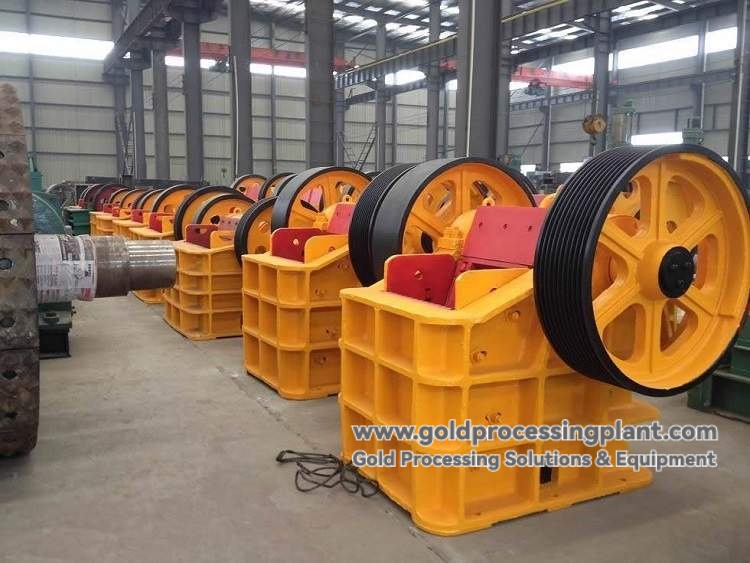
Jaw Crusher (primary crushing), Cone Crusher (secondary and tertiary crushing), Ball Mill (grid type/overflow type), Rod Mill, Spiral Classifier/Hydrocyclone, Ore Washing Equipment.
Gravity Separation
Centrifugal mineral separators, shaking tables (6-S/multi-deck), chutes (spiral/vibrating/gold-binding), jigs.
Flotation
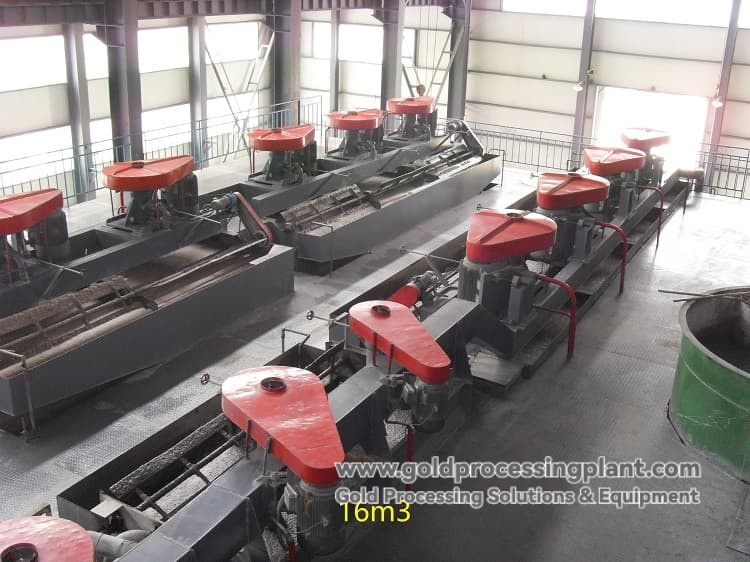
SF Series (self-suction slurry), XCF/KYF Series (air-injection type, preferred for large-scale operations), BF Series, and JJF Series—full product lines that can be combined into roughing, scavenging, and concentrating units.
Magnetic Separation
Wet/dry permanent magnet separators, high-gradient magnetic separators, used for the recovery of associated magnetite or iron removal.
Leaching and Adsorption
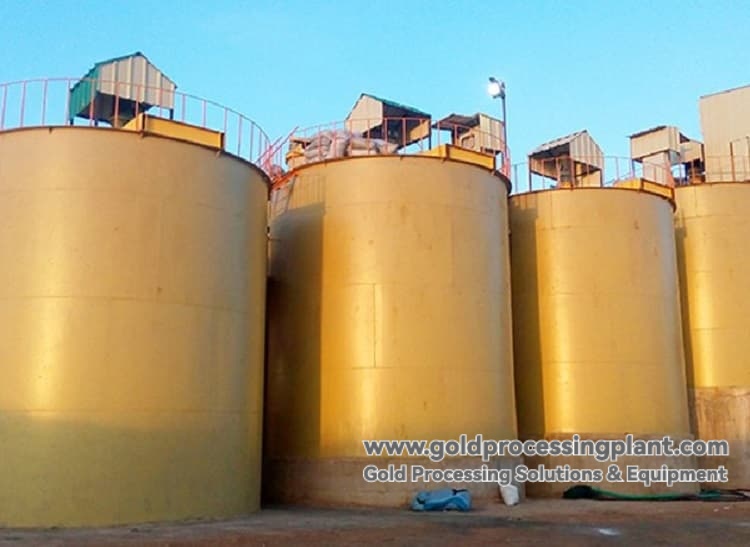
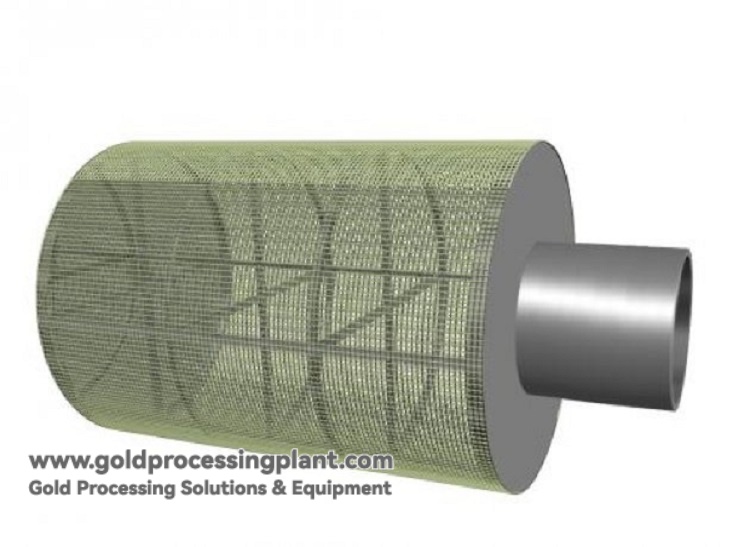
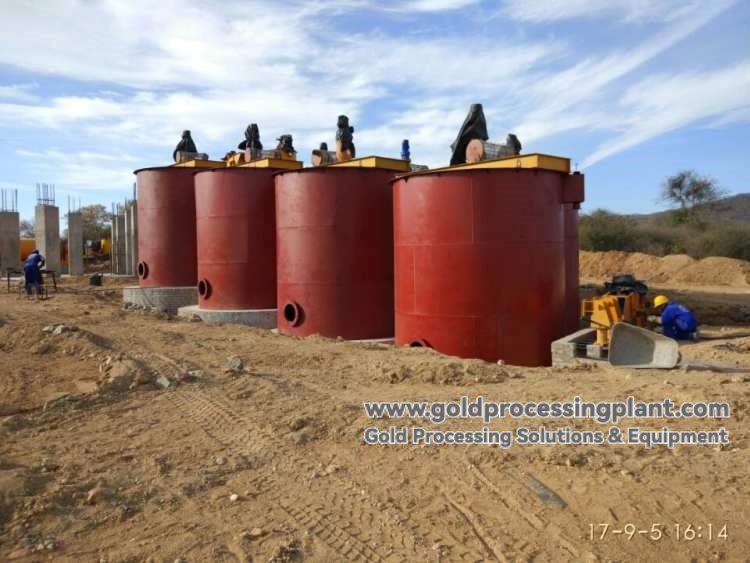
Leaching tanks (with agitation and aeration), high-efficiency dual-impeller carbon leaching tanks, activated carbon adsorption systems, carbon separation screens, and carbon recovery units.
Desorption and Electrolysis
Room-temperature, atmospheric-pressure desorption and electrolysis equipment; high-temperature, high-pressure desorption and electrolysis equipment; electrolytic cells; gold smelting furnaces.
Zinc Powder Replacement
Clarification and filtration equipment, vacuum deoxidation tower, zinc powder feeding system, displacement column/displacement tank, gold slurry filter press.
Concentration and Dewatering
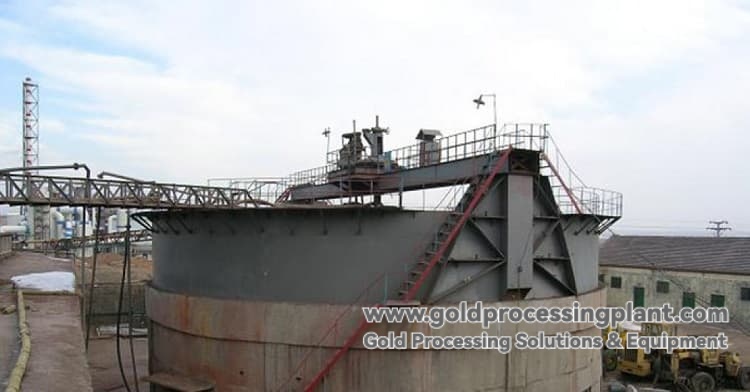
Center-driven thickeners, high-efficiency thickeners, plate-and-frame filter presses, dewatering screens, and filters.
Auxiliary
Feeders, belt conveyors, mixing tanks, slurry pumps, carbon-lifting pumps, circulating water systems.
All core equipment is manufactured in-house; our products are CE-certified, strictly adhere to the ISO 9001 quality management system, and are exported to more than 50 countries and regions.
V. How to Implement an Integrated Solution: From Ore Samples to Production
- Step 1: Ore Sample Validation. Representative ore samples undergo chemical analysis and process feasibility testing, covering gravity separation tests, open-circuit/closed-circuit flotation tests, cyanide leaching tests, and comparative tests of whole-ore cyanide CIL/CIP processes. The test report not only provides recommended processes and expected recovery rates but also directly includes a list of recommended equipment and a preliminary budget.
- Step 2: Process Design and Equipment Selection. Based on the test data, we provide process flow diagrams, equipment configuration lists, plant layout plans, civil engineering requirement drawings, and technical briefing documents.
- Step 3: Equipment Manufacturing and Supply. Core equipment is manufactured according to approved drawings and process standards, while standard auxiliary equipment not produced in-house is procured through centralized quality inspection.
- Step 4: Logistics and Shipping. Coordinate packaging, shipping, and ocean or land transport; process export documentation and customs clearance paperwork; and plan shipping routes and schedules in advance for overseas projects.
- Step 5: Installation and Commissioning. Engineers are stationed on-site to supervise equipment positioning, pipeline connections, and electrical installation; they lead individual unit commissioning and integrated trial runs with feed material; and train operators to adjust grinding fineness, chemical dosing regimens, and leaching parameters.
- Step 6: Acceptance and Long-Term Support. Complete acceptance and handover, then proceed to the spare parts supply and technical support phase.
The mineral processing test fees and design fees paid in advance can be fully offset against the equipment cost when the equipment or EPC contract is subsequently signed.
VI. Cost Comparison Between Integrated Solutions and Pieced-Together Plants
When building a plant piecemeal on your own, individual unit prices may appear transparent, but the total cost is often higher:
Management costs associated with coordinating multiple parties: Coordinating between equipment manufacturers, design institutes, and construction teams involves interface mismatches that require rework; when problems arise, parties shift blame onto one another, leaving the investor to act as the “referee.”
Rework costs due to incorrect equipment selection: Equipment is selected based on inventory rather than the specific ore, resulting in reduced production capacity and lower recovery rates; the cost of rework and equipment replacement far exceeds the initial price savings.
Losses from project delays: Waiting for blueprints, equipment, and workers—with poor coordination between stages—causes the start-up date to be repeatedly pushed back.
Long-term energy consumption and maintenance costs: Over-specified or mismatched equipment leads to persistently high operating costs.
Our integrated solution ensures precise equipment selection to eliminate over-specification. Integrated design eliminates bureaucratic red tape, establishes a single point of accountability, and delivers a more cost-effective overall project. We don\'t compete on the lowest bid—we compete on the best overall value.
VII. Why Choose GoldProcessingPlant\'s Integrated Solution
Process Design Capabilities
With over 20 years of experience in gold ore beneficiation process design and equipment manufacturing, we specialize in core processes such as CIP/CIL, flotation, gravity separation, and heap leaching, and excel at processing hard-to-beneficiate ores and complex ore bodies.
Equipment Manufacturing Capabilities
We independently research, develop, and manufacture a full range of specialized gold ore beneficiation equipment. The performance of our key equipment meets internationally advanced standards, featuring high processing capacity, low energy consumption, optimal operating costs, a high degree of automation, and excellent environmental performance.
Project Execution Capabilities
EPC turnkey contracts cover the entire process from design to equipment supply, installation, and commissioning. We possess extensive experience in executing overseas projects, are well-versed in international standards and specifications, and provide technical support for production and operations as well as personnel training.
Global Project Experience
Projects span major gold-producing regions including Ghana, Mali, and Tanzania in Africa; Peru and Colombia in South America; Russia and Kazakhstan in Central Asia; and Southeast Asia, with processing capacities ranging from 30 to 5,000 metric tons per day.
Flexible Service Models
Choose from individual equipment, complete plant packages, engineering drawings, installation and commissioning guidance, or turnkey EPC solutions—all on an as-needed basis, with no mandatory bundling.
The value of an integrated gold processing system lies not in the length of the equipment list, but in whether the “ore—process—equipment” trio is seamlessly integrated and whether there are any gaps in the chain of responsibility. The value of a production line supplied directly by the manufacturer lies not in how much lower the price is, but in equipment tailored to the specific ore and comprehensive after-sales support.
GoldProcessingPlant\'s approach is as follows: First, we assess the ore type and deposit conditions to determine the process route; then, we select equipment based on the process; finally, we dispatch engineers to the site to commission the plant until gold production begins. From ore samples to production launch, and from individual units to EPC projects, a single team manages the entire process from start to finish.
Whether you are in the exploration phase, looking to upgrade an existing production line, or planning to build a new plant, GoldProcessingPlant can provide professional consulting and comprehensive implementation plans.
The core of our integrated gold processing system is that “the same team is responsible for the process, equipment, and commissioning, ensuring a seamless chain of responsibility”:Covering four major ore types—placer gold, lode gold, hard-to-process gold ores, and tailings reprocessing—our processes include gravity separation, flotation, magnetic separation, CIL/CIP, heap leaching, zinc powder replacement, and carbon-in-column (CIC) methods, with processing capacities ranging from 30 to 5,000 metric tons per day.Direct supply from the manufacturer means no middleman markups; equipment is tailored to the specific mine rather than selected from inventory; and after-sales service is backed by our own manufacturing base. The implementation process is as follows: ore sample verification → process design and equipment selection → equipment manufacturing → logistics → installation and commissioning → acceptance and long-term support. Initial testing and design fees can be fully offset against subsequent equipment or EPC contract costs.