


EPC Turnkey Contracting for a Gold Extraction Plant: Complete Solution for a 100-metric-ton-per-day CIP/CIL Mineral Processing Production Line
EPC Turnkey Contract for a Gold Extraction Plant: Complete Solution for a 100-Metric-Ton-Per-Day CIP/CIL Mineral Processing Line
A 100-metric-ton-per-day CIP/CIL gold extraction plant is a typical scale for small-to-medium-sized gold mining projects. Although the scale is modest, it is “small but fully equipped”—crushing, grinding, thickening, leaching and adsorption, desorption and electrolysis, smelting, and tailings treatment—not a single process step can be omitted.Many mine owners are concerned about three key issues: how to configure a 100-metric-ton-per-day line, what exactly is included in an EPC turnkey contract, and the approximate investment and project timeline. This article explains the complete solution for a 100-metric-ton-per-day CIP/CIL mineral processing production line based on the EPC delivery logic.
I. Process Flow for a 100-metric-ton-per-day CIP/CIL Line
CIP/CIL is the mainstream process for whole-ore cyanide gold extraction. For a 100 metric tons per day capacity, the process flow is typically as follows:
Crushing and grinding → Thickening and dewatering → Leaching and adsorption (CIL: simultaneous leaching and adsorption; CIP: leaching followed by adsorption) → Separation of gold-bearing carbon → Desorption and electrolysis → Gold slurry smelting → Tailings treatment.
1. Crushing and Grinding
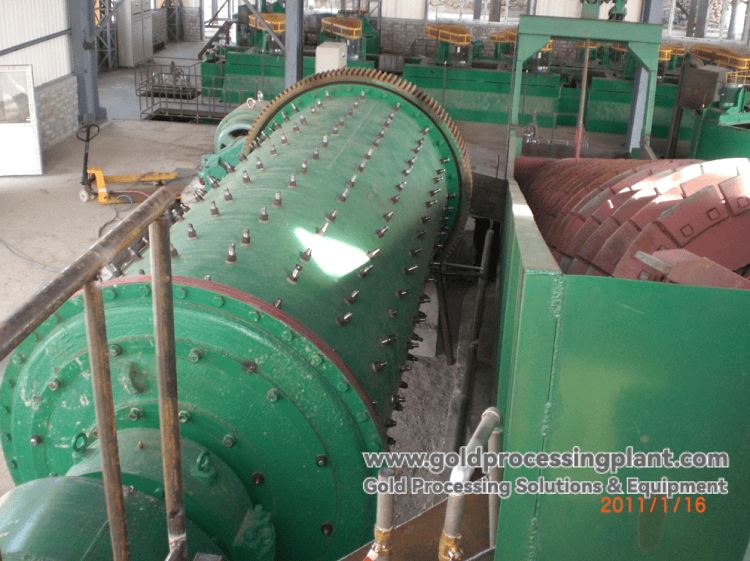
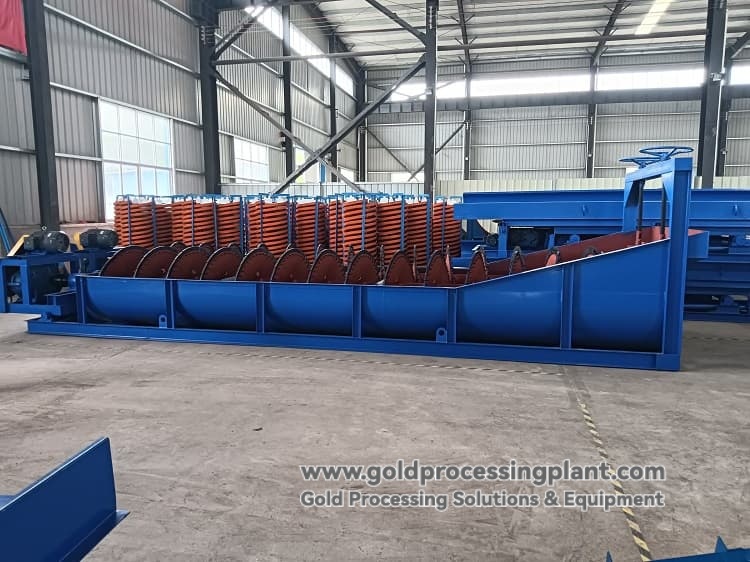
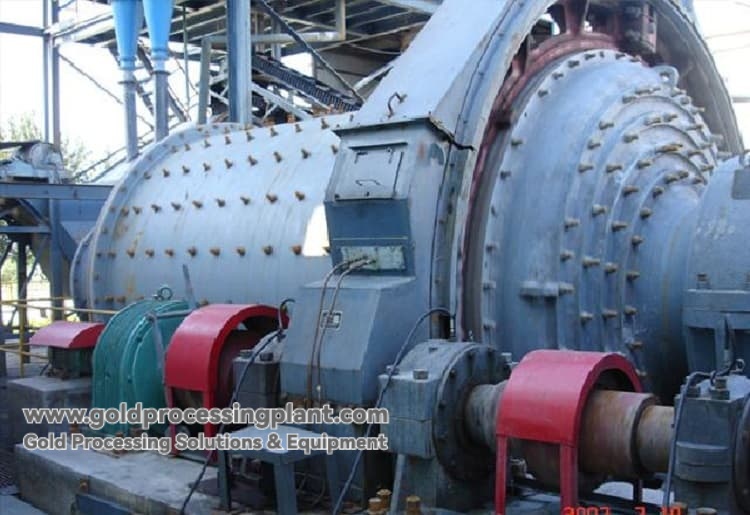
The raw ore undergoes coarse crushing in a jaw crusher, followed by medium and fine crushing in a cone crusher, and is then ground in a ball mill.For a 100-metric-ton-per-day operation, a single-stage grid-type ball mill paired with a spiral classifier or hydrocyclone is typically used to form a closed-circuit system; where the ore is highly hard or a finer grind size is required, a two-stage grinding process may be employed. Following the principle of “more crushing, less grinding,” the crushing stage handles the bulk of the work, while the grinding stage consumes less electricity.The grinding fineness is determined based on ore liberation tests.
2. Thickening and Dewatering
The ground ore is fed into a thickener for dewatering to increase the slurry concentration in preparation for leaching. The thickener overflow is returned to the grinding circuit or reused, while the underflow is sent to the leaching tank.
3. Leaching and Adsorption
CIL Process: Cyanide and lime are added to the leaching tank to adjust the pH (10–11), while activated carbon is simultaneously introduced, allowing leaching and adsorption to occur concurrently. Activated carbon is added in the final tank and moves forward in a countercurrent flow, coming into contact with the slurry in the opposite direction. Gold-loaded carbon is separated by screening in the first tank.
CIP Process: Leaching is carried out in a series of tanks. After leaching is complete, the slurry enters an adsorption tank where activated carbon is added; leaching and adsorption occur in separate tanks, allowing for a more thorough leaching time.
For a 100 metric tons per day scale, the number and volume of leaching and adsorption tanks are determined based on leaching time test data. The CIL process is compact with fewer tanks, while the CIP process ensures sufficient leaching time; the choice between the two depends on the ore\'s leaching rate.
4. Separation of Gold-Loaded Carbon and Desorption/Electrolysis
Gold-loaded carbon is separated from the slurry via a carbon separator screen or air lift and fed into the desorption system. Desorption at ambient temperature and pressure is suitable for conventional processing, while high-temperature, high-pressure desorption is more thorough and efficient. The precious metal solution obtained from desorption enters the electrolysis cell, where gold is deposited at the cathode as gold slime.
5. Gold Sludge Smelting
After acid washing, drying, and blending, the gold slime is fed into a gold smelting furnace for smelting, producing high-purity gold ingots.
6. Tailings Treatment
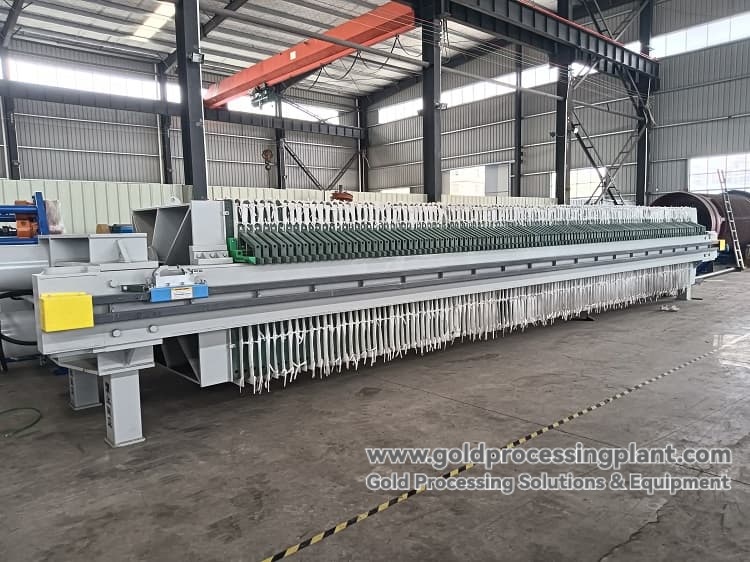
Leaching tailings are dewatered using a filter press; the tailings are either dry-stacked or treated in accordance with environmental regulations, while the lean solution is either recirculated into the system or sent for environmental treatment.
II. Core Equipment Configuration for a 100-metric-ton-per-day CIP/CIL Line
Crushing and Grinding Section: Jaw crusher, cone crusher, ball mill (lattice type), spiral classifier or hydrocyclone, feeder, belt conveyor.
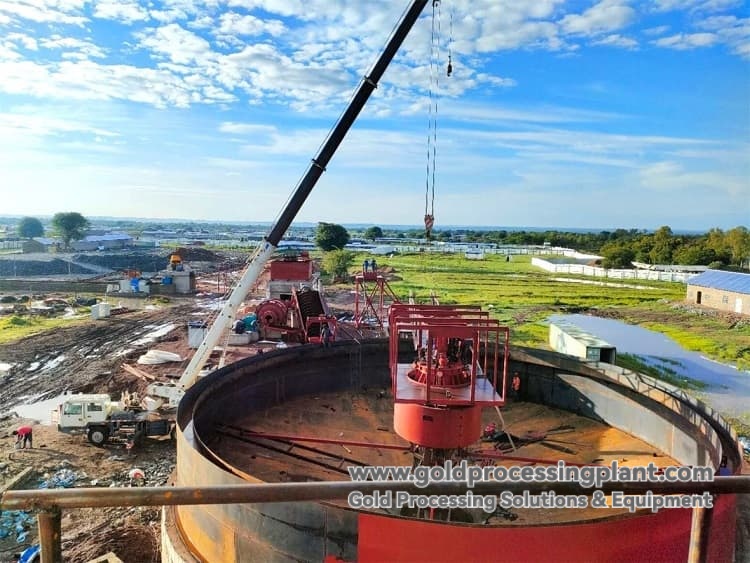
Thickening Section: Center-driven thickener or high-efficiency thickener.
Leaching and Adsorption Section: Leaching tanks (with agitation and aeration), activated carbon adsorption system, gold-bearing carbon separation screen (carbon separator screen/air lifter), activated carbon dosing unit, carbon recovery pump.
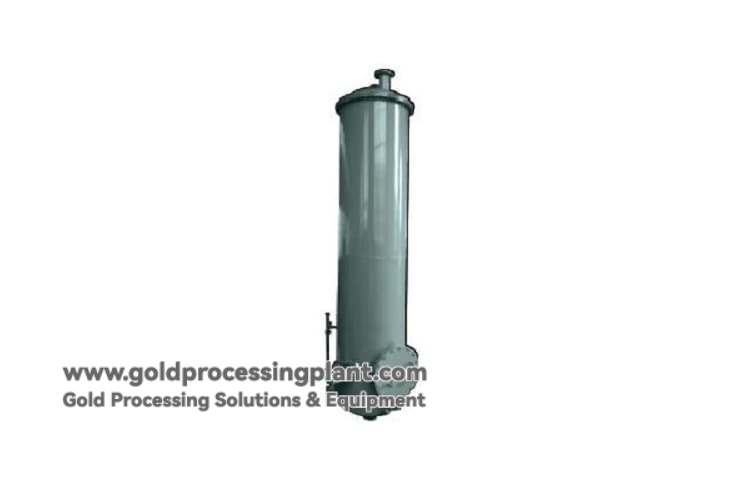
Desorption and Electrolysis Section: Desorption column, desorption liquid heating system, electrolytic cell, rectifier power supply, gold slurry filter press.
Smelting Section: Gold smelting furnace.
Tailings Section: Tailings filter press, lean solution pump, environmental treatment facilities.
Auxiliary: Agitation tank, slurry pump, electrical control system, piping and valves.
With a capacity of 100 metric tons per day, equipment selection primarily consists of standard models, with minimal custom-made components, resulting in a relatively controllable manufacturing cycle.GoldProcessingPlant covers the full CIP/CIL process chain: crushing and screening, grinding and classification, leaching and adsorption (CIL/CIP systems), desorption and electrolysis systems (ambient temperature and pressure / high temperature and high pressure), concentration and dewatering, and feeding and conveying. Equipment is available for sale as individual units or as complete turnkey systems.
III. What Exactly Does an EPC Turnkey Contract Cover?
Most disputes and delays in mineral processing plant construction stem from a failure to clearly define “who is responsible for what” before signing the contract. The core principle of GoldProcessingPlant\'s EPC services is: we take full responsibility for what falls under our purview; for tasks requiring client cooperation, we provide advance briefings.
What GoldProcessingPlant Is Responsible For
- Process Design and Technical Solutions: Analysis of ore characteristics, determination of processing flows, and reagent regimens; preparation of proposal documents including equipment selection and preliminary quotations.
- Engineering Design and Drawings: Core design drawings such as site layout plans, equipment layout diagrams, and civil engineering condition drawings, along with a complete technical briefing.
- Manufacturing of Core Equipment and Supply of Supporting Components: Manufacturing core equipment—such as crushing, grinding, leaching and adsorption, desorption and electrolysis, and smelting—in accordance with drawings; coordinating the supply of auxiliary materials such as pumps, piping, and electrical controls to ensure seamless integration between hardware and process.
- On-Site Installation Technical Guidance: Dispatch engineers to the site to supervise equipment positioning, pipeline connections, and electrical and instrumentation installation, ensuring that construction crews follow the drawings precisely.
- Integrated Commissioning and Personnel Training: Lead the commissioning of individual units and full-process integrated trial runs with water and feed materials; optimize grinding fineness, reagent regimens, and leaching parameters until standards are met and full production capacity is achieved; provide theoretical and hands-on training to the client\'s team.
- After-Sales Service and Spare Parts Supply: We assume responsibility for equipment quality during the warranty period and provide long-term spare parts supply and process optimization recommendations.
Customer Responsibilities
- Civil Engineering Construction: The client shall independently organize civil engineering construction in accordance with the civil engineering layout drawings provided by us (equipment foundations, loads, reserved openings, water and electrical connections, etc.). If complete architectural construction drawings involving plant structures, foundation reinforcement, etc., are required, these must be issued by a qualified local design institute.
- Organization of Local Installation Workers: Specific installation tasks—such as equipment positioning, pipe welding, and cable laying—must be carried out by workers recruited locally by the customer. Our engineers will provide on-site guidance on installation procedures, while the customer is responsible for organizing the workforce to perform the work.
- On-site Infrastructure: The client is responsible for ensuring “three utilities and one leveling” (water, electricity, and access roads; site grading) at the site, as well as preparing the water, electricity, and materials required for equipment hoisting and commissioning.
- Local Compliance Procedures: The client is responsible for obtaining local approvals, including environmental, safety, and construction permits, at the project site. Environmental approvals for the cyanide process are particularly critical.
Why This Division of Labor Is More Cost-Effective: If we were to dispatch a large number of Chinese workers overseas or to remote locations for construction, the costs—including airfare, visas, room and board, and high daily wages—would be astronomical.By having the client recruit local general installation workers and our company provide technical engineers for guidance, labor costs can be reduced by at least half. We still assume full responsibility for technical risks—while the workers are sourced by the client, our engineers make the final on-site decisions regarding installation methods and standards.
If the client is unable to find a local construction team at all, or wishes us to take full responsibility for both civil engineering and installation workers, we can also specify the scope of work and calculate costs separately in the contract based on the actual conditions at the project site.
IV. Reference Investment Estimate
Price Range for Complete Main Equipment: According to GoldProcessingPlant\'s pricing system for CIP/CIL gold mine main equipment, the price range for a complete set of main equipment with a daily processing capacity of 100 metric tons is approximately $350,000–$500,000.This price applies to the complete set of main equipment only and does not include civil engineering, installation labor, logistics and transportation, electrical auxiliary materials, or spare parts.
The lower limit of the range corresponds to standard configurations, conventional ore, and typical operating conditions; the upper limit corresponds to non-standard customization, complex ore, special operating conditions, or more comprehensive configurations. Specific project quotations must be determined based on ore characteristics, process routes, and site conditions; this price is provided solely as a preliminary reference for investment estimates.
If the ore contains arsenic or carbon and requires pretreatment, or if intensified grinding or an increased number of leaching tanks is needed, the investment will increase accordingly.
V. Project Timeline
For a typical 100 metric tons per day CIP/CIL project, the overall timeline from process design to production start-up is usually 8 to 15 months. Key milestones:
Process Design, Equipment Selection, and Quotation: Approximately 7–15 days. The sooner ore samples are provided, the better; this timeline may be extended if complex ores require pilot-scale testing.
Engineering Drawing Design: Approximately 20–30 days; this phase may overlap with equipment manufacturing.
Equipment Manufacturing: 60–120 days. Standard equipment is produced relatively quickly; lead times for non-standard custom equipment and diesel generator sets for power supply in Africa will be correspondingly longer.
Logistics and Transportation: 30–60 days. Overseas projects are highly dependent on shipping routes and schedules; it is recommended to allow ample buffer time.
Installation and Commissioning: 60–150 days. CIP/CIL processes involve the calibration of leaching and adsorption parameters; commissioning time depends on on-site construction coordination and ore properties.
Customs Clearance and Unforeseeable Delays: Allow approximately 30 days; this is essential for cross-border projects.
Reasonably overlapping these phases can shorten the total project duration. Many project delays are not due to equipment manufacturing issues, but rather to indecision in the early stages or a failure to properly overlap the various phases.
VI. Four Common Pitfalls in 100 metric tons/day CIP/CIL Projects
- Pitfall 1: Deciding on CIP or CIL without validating ore samples. Leaching rates, adsorption rates, and carbon consumption must all be calculated using experimental data; the choice between CIP and CIL, the number of tanks to install, and the leaching time are all determined by the test results.
- Pitfall 2: Forcing full-slurry cyanidation despite severe gold encapsulation. When gold is tightly encapsulated by sulfides or silica, it cannot be liberated no matter how finely the ore is ground; direct cyanidation yields such low leaching rates that the project becomes economically unfeasible. Flotation enrichment or pretreatment is required first.
- Pitfall 3: Neglecting environmental approvals and tailings management. Environmental approvals for cyanide processes are a strict prerequisite; dry tailings disposal, treatment of lean leachate, and cyanide management must all be planned in advance—you cannot wait until the equipment arrives to complete the necessary paperwork.
- Pitfall 4: Delays caused by the client\'s organization of civil engineering and installation workers. Under the EPC division of labor, the client is responsible for organizing civil engineering and local workers; the progress of these two areas directly impacts installation and commissioning. If these are not properly arranged in the early stages, equipment arrival will result in nothing but waiting.
VII. Why Choose GoldProcessingPlant for a 100-metric-ton-per-day CIP/CIL EPC Project
Process-First Approach, No One-Size-Fits-All Templates
Every 100 metric tons per day line is derived from the specific characteristics of the ore, rather than simply copying competitors\' blueprints. With over 20 years of experience in gold ore beneficiation process design and equipment manufacturing, we specialize in core processes such as CIP/CIL, flotation, gravity separation, and heap leaching, and excel at handling difficult-to-process ores and complex ore bodies.
In-House Equipment Manufacturing: Seamless Integration of Process and Hardware
Crushers, ball mills, leaching tanks, activated carbon adsorption systems, desorption electrolysis equipment, and gold smelting furnaces are all manufactured in-house. Process engineers and mechanical engineers collaborate as a single team, ensuring equipment is built strictly according to process drawings to avoid discrepancies such as “design drawings not matching equipment dimensions.”With two major manufacturing bases covering approximately 50,000 square meters, our annual production capacity exceeds 500 units. Our products are exported to more than 50 countries and regions, and we strictly adhere to the ISO 9001 quality management system; our products are CE-certified.
Unbroken EPC Chain of Responsibility
We provide comprehensive coordination of process design, equipment manufacturing, installation guidance, integrated commissioning, and personnel training, and take full responsibility for the final production targets. We do not shift blame to design institutes, equipment manufacturers, or construction teams when problems arise.
Global Project Experience
Projects span major gold-producing regions including Ghana, Mali, and Tanzania in Africa; Peru and Colombia in South America; Russia and Kazakhstan in Central Asia; and Southeast Asia, with processing capacities ranging from 30 to 5,000 metric tons per day. We are well-versed in international logistics, customs clearance procedures, and construction standards across different countries.In Africa, where power supply is unstable, we provide diesel generator sets; to address transportation difficulties during the rainy season, we stock up in advance; and when local workers have limited technical skills, we provide hands-on training.
Flexible Phased Implementation, No Mandatory Bundling
Clients may choose to conduct only mineral processing tests, purchase only process design and equipment selection plans, procure only equipment, or hire engineers for on-site commissioning; alternatively, they may opt for full-process EPC. Upfront payments for mineral processing tests and design fees can be fully offset against equipment costs when subsequent equipment or EPC contracts are signed.
Ongoing Technical Support
Commissioning and reaching full production capacity mark only the beginning of our partnership. We assume responsibility for equipment quality during the warranty period and, after the warranty expires, continue to supply spare parts, provide technical consultation, and offer process optimization recommendations.
For the EPC turnkey contract of a 100-metric-ton-per-day CIP/CIL gold extraction plant, the key lies not in how advanced the equipment is, but in whether the “ore—process—equipment” trio is well-integrated and whether the scope of the EPC delivery is clearly defined.Choosing the wrong process—CIP or CIL—results in lower leaching rates; failing to pre-treat encapsulated gold leads to cyanide wastage; failing to secure environmental approvals in advance means construction cannot begin even after equipment arrives; delays in civil engineering and labor organization cause the project schedule to be pushed back time and again—every decision error translates into investment losses.
GoldProcessingPlant\'s approach is as follows: First, assess the ore type and deposit conditions to determine the process route; then, select equipment based on the process; and finally, dispatch engineers to the site to commission the plant until gold is produced.A 100 metric tons per day capacity may not be large, but not a single step in the process can be skipped. EPC integrates the responsibilities for design, equipment, and commissioning into a single, seamless process; following this approach ensures a stable and controllable return on investment for small- and medium-sized gold mines.
Whether you are in the project planning stage, seeking to verify ore processability, or planning to build a 100 metric tons per day CIP/CIL production line, GoldProcessingPlant can provide professional consulting and a comprehensive EPC implementation plan.
The core of the EPC turnkey solution for a 100 metric tons per day CIP/CIL gold extraction plant is “first conduct ore testing, determine the process, select equipment, and clearly define the scope of work”: use mineral processing tests to determine whether to use CIP or CIL, as well as the leaching time and number of tanks;Equipment is configured across the entire processing chain—including crushing and grinding, thickening and dewatering, leaching and adsorption, desorption and electrolysis, smelting, and tailings treatment—with the price of the complete set of main equipment ranging from approximately $350,000 to $500,000 (excluding civil engineering, installation labor, logistics, and auxiliary materials);The EPC division of labor is clearly defined—the manufacturer is responsible for process design, equipment manufacturing, installation guidance, integrated commissioning, and training, while the client is responsible for civil engineering, local labor, site preparation (three utilities and one leveling), and compliance procedures. The client must also secure environmental approvals for the cyanidation process in advance. Only by ensuring a seamless chain of responsibility can substandard leaching rates and project delays be avoided.