


Holmstock-Type Gold Ore Recovery and Beneficiation Process and Complete Production Line Solutions
Homestake-Type Gold Mine Recovery and Beneficiation Processes and Complete Production Line Solutions
Homestake-type gold deposits are named after the Homestake Gold Mine in South Dakota, USA, and are a typical example of gold-bearing iron-bearing formations (BIFs).The key characteristic of this type of ore is the close association of gold with iron minerals; fine-grained gold is disseminated within iron minerals such as magnetite, hematite, and pyrite, as well as siliceous bands. Conventional gravity separation cannot directly recover this gold, and an inappropriate process route will result in significantly lower recovery rates.This article clearly explains the ore characteristics, recovery processes, and complete production line configuration for Homestake-type gold deposits.
I. Ore Characteristics of Homstake-Type Gold Deposits
Holmstock-type gold deposits represent gold mineralization within banded iron formations (BIFs). The characteristics of the ore determine the challenges in mineral processing:
First, gold is closely associated with iron minerals. Gold occurs as fine-grained disseminations within iron minerals such as magnetite, hematite, and pyrite, with some gold enclosed within siliceous bands or sulfides. The gold particles are finely disseminated, and sufficient grinding fineness is required for their liberation.
Second, the high content of iron minerals affects the selection methods. Magnetite can be recovered via magnetic separation; hematite requires strong magnetic separation or flotation; and gold-bearing pyrite is recovered through flotation. Iron minerals serve both as gold-bearing hosts and as components to be separated; process design must balance gold recovery with the flow path of iron.
Third, the varying content of sulfides determines the role of flotation. In ore sections with high concentrations of gold-bearing sulfides such as pyrite, flotation is the primary method for gold recovery; in sections with low sulfide content where gold is predominantly in a free state, gravity separation or cyanidation is more direct.
Fourth, the ore has high hardness, resulting in significant grinding costs. Iron-bearing rocks are dense and hard, leading to high energy consumption during crushing and grinding. Adhering to the principle of “more crushing, less grinding” and reasonably determining the grinding fineness directly impact operating costs.
II. Recovery Process Routes for Homstake-Type Gold Deposits
There is no single “one-size-fits-all” process for Homstake-type gold deposits; the process route depends on the form of gold occurrence and the composition of iron minerals:
Route 1: Flotation + Concentrate Cyanidation (One of the Mainstream Routes)
Suitable for ore bodies where gold is primarily hosted in sulfides such as pyrite. Grinding is carried out until the gold-bearing sulfides are individually liberated; flotation produces a gold concentrate, which is then sent for cyanide leaching or directly to smelting.Flotation concentrates gold in the sulfide concentrate, reducing the volume of material requiring subsequent processing; this is a common route for sulfide-bearing gold deposits in iron-hosted gold deposits.
The flotation process can range from one roughing stage, two cleaning stages, and two scavenging stages to one roughing stage, three cleaning stages, and three scavenging stages. The grinding fineness determines the degree of liberation, while the reagent regimen (collectors, activators, and pH adjusters) determines selectivity.
Route 2: Combined Magnetic Separation and Flotation
Suitable for ore bodies where magnetite and gold-bearing sulfides occur together.First, magnetic separation is used to recover magnetite (which may itself contain gold; the disposition of the magnetic concentrate depends on its gold grade), and the magnetic separation tailings are sent to flotation to recover gold-bearing sulfides. The sequence of magnetic separation and flotation, the grinding fineness, and the magnetic field strength must be determined through testing based on the properties of the ore.
Route 3: Gravity Separation + Flotation + Cyanidation Combination
Suitable for complex ore sections where coarse-grained gold and fine-grained entrapped gold coexist, and recovery rates from a single process do not meet standards.The grinding circuit is configured with a centrifugal separator to pre-recover coarse-grained free gold, while flotation is used to recover gold-bearing sulfides. Flotation tailings are either subjected to cyanidation or re-ground and re-processed, depending on their grade. The selection of process nodes in this combined process determines the overall recovery rate.
Route 4: Whole-ore Cyanidation (CIL/CIP)
Suitable for ore bodies where gold is primarily in a free state, with low sulfide content and no interfering elements such as arsenic, carbon, or antimony. After crushing and grinding, the ore undergoes thickening and dewatering before being fed into leaching tanks with added cyanide. The process may employ CIL (simultaneous leaching and absorption) or CIP (leaching followed by absorption), with gold-bearing carbon desorbed and subjected to electrolytic smelting.For iron-bearing ores, attention must be paid to the consumption of cyanide by iron minerals prior to cyanidation, and reagent costs must be calculated.
Process Route 5: Roasting/Biological Oxidation Pretreatment + Cyanidation
Suitable for difficult-to-process ore bodies where gold is tightly encapsulated by sulfides or silica, resulting in low conventional cyanide leaching recoveries.After flotation to concentrate gold-bearing sulfides, the concentrate undergoes roasting, bio-oxidation, or pressurized oxidation to break up the encapsulation, followed by cyanidation to recover gold. The choice of pretreatment method depends on the sulfide content, arsenic content, and degree of encapsulation.
The specific route to be followed must be determined through beneficiation tests using representative ore samples. The iron mineral composition and gold occurrence in different sections of a Homstake-type deposit may vary significantly; therefore, the tests must cover different ore sections.
III. Complete Production Line Equipment Configuration for Homstake-Type Gold Deposits
Based on the mainstream processing routes (flotation + cyanidation of concentrate or a combined magnetic separation + flotation process), the list of core equipment is as follows:
Crushing and Grinding Section
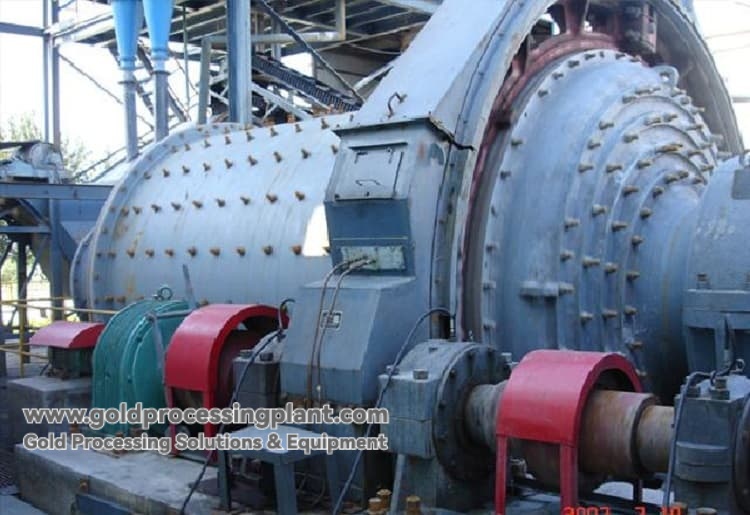
Jaw crusher (primary crushing), cone crusher (secondary and tertiary crushing), ball mill (two-stage grinding: first stage—grid type; second stage—overflow type), spiral classifier or hydrocyclone (closed-circuit classification).Given the high hardness of the iron ore, the crushing section must be adequately equipped, and the grinding fineness should be determined through testing.
Magnetic Separation Section (if applicable)
Wet permanent magnet separator, high-gradient magnetic separator, to recover magnetite and, where applicable, separate gold-bearing iron minerals.
Gravity Separation Section (if applicable)
Centrifugal separators (for recovering coarse-grained gold from the grinding circuit) and shaking tables (for concentrating the gravity concentrate).
Flotation Section
Floating machines (full series including SF self-suction type, XCF/KYF aerated type, BF type, and JJF type), configured into roughing, scavenging, and concentrating units; slurry adjustment and chemical dosing facilities.
Cyanidation Section (if applicable)
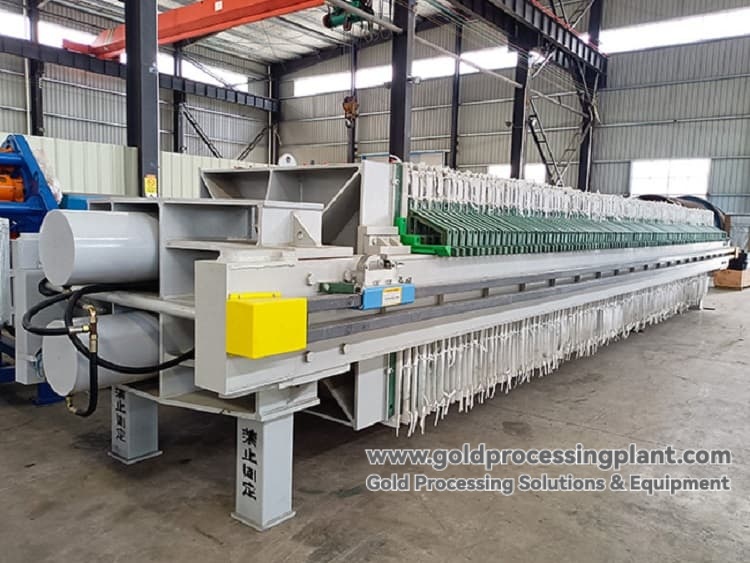
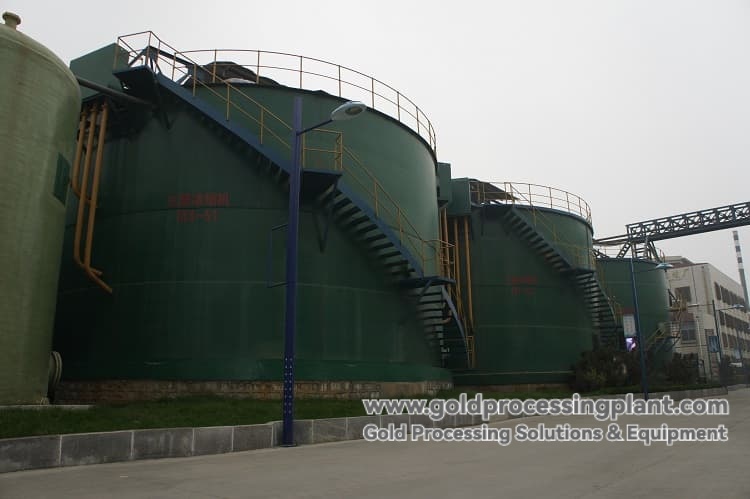
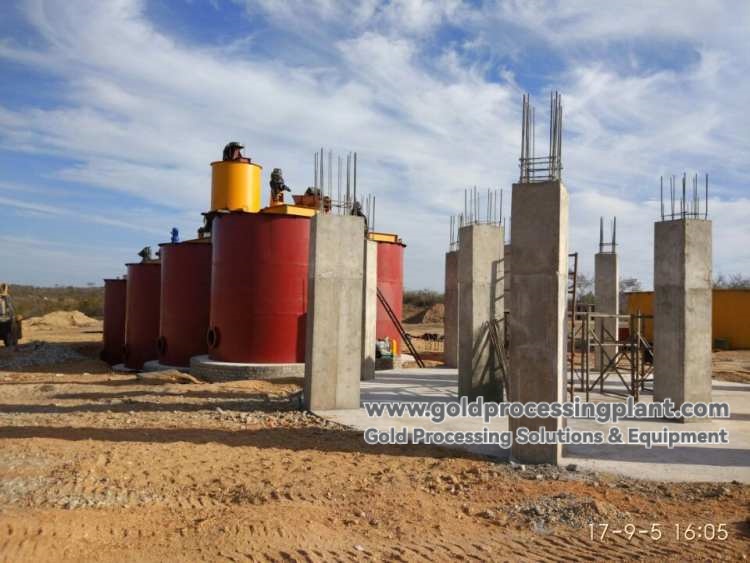
Leaching tanks (with agitation and aeration), activated carbon adsorption system, gold-bearing carbon separation screen, desorption and electrolysis equipment (ambient temperature and pressure / high temperature and high pressure), gold smelting furnace, thickener, tailings filter press.
Concentration and Dewatering Section
Thickener, filter press (concentrate dewatering, dry tailings discharge).
Auxiliary
Feeders, belt conveyors, agitation tanks, slurry pumps.
GoldProcessingPlant provides equipment covering the entire gold ore beneficiation process chain: crushing and screening, grinding and classification, gravity separation, flotation, magnetic separation, leaching and adsorption (CIL/CIP systems), desorption and electrolysis, concentration and dewatering, and feeding and conveying.Sold individually or as complete sets, configured according to ore characteristics and process requirements—not based on inventory.
IV. Four Common Pitfalls in Homstake-Type Gold Processing
- Pit 1: Building a plant based on a standard quartz vein-type process for an iron-bearing deposit. In Homstake-type deposits, gold is associated with iron minerals; the sequence and parameters for magnetic separation, flotation, and cyanidation must be redefined based on ore samples. Simply replicating a quartz vein-type process will not achieve high recovery rates.
- Pitfall 2: Insufficient grinding fineness prevents the liberation of entrapped gold. Gold is finely dispersed within iron minerals and siliceous material; if the grinding fineness does not meet standards, neither flotation nor cyanidation can effectively capture it. The required fineness must be determined through testing, balancing liberation efficiency and energy consumption.
- Pitfall 3: Neglecting the consumption of cyanide by iron minerals. Magnetite and hematite in iron-bearing ores consume cyanide. Before proceeding with whole-ore cyanidation, calculate reagent costs; if necessary, first remove some iron minerals via magnetic separation or flotation.
- Pitfall 4: Commissioning equipment without validating ore samples. In Homstak-type deposits, the composition of iron minerals and the occurrence of gold vary significantly across different ore zones. Without test data from representative ore samples, equipment selection is merely a guess based on experience.GoldProcessingPlant\'s approach is to first examine the ore, then conduct tests, and finally select equipment—ore sample testing covers gravity separation, open-circuit and closed-circuit flotation, magnetic separation, and cyanide leaching. The test report directly includes an equipment selection list and a preliminary budget.
V. Why Choose GoldProcessingPlant for a Homstake-Type Gold Mine Project
Process-First Approach, No One-Size-Fits-All Templates
Holmstock-type deposits differ in their occurrence from quartz vein, altered rock, and Carlin-type deposits, so process parameters should not be the same.With over 20 years of experience in gold ore processing design and equipment manufacturing, we specialize in core processes such as gravity separation, flotation, magnetic separation, CIP/CIL, and heap leaching, and excel at handling difficult-to-process ores and complex ore bodies.
In-House Equipment Manufacturing: Seamless Integration of Process and Hardware
Crushers, ball mills, magnetic separators, centrifugal concentrators, flotation cells, and CIL leaching tanks are all manufactured in-house. Process engineers and mechanical engineers collaborate as a single team, ensuring equipment is built according to process drawings to avoid discrepancies such as “design drawings not matching equipment dimensions.”With two major manufacturing bases covering approximately 50,000 square meters, the company has an annual production capacity exceeding 500 units. Products are exported to more than 50 countries and regions, and the company strictly adheres to the ISO 9001 quality management system; all products are CE-certified.
Specialized Capabilities for Difficult-to-Process Ores
For difficult-to-process ores—such as those containing fine-grained encapsulated gold, polymetallic ores, and high-sulfide ores—we offer corresponding integrated processes and specialized solutions, rather than applying a one-size-fits-all standard process to all gold deposits.
Global Project Experience
Projects span major gold-producing regions including Ghana, Mali, and Tanzania in Africa; Peru and Colombia in South America; Russia and Kazakhstan in Central Asia; and Southeast Asia, with processing capacities ranging from 30 to 5,000 metric tons per day. We are well-versed in international logistics, customs clearance procedures, and construction standards across different countries.
Flexible Phasing, No Mandatory Bundling
Clients may choose to conduct only mineral processing tests, purchase only process design and equipment selection plans, procure only equipment, or hire engineers for on-site commissioning; alternatively, they may opt for an EPC turnkey solution. Fees paid in advance for mineral processing tests and design services can be fully offset against the equipment cost when subsequent equipment or EPC contracts are signed.
Ongoing Technical Support
We assume responsibility for equipment quality during the warranty period and continue to supply spare parts, provide technical consultation, and offer process optimization recommendations long after the warranty expires. Since ore properties change with mining depth, recovery parameters must be adjusted accordingly—and we\'ll always be here to help.
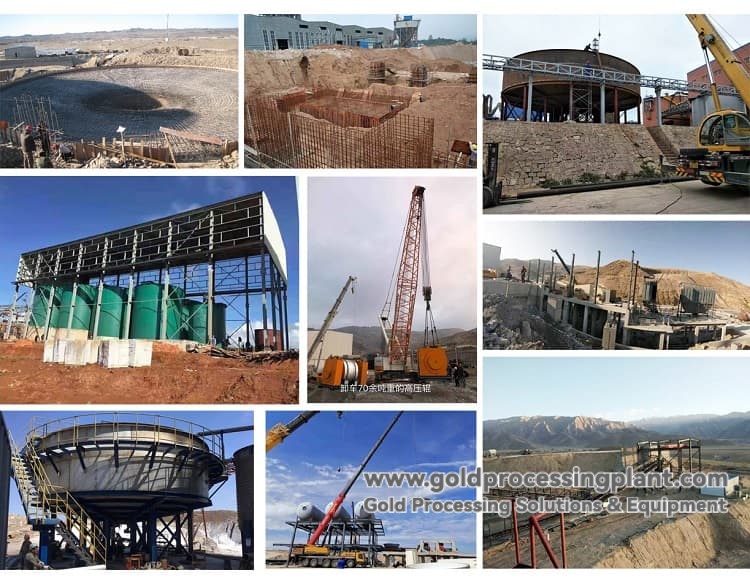
The challenge in recovering gold from Homstak-type deposits lies not in individual pieces of equipment, but in whether the “ore—process—equipment” trio is properly aligned. If the association between gold and iron minerals is unclear, the sequence of magnetic separation and flotation may be misaligned; if the grinding fineness is insufficient, encapsulated gold cannot be liberated;neglecting the cyanide consumption by iron minerals leads to uneconomical reagent costs; commissioning equipment without validating ore samples results in wasted investment—every decision error translates into lost gold in the tailings.
GoldProcessingPlant\'s approach is as follows: first, assess the ore type and occurrence conditions to determine the process flow; then, select equipment based on the process requirements; and finally, dispatch engineers to the site to fine-tune operations until gold is recovered.For Homstake-type gold deposits, the mainstream approach is a combined process of flotation followed by cyanidation of the concentrate, or magnetic separation followed by flotation. Specific parameters are determined based on ore sample testing; following this approach correctly ensures both high recovery rates and a solid return on investment.
Whether you are in the exploration phase, seeking to verify the feasibility of developing a gold deposit within an iron ore deposit, or planning to build a new mineral processing line, GoldProcessingPlant can provide professional consulting and comprehensive implementation plans.
The core of gold recovery and beneficiation for Homstake-type gold deposits is “first assess the ore, then determine the process route, and finally select the equipment”:Based on the gold occurrence and iron mineral composition, select from routes such as flotation + concentrate cyanidation, magnetic separation + flotation, gravity separation + flotation + cyanidation, whole-ore cyanidation, or roasting/biological oxidation pretreatment + cyanidation;Equipment is configured to cover the entire processing chain, including crushing and grinding, magnetic separation, gravity separation, flotation, cyanidation, and concentration and dewatering.Before finalizing the process selection, it is essential to conduct gravity separation, flotation, magnetic separation, and cyanide leaching tests using representative ore samples to avoid four common pitfalls: applying processes designed for quartz vein deposits, insufficient grinding fineness, neglecting cyanide consumption by iron minerals, and commissioning equipment without proper validation.