


How should one select a complete set of equipment for a gravity separation process at a processing plant for alluvial gold deposits?
How to Select a Complete Set of Equipment for a Gravity Separation Process at a Processing Plant for Alluvial Gold Deposits?
When selecting a complete set of equipment for a gravity separation process at a placer gold ore processing plant, the key is not “which manufacturer\'s equipment to buy,” but rather answering four questions first: What is the size of the gold particles in the ore? What is the clay content? What are the respective proportions of coarse and fine gold particles? And are the ore deposits dispersed or concentrated? Once these four questions are answered, the equipment list is essentially determined.This article breaks down the selection process step by step, clearly explaining how to choose a complete set of equipment for the gravity separation process in alluvial gold ore processing plants.
I. Determine the Process Flow First, Then Consider the Equipment
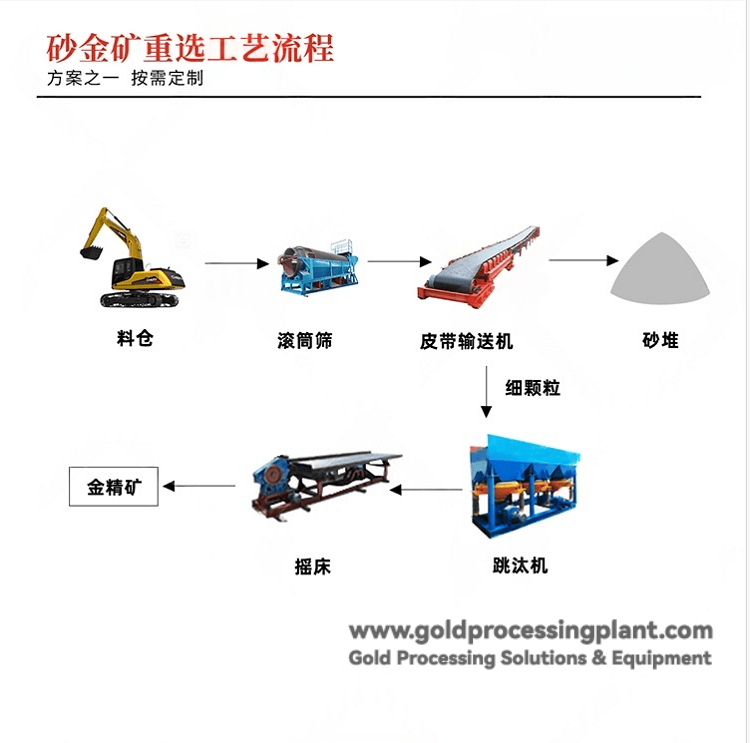
Gold in alluvial deposits primarily exists in the form of free, individual particles, so grinding is not required; recovery relies on washing, screening, and gravity separation. The standard process is: washing and classification → roughing in chutes → enrichment in a centrifugal separator → fine selection on shaking tables → smelting of the combined gold.
Equipment selection must adhere to this process flow; it cannot be reversed—the most common mistake at alluvial gold processing plants is to first look at what equipment is available and then try to fit a process around it. At GoldProcessingPlant, our approach is to first examine the ore, then conduct tests, and finally select equipment. Equipment selection is based on ore characteristics and the process flow, ensuring that equipment parameters are highly aligned with process requirements.
II. Selecting Equipment by Process Stage: Five Stages, Five Selection Criteria
1. Ore Washing and Classification: Selection Based on Silt Content—This Is the First Critical Step
Alluvial ore has high clay content and abundant clay minerals; selecting the wrong ore washing equipment will render the entire downstream process ineffective.
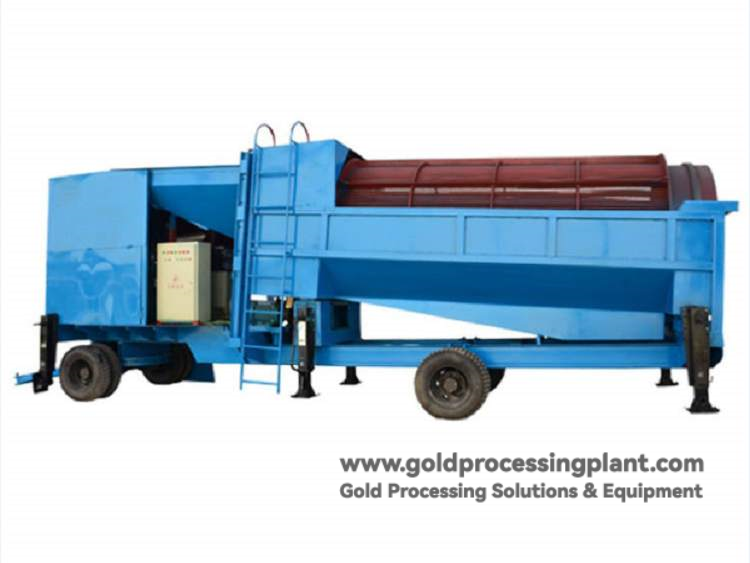
- Moderate clay content and low throughput: A single cylindrical ore washer or trommel screen is sufficient, as it combines washing and screening functions.
- High mud content with clay clumps that are difficult to break up: A two-stage configuration consisting of a screw washer for pre-washing followed by a drum screen for secondary washing, with wash water pressure and flow rate adjustable based on mud content.
- Scattered ore sites requiring relocation: A mobile trommel screen, which combines washing and screening functions, can be moved directly to the ore site.
Screen aperture size is determined based on gold particle size and the requirements of downstream equipment; typically, the ore is classified into coarse and fine fractions, which are fed into different gravity separation devices.
2. Chute Pre-concentration: Selected based on the proportion of coarse gold and slurry concentration
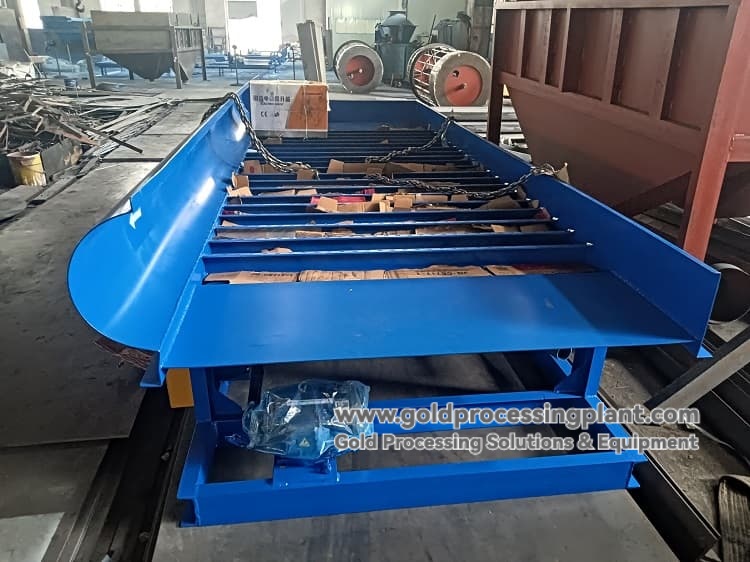
Chutes feature a simple structure, high throughput, and low cost, and are responsible for capturing coarse gold.
- High proportion of coarse gold: Ensure sufficient chute length, appropriate slope, and the correct number of parallel chutes; select a gold-retaining mat or agitated chute based on slurry concentration.
- High throughput: Arrange multiple sets of chutes in parallel; concentrate is periodically removed and sent to downstream enrichment.
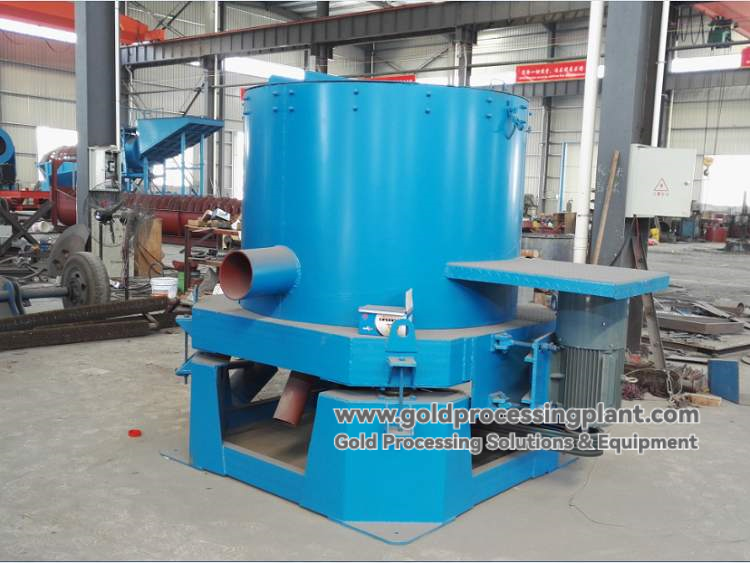
3. Enrichment via Centrifugal Separators: The thorough recovery of fine-grain gold depends entirely on this stage
The proportion of fine and ultrafine gold in alluvial deposits is significant; sluices have limited capacity to recover this portion of the gold, making the centrifugal separator the core equipment for fine gold recovery.
- High proportion of fine-grained gold: A centrifugal separator must be installed; the feed particle size, centrifugal force, and backwash pressure should be adjusted according to the properties of the ore.
- Significant fluctuations in slurry concentration: Install a thickener or slurry adjustment facility upstream of the centrifuge to ensure a stable feed.
4. Shaking Table Enrichment: Process according to concentrate grade requirements
Combine the concentrate from the centrifuge and the chute to feed the shaking table for selective concentration.
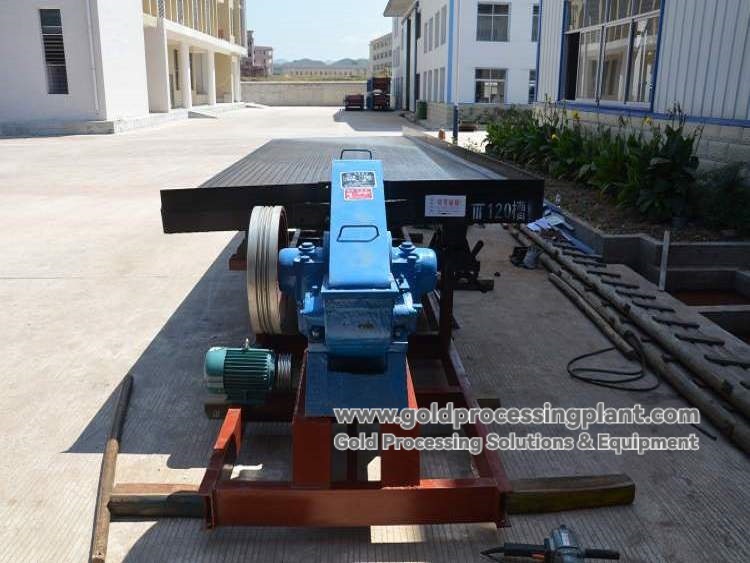
- Conventional Fine Selection: 6-S shaking tables provide high separation precision and produce smeltable gold concentrate.
- High throughput and limited space: Use multi-tier suspended shaking tables, which offer high throughput per unit of floor space.
- The stroke, stroke frequency, transverse slope, and feed concentration of the shaking tables directly affect concentrate grade; on-site calibration is required during the commissioning phase.
5. Auxiliary Equipment and Smelting: Select based on the scope of the integrated system
Sand pumps, slurry pumps, recirculating water systems, feeders, and conveyors should be selected to match the process flow; gold smelting furnaces should be selected based on whether an in-house smelting operation is planned. The recirculating water system recovers most of the process water; since the washing of alluvial deposits requires a large volume of water, this step cannot be omitted.
III. Selecting Configuration Based on Project Type: Mobile or Stationary
The second criterion for equipment selection is the project\'s nature, which hinges on three key figures: the number of mining sites, reserves per site, and the target total processing capacity.
Mobile Solution: Suitable for projects with dispersed ore sites, thin ore layers, and short mining cycles. A mobile drum screen combined with a mobile chute and centrifuge unit allows for easy relocation, with a single unit following a single ore site. Although the cost per unit is high, it eliminates the need to repeatedly build processing plants.
Fixed-Type Solution: Suitable for projects with relatively concentrated ore sources, large reserves, and long mining lifespans. It offers high processing capacity, stable operation, and low unit processing costs. The ore washing plant, chutes, centrifuges, and shaking tables are arranged according to the process flow, supported by a recirculating water system and tailings disposal facilities.
Processing capacities range from 30 metric tons per day to 5,000 metric tons per day. While scale affects equipment configuration and budget, it does not impact design or process standards.
IV. One Essential Step Before Equipment Selection: Ore Sample Verification
Alluvial ore grades fluctuate significantly, and the particle size and clay content of gold grains can vary considerably between different ore sections. Without screening and gravity separation test data from representative ore samples, equipment selection is merely a guess based on experience.
GoldProcessingPlant\'s approach is to first examine the ore, then conduct tests, and finally select equipment—ore sample feasibility tests cover gravity separation and screening tests, and the test report is directly appended to the equipment selection list and preliminary budget.The upfront costs for beneficiation testing and design fees can be fully offset against the equipment purchase price when subsequently signing an equipment or EPC contract.
V. Four Common Mistakes in Equipment Selection
- Mistake 1: Selecting only chutes without centrifuges. Chutes are effective for coarse-grain gold but have limited recovery of fine-grain gold. Since alluvial deposits contain a significant proportion of fine-grain gold, this approach will result in significantly elevated tailings grades.
- Mistake 2: Selecting ore washing equipment based on “rough estimates.” Mud content is the greatest variable in alluvial deposits; the selection of ore washing equipment and the pressure of the wash water must be designed based on the actual mud content and cannot be estimated.
- Mistake 3: Applying riverbed placer gold processing flowsheets to alluvial deposits. While the flow sheet can serve as a reference, parameters must be redefined based on ore samples, as the clay content and particle size distribution are entirely different.
- Mistake 4: Purchasing equipment first and then piecing together a process flow. Equipment selection must be guided by the process flow; doing it the other way around will inevitably result in incompatible interfaces and reduced production capacity.
VI. Why Choose GoldProcessingPlant\'s Gravity Separation Equipment Solution
Process First, No Templates
Alluvial, riverbed, and residual ores differ in clay content and particle size distribution; therefore, their process parameters should not be the same. With over 20 years of experience in gold ore beneficiation process design and equipment manufacturing, we offer proven solutions for the entire process—from placer gold washing and gravity separation to refining.
In-House Equipment Manufacturing Ensures Seamless Integration of Process and Hardware
We independently manufacture the full range of equipment for the placer gold processing chain—including trommel screens, ore washers, chutes, centrifugal separators, shaking tables, and sand pumps. Process engineers and mechanical engineers collaborate as a single team, ensuring equipment is manufactured according to process drawings to avoid discrepancies such as “design drawings not matching equipment dimensions.”With two major manufacturing bases and an annual production capacity exceeding 500 units, our products are exported to more than 50 countries and regions. We strictly adhere to the ISO 9001 quality management system, and our products are CE-certified.
We offer a variety of solutions, including mobile and stationary configurations, and can provide either individual units or complete production lines.
Mobile units are ideal for dispersed mining sites, while stationary production lines are suited for concentrated ore sources. Whether upgrading an existing plant—which may require replacing just a single piece of equipment—or building a new production line from scratch, we offer flexible supply options without mandatory bundling.
Global Project Experience
Projects span major gold-producing regions including Africa, South America, Central Asia, and Southeast Asia, with processing capacities ranging from 30 to 5,000 metric tons per day. We are well-versed in international logistics, customs clearance procedures, and construction standards across different countries.
Ongoing Technical Support
We assume full responsibility for equipment quality during the warranty period and continue to supply spare parts, provide technical consultation, and offer process optimization recommendations long after the warranty expires.
When selecting a complete heavy-medium separation solution for alluvial gold deposits, it ultimately boils down to one principle: first, understand the ore; second, determine the processing flow; and finally, configure the equipment according to that flow. The mud content determines the ore washing configuration; the proportion of coarse-grain gold determines the chute specifications; the proportion of fine-grain gold determines the centrifuge and shaking table configurations; and the distribution of ore bodies determines whether a mobile or stationary setup is required.Every equipment selection decision is based on the characteristics of the ore, ensuring that the equipment configuration is precisely tailored.
Whether you are in the exploration phase, hoping to verify the re-processing value of alluvial deposits, or planning to build a new processing line, GoldProcessingPlant can provide professional consulting and comprehensive implementation plans.
When selecting a complete set of equipment for the gravity separation of alluvial gold deposits, the key principle is “first understand the ore, then determine the process, and finally configure the equipment according to the process”: the clay content determines the ore washing configuration; the proportion of coarse-grained gold determines the size of the sluice boxes; the proportion of fine-grained gold determines the centrifuge and shaking table configuration; and the distribution of ore deposits determines whether a mobile or stationary setup is required.Before selecting equipment, it is essential to conduct screening and gravity separation tests using representative ore samples to avoid four common mistakes: configuring only sluices without centrifuges; “roughly estimating” ore washing specifications; applying riverbed processing flows as-is; and purchasing equipment first and then piecing together a process afterward.