


Equipment Configuration and High-Efficiency Production Solutions for Sand Gold Mining Production Lines—Improving Sand Gold Recovery Rates
Equipment Configuration and High-Efficiency Production Solutions for Placer Gold Mining Lines—Improving Placer Gold Recovery Rates
The barrier to entry for investing in placer gold mining is low, but recovery rates can vary significantly. With the same processing line, some operators can achieve gold recovery rates of over 85%, while others manage only slightly over 60%—the lost gold isn\'t swallowed by the ore itself, but rather lost due to poor equipment configuration.Placer gold mining involves no grinding or cyanidation, and the process is short. The advantages are lower investment costs and quick returns; the downside is that there are no subsequent processes to act as a safety net—if gold isn\'t recovered earlier in the process, it\'s truly lost.
This article explains how to configure a placer gold production line and improve recovery rates from the perspectives of equipment configuration and efficient production.
I. First, Understand the Recovery Logic of Placer Gold Mining: Three Stages, Each Must Be Passed
In placer gold deposits, gold exists in a free, individual form and is found in loose sediments such as sand, gravel, and clay. Recovery relies not on chemical dissolution, but on washing to disperse the ore, density-based separation, and staged collection. A placer gold production line must pass three key stages:
First Stage: Ore Washing.
Clay coats the gold, making it inaccessible to gravity separation equipment. If the ore is not thoroughly washed, the subsequent chutes and centrifuges will be completely ineffective. This is the primary cause of recovery rate loss in a placer gold production line.
Second Stage: Coarse Gold Stage.
Coarse-grain gold is dense and settles quickly; both sluices and centrifuges can recover it. However, if the equipment is improperly configured—such as incorrect sluice incline or excessive feed rate to the centrifuge—the coarse-grain gold will be washed away. Coarse-grain gold is highly valuable; losing a single grain is equivalent to losing a whole batch of fine-grain gold.
Third Stage: Fine-Grain Gold Stage.
Micron-sized fine gold settles slowly and cannot be recovered by sluices alone. It must be concentrated using a centrifugal separator to enhance the gravitational field, followed by fine selection on a shaking table. Fine gold is the “hidden drain” in the recovery rate of a placer gold processing line and the real reason why many processing plants fail to meet their performance targets.
The core of a high-efficiency production plan lies in ensuring that each of the three stages is fully equipped with the necessary machinery, with each stage seamlessly integrated into the next, leaving no gaps.
II. Equipment Configuration: Segment-by-Segment Allocation According to Process Stages
1. Feeding Section: Uniformity and stability are the top priorities
Vibrating feeders and hoppers ensure uniform feeding to avoid shock loads. Uneven feeding can cause fluctuations in the feed volume to the ore washing section, leading to drum screen blockages or idling, which in turn causes processing capacity fluctuations in the subsequent gravity separation section and resulting fluctuations in recovery rates.
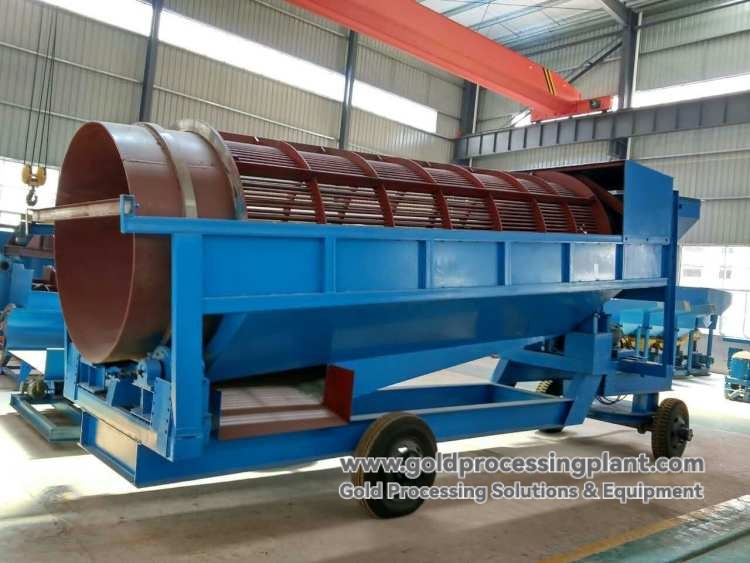
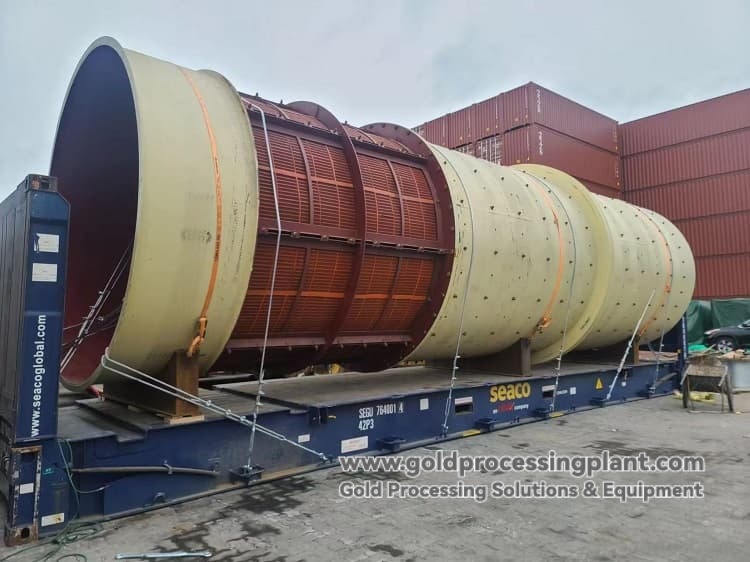
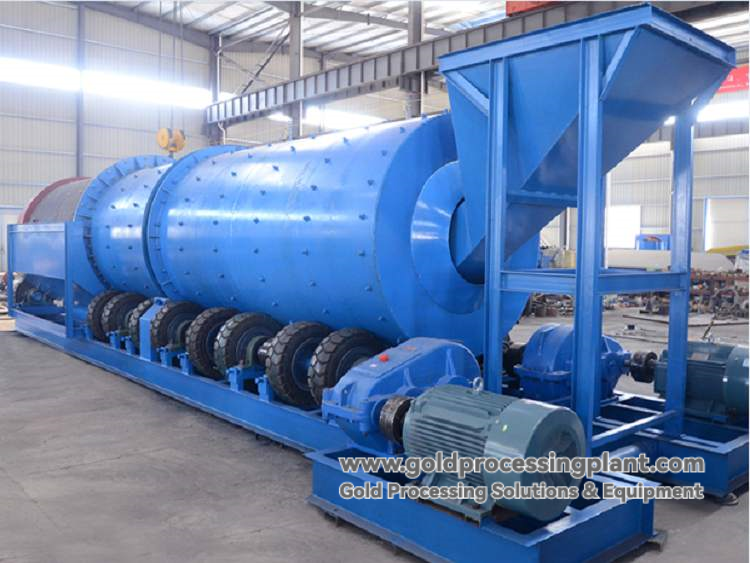
2. Ore Washing and Screening Section: Trommel Screen/Cylindrical Ore Washer
The trommel screen combines washing and screening functions, offers high throughput, and is resistant to clogging, making it the first and most critical piece of equipment in a placer gold processing line. Key configuration points:
- Select specifications based on processing capacity and clay content; do not choose equipment based on the notion that “just enough will do.” Insufficient ore washing capacity is the primary cause of recovery rate loss;
- Provide high-pressure rinse water; intensify rinsing when clay content is high, and install a spiral ore washer for pretreatment if necessary;
- Match the screen aperture size to the grain size of the gold and gravel; the undersize slurry proceeds to gravity separation, while the oversize waste rock is discharged.
3. Roughing Stage: Chutes
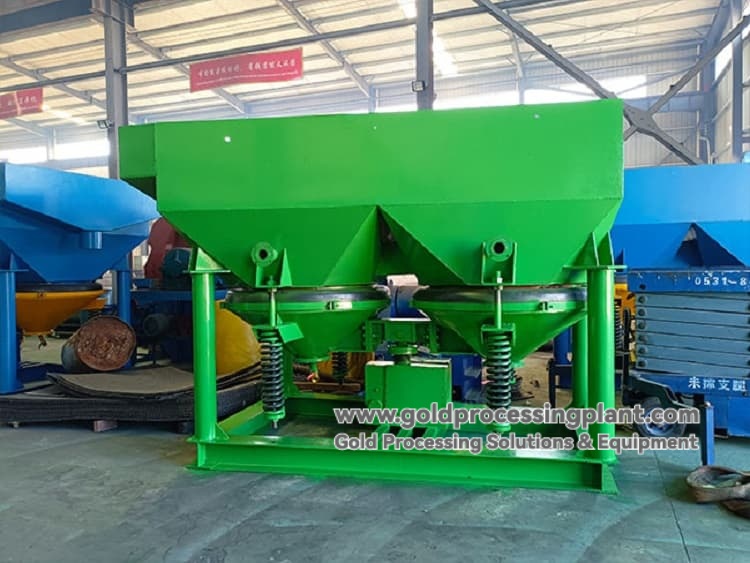
The undersize slurry is fed into chutes for roughing and concentration. Chutes feature a simple structure and high throughput, making them suitable for the initial capture of coarse-grained gold and intergrown particles. Select agitating chutes or gold-adhering chutes based on the ore characteristics. Key Configuration Points:
- Adjust the slope and length based on slurry flow rate and gold particle size; if the slope is too steep, the gold will be washed away, and if too gentle, the processing capacity will be insufficient;
- Concentrates must be cleared periodically; the cleaning interval is determined by the feed grade. If the chute is allowed to fill up without cleaning, it will lose its collection capacity;
- Chutes are roughing equipment; they cannot be relied upon to recover fine-grained gold. Their function is to retain coarse particles and discard large volumes of tailings.
4. Enrichment Section: Centrifugal Mineral Processor
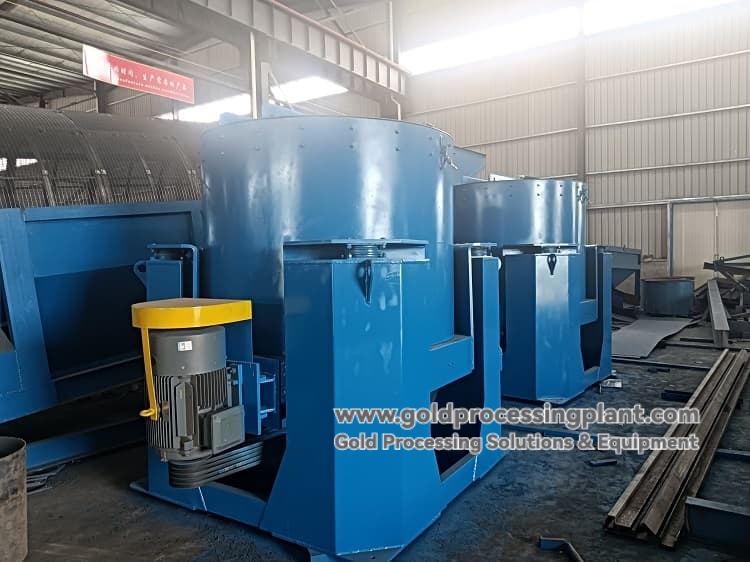
Centrifugal separators enhance gravity separation based on the principle of centrifugal force, achieving significant recovery of fine-grain gold; they are the key equipment for recovering fine-grain gold in placer gold processing lines. Configuration Guidelines:
- The number of units should be matched to the processing capacity; if the feed rate is too high, the separator\'s performance will drop sharply;
- Backwash water pressure, drum rotation speed, and feed concentration are the three core operating parameters that require on-site commissioning and optimization;
- The centrifuge processes coarse concentrate from chutes or undersize slurry from screens, significantly improving concentrate grade and reducing the load on the shaking table for final concentration.
5. Concentration Stage: Shaking Tables
The 6-S shaking table offers high separation precision and is used for fine-grain concentration, further refining the centrifuge concentrate into high-grade gold concentrate. Key Configuration Points:
- Match the throughput to the concentrate yield; since the fine selection stage\'s throughput is inherently low, the number of shaking tables should be determined based on the actual concentrate yield;
- Adjust the bed slope, stroke frequency, and transverse wash water flow rate according to the concentrate particle size; incorrect parameters will prevent the separation of concentrate from middles;
- Middle products from the shaking tables can be returned to the centrifuge or processed separately to prevent gold loss.
6. Smelting Section: Blended Gold
Shaking table concentrate undergoes gravity separation via a mercury-free process (as an alternative to mercury-based methods), after which it is either directly smelted or sold as concentrate to produce alloyed gold. Equip the facility with gold smelting furnaces, crucibles, fluxes, and casting molds. In regions with stringent environmental requirements, adopting a mercury-free gravity separation process is a mandatory requirement.
7. Auxiliary Systems: Water, Electricity, and Conveyance
- Recirculating Water System: Settling tanks and recirculation pumps recover most of the process water, reducing fresh water consumption; tailwater is treated to meet environmental standards;
- Conveyance System: Belt conveyors, sand pumps, and slurry pumps connect the various process stages; pump head and flow rate are matched to the slurry concentration;
- Electrical Configuration: In areas with unstable power supply, diesel generator sets are standard equipment as either the primary or backup power source; soft starters are used to reduce inrush current during equipment startup, and voltage stabilizers are installed for critical control systems.
III. High-Efficiency Production Plan: Five Practical Tips for Improving Recovery Rates
Key Point 1: Ensure Adequate Water Pressure and Flow for Ore Washing.
This is the factor with the highest return on investment. If ore washing is incomplete, all subsequent equipment will operate in vain. For ore with high clay content, it is better to increase the capacity of the washing equipment and raise the washing water pressure than to attempt “remedial measures” in the gravity separation section.
Key Point 2: Recover coarse and fine gold in separate stages; do not rely on a “one-size-fits-all” machine.
Chutes retain coarse particles, centrifuges capture fine particles, and shaking tables perform precise selection—each stage fulfills its specific function. If only chutes are used, fine gold will be lost in the tailings; if only centrifuges are used, the processing capacity for coarse gold will be insufficient. Staged configuration is a structural guarantee for recovery rates.
Key Point 3: Optimize centrifuge parameters on-site; do not operate using factory default settings.
Three parameters—backwash water pressure, drum rotation speed, and feed concentration—directly determine the recovery efficiency of fine-grained gold. Since gold particle size and clay content vary across different mining areas, these parameters must be determined through on-site commissioning. Many processing plants have centrifuges that are “installed but not utilized effectively” precisely because the parameters were not adjusted.
Key Point 4: Institutionalize chute cleaning.
If concentrate accumulates in the chutes without being cleared, the collector\'s efficiency decreases, and gold is washed away with the tailings. Cleaning intervals should be determined based on feed grade and flow rate and formalized into a system; cleaning should not be done only “when it looks full enough.”
Key Point 5: Management of Recirculating Water and Tailings Water.
The recirculating water system not only conserves water but also affects the stability of gravity separation—fluctuations in water volume and pressure cause corresponding fluctuations in the separation efficiency of chutes and shaking tables. Ensuring tailings water treatment meets regulatory standards is the minimum environmental requirement and a prerequisite for long-term, stable production.
IV. Three Criteria for Equipment Selection and Configuration
First, select equipment based on ore characteristics, not on inventory. For ores with high clay content and fine-grained gold, the capacity of washing plants and centrifuges must be increased; for ores dominated by coarse-grained gold, the capacity of chutes and jigs must be scaled up accordingly. Alluvial gold deposits vary significantly across different mining areas, and simply copying a neighboring mine\'s equipment list is a common mistake.
Second, equipment must be integrated as a complete system, not pieced together. The discharge particle size of the trommel screen, the processing capacity of the chutes, the number of centrifuges, and the processing capacity of the shaking tables must be matched step by step. Mixing equipment from different manufacturers results in mismatched interfaces and processing capacities, leading to material blockages or idle operation in intermediate stages, which reduces the efficiency of the entire line.The value of a complete equipment package lies in system synergy and a single point of responsibility.
Third, choose between mobile and stationary systems based on the ore source. For dispersed ore sites and short-term mining operations, select mobile systems—they can be set up and moved as needed; for concentrated ore sources and large-scale operations, choose stationary systems, which offer better control over equipment specifications and recovery rates. Stationary systems are recommended for operations at 300 metric tons per day or higher.
V. Price Reference and Construction Timeline
Price Reference: The equipment configuration of a placer gold gravity separation line differs from that of a cyanide leaching line for rock gold ore; it does not include leaching, adsorption, desorption, or electrolysis systems, resulting in relatively lower investment costs for the main equipment. Specific prices are calculated individually based on processing capacity, mud content, gold particle size, and automation configuration.As a general comparison, a complete set of main equipment for a CIP/CIL line processing 300 metric tons per day costs approximately $600,000–$900,000 (excluding civil engineering, installation, logistics, and auxiliary materials); the main equipment for a placer gold gravity separation line is typically less expensive than that of a cyanidation line of the same scale.The lower end of the range corresponds to standard configurations, typical ore characteristics, and standard operating conditions; the upper end corresponds to non-standard customization, complex operating conditions, and more comprehensive solutions.
Construction Timeline: The process flow for a placer gold gravity separation line is simpler than that of a lode gold cyanidation line, and the equipment manufacturing cycle is relatively short. Standard Process: Concept design, equipment selection, and quotation → Equipment manufacturing → Logistics → Installation and commissioning.With each phase reasonably interleaved, the overall timeline is typically shorter than the 8–15-month timeframe typical for rock gold mines. Providing ore samples and site data as early as possible to initiate design is the first step in shortening the construction period.
Phased Construction: If the budget is limited, the core sections—including ore washing, chutes, and centrifuges—can be built first to ensure concentrate production; the shaking table enrichment, smelting, and recirculating water systems can be added later. Design interfaces should be reserved during the initial phase to ensure process continuity.
VI. Troubleshooting Sequence for Unsatisfactory Recovery Rates
If on-site recovery rates remain low, follow this troubleshooting sequence:
1. Inspect the ore washing process
Check whether the clay has been thoroughly washed away, whether the pressure and flow rate of the rinse water are sufficient, and whether the trommel screen is clogged;
2. Check the Chutes
Is the slope appropriate? Is the concentrate being removed promptly? Is the feed rate too high?
3. Check the centrifuges
Check whether the backwash water pressure, drum rotation speed, and feed concentration are optimized, and whether the number of units matches the processing capacity;
4. Inspect the shaking tables
Check whether the slope, stroke length and frequency, and transverse water flow are appropriate, and whether the middlings are being returned for reprocessing;
5. Inspect the water system
Check whether the circulating water volume and pressure are stable, and whether gold is being lost in the tailings water.
Targeted adjustments are more cost-effective than replacing the entire set of equipment; begin by conducting a process review to identify bottlenecks.
VII. Alluvial Gold Recovery Rate: Achieved Through Both Equipment Configuration and Fine-Tuning
The recovery rate of a placer gold production line depends equally on proper configuration and fine-tuning. The core of configuration lies in ensuring thorough ore washing, the separate recovery of coarse and fine particles, and seamless coordination between equipment in each stage; the core of fine-tuning lies in on-site optimization of centrifuge and shaking table parameters, institutionalized chute cleaning protocols, and stable operation of the water system.
Sand gold processing lines are short and lack a cyanide backup stage; any gold lost is a real loss. Therefore, every stage must be fully equipped and properly adjusted—you cannot rely on “making up for it later.”
If you are planning a placer gold processing line, or if your existing placer gold plant is experiencing poor recovery of fine-grain gold and struggling to increase recovery rates, please contact GoldProcessingPlant for ore sample analysis and process diagnostics—understand your ore first, then select equipment and adjust parameters.