


How to Design a Mineral Processing Flow Sheet for a Sulfide Gold Mine Where Flotation Is the Primary Method? A Comprehensive Analysis of the Process Flow, Reagent Regimen, and Equipment Configuration
How to Design a Flotation-Based Beneficiation Process for Sulfide Gold Ore? A Comprehensive Analysis of the Process Flow, Reagent Regimen, and Equipment Configuration
Sulfide gold ores are the most common type of rock gold ore. Gold is found in sulfide minerals such as pyrite, arsenopyrite, and chalcopyrite, and is closely associated with these sulfides—the processing logic for these ores is straightforward: since gold follows the sulfides, floating the sulfides to the surface enriches the gold.Therefore, flotation is the primary method; it is no coincidence that approximately 80% of China\'s rock gold deposits use flotation for gold recovery.
However, “floatation-based” does not mean “simply installing a single flotation machine and calling it a day.” The process configuration for flotation of sulfide gold ores involves the interplay of four key factors: grinding fineness, reagent regimen, number of flotation stages, and concentrate disposition. This article thoroughly explains how to configure this process.
I. First, determine whether your sulfide gold ore is suitable for flotation-based processing
The prerequisite for a flotation-based process is that gold is clearly associated with sulfides, and the sulfides themselves are floatable. There are three specific criteria for determining this:
First, the type of gold-bearing minerals.
Gold-bearing pyrite, arsenopyrite, and chalcopyrite are all typical candidates for flotation.The gold floats along with the host minerals, and the concentrate is sent for smelting or cyanidation. If the gold is primarily in a free state, the gangue is simple, and there are no interfering elements, direct whole-ore cyanidation is actually a more straightforward approach—in this case, flotation is not a mandatory option.
Second, the grain size of the gold.
For ores with fine-grained disseminated gold or where gold is closely associated with sulfides, flotation can concentrate the gold into the sulfide concentrate, thereby preventing large amounts of gangue from occupying leaching tanks and consuming reagents during whole-ore cyanidation. For free gold with excessively coarse grain size, consideration should be given to recovering it in advance via a grinding circuit followed by gravity separation.
Third, the presence of interfering elements.
Arsenic-bearing ores require suppression of arsenopyrite or separate flotation of arsenic-gold concentrate; carbon-bearing ores require suppression of the “gold-snatching” effect caused by carbonaceous matter; and for polymetallic ores, one must consider whether to prioritize selective flotation or mixed flotation. These factors directly determine the reagent regime and process configuration.
There is only one basis for judgment: Conduct open-circuit and closed-circuit flotation tests on representative ore samples, and let the recovery rates and concentrate grades speak for themselves. Copying the reagent specifications of a neighboring mine without conducting tests is a common cause of poor flotation performance.
II. Grinding Fineness: The Primary Variable in Flotation
Grinding fineness determines the degree of individual liberation of gold-bearing minerals and is the primary variable affecting flotation recovery.
Insufficient fineness
Gold-bearing sulfides remain unseparated from the gangue; intergrown particles have poor floatability, causing gold to be lost in the tailings;
Excessively Fine Grinding
Over-grinding causes sulfides to become sludgy, reducing flotation selectivity, increasing reagent consumption, and making it difficult to maintain the concentrate grade.
The grinding fineness for gold-bearing sulfide ores should be determined through a combination of grinding tests and flotation tests, typically aiming for a balance where gold-bearing sulfides are fully liberated without generating large amounts of secondary slime.For ore with coarse-grained distribution, staged grinding and staged beneficiation can be employed—coarse grinding followed by preliminary flotation to discard tailings, with the coarse concentrate then reground and re-processed to minimize overgrinding.
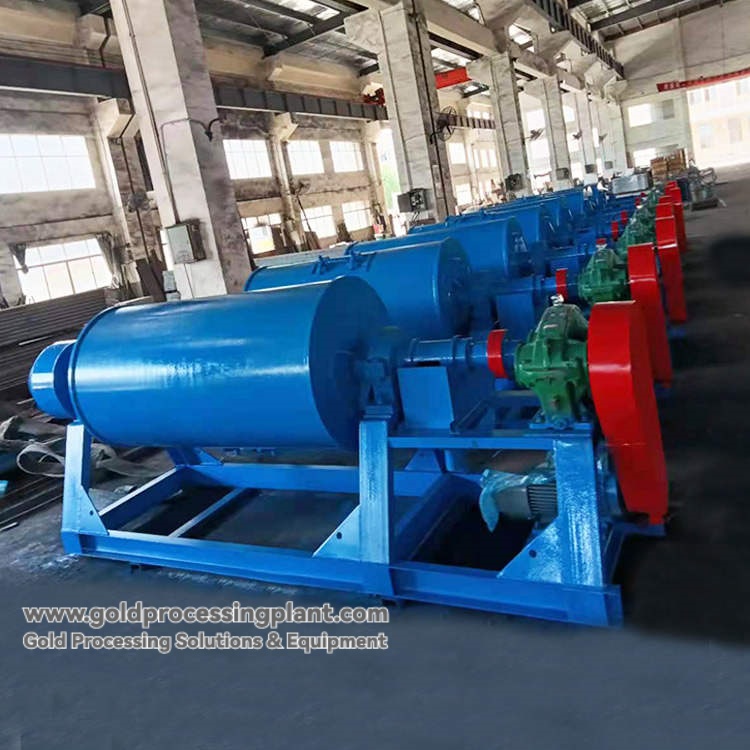
For grinding and classification, a closed-circuit system using a ball mill with a spiral classifier or hydrocyclone is employed; qualified fine powder is sent to flotation, while coarse sand is returned for regrinding. Adhering to the principle of “more crushing, less grinding,” the crushing stage handles the bulk of the work, while the grinding stage consumes less electricity.
III. Reagent Regimen: The Core Variable in Flotation Performance
The reagent regimen determines flotation selectivity and is of paramount importance in designing the flotation process for sulfide gold ores. Reagents are categorized into four types:
1. pH Adjusters.
Lime or sodium carbonate are commonly used to adjust the pulp pH, thereby influencing the surface charge of minerals and the interaction of reagents. Lime also serves to inhibit pyrite and stabilize the foam; the dosage must be determined through testing—excessive amounts may inhibit the gold-bearing sulfides themselves.
2. Activators/Inhibitors.
Activators (such as copper sulfate) are used to activate suppressed sulfides; inhibitors are used to suppress gangue minerals, arsenopyrite, or carbonaceous matter.Arsenic-bearing ores require suppression of arsenopyrite or separate flotation of arsenic-gold concentrate; carbon-bearing ores require suppression of the gold-capturing effect of carbonaceous matter. The selection and dosage of suppressants directly determine the concentrate grade.
3. Collectors.
For gold-bearing sulfide ores, xanthates (ethyl, butyl, or isopentyl xanthates) or thiourea-nitrogen compounds are the first choice due to their strong collection ability for sulfide ores.When a single collector cannot adequately balance recovery rate and selectivity, a combination of a primary collector and an auxiliary collector is used: xanthates ensure recovery rate, while a small amount of esters or neutral oils is added to improve the collection of fine-grained gold and intergrown particles. The combination ratio must be determined through flotation tests.
4. Foaming agents.
Substances such as pine oil and MIBC affect foam structure and stability. If the foam is too brittle, concentrate is prone to falling off; if it is too sticky, it entrains gangue, leading to a decrease in grade.
The dosing points and sequence are equally critical: pH adjusters should be added first; once they have taken full effect, collectors and frothers should be added. The distribution of reagents across roughing, scavenging, and concentrating stages should follow a gradient; additional collectors should be added during scavenging to maintain recovery rates, while minimal or no reagents should be added during concentrating to preserve grade.The reagent regimen must be optimized through open-circuit and closed-circuit flotation tests; a one-size-fits-all approach is not acceptable.
IV. Process Configuration: How to Configure Roughing, Scavenging, and Concentrating Stages
The process configuration for the flotation of gold sulfide ores typically ranges from one roughing, two concentrators, and two scavenging stages to “one roughing, three concentrators, and three scavenging stages.” The specific number of stages is determined based on the ore\'s floatability and grade requirements:
- Roughing: Ensure recovery rates and float as much gold-bearing sulfide as possible;
- Sweep: Recover intergrown and fine-grained gold from the roughing tailings; the number of sweep stages determines the tailings grade;
- Concentration: Improves concentrate grade; too many concentration stages will reduce recovery rates, while too few will prevent the grade from reaching the required level;
- Intermediate Product Recirculation: The recirculation points for intermediate products (enrichment tailings and scavenging concentrates) must be appropriately located to prevent the accumulation of poorly floatable intergrown minerals within the process, which could lead to process instability.
For polymetallic ores, a decision must be made between priority flotation (e.g., flotation of copper followed by sulfur) or mixed flotation (flotation of copper and sulfur together, followed by separation of concentrates). This depends on the content of each mineral, differences in flotability, and smelting requirements, and must be determined through comparative testing.
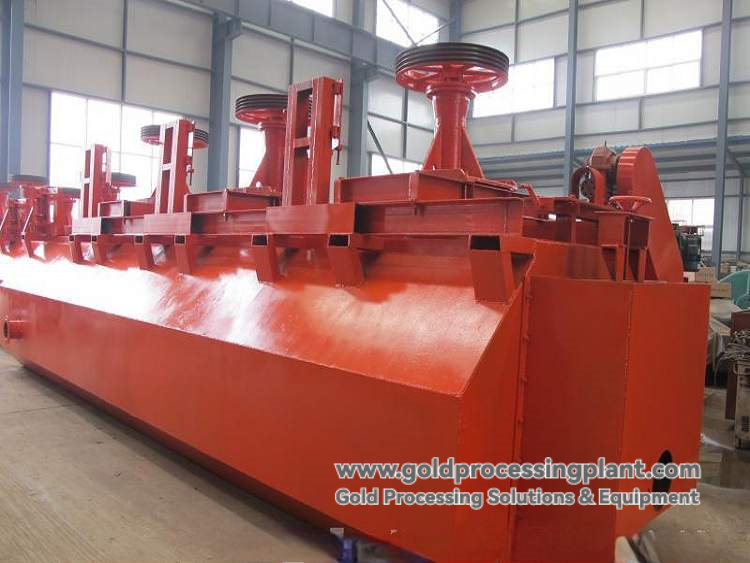
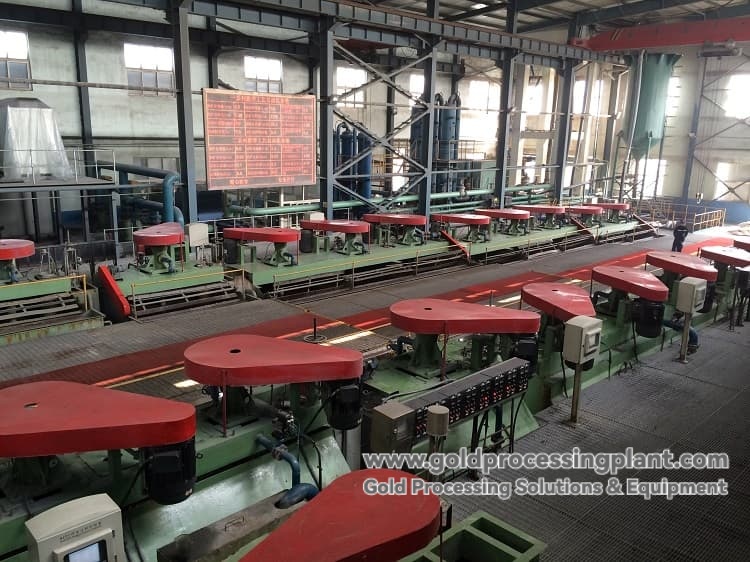
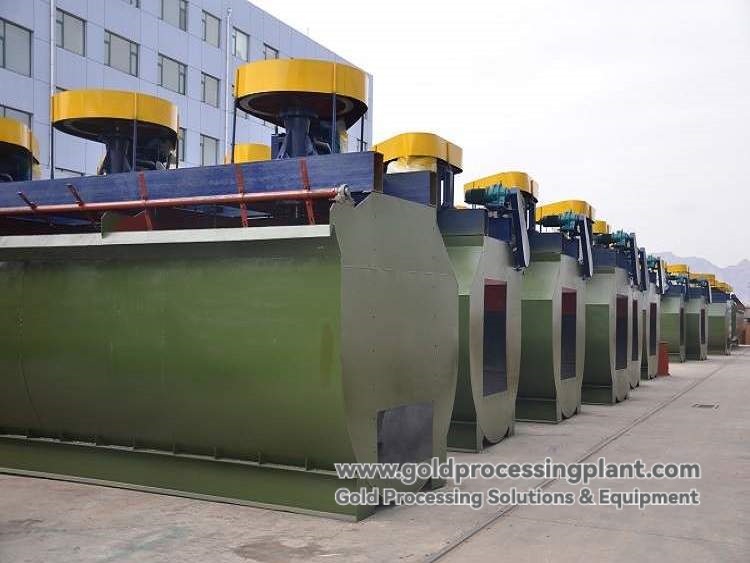
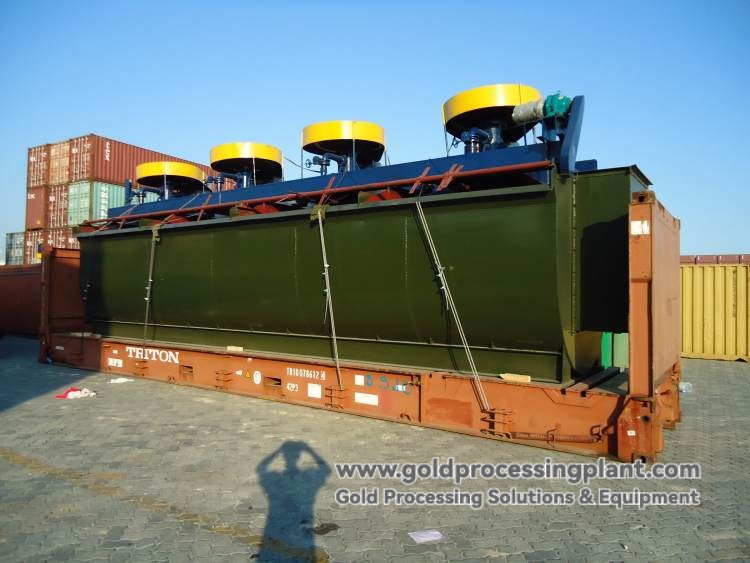
Matching flotation equipment parameters: The aeration rate, impeller speed, and cell depth of the flotation cell affect slurry suspension and foam conditions.Regarding equipment selection, the SF-type self-priming slurry pump is suitable for roughing and the initial stages of scavenging (no additional slurry suction equipment required); the XCF/KYF-type aerated pumps are suitable for large-scale direct-flow cell configurations; and the BF-type and JJF-type pumps should be selected based on throughput and aeration requirements. These can be combined to form roughing, scavenging, and concentrating units.
V. Where Do Flotation Concentrates Go: Smelting or Cyanidation
Floating is merely a means of concentration; the destination of the concentrate determines the integrity of the entire process line:
Route 1: Concentrate is sent for smelting.
Gold concentrate is sold directly to a smelter. This is the shortest process with the lowest investment, suitable for projects with high concentrate grades and favorable transportation conditions. It requires a thickener and filter press for dewatering to ensure the concentrate filter cake meets transportation requirements.
Route 2: Concentrate Cyanidation.
The concentrate is re-ground and subjected to cyanide leaching (CIL/CIP) to recover gold.This is suitable for projects where the concentrate contains arsenic or carbon requiring pretreatment, or where the goal is to produce high-purity gold on-site. Compared to whole-ore cyanidation, concentrate cyanidation significantly reduces processing capacity; leaching tanks and desorption/electrolysis equipment are smaller in scale and require less investment. It is a common “flotation + cyanidation” combined route for sulfide gold ores.
Route 3: Cyanidation after concentrate pretreatment.
Difficult-to-process concentrates containing arsenic and carbon are first treated with proprietary reagents, roasting, pressurized oxidation, or bio-oxidation to release the bound gold, followed by cyanidation. The value of flotation is most fully realized here—it reduces the large volume of raw ore requiring pretreatment to a small amount of concentrate, significantly lowering pretreatment investment and processing costs.
If coarse-grained free gold coexists with fine-grained gold-bearing sulfides in the ore, a centrifugal separator can be incorporated into the grinding circuit to recover coarse-grained gold early on, forming a “gravity separation + flotation (+ cyanidation)” combined process. This ensures “early and increased recovery” of coarse-grained gold, preventing losses due to over-grinding.
VI. Complete Equipment Configuration List
Complete Production Line Primarily Based on Flotation of Sulfide Gold Ore (Example: 200–500 metric tons per day):
Crushing and Grinding Section:
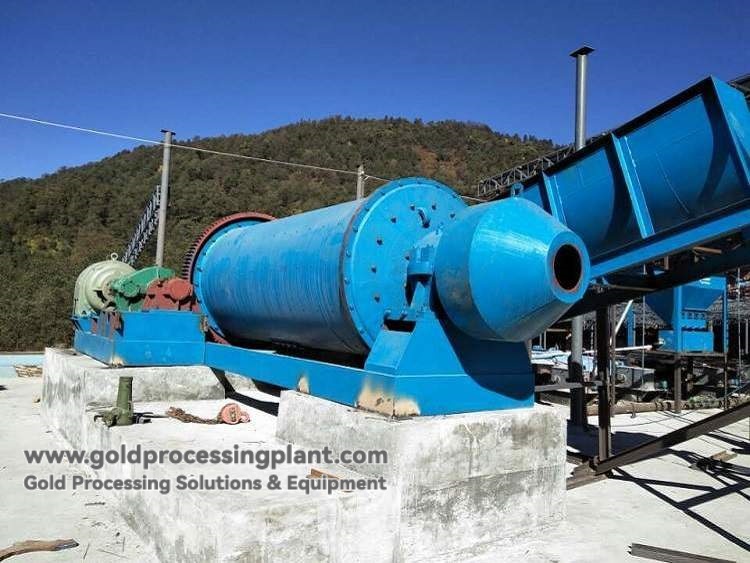
Vibrating feeder → Jaw crusher (primary crushing) → Cone crusher (secondary and tertiary crushing) → Circular vibrating screen → Ball mill (first stage: grate type; second stage: overflow type) → Spiral classifier/hydrocyclone closed circuit.
Slurry Preparation and Reagent Dosage Section:
Slurry preparation in agitation tanks → Reagent preparation and dosing system (separate dosing of pH adjusters, activators, inhibitors, collectors, and frothers).
Flotation Section:
Floating machine units (roughing, scavenging, and concentrating; number of stages determined by testing) → Middle product return pump → Concentrate tank.
Concentrate Dewatering Section:
Thickener → Plate-and-frame filter press (concentrate filter cake sold externally or fed to the cyanide processing section).
Tailings Treatment Section:
Tailings Thickener → Filter Press (dry tailings discharge) → Recirculation System.
Three Key Considerations for Equipment Configuration:
First, the process and equipment must be managed by the same team. The number of flotation stages and the reagent regimen must be determined before the specifications of the flotation cells and the unit configuration can be finalized. If process design and equipment manufacturing are disconnected, issues such as “mismatches between design parameters and actual equipment performance” will arise.
Second, customization based on ore characteristics. For highly siliceous, abrasive ores, upgrade crusher liners, ball mill liners, and flotation cell flow components to high-chromium alloy or wear-resistant rubber; for arsenic- and carbon-bearing ores, the process flow must include provisions for pretreatment interfaces; for overseas projects, equip with diesel generator sets and soft starters to reduce inrush current.
Third, integrated systems are preferable to piecemeal solutions. When flotation cells, agitation tanks, reagent dosing systems, and thickeners come from different manufacturers, mismatched interfaces and parameters can compromise flotation stability. Integrated supply ensures system synergy and establishes a single point of accountability in case of issues.
VII. Troubleshooting Sequence for Unsatisfactory Flotation Performance
If on-site flotation performance is poor, troubleshoot in the following order:
- Inspect the ore: Check for changes in ore properties (oxidation rate, sludging, sulfide type), and retest ore samples;
- Check the grinding process: Verify whether the fineness meets specifications, whether classification efficiency is normal, and whether over-grinding or sludging has occurred;
- Check Reagents: Verify whether the type and dosage of collectors are appropriate, whether the dosing points and sequence are reasonable, and whether the pH is stable;
- Check the process flow: number of flotation stages, return of intermediate concentrate, and whether desliming is required;
- Finally, inspect the equipment: check the aeration rate, rotational speed, and condition of the cells.
Targeted modifications are more cost-effective than blindly replacing equipment—in many cases of “poor flotation performance,” the problem lies in grinding fineness and the chemical regimen; replacing the flotation machine does not address the root cause.
VIII. Investment Reference and Project Timeline
Investment Estimate: The equipment configuration of a flotation line differs from that of a CIP/CIL line; prices must be calculated separately based on the process design. The cost of complete sets of main equipment for CIP/CIL lines can serve as a reference (in ten thousand U.S. dollars, excluding civil engineering, installation, logistics, and auxiliary materials):Approximately 350,000–500,000 for a 100-metric-ton-per-day capacity, 450,000–750,000 for 200 metric tons, 600,000–900,000 for 300 metric tons, and 900,000–1,350,000 for 500 metric tons.The investment for a “flotation + concentrate cyanidation” combined line falls between that of a pure flotation line and a whole-ore cyanidation line; the specific cost will be determined by the quotation based on the proposed plan.
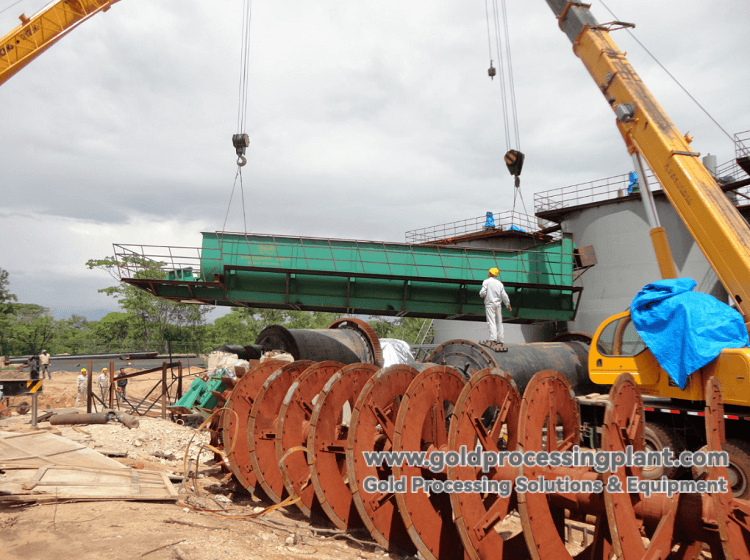
Project timeline: Typically 8–15 months—process design and technical proposal 7–15 days → engineering design 20–30 days → equipment manufacturing 60–120 days → logistics 30–60 days → installation and commissioning 60–150 days.For difficult-to-process ores containing arsenic or carbon, additional testing and pretreatment steps are required, which will extend the project timeline accordingly.
IX. Flotation as the Main Process, Complemented by the “Reagents + Process + Equipment” Trio
For sulfide gold ores, relying primarily on flotation is the correct approach; however, flotation performance depends on the seamless integration of three factors: grinding fineness to ensure liberation, a reagent regime to ensure selectivity, and a process flow structure to ensure recovery rate and grade. If any one of these three factors is out of sync, even the best flotation machine will fail to meet the required performance targets.
The correct sequence is: collect representative ore samples → conduct open-circuit and closed-circuit flotation tests to optimize the reagent regime and number of process stages → configure a complete set of flotation equipment based on the test parameters → determine the destination of the concentrate (smelting or cyanidation) → have an engineer on-site to commission the plant and optimize parameters.
If you have a gold sulfide ore deposit with unsatisfactory flotation recovery rates or concentrate grades, or if you are planning a production line primarily based on flotation, please contact GoldProcessingPlant for ore sample analysis and flotation testing to identify breakthroughs in both the reagent regime and process configuration.