


Poor flotation results in skarn-type gold deposits? Mastering these key points for collector selection and process optimization is the key.
Poor Flotation Results in Skarn-Type Gold Deposits? Mastering These Key Points on Collector Selection and Process Optimization Is Crucial
Skarn-type gold deposits are a unique category among rock-type gold deposits. They are often associated with multiple metals such as copper, iron, lead, and zinc, featuring complex mineral compositions and tightly intergrown minerals. During flotation, these deposits frequently face a threefold challenge: “low recovery rates, uncontrollable concentrate grades, and persistently high reagent consumption.”Many processing plants have tried several rounds of reagent changes and adjusted flotation machine speeds, yet results remain unsatisfactory—the problem often lies not with individual equipment, but rather with collector selection and process design that have not been tailored to the mineralogical characteristics of skarn deposits.
This article begins by examining the ore characteristics of skarn-type gold deposits, clearly explaining the root causes of poor flotation performance, the logic behind collector selection, and key points for process optimization.
I. Understanding the Basics: Why Are Skarn-Type Gold Ores Difficult to Float?
The “difficulty” of skarn-type gold deposits stems from their ore-forming environment and mineral composition:
1. Polymetallic association and complex mineral composition.
Scalnite-type deposits are often associated with minerals such as copper, iron, lead, zinc, and sulfur; gold may be hosted in chalcopyrite, pyrite, pyrrhotite, magnetite, or silicate minerals characteristic of scalnites.The mixture of multiple minerals with similar flotation properties results in poor flotation selectivity, leading to a large amount of non-target minerals being mixed into the gold concentrate, which naturally prevents the grade from increasing.
2. The gold is closely disseminated, and liberation is insufficient.
Gold is closely embedded with sulfides and skarn minerals (such as garnet, diopside, and fuchsite), often occurring as fine-grained inclusions or intergrown bodies.If the grinding fineness is insufficient, the gold-bearing minerals cannot be liberated; if the grinding is too fine, the skarn minerals become severely muddied, worsening the flotation conditions.
3. Interference from skarn gangue minerals.
Skeelite, diopside, chlorite, and other skarn minerals have high hardness and density; they are prone to sludging during grinding. The resulting fine sludge coats the surface of target minerals, consumes reagents, contaminates the foam, and reduces flotation selectivity.This is a significant challenge that distinguishes the flotation of skarn-type gold deposits from that of quartz vein-type deposits.
4. Complex sulfide types with significant variations in floatability.
Pyrite, pyrrhotite, and chalcopyrite exhibit different flotability; pyrrhotite, in particular, is prone to oxidation, which consumes reagents and affects flotation stability. To selectively inhibit or prioritize flotation, the reagent regime must be meticulously designed.
In a nutshell: Poor flotation results in skarn-type gold deposits are rarely due to “inadequate equipment,” but rather to “inappropriate reagents and mismatched processes.”
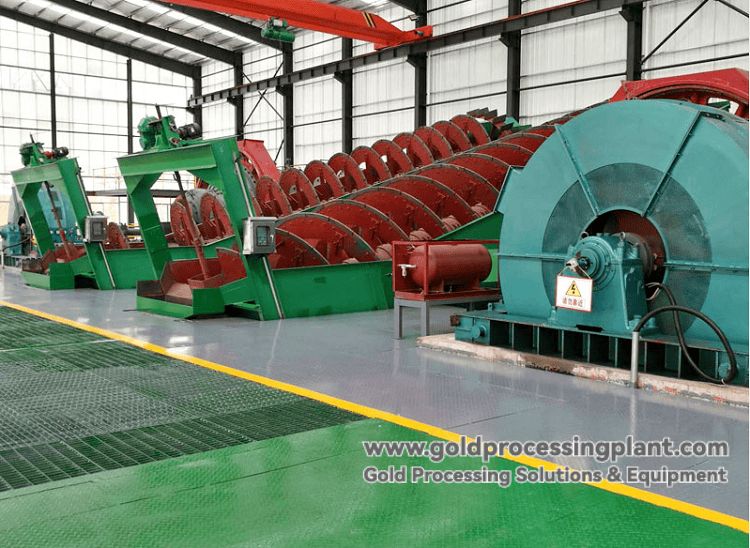
II. Collector Selection: The First Key to Skarn-Type Gold Ore Flotation
Collectors determine whether target minerals can float due to their hydrophobicity and are the core variable in flotation performance. When selecting collectors for skarn-type gold ore flotation, several principles must be followed:
1. Select the type of collector based on the type of gold-bearing mineral.
- When gold is primarily hosted in sulfide minerals such as chalcopyrite and pyrite: prioritize xanthates (ethyl, butyl, or isopentyl xanthates) or thio-nitro-type collectors, which exhibit strong collection ability for sulfide minerals;
- When gold-bearing chalcopyrite and pyrite occur together and copper flotation must be prioritized over sulfur flotation: a combination of selective xanthates and inhibitors may be used, or thio-nitroester-based collectors may be employed to enhance selectivity;
- Gold is associated with magnetite: Since magnetite is prone to oxidation, has poor floatability, and causes significant interference, activation or suppression measures must be employed; collector selection should consider compatibility with magnetite;
- Some gold occurs in a free state within skarn gangue: sulfide ore collectors alone cannot achieve complete recovery; the feasibility of using gravity separation to pre-recover coarse-grained gold must be evaluated.
2. Combination use is superior to single-reagent use.
Scalnite-type ores have a complex mineral composition, making it difficult for a single collector to balance both recovery rate and selectivity.A common approach is to use a combination of a primary collector and an auxiliary collector: xanthates serve as the primary collector to ensure recovery rate, while a small amount of ester-based or neutral oil-based auxiliary collectors is added to improve the collection efficiency of fine-grained gold and intergrown particles. The combination ratio must be determined through flotation tests and cannot be applied indiscriminately.
3. Foaming agents and pH adjusters must be used in conjunction.
Collectors do not operate in isolation. Foaming agents (such as pine oil and MIBC) affect foam structure and stability; pH adjusters (such as lime and sodium carbonate) influence mineral surface charge and reagent interaction; and activators/inhibitors determine selectivity.For skarn-type ores, particular attention must be paid to inhibitors—inhibiting skarn gangue minerals and pyrrhotite is key to improving concentrate grade.
4. Reagent regimes must be tested specifically for the ore; do not rely on templates.
Even within the same skarn-type gold deposit, the mineral composition, grain size distribution, and degree of oxidation vary significantly across different mining areas; therefore, the type, dosage, dosing point, and dosing sequence of collectors must all be optimized through open-circuit and closed-circuit flotation tests. Blindly copying the reagent specifications from a neighboring mine is a common cause of poor flotation performance.
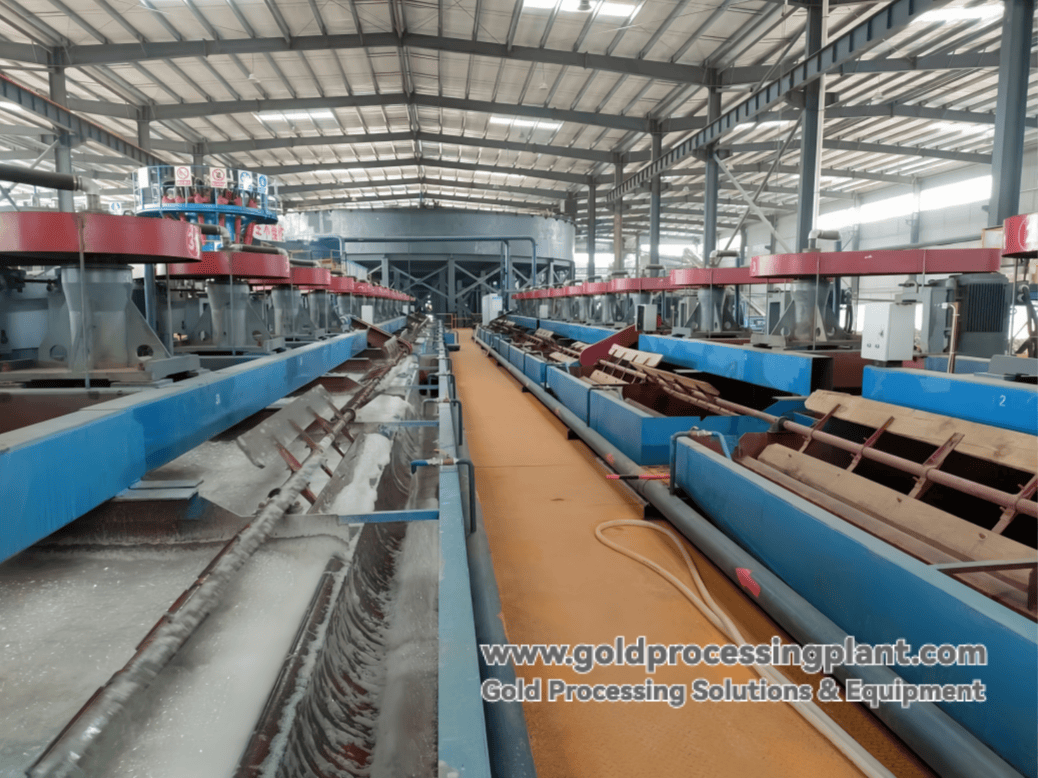
III. Process Optimization: Only with the Right Structure Can Flotation Be Stable
Even with the right collectors, an unreasonable process configuration will still fail to meet performance targets. When optimizing the flotation process for skarn-type gold deposits, focus on the following key areas:
1. Grinding Fineness: Striking a balance between liberation and muddification.
Grinding fineness is the primary variable in flotation. If the fineness is insufficient, gold-bearing minerals will not be sufficiently liberated, resulting in intergrown particles entering the concentrate or being lost in the tailings; if the fineness is excessive, skarn gangue will become severely muddied, leading to fine slurry coverage, increased reagent consumption, and reduced flotation selectivity.For skarn-type ores, the grinding fineness must be determined through testing to find the optimal balance. If necessary, stage grinding and stage separation should be adopted—coarse grinding followed by tailings rejection, then regrinding and re-selection of the concentrate—to minimize over-grinding.
2. Number of flotation stages: Design a roughing-scavenging-concentrating structure based on mineral floatability.
Common configurations range from one roughing, two concentrators, and two scavengers to one roughing, three concentrators, and three scavengers. For skarn-type polymetallic ores, note the following:
- Roughing should ensure recovery rates, while scavenging should recover intergrown minerals and fine-grained gold;
- The number of concentrate stages determines the concentrate grade; too many stages will reduce recovery rates, while too few will prevent the grade from reaching the desired level;
- The return point for the intermediate product must be appropriately located to prevent the accumulation of poorly floatable intergrown particles in the process circuit.
3. Selection Between Priority Flotation and Mixed Flotation.
For skarn-type gold deposits with polymetallic associations, evaluate whether to use priority flotation (e.g., flotation of copper followed by sulfur) or mixed flotation (flotation of copper and sulfur together, followed by separation of concentrates). The choice depends on the content of each mineral, differences in flotability, and smelting requirements, and must be determined through comparative testing.
4. Desliming: The “miracle cure” for skarn-type ores.
To address the problem of severe siltation in skarn gangue, a desliming operation (hydrocyclone classification or flocculation desliming) can be added prior to flotation to separate fine silt in advance and reduce its interference with the flotation process.Whether to perform desliming and the target particle size for desliming should be determined based on the slime content and the results of flotation tests.
5. Treatment of pyrrhotite.
In skarn-type gold deposits containing magnetite, the magnetite is prone to oxidation, consumes large amounts of reagents, and interferes with flotation. Consider removing some of the magnetite via weak magnetic separation prior to flotation, or enhance inhibition during flotation; the specific approach should be determined through testing.
6. Matching of flotation equipment parameters.
The aeration rate, impeller speed, and cell depth of the flotation cell affect slurry suspension and foam stability. Since skarn minerals have high density and tend to settle, the agitation intensity of the flotation cell must be sufficient to prevent the slurry from settling to the bottom of the cell; the aeration rate must be matched to the reagent regimen and ore properties.Regarding equipment selection, the SF-type self-aspirating flotation cell is suitable for the front end of roughing and scavenging, while the XCF/KYF-type aerated flotation cell is suitable for large-scale direct-flow cell configurations; specific selection should be based on throughput and aeration requirements.
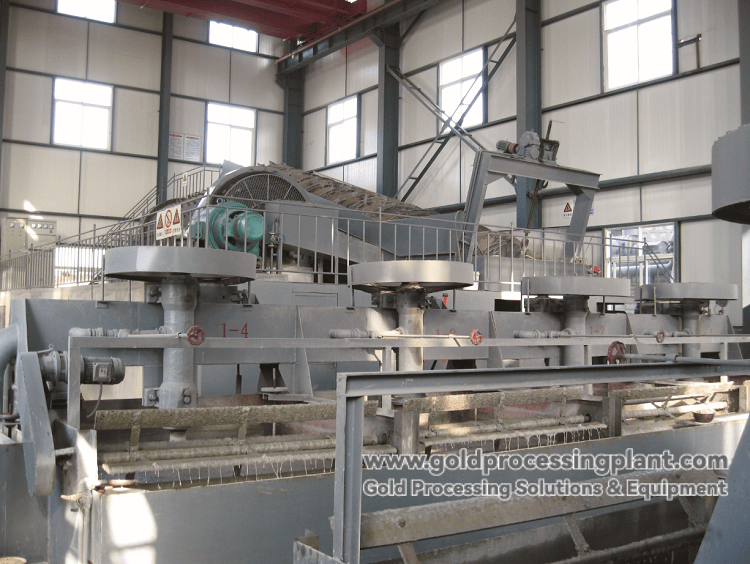
IV. Recommendations for Complete Flotation Plant Configuration
Equipment Configuration for a Skarn-Type Gold Ore Flotation Line (based on a daily processing capacity of 200–500 metric tons):
Crushing and Grinding Section:
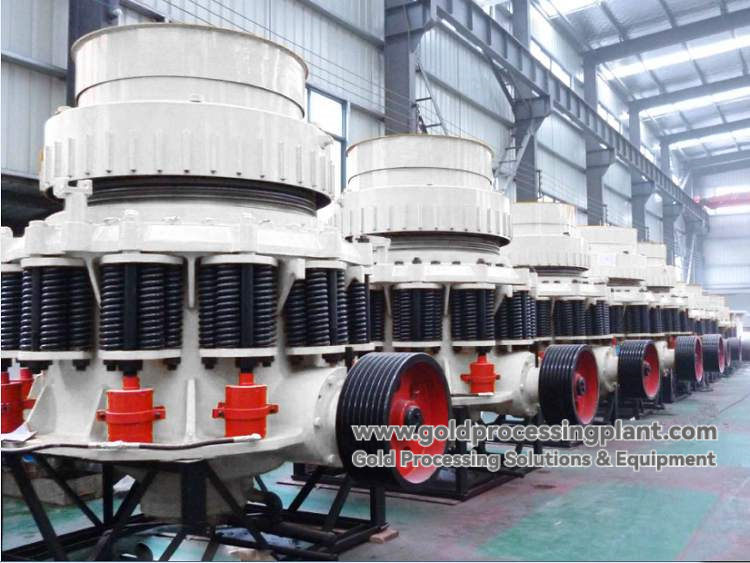
Vibrating feeder → Jaw crusher (primary crushing) → Cone crusher (secondary and tertiary crushing) → Circular vibrating screen → Ball mill(first stage: grid type + second stage: overflow type) → spiral classifier/hydrocyclone closed-circuit. For skarn ores with excessively high hardness, the crushing section should utilize wear-resistant configurations, and the grinding section may consider a staged grinding scheme.
Slurry Adjustment and Desliming Section:
Slurry conditioning in the mixing tank → Hydraulic cyclone desliming (configured as needed) → Reagent dosing system (pH adjusters, activators, inhibitors, collectors, and frothers added at separate points).
Flotation Section:
Floating machine units (roughing, scavenging, and concentrating), configured with the number of stages determined by testing; for polymetallic ores, a priority flotation or mixed flotation process may be employed; equipped with a middlings return pump.
Concentrate Dewatering Section:
Thickener → Plate-and-frame filter press; the concentrate filter cake meets transportation requirements.
Tailings Treatment Section:
Tailings thickener → filter press (dry tailings discharge) → water recirculation system.
Key Considerations for Equipment Configuration:
First, the process and equipment must be managed by the same team. The number of flotation stages and the reagent regimen must be determined before the specifications of the flotation cells and unit configurations can be finalized. A disconnect between process design and equipment manufacturing is the root cause of “mismatches between design drawings and actual equipment.”
Second, materials must be customized according to ore characteristics. Skarn ores are highly hard and abrasive; therefore, crusher liners, ball mill liners, and flotation cell flow components must be upgraded to high-chromium alloy or wear-resistant rubber to reduce the consumption of wear parts.
Third, integrated systems are superior to piecemeal solutions. When flotation cells, agitation tanks, reagent dosing systems, and thickeners come from different manufacturers, mismatched interfaces and parameters can compromise flotation stability. Integrated supply ensures system synergy.
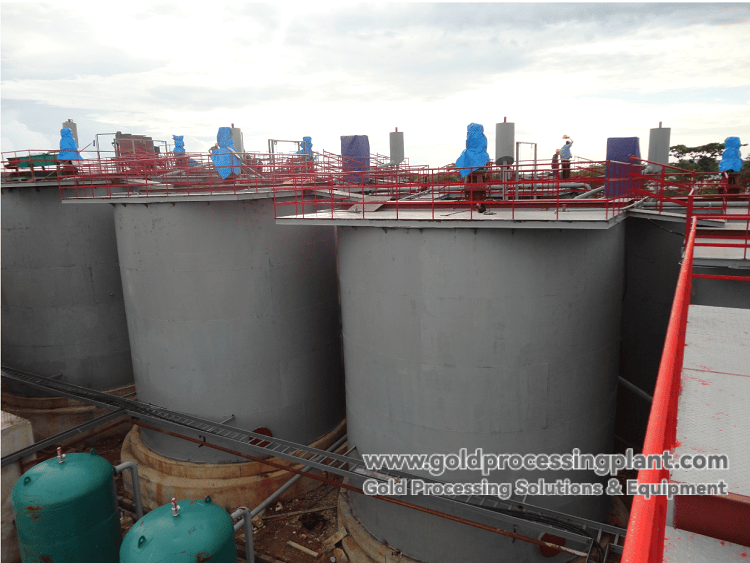
V. Troubleshooting Sequence for Poor Flotation Performance
If on-site flotation indicators are unsatisfactory, it is recommended to troubleshoot in the following order:
- First, examine the ore: Check for changes in ore properties (oxidation rate, degree of sludging, sulfide type), and retest ore samples;
- Next, examine the grinding process: Check whether the grinding fineness meets specifications, whether classification efficiency is normal, and whether over-grinding or sludging has occurred;
- Check the reagents: Verify whether the collector type and dosage are appropriate for the current ore, whether the dosing points and sequence are reasonable, and whether the pH is stable;
- Check the process flow: Verify whether the number of flotation stages, the return of intermediate concentrate, and the de-sliming process are appropriate;
- Finally, inspect the equipment: Check whether the flotation cell\'s aeration rate, rotational speed, and cell condition are normal.
Targeted modifications are more cost-effective than blindly replacing equipment. In many cases of “poor flotation performance,” the problem lies in grinding fineness and the reagent regimen; replacing the flotation cells will not solve the root cause.
VI. Flotation of Skarn-Type Gold Deposits: Reagents and Processes Must Be “Tailored to the Problem”
Poor flotation performance in skarn-type gold deposits does not mean the ore is irrecoverable; rather, it means the correct method has not been identified.The core logic is: First, determine the mineral composition and distribution patterns → Optimize the collector combination and reagent regime through flotation tests → Design the grinding fineness, number of flotation stages, and desliming process based on the ore\'s characteristics → Configure a complete set of well-coordinated flotation equipment → Perform on-site commissioning and parameter optimization.
The selection of collectors is the first key to flotation, but reagents cannot be discussed in isolation from the process—if the grinding fineness is incorrect, even the best collectors will be ineffective; if the process structure is unreasonable, reagent consumption cannot be reduced.
If you operate a skarn-type gold deposit and are experiencing unsatisfactory flotation recovery rates or concentrate grades, please contact GoldProcessingPlant for ore sample analysis and flotation testing to identify breakthroughs in both the chemical regime and process design.