


Cyanidation-Carbon-in-Pulp Adsorption Process for Rock Gold Ore—A High-Efficiency Gold Recovery Solution—Promotion of Professional Mineral Processing Technologies
Whole-ore Cyanidation and Carbon-in-Pulp Adsorption Process for Rock Gold Ore—A High-Efficiency Gold Recovery Solution—Promotion of Professional Mineral Processing Technologies
When extracting gold from rock gold ores, one core decision cannot be avoided: should one opt for flotation enrichment or the whole-ore cyanide carbon-in-leach adsorption process? Flotation is suitable for gold-bearing sulfides and fine-grained, disseminated ores, where gold is concentrated into concentrate for further processing;whereas the whole-ore cyanidation-activated carbon adsorption (CIP/CIL) process takes a different approach—the raw ore is ground and leached directly, and activated carbon is used to capture the dissolved gold. This process features a short flow path, minimal equipment, and a direct recovery route.
This process is widely used in the field of gold-bearing rock ores, but “being able to use it” and “using it well” are two different things. Common on-site issues include low leaching rates, low activated carbon adsorption efficiency, backlogs of gold-loaded carbon, and persistently high reagent consumption.This article provides a comprehensive overview of the applicable conditions, process parameters, equipment configuration, and gold recovery strategies for whole-ore cyanide carbon-in-pulp adsorption.
I. Initial Assessment: Is Your Rock Gold Mine Suitable for Whole-Slurry Cyanide Carbon-in-Pulp Adsorption?
The prerequisite for whole-ore cyanidation is that gold must be able to “come into contact” with cyanide and be dissolved. Therefore, the suitability assessment focuses on three key points:
First, the state of gold occurrence.
If gold is primarily in a free or semi-free state and can be fully dissociated and exposed after grinding, it is an ideal candidate for whole-ore cyanidation.If the gold is present as fine particles encapsulated within the crystal lattices of pyrite or arsenopyrite (Kalin-type), it will not be released even with ultra-fine grinding, resulting in a very low direct leaching rate. In such cases, gold-bearing sulfides should first be concentrated via flotation, and the encapsulation should be broken open through pretreatment before cyanidation.
Second, the content of interfering elements.
Arsenic consumes cyanide and passivates the surface of gold particles; carbonaceous materials “sequester gold,” re-adsorbing already dissolved gold cyanide complexes; antimony also interferes with leaching; and high levels of cyanide-consuming substances such as copper and iron sulfides drive up reagent costs.If the concentrations of these elements are too high, direct whole-ore cyanidation is not economical; pretreatment or a switch to the flotation route is required.
Third, the economics of grinding.
Cyanidation of the whole ore stream requires grinding the entire raw ore to the liberation fineness, and grinding energy consumption is one of the largest cost items in the entire process. If the gold is too finely disseminated and requires ultra-fine grinding for liberation, the grinding costs may eat into profits; in this case, “flotation to concentrate a small amount of concentrate followed by fine grinding” is actually more cost-effective.
There is only one way to verify the conclusion: Conduct whole-ore cyanidation leaching tests (including CIL/CIP comparison tests) on representative ore samples and let the leaching recovery data speak for itself. Proceeding with a whole-ore cyanidation line without experimental data represents the greatest risk in investing in a rock gold mine.
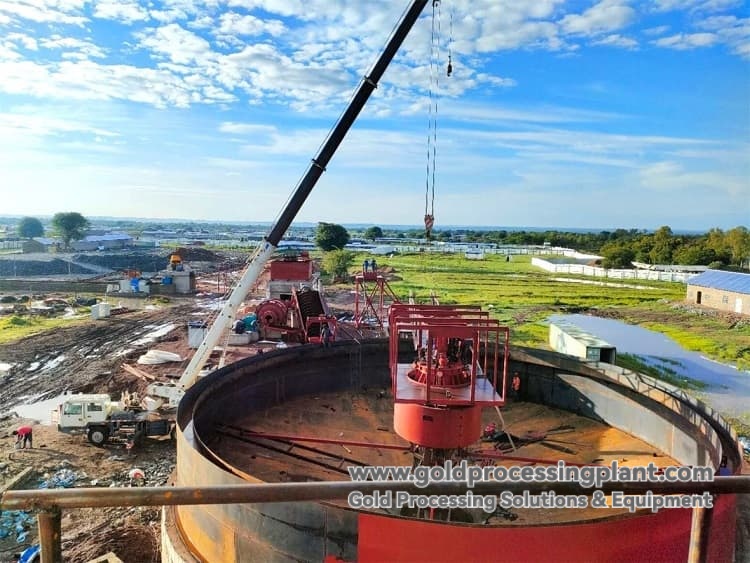
II. How to Choose Between CIP and CIL: Differences Between the Two Carbon-in-Pulp Processes
Once it has been confirmed that whole-ore cyanidation is feasible, a choice must still be made between CIP and CIL. Both involve “cyanide leaching + activated carbon adsorption,” but the difference lies in the sequence:
CIL (Carbon-in-Leach)
Leaching and adsorption occur simultaneously; leaching and adsorption proceed in parallel. Activated carbon is added to the final tank and moves forward in a countercurrent flow, coming into contact with the ore slurry in the opposite direction. This process is compact, requires fewer tanks, and involves relatively lower capital investment. It is suitable for small- to large-scale processing plants and is currently the more widely adopted configuration.
CIP (Carbon-in-Pulp)
Leaching is completed first, and the slurry then enters the adsorption tank where activated carbon is added. This method allows for a more thorough leaching period and more precise segmented control of leaching and adsorption. It is suitable for ores with relatively fast leaching rates that require segmented control and is commonly used in large-scale processing plants.
Selection Criteria: Determined by the kinetic data from leaching tests—for ores with fast leaching rates, the CIL process (simultaneous leaching and adsorption) offers high efficiency and a streamlined flow; for ores requiring longer leaching times or precise segmented control, CIP is more suitable. The final decision should be made based on a comprehensive evaluation of processing capacity and investment budget.
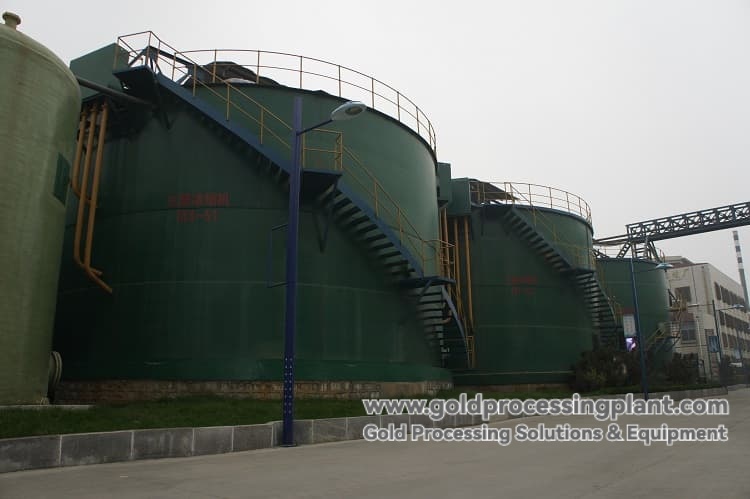
III. Process Parameters: Seven Key Factors Determining Leaching Recovery
1. pH Control.
Leaching is conducted under alkaline conditions, with pH typically maintained between 10 and 11, adjusted using lime or sodium hydroxide. If the pH is too low, cyanide is prone to volatilization and loss; if too high, it affects leaching rate and lime consumption. Lime addition must be continuous and stable.
2. Grinding Fineness.
This determines the degree of gold dissociation and is the primary variable affecting cyanide recovery from whole slurry. Insufficient fineness prevents encapsulated gold from being released, while over-grinding increases energy consumption and slurry formation, and adversely affects thickening and adsorption. The optimal fineness is determined through a combination of grinding and leaching tests.
3. Cyanide Concentration and Dosage.
Too low a concentration results in slow leaching, while too high a concentration wastes reagents and increases environmental pressure related to cyanide treatment. These parameters must be dynamically adjusted based on the ore\'s cyanide consumption characteristics and precisely controlled using a dedicated reagent dosing system.
4. Leaching Time and Number of Tanks.
Multiple tanks connected in series ensure adequate leaching time, while the number of stages depends on leaching kinetics. Insufficient time prevents complete gold dissolution, while too many stages result in wasted investment. CIL typically uses 4–6 stages in series, with the specific configuration determined by testing.
5. Activated Carbon Concentration and Gold-Loaded Carbon Management.
Activated carbon concentration affects the adsorption rate; gold-loaded carbon must be promptly lifted and desorbed to prevent the carbon from losing its adsorption capacity once it becomes “saturated.” The capacity of the carbon lifters and the desorption electrolysis processing capacity must match the daily output of gold-loaded carbon—this is the most common point of imbalance in on-site system coordination.
6. Dissolved Oxygen.
Cyanide leaching requires oxygen, so leaching tanks must be aerated. Insufficient aeration slows leaching, while excessive aeration increases energy consumption.
7. Thickening and Dewatering.
After grinding, the slurry concentration must be adjusted to meet leaching requirements; dewatering in the thickener is a critical step. Ore with high clay content requires a flocculant dosing system.
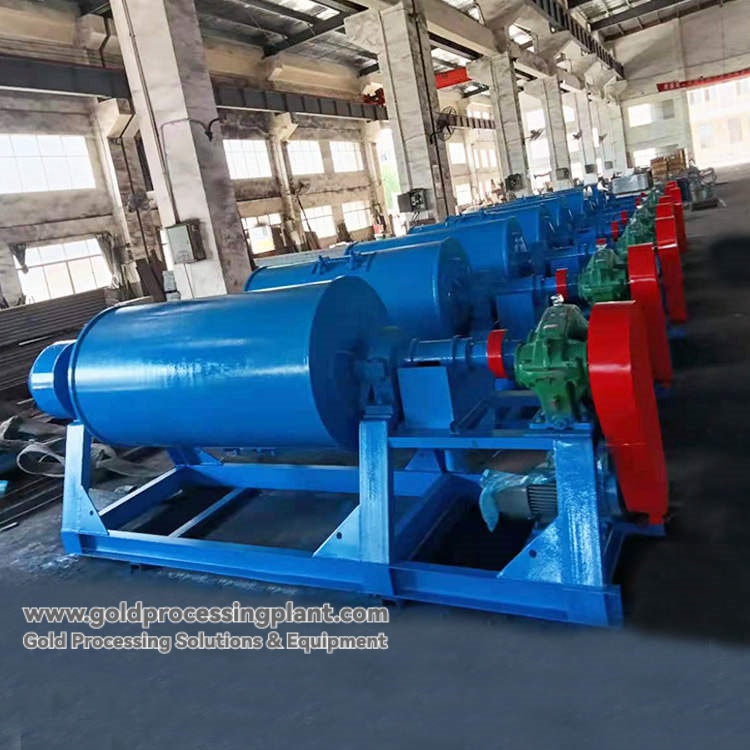
IV. Complete Equipment Configuration: From Raw Ore to Refined Gold
For a whole-ore cyanide carbon-in-pulp adsorption line for rock gold deposits, the complete equipment chain is as follows:
Crushing and Grinding Section:
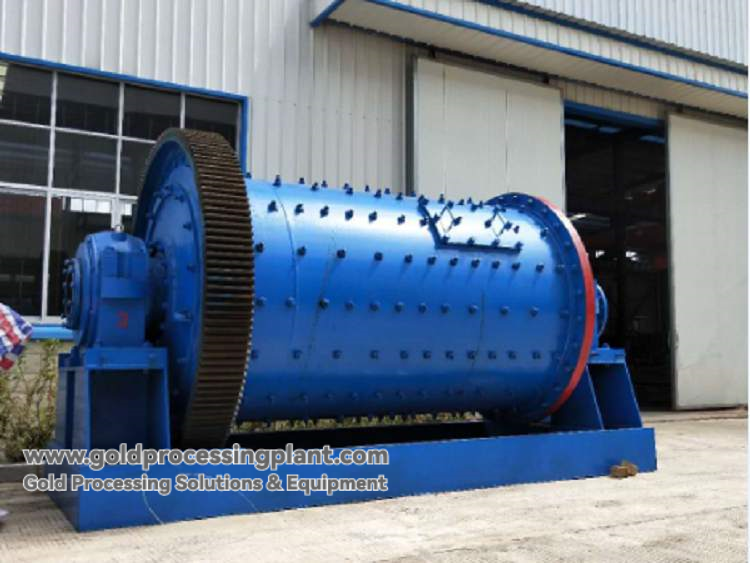
Vibrating feeder → Jaw crusher (primary crushing) → Cone crusher (secondary and tertiary crushing) → Circular vibrating screen → Ball mill (first stage: grate type + second stage: overflow type, or single-stage configuration depending on scale)→ Screw classifier/hydrocyclone closed-circuit system. Adhering to the principle of “more crushing, less grinding,” the crushing section handles the bulk of the work while the grinding section consumes less electricity.
Thickening and Dewatering Section:
A high-efficiency thickener adjusts the slurry concentration; a flocculant system is added when the clay content is high.
Leaching and Adsorption Section:
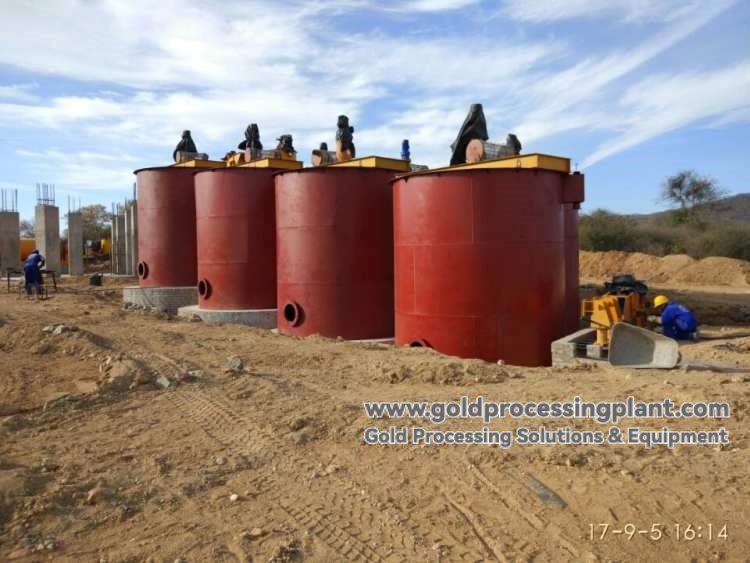
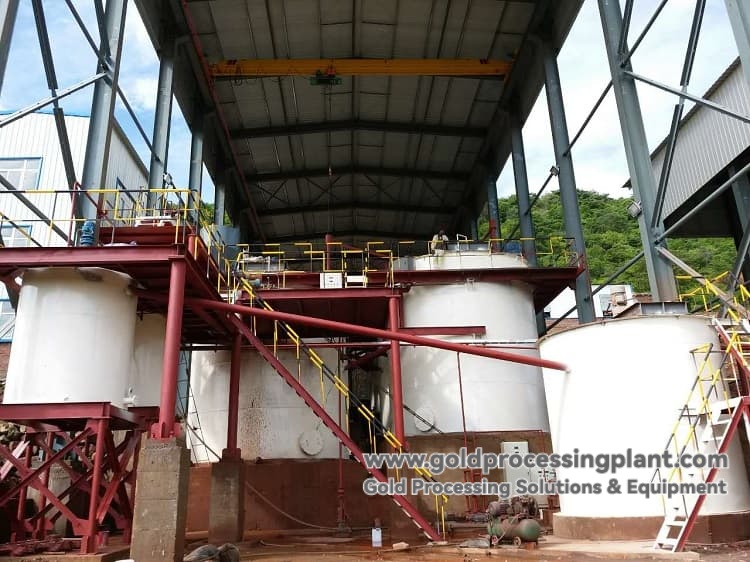
Leaching tanks (with agitation and aeration; multiple tanks in series; sodium cyanide and lime added to adjust pH) → High-efficiency twin-impeller carbon-in-leach (CIL) tank (simultaneous leaching and carbon extraction) or adsorption tank(CIP) → Carbon Separator (separates gold-bearing carbon from the slurry; screen aperture size must match the carbon particle size—too large results in carbon loss, too small causes slurry blockage) → Carbon Lifter (air lifter extracts gold-bearing carbon) → Activated Carbon Addition System.
Desorption and Electrolysis Section:
Acid washing (to remove impurities such as calcium carbonate and iron, and prevent scaling) → Desorption and electrolysis equipment (room temperature and atmospheric pressure are suitable for conventional processing; high-temperature, high-pressure desorption is more thorough and suitable for large-scale or hard-to-desorb ores) → Electrolysis cell → Gold smelter to produce refined gold.
Tailings Treatment Section:
Tailings Thickener → Plate-and-Frame Filter Press (for dry tailings discharge) → Cyanide Removal and Wastewater Treatment System (to meet environmental standards).
Auxiliary Equipment:
Slurry pumps, carbon recovery pumps, belt conveyors, agitation tanks, chemical preparation and dosing systems, soft-start and voltage-stabilizing electrical configurations (diesel generator sets may be provided for overseas projects).
Three Key Considerations for Equipment Configuration:
First, a fully integrated system is superior to a pieced-together one. The number of leaching tank stages, carbon-in-leach tank specifications, carbon-separating screen aperture size, carbon recovery unit capacity, and desorption/electrolysis processing capacity—these five parameters form a system of simultaneous equations.Mixing equipment from different manufacturers results in mismatched interfaces and parameters, leading to carbon leakage, tank blockages, and a buildup of gold-bearing carbon during operation. Only when process design and equipment manufacturing are managed by the same team can the seamless integration of “ore—process—equipment” be guaranteed.
Second, design must be customized to ore characteristics, not based on stock items. For highly siliceous, abrasive ores, flow components should be upgraded to high-chromium alloys or wear-resistant rubber; in acidic leaching environments, corrosion-resistant stainless steel or internal linings should be considered; and for operations in extremely cold, high-altitude, or unstable power supply conditions, non-standard adaptations must be made.
Third, environmental protection measures must be designed concurrently. Treatment of tailings water from the cyanidation process, cyanide removal systems, and dry tailings disposal must be planned together during the design phase; environmental protection measures cannot be added after the plant is already built.
V. High-Efficiency Gold Extraction Solutions: When to Adopt a Combined Process
If ore sample tests indicate that direct whole-ore cyanidation is uneconomical, a combined process should be adopted:
High gold encapsulation and low direct leaching recovery:
First, flotation is used to concentrate gold-bearing sulfides into a concentrate. The concentrate is then pretreated (using proprietary reagents, roasting, pressurized oxidation, or bio-oxidation) to release the gold, followed by cyanidation. The value of flotation lies in reducing the volume of raw ore requiring pretreatment to a small amount of concentrate, thereby lowering capital investment and reagent costs.
Significant interference from arsenic and carbon:
Suppress carbon-bearing materials during flotation or flotate arsenic-gold concentrate separately; leach only after pretreatment to eliminate gold entrapment and passivation effects.
Coexistence of coarse-grained free gold and fine-grained encapsulated gold:
Incorporate a centrifugal separator into the grinding circuit to recover coarse-grained gold early; use flotation to concentrate sulfides; and perform cyanidation after concentrate pretreatment. The combined “gravity separation + flotation + cyanidation” process ensures “early and maximum recovery” of coarse-grained gold, preventing loss due to overgrinding.
The selection of key process steps in the combined process (the placement of gravity separation within the grinding circuit, and whether flotation tailings are reground and re-leached) determines the overall recovery rate; the economic viability must be verified through pilot testing.
VI. Investment Reference and Project Timeline
Estimated Investment: Taking a complete set of CIP/CIL main equipment as an example (in US dollars, excluding civil engineering, installation, logistics, and auxiliary materials): 100 metric tons per day is approximately 350,000–500,000; 200 metric tons per day is approximately 450,000–750,000;300 metric tons: approximately 600,000–900,000; 500 metric tons: approximately 900,000–1,350,000; 1,000 metric tons: approximately 1,500,000–1,900,000; 1,500 metric tons: approximately 2,050,000–2,700,000.The lower end of the range corresponds to standard configurations, conventional oxidized ores, and typical operating conditions; the upper end corresponds to non-standard customizations, complex ores, and more comprehensive solutions. Specific quotations must be determined based on ore type, process flow, and site conditions.
Project Duration: Typically 8–15 months—Process Design and Technical Proposal: 7–15 days → Engineering Design: 20–30 days → Equipment Manufacturing: 60–120 days → Logistics: 30–60 days → Installation and Commissioning: 60–150 days.Overseas projects should allow an additional buffer of approximately 30 days for customs clearance. The total project duration can be shortened by appropriately overlapping various phases; providing representative ore samples as early as possible to initiate process validation is the first step in reducing the total project duration.
VII. Whole-ore Cyanidation Carbon-in-Pulp Adsorption: It\'s a System, Not a Single Unit
The whole-ore cyanide carbon-in-pulp adsorption process appears simple—grinding, leaching, carbon addition, carbon screening, desorption and electrolysis, and smelting.However, processing plants that actually achieve target performance rely on the systematic coordination of leaching time, carbon concentration, carbon separation screens, carbon recovery units, and desorption-electrolysis capacity, as well as the seamless integration of “ore—process—equipment.”
The correct sequence is: Take representative ore samples → Conduct ore characterization analysis and whole-ore cyanide leaching tests (CIL/CIP comparison)→ If feasibility is confirmed, set parameters and procure the complete equipment package; if not feasible, switch to a combined flotation + pre-treatment + cyanidation route → have engineers on-site to fine-tune the process until gold is recovered. Skipping pilot testing and purchasing equipment directly is the greatest risk in rock gold ore investment.
If you are planning a whole-ore cyanide carbon-in-leach (CIL) processing plant for a gold-bearing rock deposit, or if your existing CIP/CIL system is experiencing issues such as low leaching rates, carbon leakage and channel blockages, backlogs of gold-bearing carbon, or insufficient desorption capacity, please contact GoldProcessingPlant for ore sample testing and process diagnostics.