


Analysis of the Whole-Slurry Cyanidation Technology for Gold Deposits in Conglomerate Rocks and a High-Efficiency Gold Recovery Plan
Analysis of Cyanidation Technology for Whole-Slurry Processing of Conglomerate-Type Gold Deposits and High-Efficiency Gold Recovery Schemes
Although brecciated gold deposits are not the most well-known type in China\'s gold mining landscape, they constitute the primary ore type in many mining areas—characterized by well-developed brecciated structures, low sulfide content, and gold occurring primarily in free or semi-free forms.This type of deposit presents a very real temptation: it appears that whole-ore cyanidation can be applied directly, bypassing the flotation stage, resulting in a shorter process flow and lower investment. However, there is a significant gap between “appearing feasible” and “actually feasible,” which requires a rigorous set of process validations.
This article clearly explains the occurrence characteristics of brecciated gold deposits, the conditions under which whole-slurry cyanidation is applicable, the process parameters, and the complete equipment configuration, to help you determine whether your mine should adopt whole-slurry cyanidation or a combined process.
I. Characteristics of Conglomerate-Type Gold Deposits: Why They Are Often Classified as “Cyanide-Leachable”
Conglomerate-type gold deposits refer to a type of deposit in which gold mineralization occurs within conglomerate bodies.The composition of the breccia is complex, commonly consisting of quartz, siliceous rocks, carbonate rocks, and various fragments of host rock, with the cementing material typically being siliceous, carbonate, or sulfide. Several typical characteristics of this type of deposit directly determine the choice of process:
1. Gold occurs primarily in free and semi-free forms.
In brecciated gold deposits, gold is often hosted within the cement, in fractures within the breccia, or in the interstices between quartz grains; coarse-grained and fine-grained gold may coexist.Compared to Karst-type deposits, where “invisible gold is encapsulated within sulfide crystal lattices,” gold in brecciated gold deposits is relatively easy to liberate—a prerequisite for the feasibility of whole-ore cyanidation.
2. The sulfide content is typically low.
In most brecciated gold deposits, the content of gold-bearing sulfides such as pyrite and arsenopyrite is limited, meaning that gold is not entirely dependent on sulfide carriers. A low sulfide content implies lower cyanide consumption and a relatively “clean” cyanide leaching environment.
3. Interfering elements must be screened individually.
This is crucial. Conglomerate-type deposits vary greatly from one another: in some mining areas, arsenic, carbon, and antimony contents are very low, making direct cyanidation feasible; in others, the cementing material contains carbonaceous matter or arsenic-bearing minerals, which can significantly reduce the leaching efficiency of direct cyanidation.One cannot assume that direct cyanidation is feasible simply because the ore is “conglomerate-type”; the data from ore sample analyses must be the deciding factor.
4. Conglomerate bodies have uneven structures, and ore properties may vary significantly.
Ore from different brecciation zones and at different depths may vary in gold particle size, sulfide content, and degree of silicification; therefore, the design of the process must account for these variations and incorporate an operational margin of error.
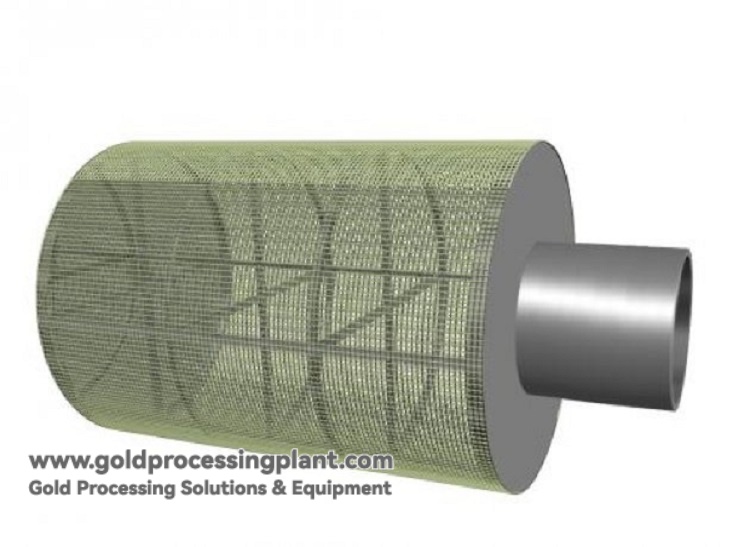
II. Whole-ore Cyanidation: Under What Conditions Can a Conglomerate-Type Gold Deposit Directly Adopt This Approach?
The logic behind whole-ore cyanidation (CIL/CIP) is as follows: the raw ore is ground to a sufficiently fine particle size; after the gold is fully liberated, it proceeds directly to cyanide leaching and is recovered via activated carbon adsorption, bypassing flotation enrichment. Its advantages include a short process flow, minimal equipment requirements, and relatively low capital investment, making it suitable for small- to large-scale processing plants.
For brecciated gold deposits to be processed directly via CIL/CIP, several conditions must be met simultaneously:
Condition 1: Gold must be predominantly in a free state, with a low proportion of gold entrapped in minerals.
Gold must be fully exposed after grinding so that cyanide can come into contact with it. If laboratory analysis shows that a significant proportion of the gold is finely dispersed and entrapped within sulfides or gangue, it will not be liberated no matter how finely the ore is ground, and the direct cyanide leaching recovery rate will remain low.
Condition 2: The ore must contain little or no interfering elements such as arsenic, carbon, and antimony.
Arsenic consumes cyanide and passivates the surface of gold particles; carbonaceous materials “sequester gold,” re-adsorbing already dissolved gold cyanide complexes; and antimony also interferes with leaching. If the concentrations of these elements are high, pre-treatment is required before leaching, or the process must be switched to a flotation enrichment route.
Condition 3: Low cyanide consumption.
Copper, iron sulfides, and oxide minerals in the ore consume cyanide; high cyanide consumption drives up chemical costs, requiring a reassessment of economic viability.
Condition 4: The grinding fineness can economically meet the liberation requirements.
Whole-ore cyanidation requires grinding the entire raw ore to a fine particle size, and grinding energy consumption is one of the largest cost items in the entire process. If the gold grain size is too fine and ultra-fine grinding is required for liberation, the grinding costs may eat into profits.
There is only one way to reach a conclusion: take representative ore samples to conduct whole-ore cyanidation leaching tests (including CIL/CIP comparison tests) and verify feasibility using leaching recovery data. Launching a whole-ore cyanidation line without test data is the greatest investment risk for conglomerate-type gold deposits—if the leaching rate fails to meet expectations after construction, the cost of rework will far exceed the cost of testing.
III. How to Choose Between CIL and CIP in Whole-Ore Cyanidation
Once it has been confirmed that whole-ore cyanidation is feasible, a choice must be made between CIL and CIP:
CIL (Carbon-in-Leach)
Leaching and activated carbon adsorption occur simultaneously, with leaching and adsorption taking place concurrently. Activated carbon is added to the final tank and moves forward in a countercurrent flow, coming into contact with the ore slurry in the opposite direction. This process is compact, requires fewer tanks, and is suitable for small- to large-scale processing plants; it is currently the more widely used configuration.
CIP (Carbon-in-Pulp Process)
Leaching is completed first, followed by the addition of activated carbon in the adsorption tank. This method allows for a more thorough leaching period and finer-grained stage-by-stage control, making it suitable for ores with relatively fast leaching rates that require precise stage-by-stage control; it is commonly used in large-scale processing plants.
Selection Criteria: For ores with fast leaching rates, the CIL process offers high efficiency and a streamlined workflow through simultaneous leaching and adsorption; for ores requiring longer leaching times or precise stage-by-stage control, the CIP process is more suitable. The specific choice depends on the kinetic data from leaching tests, while also taking into account processing capacity and investment budget.
IV. Process Parameters for Whole-Slurry Cyanidation: Key Points to Strictly Control
1. pH Control.
Leaching is carried out under alkaline conditions, with pH typically maintained between 10 and 11, adjusted using lime or sodium hydroxide. If the pH is too low, cyanide is prone to volatilization and loss; if too high, it affects leaching rate and lime consumption. Lime addition must be stable and continuous.
2. Grinding Fineness.
This determines the degree of gold dissociation and is the primary variable affecting recovery rates in whole-ore cyanidation. Insufficient fineness prevents encapsulated gold from being released; over-grinding increases energy consumption and slurry formation, affecting subsequent thickening and adsorption. The optimal fineness is determined through a combination of grinding and leaching tests.
3. Cyanide Concentration and Dosage.
Too low a concentration results in slow leaching, while too high a concentration wastes reagents and increases environmental treatment demands. These parameters must be dynamically adjusted based on the ore\'s cyanide consumption characteristics and precisely controlled using a dedicated reagent dosing system.
4. Leaching Time and Number of Tanks.
Multiple tanks connected in series ensure adequate leaching time, while the number of stages depends on leaching kinetics. Insufficient leaching time prevents complete gold dissolution; too many stages result in wasted investment.
5. Activated Carbon Concentration and Gold-Loaded Carbon Management.
Activated carbon concentration affects the adsorption rate; gold-loaded carbon must be promptly lifted and desorbed to prevent the carbon from losing its adsorption capacity after becoming “saturated” within the system. The capacity of the carbon lifters and the desorption electrolysis capacity must be matched to the output of gold-loaded carbon.
6. Dissolved Oxygen.
Cyanide leaching requires oxygen, so the leaching tanks must be aerated. Insufficient aeration slows leaching, while excessive aeration increases energy consumption.
7. Thickening and Dewatering.
After grinding, the slurry concentration must be adjusted to meet leaching requirements; dewatering in the thickener is a critical step, especially for brecciated ores with high clay content.
V. Complete Equipment Configuration: From Raw Ore to Refined Gold
The complete equipment configuration for a whole-ore cyanide CIL line processing brecciated gold ore is as follows:
Crushing and Grinding Section:
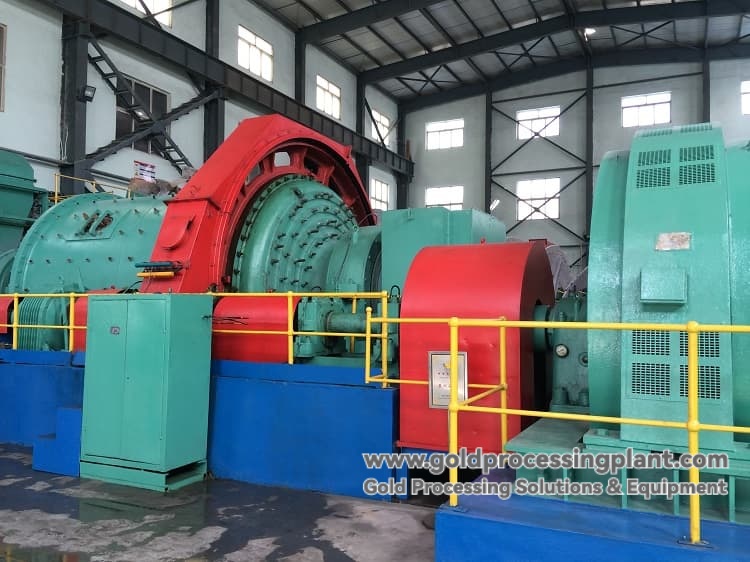
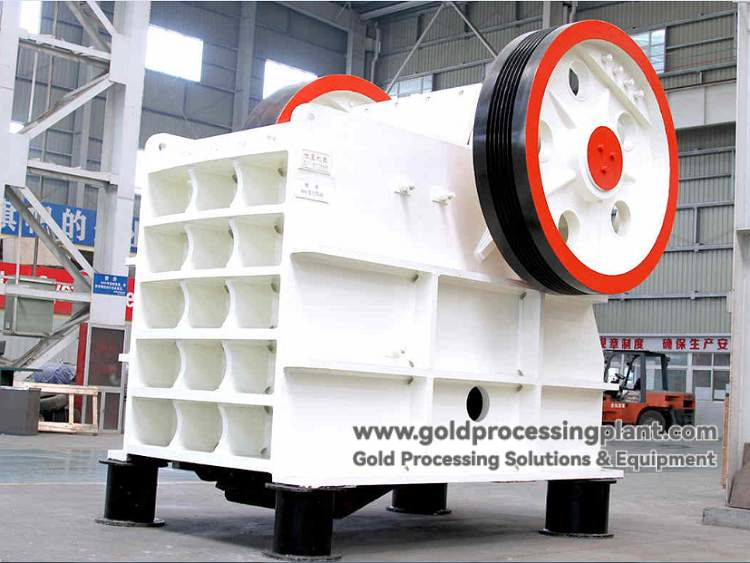
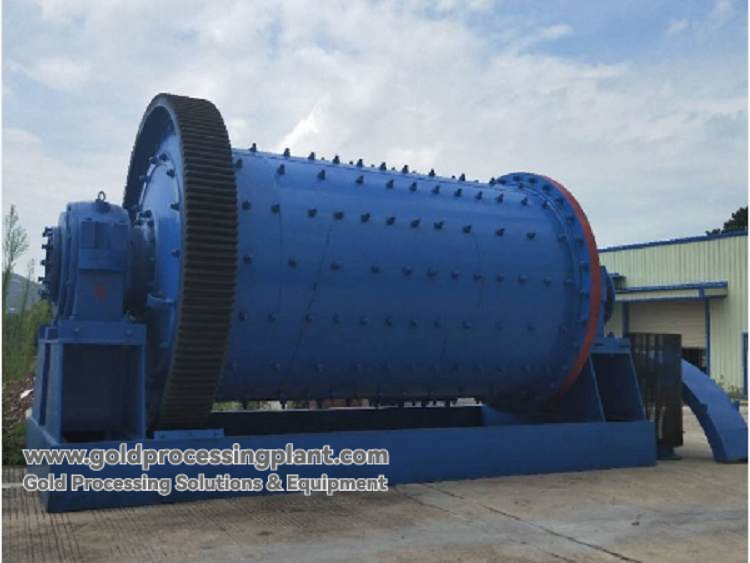
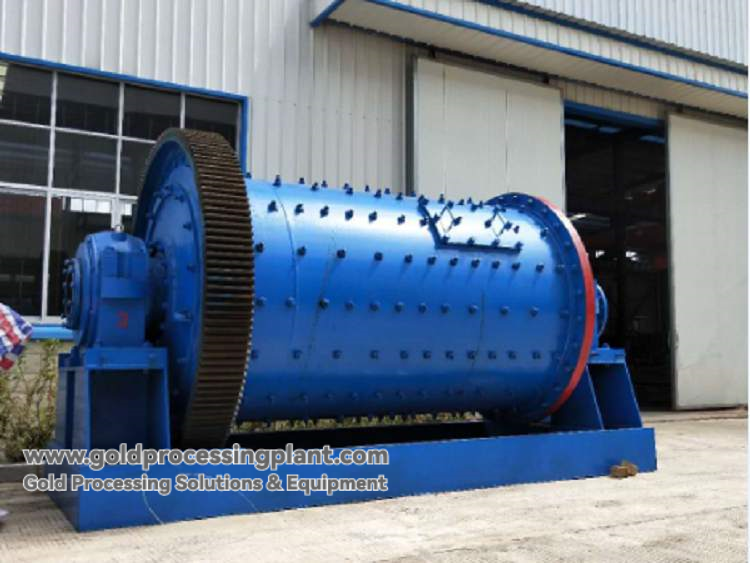
Vibrating feeder → Jaw crusher (primary crushing) → Cone crusher(medium and fine crushing) → Circular vibrating screen → Ball mill (first stage: grid type + second stage: overflow type, or single-stage configuration depending on scale) → Spiral classifier/hydrocyclone closed circuit. This follows the principle of “more crushing, less grinding.”
Thickening and Dewatering Section:
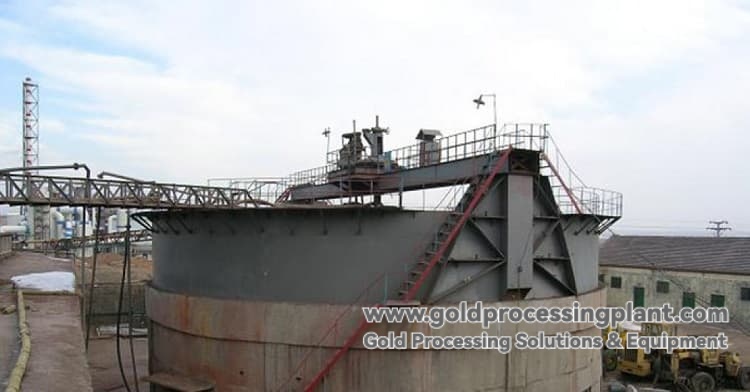
High-efficiency thickener (for adjusting slurry concentration); a flocculant dosing system may be installed when the mud content is high.
Leaching and Adsorption Section:
Leaching tanks (with agitation and aeration, multiple tanks in series) → High-efficiency dual-impeller carbon-in-leach (CIL) tanks (simultaneous leaching and suction) or adsorption tanks (CIP) → Carbon separation screen (separation of gold-bearing carbon from slurry) → Carbon extractor (extraction of gold-bearing carbon) → Activated carbon addition system.
Desorption and Electrolysis Section:
Acid washing → Desorption and electrolysis equipment (room temperature and atmospheric pressure for conventional processing; high temperature and high pressure for more thorough desorption, suitable for large-scale or hard-to-desorb ores) → Electrolysis cell → Gold smelter to produce refined gold.
Tailings Treatment Section:
Tailings Thickener → Plate-and-Frame Filter Press (for dry tailings disposal) → Wastewater Treatment and Cyanide Decomposition System (to meet environmental standards).
Auxiliary Equipment:
Slurry pumps, carbon recovery pumps, belt conveyors, agitation tanks, chemical preparation and dosing systems, voltage stabilization and soft-start electrical configurations.
Three Key Considerations for Equipment Configuration:
First, a fully integrated system is superior to a pieced-together one. The number of leaching tank stages, carbon-in-leach tank specifications, carbon-separating screen aperture size, carbon recovery unit capacity, and desorption/electrolysis processing capacity—these parameters form a system of interdependent equations.Mixing equipment from different manufacturers results in mismatched interfaces and parameters, leading to carbon leakage, tank blockages, and a backlog of gold-bearing carbon during operation. Only when process design and equipment manufacturing are managed by the same team can the seamless integration of “ore—process—equipment” be guaranteed.
Second, design must be customized to ore characteristics, not based on inventory. Conglomerate ores exhibit significant individual variation; ores with high clay content require enhanced thickening and desliming; flow components exposed to abrasive siliceous conglomerate must be upgraded with wear-resistant materials; and acidic leaching environments require corrosion-resistant configurations.
Third, environmental protection measures must be designed concurrently. Tailings water management, cyanide deactivation treatment, and dry tailings disposal for the cyanidation process must be planned together during the design phase; environmental protection measures cannot be added after the plant is already built.
VI. When Direct Whole-Slurry Cyanidation Is Not Feasible: Switching to a Combined Process
If ore sample tests indicate the following conditions, direct whole-ore cyanidation is not economically viable, and a combined process should be adopted:
High gold encapsulation and low direct leaching recovery:
First, flotation is used to concentrate gold-bearing sulfides into a concentrate. The concentrate is then pretreated (using proprietary reagents, roasting, pressurized oxidation, or bio-oxidation) to release the encapsulated gold before cyanidation. The value of flotation lies in reducing the volume of raw ore requiring pretreatment to a small amount of concentrate.
Significant interference from arsenic and carbon:
Flotation should be used to suppress carbon-bearing materials or to separately flotate arsenic-gold concentrates; leaching should follow after pretreatment to eliminate gold entrapment and passivation effects.
Coexistence of coarse-grained free gold and fine-grained encapsulated gold:
Incorporate a centrifugal separator into the grinding circuit to recover coarse-grained gold early; use flotation to concentrate sulfides; leach the concentrate after pretreatment; employ a combined “gravity separation + flotation + cyanidation” process. “Early and maximum recovery” of coarse-grained gold helps prevent loss due to overgrinding.
The selection of key process nodes in the combined process—such as the placement of gravity separation within the grinding circuit and whether flotation tailings should be reground and re-leached—determines the overall recovery rate. The economic viability must be verified through testing; decisions cannot be made arbitrarily.
VII. Investment Reference and Project Timeline
Estimated Investment: Taking a complete set of CIP/CIL main equipment as an example (in US$10,000, excluding civil engineering, installation, logistics, and auxiliary materials): approximately 350,000–500,000 for a daily processing capacity of 100 metric tons, approximately 450,000–750,000 for 200 metric tons,300 metric tons: approximately 600,000–900,000; 500 metric tons: approximately 900,000–1,350,000; 1,000 metric tons: approximately 1,500,000–1,900,000. The lower end of the range corresponds to standard configurations, conventional oxidized ores, and typical operating conditions; the upper end corresponds to non-standard customizations, complex ores, and more comprehensive solutions.
Project Duration: Typically 8–15 months—Process Design and Technical Proposal: 7–15 days → Engineering Design: 20–30 days → Equipment Manufacturing: 60–120 days → Logistics: 30–60 days → Installation and Commissioning: 60–150 days.For brecciated ores, if ore properties fluctuate significantly or contain interfering elements, the preliminary testing period will be extended. Providing representative ore samples as early as possible to initiate process validation is the first step toward shortening the overall project duration.
VIII. Whether Whole-Slurry Cyanidation Is Feasible Depends on Test Data
Cobble-type gold deposits possess the inherent conditions for whole-ore cyanidation—gold is primarily in a free state, and the sulfide content is low. However, “possessing the conditions” does not equate to “being ready to proceed”; interference from arsenic, carbon, and antimony, as well as the degree of gold encapsulation, must be verified one by one through ore sample testing.