


How to Choose Gold Processing Equipment for Small-Scale Mines? Mineral Processing Equipment Manufacturers Provide Comprehensive Production Line Solutions
How to Choose Gold Processing Equipment for Small-Scale Mines? Mineral Processing Equipment Manufacturers Provide Comprehensive Production Line Solutions
When investing in a small-scale gold mine, there are two major concerns: first, purchasing equipment that\'s too large, tying up capital and preventing cash flow; second, purchasing the wrong equipment, resulting in insufficient production capacity and low recovery rates—leading to losses from the moment operations begin. Every penny in a small mine\'s budget is hard-earned, so there\'s no room for trial and error when selecting equipment.
So how exactly should you choose processing equipment for a small-scale gold mine? The guiding principle is simple: just because the scale is small doesn\'t mean you can settle for subpar equipment. The first step in selecting equipment is to define the processing workflow, and the prerequisite for defining the workflow is to thoroughly understand the ore. Following this logic, this article clearly explains equipment selection and comprehensive production line solutions for small-scale gold mines.
I. Defining the Scope: What Constitutes “Small-Scale”?
According to industry conventions, a small-scale gold processing plant generally refers to a facility with a daily processing capacity of 30 to 300 metric tons; anything above that up to 500 metric tons is considered medium-scale. Small-scale operations are commonly found in:
Start-up projects where the mining rights have just been acquired, funding is limited, and the goal is to build a processing line to extract gold and recoup funds;
Mines with scattered ore deposits, limited ore volumes, and unsuitable for large-scale fixed processing lines;
Scenarios with relatively dispersed ore sources, such as alluvial placer deposits, riverbed deposits, and residual slope deposits;
Partial retrofits of existing processing plants, where only some equipment is replaced or supplemented.
Small scale affects equipment specifications and investment budgets but does not affect design and process standards. Small-scale processing plants must still conduct ore property analyses and determine their processing flow based on ore occurrence conditions; skipping this step renders even the cheapest equipment a waste of money.
II. The First Step Is Not Selecting Equipment, but Determining the Process Flow
Process routes for small-scale gold mines are divided into three major categories based on ore type:
1. Placer gold deposits: A complete process involving washing and gravity separation, with no need for grinding
Gold occurs in free, individual particles, so the core processes are “washing” and “gravity separation”: ore washing and classification using a trommel screen or ore washer → rough selection via chutes → enrichment using a centrifugal concentrator → fine selection using a shaking table → smelting of the combined gold concentrate.Over-size waste rock is discharged, while the under-size slurry enters the gravity separation system; recycled water can recover most of the process water.
Two configurations for small-scale placer gold mines: the mobile solution is suitable for dispersed ore sites and short-term mining—simply set up and go; the stationary solution is suitable for concentrated ore sources and slightly larger-scale operations. When clay content is high, enhanced ore washing is required; coarse-grained gold is recovered using chutes and centrifuges, while fine-grained gold is recovered using shaking tables or centrifugal sweepers.
2. Rock Gold Deposits: Crushing and grinding are prerequisites; the separation method depends on the gold\'s occurrence state
- Gold in sulfides (pyrite, arsenopyrite containing gold), fine-grained disseminated, and polymetallic association → flotation as the primary method, with concentrate sent for smelting or cyanidation;
- Gold is predominantly in a free state, with simple gangue and no interfering elements such as arsenic, carbon, or antimony → Whole-ore cyanidation (CIL/CIP) is a more direct approach;
- High content of coarse-grained free gold → Incorporate a centrifugal separator into the grinding circuit to recover coarse-grained gold early, followed by a combination of flotation or cyanidation.
3. Difficult-to-process ores (arsenic-bearing, carbon-bearing, or with fine-grained encapsulation)
Small-scale projects must exercise extreme caution when encountering this type of ore: conventional cyanidation yields low leaching rates, requiring a combined process of flotation enrichment + pre-treatment + cyanidation, which increases both investment and the testing cycle. It is not recommended for small-scale mines to install equipment directly without conducting ore sample tests; first, perform recoverability tests to assess economic viability, then discuss equipment configuration.
It must be emphasized here: small-scale mines are most susceptible to being “short-changed” by cutting corners. Some operators simply copy equipment lists from “other processing plants of the same scale,” only to discover that the ore types are completely different. Even if flotation cells are installed, if the ore contains encapsulated gold, recovery rates will still remain low. The same flotation cell can yield recovery rates that differ by as much as 20 percentage points when used on quartz vein-type versus Carlin-type ores.
III. Equipment Configuration for a Complete Small-Scale Gold Mine Production Line
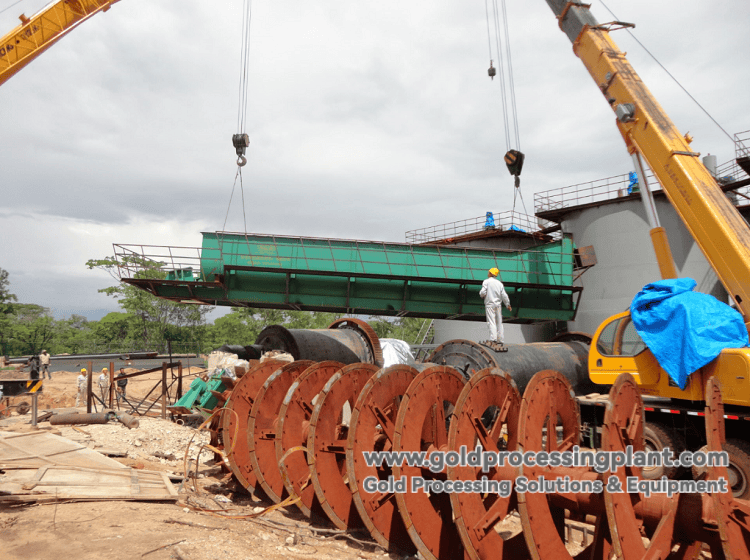
Taking a rock gold ore flotation line (daily processing capacity of 100–300 metric tons) as an example, the equipment configuration for a complete production line is as follows:
Crushing Section:
Vibrating feeder → Jaw crusher (primary crushing) → Cone crusher (secondary and tertiary crushing) → Circular vibrating screen. Small-scale lines typically use a two-stage closed-circuit configuration, adhering to the principle of “crush more, grind less,” which maximizes the workload of the crushing stage and minimizes power consumption in the grinding stage.
Grinding and Classification Section:
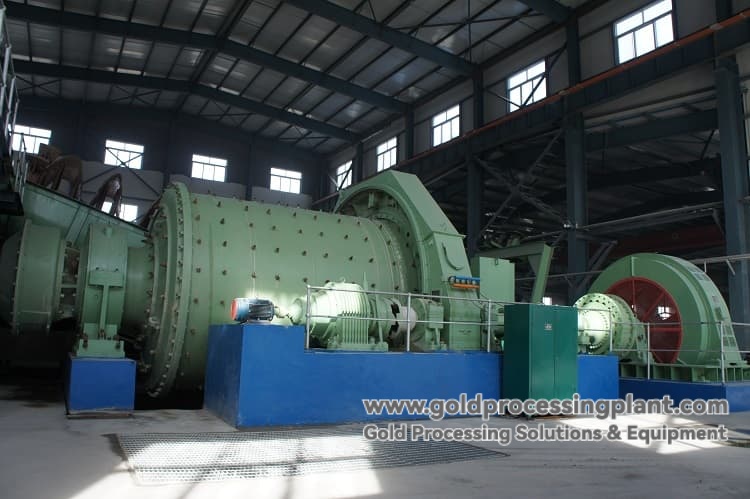
Ball mill (small-scale lines typically use a single-stage grate-type ball mill, which offers high throughput and minimizes over-grinding) → Spiral classifier or hydrocyclone in a closed-circuit system; qualified fine powder is discharged, while coarse sand is returned for regrinding. The fineness of grinding determines the liberation degree of gold-bearing minerals, which is a critical parameter for the entire line.
Beneficiation Section:
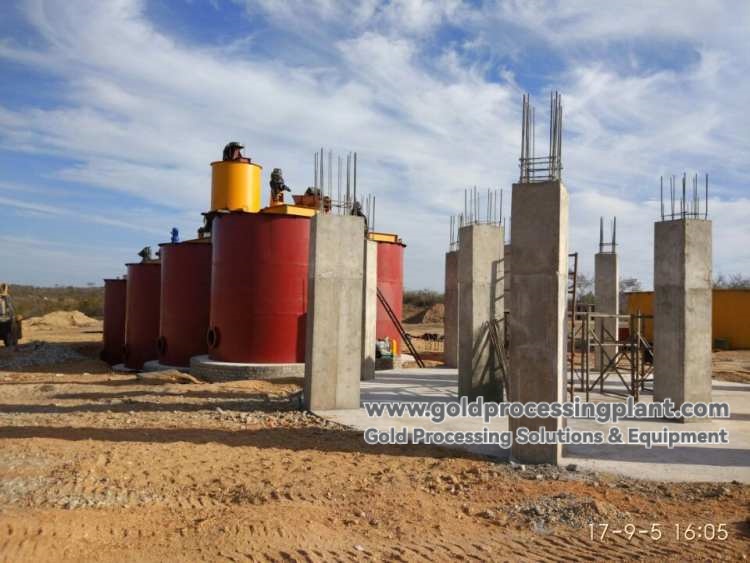
Agitation tank for slurry adjustment and reagent addition → Flotation unit (SF-type self-priming flotation cells are suitable for the roughing and scavenging stages of small-scale lines; configurations can include one roughing, two concentrating, and two scavenging stages) → Thickener → Filter press to produce gold concentrate. If gravity separation is included, a centrifugal separator and shaking table for fine selection are added to the grinding circuit.
Dewatering Section:
Thickener sedimentation and dewatering → Plate-and-frame filter press processing; the concentrate filter cake directly meets transportation requirements, and tailings can be dry-discharged.
Auxiliary Equipment:
Slurry pumps, belt conveyors, agitation tanks, and chemical dosing systems.
For a cyanide line, the beneficiation section is replaced with a leaching and adsorption system: leaching tanks (multiple tanks in series) → carbon-in-leach (CIL) tank/adsorption tank → carbon separator → carbon recovery unit → desorption and electrolysis → gold smelter; equipped with a thickener and a tailings filter press.
There are three key points for configuring a small-scale line:
First, equipment specifications should be matched to processing capacity; do not aim to “get it all done in one go.” Purchasing oversized equipment for a small-scale line—with high motor power, high electricity consumption, and expensive spare parts—while operating below full capacity is equivalent to tying up capital in the equipment. Precise equipment selection prevents overcapacity.
Second, do not skimp on key equipment; auxiliary equipment can be simplified. Core equipment such as crushers, mills, and separators determines recovery rates and must be fully configured according to process requirements; automated controls, backup units, and other components can be phased in according to the budget, provided that initial designs reserve interfaces for future integration.
Third, equipment must be integrated as a complete system. If crushers, ball mills, classifiers, and flotation machines come from different manufacturers, there is a high risk of mismatches in interface dimensions, processing capacity, and energy consumption. This results in reduced production capacity once operations begin, and when problems arise, parties tend to pass the blame onto one another. Small-scale production lines, in particular, cannot withstand such complications—especially without a professional engineering team to coordinate among multiple parties.
4. How to Select Equipment Manufacturers: A Comprehensive Production Line Solution Is More Important Than Individual Machine Quotes
Small-scale mines typically use two approaches when sourcing equipment: one is to purchase individual machines from different manufacturers and assemble the line themselves; the other is to find a single supplier that provides a comprehensive production line solution. For small-scale mines, the latter option generally offers better value for money for three reasons:
1. The process and equipment are managed by the same team.
The number of flotation stages and the reagent regimen must be determined before the specifications of the flotation cells can be finalized; the grinding fineness must be determined before the classification equipment can be selected. When process design and equipment manufacturing are handled by the same team, equipment selection is based on the specific characteristics of the ore, rather than simply “matching equipment to inventory.”
2. There is a single entity responsible.
When the entire line is supplied by a single provider, responsibility is clear if production capacity or recovery rates fall short. With a pieced-together line, if problems arise, the equipment manufacturer may blame the process, while the process designer may blame the equipment—leaving the small mine owner to act as the arbiter, a role they cannot afford to take on.
3. Upfront costs are tax-deductible, and the decision-making threshold is low.
Reputable manufacturers typically offer flexible, modular services: clients can opt for just process design and equipment selection quotes, purchase only engineering drawings, procure only equipment, or hire engineers for on-site commissioning—without mandatory bundling. Upfront process design fees can be offset against the equipment cost when the equipment contract is subsequently signed.Small mine owners can start by investing a modest amount to solidify their plan before deciding how much to invest.
Four questions to ask when selecting a manufacturer:
- Do they have actual case studies involving similar types of ore? Not just “experience with gold mines,” but specifically with gold mines featuring the same ore conditions as yours;
- Is the process design and equipment manufacturing handled by the same team? Small mines cannot afford the pitfalls of discrepancies between drawings and equipment;
- How are installation and commissioning tasks divided? The standard approach is for the manufacturer to dispatch engineers to provide on-site installation guidance, lead individual unit commissioning, and conduct integrated trial runs with actual ore, while the client organizes local civil engineering and general installation workers—this ensures technical quality while saving significant costs on dispatched labor;
- Is the supply of spare parts guaranteed? We recommend purchasing wear-and-tear parts along with the initial equipment shipment to avoid production downtime due to parts shortages during the early stages of operation.
V. Investment Guidelines and Construction Timeline
Investment Estimate: Taking a complete set of main equipment for the CIP/CIL process as an example (in US$10,000, excluding civil engineering, installation, logistics, and auxiliary materials): 30 metric tons per day is approximately 200,000–350,000; 50 metric tons per day is approximately 250,000–400,000;100 metric tons: approximately 350,000–500,000; 150 metric tons: approximately 400,000–650,000; 200 metric tons: approximately 450,000–750,000; 300 metric tons: approximately 600,000–900,000.The equipment configurations for flotation and gravity separation lines differ, so prices must be calculated separately based on the specific process design. The lower end of the range corresponds to standard configurations, conventional ores, and typical operating conditions, while the upper end corresponds to non-standard customizations and complex ores.
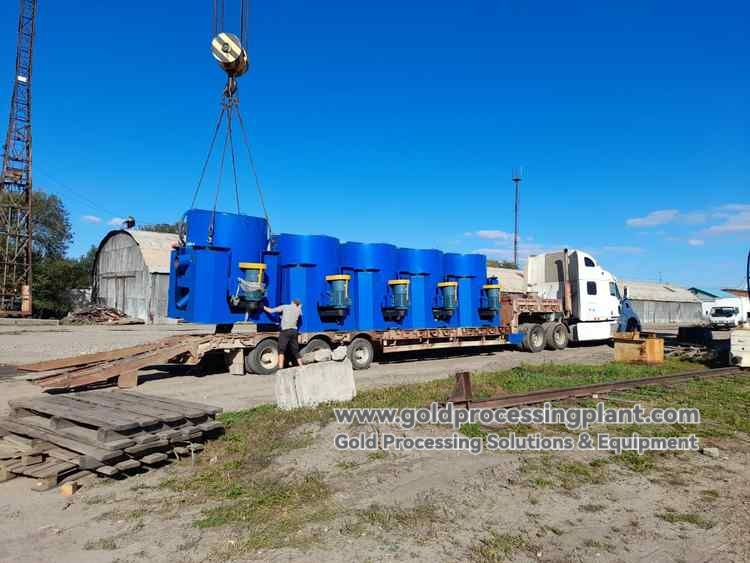
Construction Timeline: For a typical gold mining project, the timeline from process design to production start-up is 8–15 months (process design: 7–15 days → engineering design: 20–30 days → equipment manufacturing: 60–120 days → logistics: 30–60 days → installation and commissioning: 60–150 days).The process flow for small-scale lines is relatively simple, and the construction schedule can be shortened by reasonably interweaving the various stages. Providing representative ore samples as early as possible to initiate process design is the first step in shortening the overall construction period.
If the budget is limited, construction can be carried out in phases: first, build the core crushing, grinding, and beneficiation sections to ensure the production of gold concentrate; then, gradually improve the environmental protection and dry tailings disposal systems in later phases. During the initial design phase, ensure that interfaces for later phases are properly planned to guarantee the continuity of the overall process.
VI. Selecting Equipment for Small-Scale Gold Mines: Understand the Ore Before Selecting Equipment
Selecting equipment for small-scale gold mines is essentially a matter of matching “ore—process—equipment.” Given the small scale and lower margin for error, it is absolutely essential not to skip ore sample analysis and process design and proceed directly to purchasing equipment.
The correct sequence is always: Collect representative ore samples → Conduct ore property analysis(conduct feasibility tests if necessary) → Determine the process route → Select equipment based on the process → Have an engineer on-site to commission the plant until gold production is achieved. The value of a turnkey production line solution provided by equipment manufacturers lies not in “selling equipment as a package,” but in seamlessly integrating these four steps under the coordination of a single team.
If you are planning a small-scale gold processing plant or wish to evaluate whether your existing configuration is appropriate, please contact GoldProcessingPlant—from ore samples to production, we provide tailored turnkey production line solutions based on your funding schedule and ore characteristics.