


Specialized Solutions for the Mining and Processing of Arsenic-Bearing Gold Ore | High-Efficiency Gold Extraction Processes and Environmental Compliance Technologies
Specialized Solutions for the Mining and Processing of Arsenic-Bearing Gold Ore | High-Efficiency Gold Extraction Processes and Environmentally Compliant Technologies
Arsenic-bearing gold ore is widely recognized in the gold mining industry as a “tough nut to crack.” Gold is encapsulated within arsenopyrite and arsenic-bearing pyrite, and no amount of grinding—no matter how fine—can extract it;conventional whole-ore cyanide leaching recovery rates are often only 20%–50%, resulting in high reagent consumption and tailings with arsenic content that must be treated as hazardous waste. When many mine owners encounter this type of ore, their first reaction is, “Is it hopeless?”—but in reality, it\'s not the ore that\'s hopeless; it\'s the process that isn\'t tailored to the specific challenges.
Starting with the characteristics of the ore, this article clearly explains the mining and beneficiation process flow, equipment configuration, and key points for meeting environmental standards for arsenic-bearing gold ores.
I. Understanding the Basics: What Makes Arsenic-Bearing Gold Ore So Challenging
The “challenges” of arsenic-bearing gold ore primarily lie on three levels:
First, the form in which gold is present.
In arsenic-bearing gold ores, gold is often associated with arsenopyrite (FeAsS) and arsenopyrite, frequently existing in the form of fine-grained encapsulated gold, submicroscopic gold, or even invisible gold.Since the gold is encapsulated within the sulfide crystal lattice, conventional grinding cannot achieve single-particle liberation; cyanide cannot reach the gold, and leaching rates naturally remain low.
Second, interference from arsenic.
During the leaching process, arsenic consumes cyanide and oxygen, forming arsenides that coat the surface of gold particles and create a passivation layer, further hindering the dissolution of gold. The higher the arsenic content, the less economically viable conventional cyanidation becomes.
Third, environmental pressure.
If arsenic-containing tailings and leachate are not properly treated, there is a risk of environmental pollution. The stockpiling, transportation, and disposal of arsenic-containing materials are subject to strict environmental requirements, which directly dictate that the process route cannot focus solely on “how much gold can be recovered,” but must also consider “how to ensure tailings meet regulatory standards.”
Therefore, the core logic behind the design of processing schemes for arsenic-bearing gold ores is: first concentrate, then break down the encapsulation, and finally extract the gold—while strictly controlling the movement of arsenic throughout the entire process.
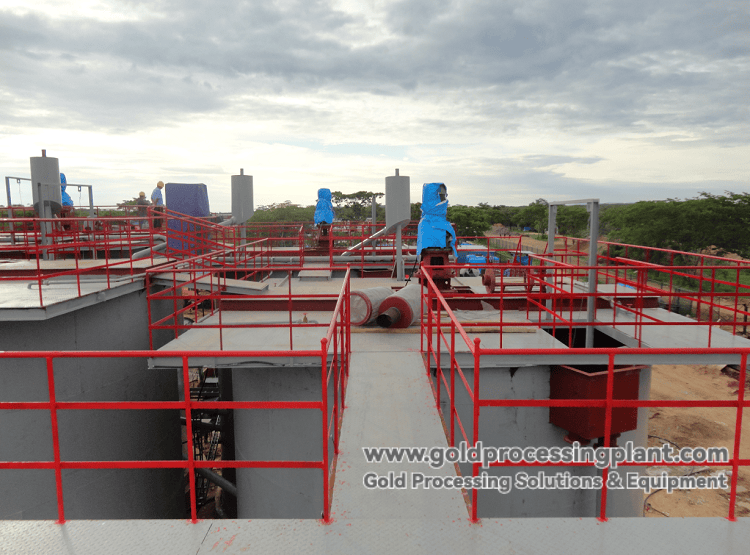
II. Process Flow: Flotation Concentration + Pretreatment + Cyanidation
This is the mainstream route for arsenic-bearing gold ores and also the route with the most controllable economic viability. It consists of three steps:
Step 1: Flotation Enrichment of Arsenic-Gold Concentrate
Use flotation to concentrate gold-bearing sulfides—such as arsenopyrite and arsenic-bearing pyrite—into a concentrate, while the tailings are directly discarded.The value of this step lies in reducing the large volume of raw ore requiring pretreatment to a small amount of high-grade concentrate, thereby significantly reducing the processing volume for subsequent pretreatment and cyanidation, and consequently lowering investment and reagent costs.
Key control points:
- The grinding fineness must ensure the individual liberation of gold-bearing sulfides, but there is no need to blindly pursue excessive fineness; over-grinding increases sludge formation and reagent consumption;
- The reagent regimen determines selectivity—the type and dosage of collectors, pH adjusters, and the ratio of activators to inhibitors must be adjusted based on the differences in floatability between arsenopyrite and pyrite;
- For arsenic-bearing ores, options include inhibiting arsenopyrite, flotating arsenic-gold concentrate separately, or flotating arsenic and gold together followed by separation, depending on the arsenic content and the subsequent pretreatment method;
- The grade of the flotation concentrate and the sulfur recovery rate directly impact the economic viability of subsequent pretreatment; these two indicators must be clearly verified during the pilot testing phase.
Step 2: Pre-treatment to Break the Encrustation
The gold in the flotation concentrate remains encapsulated by sulfides, so the encapsulation structure must first be disrupted. Options include:
Proprietary Reagent Pretreatment
A customized reagent system for arsenic- and carbon-bearing ores that breaks down the sulfide coating and eliminates the passivation effect of arsenic prior to leaching; this process is relatively simple and requires lower capital investment;
Roasting and Oxidation
High-temperature oxidation of sulfides and arsenic exposes the encapsulated gold. This is a well-established process; however, arsenic enters the flue gas in the form of As₂O₃, requiring a dedicated flue gas arsenic recovery and solidification system, resulting in high environmental protection costs;
Pressurized Oxidation
Oxidation of sulfides under high-temperature, high-pressure acidic conditions results in thorough gold dissociation and high recovery rates, making it suitable for large-scale projects; however, it requires significant capital investment in equipment and has high operational demands;
Biological Oxidation
Utilizes acidophilic bacteria to oxidize sulfides. This method is relatively low-cost and environmentally friendly, but the oxidation cycle is long (ranging from several days to over ten days) and is highly dependent on temperature and pulp conditions;
Chemical Oxidation
This process uses oxidizing agents to break down the encapsulation at atmospheric pressure and is suitable for small- to medium-scale operations or specific ore types.
The choice of pretreatment depends on arsenic content, the degree of gold entrapment, processing scale, local environmental requirements, and investment budget. This cannot be decided on a whim; it is essential to conduct ore sample tests to compare the leaching rates and costs of each option.
Step 3: Cyanide Leaching for Gold Recovery
The pretreated concentrate (or roasted ore, or oxidized slag) enters the cyanide leaching process. Once the gold is dissolved, it is recovered via activated carbon adsorption (CIL/CIP) or zinc powder displacement. Since the encapsulation has been broken and arsenic interference eliminated, the leaching recovery rate in this step can exceed the contractually agreed-upon targets.
If the gold in the ore is predominantly in a free state, the arsenic content is low, and the gangue is simple, the feasibility of direct whole-ore cyanidation (CIL/CIP) can also be evaluated; however, leaching tests must be conducted to verify this approach before proceeding with arsenic-bearing ore—assumptions should not be made.
Alternative Process: Combined Gravity Separation + Flotation + Cyanidation
If coarse-grained free gold and fine-grained encapsulated gold coexist in the ore, a centrifugal separator can be installed in the grinding circuit to recover coarse-grained gold in advance, while flotation is used to concentrate gold-bearing sulfides, followed by cyanidation after concentrate pretreatment.“Early and maximum recovery” of coarse-grained gold helps prevent its loss to tailings due to overgrinding. The selection of process nodes in the combined process—such as the placement of gravity separation within the grinding circuit and whether to regrind and re-leach flotation tailings—determines the overall recovery rate; the economic viability must be verified through testing.
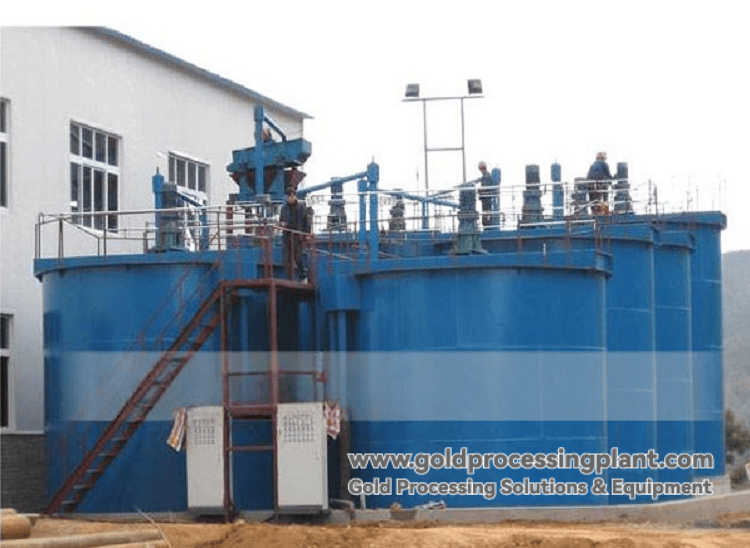
III. How to Configure the Complete Equipment Set
Based on the “flotation enrichment + pretreatment + cyanidation” main process flow, the equipment configuration is as follows:
Crushing and Grinding Section:
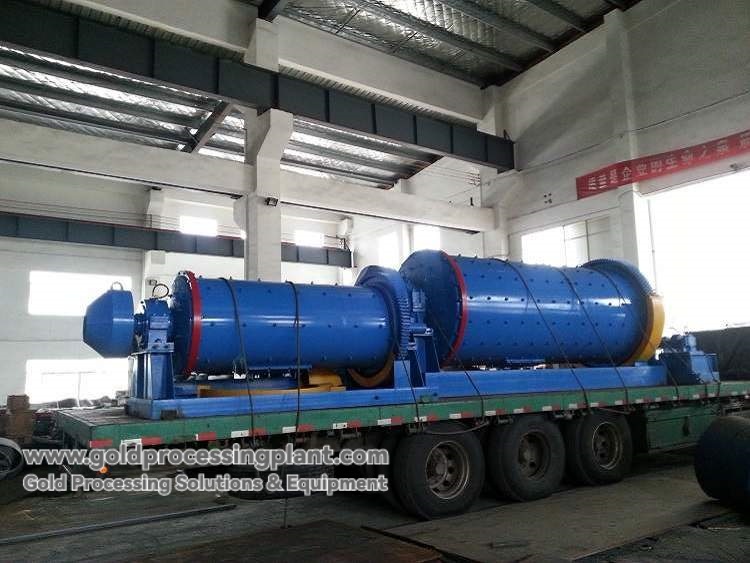
Jaw crusher for primary crushing → Cone crusher for secondary and fine crushing → Ball mill (first stage: grid type; second stage: overflow type) in a closed circuit with a spiral classifier or hydrocyclone. Adhering to the principle of “more crushing, less grinding,” the crushing stage handles the bulk of the work, while the grinding stage consumes less electricity.
Flotation Section:
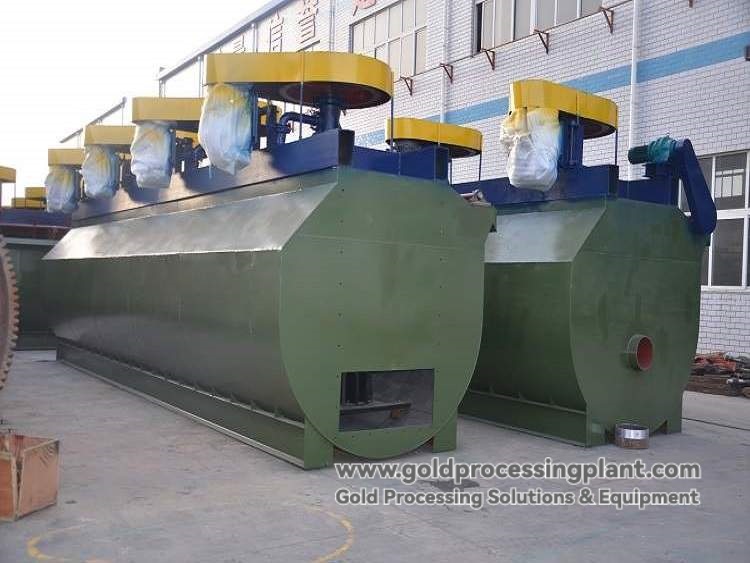
Agitation tank for slurry preparation and chemical dosing → Flotation machine units (SF-type self-aspirating flotation machines are suitable for the front end of roughing and scavenging; XCF/KYF-type aerated flotation machines are suitable for large-scale configurations, allowing for combinations ranging from one roughing, two concentrating, and two scavenging stages to one roughing, three concentrating, and three scavenging stages) → Thickener → Filter press to produce arsenic-gold concentrate.
Pre-treatment Section:
Configured according to the selected method. For chemical pretreatment: reagent preparation and dosing systems, reaction tanks; for roasting: fluidized bed roasters, flue gas arsenic recovery and solidification systems; for pressurized oxidation: autoclaves and supporting equipment; for biological oxidation: bioreactors, aeration, and temperature control systems.
Cyanide Leaching Section:
Leaching tanks (equipped with agitation and aeration; sodium cyanide and lime are added to adjust pH to 10–11) → Activated carbon adsorption system (CIL: dual-impeller carbon leaching tanks for simultaneous leaching and adsorption, or CIP: leaching followed by transfer to the adsorption tank)→ Carbon separator → Carbon extractor → Desorption and electrolysis (at ambient temperature and pressure or high temperature and pressure) → Gold smelting furnace to produce alloy gold. A zinc powder displacement process may also be used to treat the precious metal concentrate.
Concentration, Dewatering, and Environmental Protection Section:
Thickening machines and filter presses are used for concentrate and tailings dewatering; dry tailings discharge reduces stockpiling risks; arsenic-containing tailings are subjected to stabilization/solidification treatment in accordance with environmental regulations.
Key Considerations for Equipment Selection: The process and equipment must be designed in close coordination by the same team. The grade of the flotation concentrate determines the scale of pre-treatment; the pre-treatment method determines the configuration of downstream leaching equipment; and leaching parameters determine the number of carbon-in-leach (CIL) tanks and the desorption-electrolysis capacity—if any parameter in this chain is out of sync, the entire system will fail to meet performance targets.Piecing together equipment from different manufacturers—where interfaces, production capacity, and control logic do not align—leads to mutual blame when problems arise, which is the most common pitfall in arsenic-bearing gold ore projects.
IV. Environmental Compliance: The Path of Arsenic Must Be Controlled Throughout the Entire Process
Achieving environmental compliance for arsenic-bearing gold ore projects is not simply a matter of installing an end-of-pipe wastewater treatment system; rather, the flow of arsenic must be clearly planned from the process design stage:
1. Arsenic solidification and stabilization.
Flotation concentrates arsenic into the concentrate; during the pretreatment stage, arsenic enters flue gas (roasting) or leachate (pressurized/biological oxidation), requiring corresponding arsenic recovery, solidification, or stabilization processes.Arsenic-containing tailings, arsenic-calcium slag, and similar materials must be disposed of in accordance with local environmental standards and cannot simply be stockpiled.
2. Treatment of leachate and tailings water.
Arsenic and cyanide in cyanide leachate must be treated to meet regulatory standards before being recycled or discharged. Supporting wastewater treatment and cyanide deactivation systems are required.
3. Dry tailings disposal.
A filter press compresses the tailings into a filter cake for dry discharge, reducing the risk of leakage from arsenic-containing tailings water and facilitating subsequent stockpile management.
4. Local Compliance.
Environmental approval processes, discharge standards, and hazardous waste management requirements at the project site must be thoroughly understood during the design phase to avoid discovering that environmental permits cannot be obtained after the plant is built.
5. Selection of Clean Processes.
Relatively environmentally friendly pretreatment methods, such as biological oxidation, should be prioritized for evaluation when conditions permit, thereby reducing the burden on end-of-pipe treatment.
Environmental protection investments are not a “financial burden”—if an arsenic-containing gold mine project fails to meet environmental standards, it faces the risk of production suspension and rectification at any time, rendering all initial investments worthless. Integrating environmental protection into the process design is the prerequisite for the project\'s long-term and stable operation.
V. Investment and Timeline Guidelines
The investment in an arsenic-bearing gold ore project depends on the pretreatment method (chemical pretreatment involves relatively low investment, while roasting and pressurized oxidation require higher investment), processing capacity, and supporting environmental protection facilities. The price of complete sets of main equipment can be estimated based on the CIP/CIL process ranges: approximately $350,000–$500,000 for a daily processing capacity of 100 metric tons,300 metric tons: approximately $600,000–$900,000; 500 metric tons: approximately $900,000–$1.35 million; 1,000 metric tons: approximately $1.5 million–$1.9 million (excluding civil engineering, installation, logistics, and auxiliary materials; specific costs are subject to ore testing and project proposals).
The project cycle typically ranges from 8 to 15 months; however, since arsenic-bearing ores require additional process validation and pre-treatment steps, the initial testing phase will be correspondingly extended—the more thorough the ore sample testing, the fewer reworks will be required later on. It is recommended to provide representative ore samples as early as possible to initiate process validation.
VI. Conclusion: Arsenic-bearing gold ores are not hopeless; we simply haven\'t found the right approach
The challenge with arsenic-bearing gold ores has never been “failing to recover the gold,” but rather “how to ‘unwrap\' the ore and contain the arsenic.”The correct sequence is: obtain representative ore samples → conduct ore characterization and comparative testing of pretreatment schemes → determine the process route → select equipment based on the process → design environmental protection measures in parallel → have engineers on-site to fine-tune the process until gold is recovered.
Skipping testing and purchasing equipment directly is the greatest risk in investing in arsenic-bearing gold ore. When others fail to process it effectively, it may be due to a process that doesn\'t address the specific issues or an incorrect chemical regimen—difficult-to-process gold ores are precisely where rigorous process validation and the search for breakthroughs are most needed.
If you have difficult-to-process gold ore containing arsenic, carbon, or fine-grained inclusions, please contact GoldProcessingPlant for ore sample analysis and process validation.