


Full-Service Supplier of CIL Equipment for Gold Mines: How Should the Carbon-in-Leach System and Recovery Process Be Integrated?
Full-Service Supplier of CIL Equipment for Gold Mines: How Do the Carbon-in-Leach System and Recovery Process Work Together?
The core logic of the gold mine CIL (carbon-in-leach) process can be summed up in one sentence: leaching and adsorption occur simultaneously. Cyanide dissolves gold from the ore into the slurry, while activated carbon simultaneously removes the dissolved gold. This eliminates the need for separate leaching and adsorption tanks, resulting in a compact process and lower capital investment.However, what truly determines whether a CIL plant can meet its production targets is not any single leaching tank, but rather whether the carbon-in-leach system and the downstream recovery process are properly integrated and working in tandem—if carbon escapes through the carbon-separating screen, if the carbon extractor fails to retrieve the carbon, or if the desorption and electrolysis capacity does not match the output of gold-loaded carbon,if any single link in the chain fails, the entire CIL system will be unable to produce gold.
This article explains, from the perspective of a turnkey supplier, how the carbon-in-leach system and recovery stages should be properly integrated.
I. First, let\'s examine the complete CIL system chain: from slurry entering the leaching tank to the shipment of consolidated gold
A complete CIL system follows this sequence:
Crushing and grinding → Thickening and dewatering → Leaching tank (addition of cyanide and lime to adjust pH to 10–11) → High-efficiency twin-impeller carbon-in-leach tank (simultaneous leaching and suction; activated carbon is added at the end of the tank and moves forward in a countercurrent flow) → Carbon-separating screen(separation of gold-bearing carbon from the slurry) → Carbon extractor (extraction of gold-bearing carbon) → Acid washing → Desorption and electrolysis (at ambient temperature and pressure or high temperature and pressure) → Gold slurry smelting → Refined gold
Meanwhile, tailings are dewatered and dry-discharged via a thickener and filter press. In this process chain, the carbon-in-leach section serves as the reaction zone where “leaching” and “adsorption” occur simultaneously, while the recovery section functions as the purification zone where “gold on the carbon is converted into gold ingots”; the capacities of these two sections must be matched.
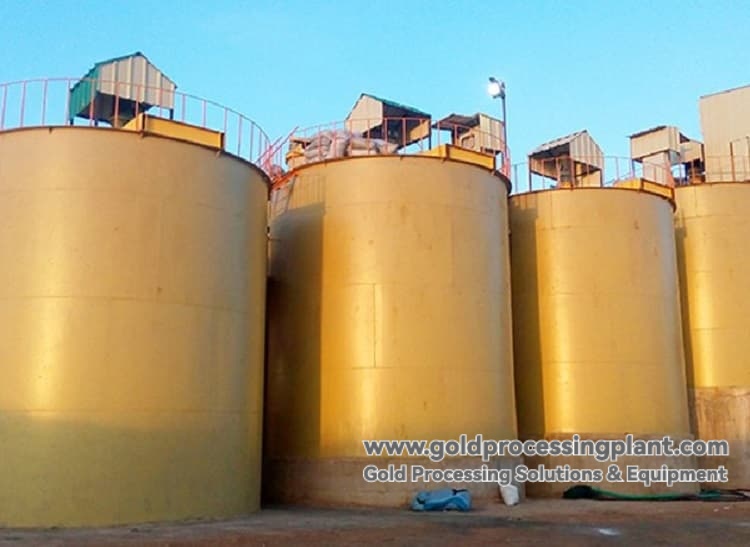
II. How to Configure a Carbon-in-Leach System: Six Key Pieces of Equipment
1. Leaching Tank (with Agitation and Aeration)
Sodium cyanide and lime are added to adjust the pH, allowing gold to dissolve as gold cyanide complexes. The agitation intensity must ensure that the slurry does not settle and that reagents are evenly distributed; aeration provides dissolved oxygen. Multiple tanks connected in series ensure adequate leaching time.
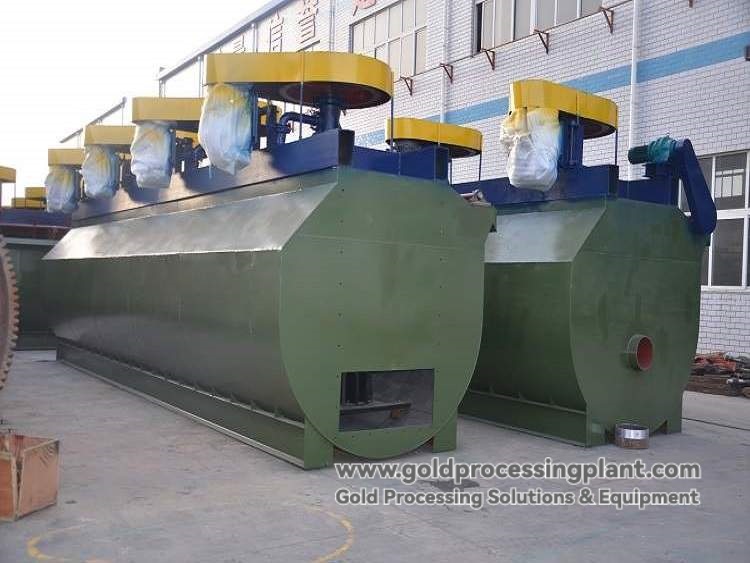
2. High-Efficiency Dual-Impeller Carbon Leaching Tank
The core equipment of the CIL process. Gold is leached while being simultaneously adsorbed by activated carbon. The dual-impeller design ensures that the activated carbon remains uniformly suspended within the tank, preventing it from settling to the bottom or being lost through short-circuiting with the slurry.
3. Carbon Separation Screen
Prevents activated carbon from being carried away with the slurry while allowing the slurry to flow smoothly to the next tank. The screen aperture size must match the particle size of the activated carbon—if the apertures are too large, carbon escapes; if too small, the slurry becomes blocked. This is one of the most common failure points at CIL sites.
4. Carbon Lifter (Air Lifter)
Lifts and extracts the gold-laden activated carbon from the tank and transports it to the desorption section. The carbon extraction capacity must match the output of gold-laden activated carbon; if the carbon cannot be extracted, it will accumulate in the tank, leading to a decline in adsorption efficiency.
5. Activated Carbon Feeding System
New or regenerated carbon is fed in measured quantities into the final stage of the carbon leaching tank and moves forward in a countercurrent flow. The carbon concentration and feed rate directly affect the adsorption rate and the grade of gold-loaded carbon.
6. Tank Series Configuration and Number of Stages
CIL systems typically consist of 4–6 stages connected in series; the number of stages depends on the ore leaching rate, processing capacity, and target recovery rate. Insufficient stages result in inadequate leaching time, while too many stages increase capital investment and land requirements. The specific number of stages must be determined through leaching tests.
Key Consideration: Equipment for the carbon-in-leach system must be designed as a complete set with parameters that are precisely coordinated. The residence time in the leaching tanks, the number of stages, the activated carbon concentration, the screen aperture of the carbon-separating screen, and the capacity of the carbon-retrieval unit—these five parameters form a system of simultaneous equations.If leaching tanks are purchased from Plant A, carbon-separating screens from Plant B, and carbon extractors from Plant C, and then forcibly assembled together, the interfaces and parameters will not align. Once the system is operational, this will result in carbon leakage, tank blockages, and an inability to achieve the desired adsorption rate.
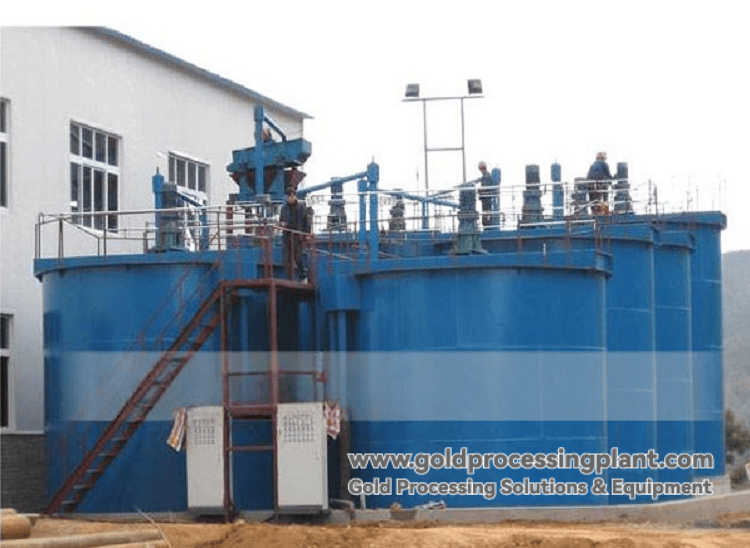
III. How to Configure the Recovery Process: From Gold-Loaded Carbon to Refined Gold
1. Acid Washing
Before desorption, the gold-loaded carbon is acid-washed to remove impurities such as calcium carbonate and iron, thereby preventing these impurities from causing scaling in the desorption system or contaminating the electrolyte.
2. Desorption and Electrolysis Equipment
The gold on the gold-loaded carbon is eluted into the solution and electrolyzed into gold slime. There are two configurations:
- Room-temperature, atmospheric-pressure desorption and electrolysis: Suitable for routine processing and small-to-medium-sized processing plants; requires lower investment;
- High-temperature, high-pressure desorption and electrolysis: Provides more thorough desorption and higher efficiency; suitable for large-scale mines or ores that are difficult to desorb.
Selection Criteria: The processing capacity of the desorption and electrolysis system must match the daily output of gold-loaded carbon. The desorption and electrolysis system must have a daily processing capacity that matches the daily output of gold-loaded carbon from the carbon-in-leach (CIL) system. If desorption capacity is insufficient, gold-loaded carbon will accumulate, preventing the carbon from circulating through the system, which will directly reduce adsorption efficiency; if desorption capacity is excessive, it results in wasted investment.
3. Gold Smelting Furnace
Gold slurry is smelted into gold ingots or refined gold. This process requires supporting equipment such as crucibles, fluxes, and casting molds.
4. Zinc Powder Displacement Unit (Alternative Process)
If the precious liquid has a high silver content or activated carbon adsorption is ineffective, zinc powder displacement may be considered as an alternative to carbon adsorption. The process is as follows: clarification and filtration of the gold-bearing precious liquid → vacuum deoxygenation → addition of zinc powder for displacement → filter pressing of gold sludge → acid washing to remove zinc → smelting.The precious liquid must be clarified to a suspended solids level of <10 ppm, and dissolved oxygen must be <1 mg/L after deoxygenation; the displacement rate is typically >99%. Note: Zinc powder displacement can only process clarified liquids and is not suitable for direct treatment of ore slurry; it is an either/or or staged combination option relative to the CIL carbon adsorption route.
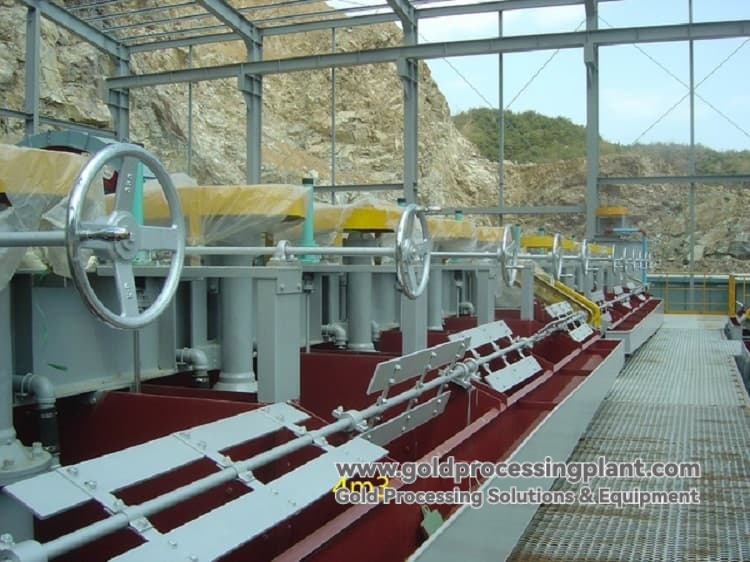
IV. How to Select a Turnkey Supplier: Four Key Criteria
First, are process design and equipment manufacturing handled by the same team?
Parameters such as the number of CIL tanks, the mesh size of the carbon-separating screens, and the capacity of the carbon recovery units must be determined by process engineers, after which equipment manufacturers produce the equipment according to the drawings. If process design and equipment manufacturing are handled by two separate companies, problems will inevitably arise, such as “the design institute\'s drawings not being accepted by the equipment manufacturer, or the design institute refusing to modify the design based on the equipment manufacturer\'s requirements.”
Second, are the carbon-in-leach system and the recovery system supplied as a complete package?
Only when leaching tanks, carbon-in-leach tanks, carbon-separating screens, carbon lifters, desorption electrolysis units, and smelting furnaces are supplied as a complete package by a single vendor can interface dimensions, processing capacity, and control logic be properly aligned. Purchasing a single desorption column to pair with another vendor\'s carbon-in-leach tank often results in mismatched parameters.
Third, does the supplier have the capability to handle difficult-to-process ores?
Arsenic- and carbon-bearing ores have low leaching rates when fed directly into CIL tanks; they require prior flotation to concentrate gold-bearing sulfides, followed by pretreatment to break up the encapsulation, and finally cyanidation. If a turnkey supplier only sells CIL tanks but lacks expertise in pretreatment, they will be at a loss as soon as the ore properties change.
Fourth, the capability for overseas delivery and commissioning.
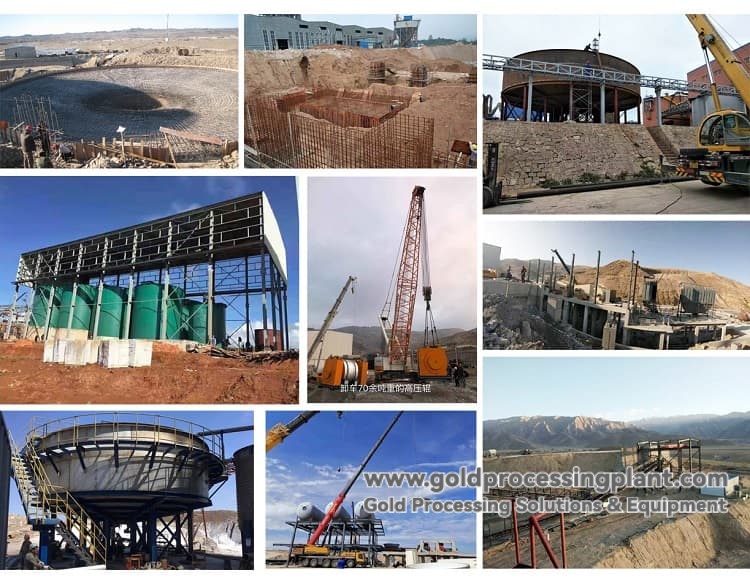
CIL system commissioning involves multiple variables, including grinding fineness, reagent regimes, leaching parameters, and carbon concentration. Engineers must be on-site to lead integrated commissioning tests using actual feed material until the first batch of qualified, specification-compliant gold is produced. Suppliers who merely ship equipment without providing on-site support—or who lack experience with cross-border deliveries—can drag out the commissioning period to the point of derailing the project.
5. Investment Estimate Reference: Price Range for CIP/CIL Turnkey Main Equipment
Taking a complete set of main equipment for a gold mine\'s CIP/CIL/whole-ore cyanidation/leaching process as an example (in ten thousand U.S. dollars, excluding civil engineering, installation, logistics, and auxiliary materials):
| Daily Processing Capacity (metric tons/day) | Price Range for Complete Set of Main Equipment (US$10,000) |
|---|---|
| 30 | 20–35 |
| 50 | 25–40 |
| 100 | 35–50 |
| 200 | 45–75 |
| 300 | 60–90 |
| 500 | 90–135 |
| 800 | 125–170 |
| 1,000 | 150–190 |
| 1,500 | 205–270 |
| 2,000 | 265–335 |
| 2,500 | 300–380 |
The lower limit of the range corresponds to standard configurations, conventional oxidized ores or simple sulfide ores, and standard operating conditions; the upper limit corresponds to non-standard customizations, complex ores, special operating conditions, or more comprehensive configurations. Specific quotations must be determined based on ore type, process flow, and on-site conditions.
VI. Conclusion: A Complete CIL System Consists of a “System,” Not Just “Individual Units”
The CIL process appears simple—leaching tanks plus carbon addition, carbon screening, carbon recovery, desorption electrolysis, and smelting.However, processing plants that actually achieve target performance rely on the proper alignment of capabilities between the carbon-in-leach system and the recovery stage: Is the leaching time sufficient? Are there leaks in the carbon-separating screens? Can the carbon extractor handle the load? Can the desorption and electrolysis process process the daily volume of gold-bearing carbon?
Selecting a turnkey supplier essentially means choosing a team capable of seamlessly integrating this entire process chain from start to finish. First, conduct ore sample leaching tests to determine the leaching order and parameters; then, configure the equipment package based on those parameters; and finally, dispatch engineers to the site to commission the system until gold is recovered—this sequence must not be reversed.
If you are planning a CIL/CIP processing plant, or if your existing carbon-in-leach system is experiencing issues such as carbon leakage, channel blockages, backlogs of gold-loaded carbon, or insufficient desorption capacity, please contact GoldProcessingPlant for ore sample testing and process diagnostics.