


Gold Mine Cyanidation Plant—Specialized Gold Mine Cyanidation Processing Equipment and Process Solutions
Gold Mine Cyanidation Plant—Specialized Gold Mine Cyanidation Equipment and Process Solutions
Cyanide leaching is the chemical gold extraction method with the highest recovery rate and the widest application in gold ore beneficiation. For rock gold ores, flotation concentrates, and certain difficult-to-process ores, the cyanide plant is often the core component that determines a project\'s return on investment.However, the cyanide plant also presents the highest technical barriers and environmental requirements: selecting the wrong process route results in low leaching rates; improper equipment configuration leads to persistently high cyanide and carbon consumption; and non-compliant tailings management can bring the project to a standstill at any time.
This article focuses on the construction of gold mine cyanide plants, systematically outlining how to select cyanide process routes, configure core equipment, pre-treat difficult-to-process ores, and handle tailings in compliance with regulations, providing gold mine investors with a professional and practical reference for cyanide mineral processing equipment and process solutions.
I. Selecting the Process Route First: Whole-ore Cyanidation or Cyanidation of Flotation Concentrates
The first step in establishing a cyanide plant is not to purchase leaching tanks, but to determine the material to be processed and the process route. There are two mainstream routes:
1. Whole-ore cyanidation (CIL/CIP). After crushing and grinding, the entire slurry is fed directly into the cyanide leaching process. This method is suitable for ores where gold is primarily in a free state, the gangue is simple, and there are no interfering elements such as copper, arsenic, antimony, or carbon—particularly for highly oxidized quartz vein-type gold deposits.The advantages include a straightforward process and high recovery rates; the disadvantages are high throughput requirements, with leaching tanks, adsorption systems, and tailings treatment facilities all needing to be sized for the entire feed volume, resulting in relatively high capital investment and chemical consumption.
2. Cyanidation of flotation concentrate. First, gold-bearing sulfides are concentrated into a concentrate via flotation; only the concentrate undergoes cyanide leaching, while the flotation tailings are processed separately. This method is suitable for sulfide-bearing ores where gold is closely associated with pyrite or arsenopyrite.The advantage is that the cyanide processing volume is significantly reduced; leaching tanks and adsorption systems are smaller in scale and require lower investment, and cyanide consumption is concentrated and controllable. The disadvantage is that the flotation recovery rate determines the upper limit of the overall recovery rate, so the flotation circuit must be properly configured.
How to choose? It depends on the form in which gold is present. If gold is present in sulfides (pyrite or arsenopyrite), flotation is the primary process, with the concentrate sent for smelting or cyanidation;if gold is primarily in a free state, the gangue is simple, and there are no interfering elements, direct whole-ore cyanidation (CIL/CIP) is a more straightforward approach. For difficult-to-process ores containing arsenic or carbon, pretreatment is required before cyanidation; otherwise, leaching efficiency will drop significantly.
II. How to Choose Between CIL and CIP: Leaching and Flotation Simultaneously, or Leaching First, Then Flotation
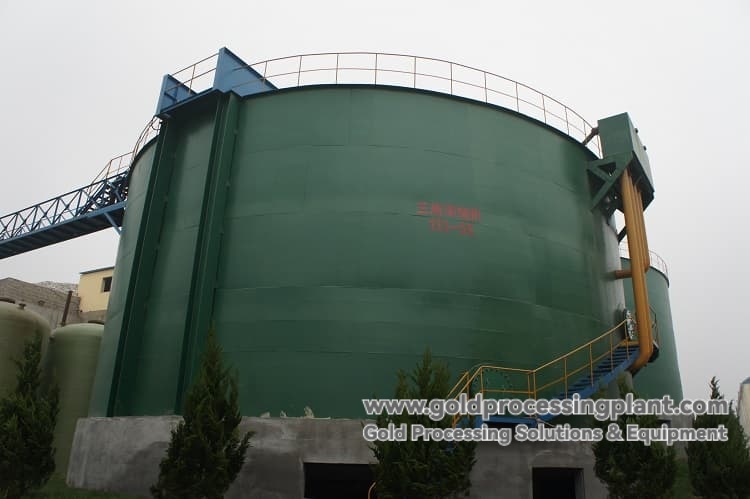
Once the whole-ore cyanidation route has been determined, a choice must be made between CIL (carbon-in-leach) and CIP (carbon-in-pulp).Both processes operate on the same principle—under alkaline conditions (pH 10–11), a cyanide solution dissolves gold into gold cyanide complexes, which are then recovered from the solution using activated carbon—but they differ in how leaching and adsorption are organized.
CIL (Carbon-in-Leach): Leaching and adsorption occur simultaneously in a single leaching tank, resulting in a compact process. Activated carbon is added to the final section of the tank and moves forward in a countercurrent flow, coming into contact with the ore slurry in the opposite direction. The advantages include fewer tanks, a compact process, and relatively low capital investment, making it suitable for small- to large-scale processing plants.
CIP (Carbon-in-Pulp): Leaching precedes adsorption, allowing for finer control. Leaching is completed first; activated carbon is added after the ore slurry enters the adsorption tank. Leaching and adsorption occur in separate tanks, allowing for a more thorough leaching time. This method is suitable for ores with relatively fast leaching rates that require staged control and is commonly used in large-scale processing plants.
Selection Logic: Choose CIL for ores with fast leaching rates where a compact process and cost-effective investment are prioritized; choose CIP for ores with slow leaching rates, those requiring precise control of leaching time, or large-scale processing.For pretreated, difficult-to-process ores where the gold-stripping effect has been eliminated, the compact CIL process is often more economical; if the ore properties are complex and leaching kinetics are slow, CIP is a more reliable choice. The specific selection should be verified through leaching tests and comparative CIL/CIP trials.
III. Core Equipment Configuration: From Leaching to Gold Concentration
The core equipment chain of a gold cyanidation plant, organized by process steps, is as follows:
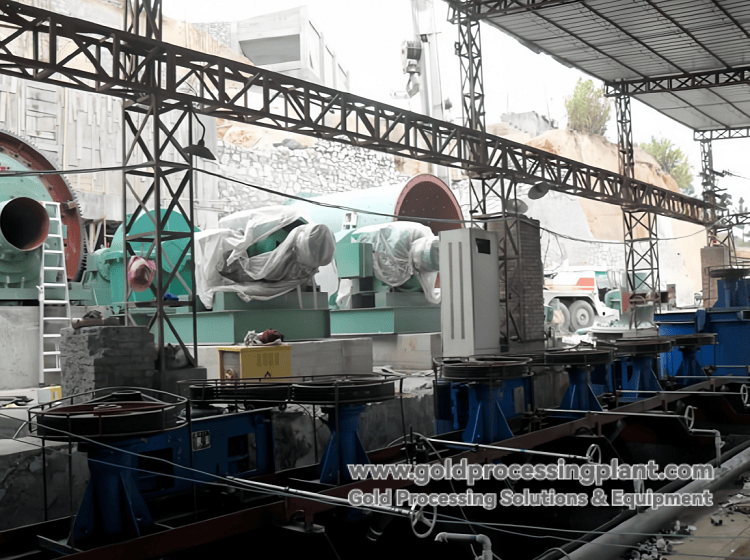
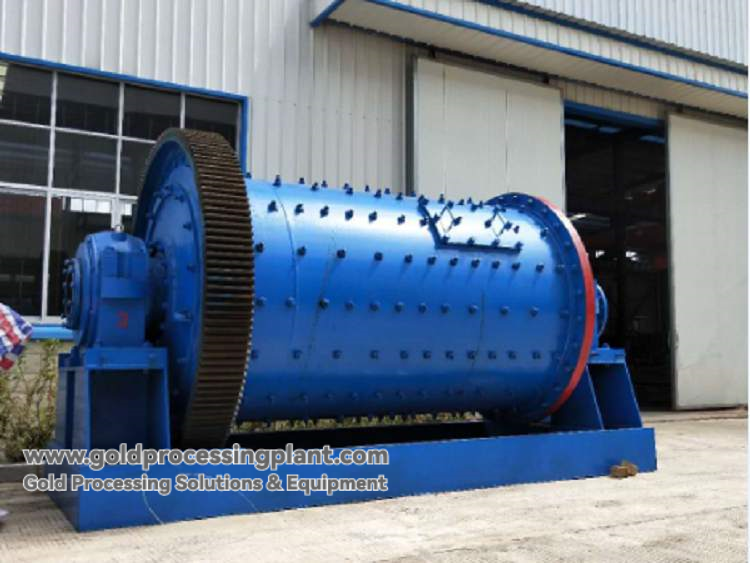
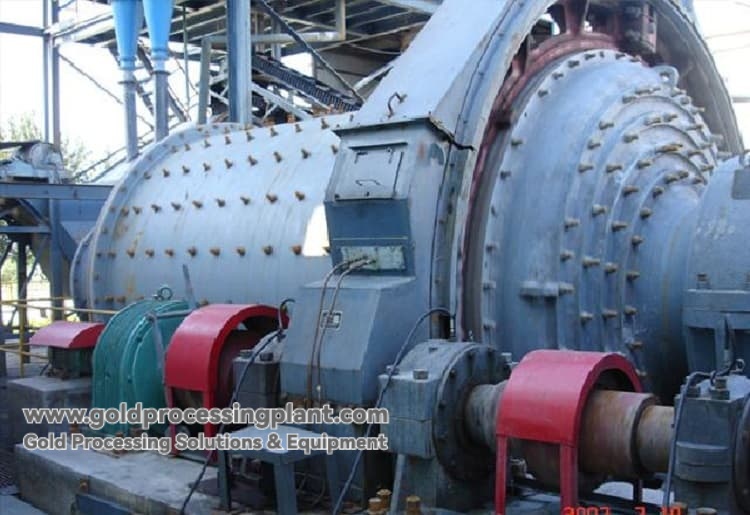
Crushing and Grinding Section (Upstream): Jaw crusher for coarse crushing + cone crusher for medium and fine crushing, ball mill (two-stage grinding: grid type + overflow type) + spiral classifier/hydrocyclone in a closed-circuit system.The fineness of grinding determines the degree of gold liberation and serves as the foundation for leaching efficiency—if the grinding fineness does not meet standards, having more leaching tanks downstream will be futile.
Thickening and Dewatering Section (Pre-Leaching): Thickening machines dewater and concentrate the ground ore slurry to control the feed concentration for leaching. Excessively high slurry concentration affects leaching kinetics, while excessively low concentration increases the load on reagents and leaching tanks.
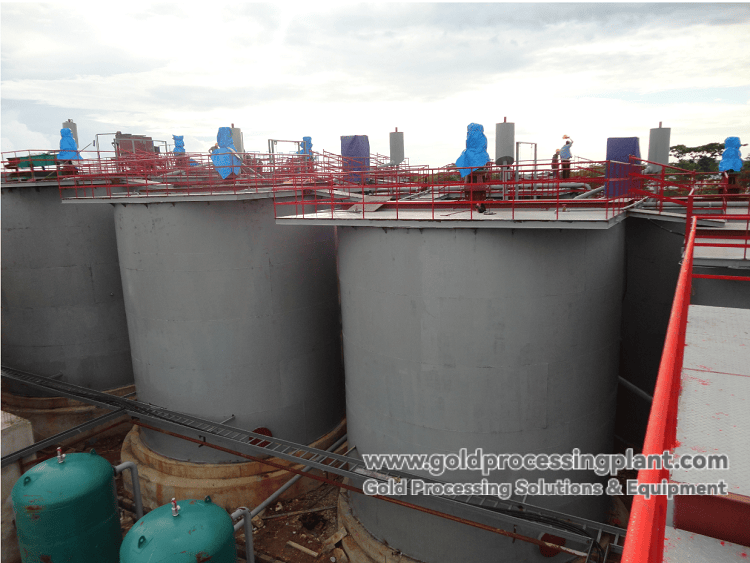
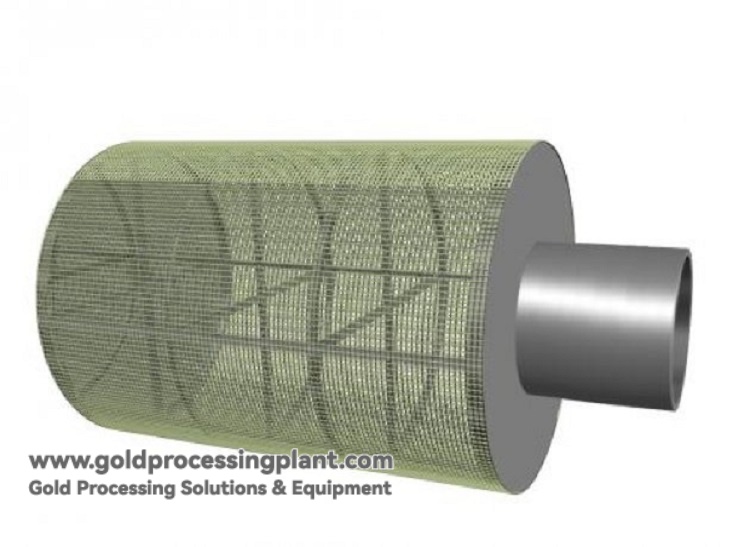
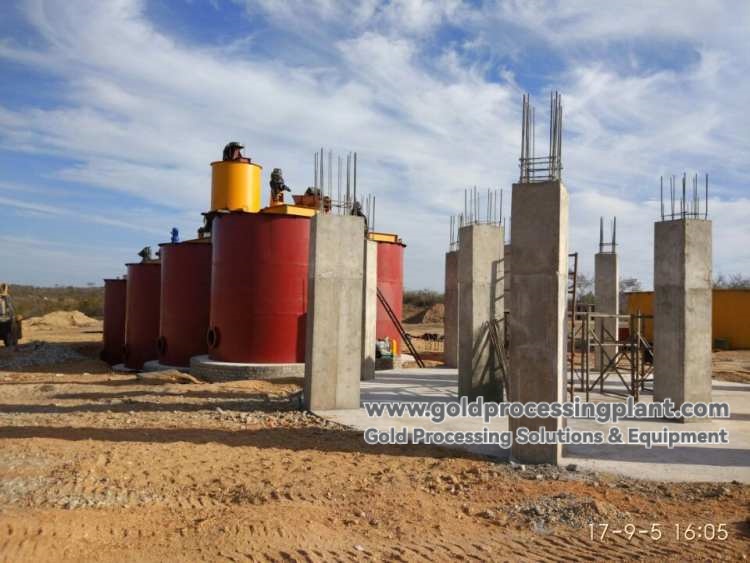
Leaching and Adsorption Section (Core): Leaching tanks (equipped with agitation and aeration, arranged in series), activated carbon adsorption system, gold-bearing carbon separation screen (carbon separator/air lifter), and carbon lifter.The agitation intensity and aeration rate in the leaching tanks directly affect the leaching rate; the carbon-retaining screen prevents activated carbon from being carried away with the slurry, while the carbon extractor lifts and extracts the gold-loaded carbon from the tanks—these specific pieces of equipment directly impact carbon consumption and recovery rates. The CIL process also requires high-efficiency dual-impeller carbon leaching tanks to enable simultaneous leaching and extraction.
Desorption and Electrolysis Section: After acid washing, the gold-loaded carbon enters the desorption and electrolysis equipment, where the gold is eluted and electrolytically converted into gold slime. Desorption and electrolysis equipment operating at ambient temperature and pressure is suitable for routine processing, while high-temperature, high-pressure equipment offers higher processing efficiency and more thorough desorption, making it suitable for large-scale mines or ores that are difficult to desorb.
Smelting Section: The gold slurry is smelted in a gold smelter to produce high-purity gold ingots.
Zinc Powder Displacement Section (Optional): Suitable for gold recovery from heap leach precious liquids and CCD countercurrent wash precious liquids. This section is equipped with clarification and filtration equipment, a vacuum deoxygenation tower, a zinc powder feeding system, displacement columns/tanks, and a gold slurry filter press.The precious metal solution must be clarified to a suspended solids level of <10 ppm and, after deoxygenation, have a dissolved oxygen level of <1 mg/L; the displacement rate is typically >99%. This process is suitable for precious metal solutions with high silver content or where activated carbon adsorption is ineffective.
Tailings Treatment Section: Leaching tailings are dewatered using a thickener and filter press, after which the tailings are either dry-stacked or sent to a tailings pond; cyanide-containing tailings must undergo detoxification treatment (such as alkaline chlorination) to meet discharge standards before being discharged, and the treated water is recycled.
IV. Pretreatment of Difficult-to-Process Ores: Don\'t Blame the Leaching Tank If Leaching Rates Are Low
For difficult-to-process gold ores containing arsenic, carbon, or fine-grained disseminated gold, conventional cyanide leaching recovery rates are typically only 20–50%. If such ores are fed directly into the cyanide plant, the reagents are entirely wasted on ineffective reactions; pretreatment is therefore essential:
Arsenic-bearing ores: Floatation to produce arsenic-gold concentrate → proprietary reagents/roasting/biological oxidation/pressurized oxidation → cyanidation. Arsenic encapsulates gold within arsenopyrite and arsenic-bearing pyrite; unless this encapsulation is broken, the leach solution cannot penetrate.
Carbon-bearing ores: Flotation to suppress carbonaceous material, or pretreatment using chlorination or chemical oxidation to eliminate the gold-snatching effect. Carbonaceous material re-adsorbs dissolved gold cyanide complexes back onto the solid phase; unless the carbonaceous material is passivated, the leached gold cannot be recovered.
Fine-grained encapsulated ores (Karin-type): Fine grinding → flotation to concentrate sulfides → pretreatment to break the encapsulation → cyanidation recovery. Conventional grinding cannot liberate invisible gold; pretreatment is essential.
Antimony-bearing ores: Pre-treatment via flotation or alkaline leaching to eliminate stibnite interference.
The choice of pretreatment method depends on the arsenic, carbon, and antimony content and their occurrence conditions; it must be verified through comparative mineral processing tests, and the economic benefits of increased leaching rates must be carefully weighed against the costs of pretreatment.
V. Environmental Protection and Safety at the Cyanide Plant: Tailings Treatment Is Non-Negotiable
Environmental compliance at the cyanide plant is a matter of life and death for the project; tailings treatment must be incorporated into the plan during the design phase:
Detoxification of Cyanide-Containing Tailings: Methods such as alkaline chlorination are used to oxidize and decompose cyanides in the tailings, which are then discharged or reused after meeting regulatory standards. The detoxification process must be designed in tandem with the leaching process and cannot be added as an afterthought.
Dry Tailings Discharge: Using a thickener followed by a filter press to compress tailings into dry filter cakes for stockpiling—which offers high water recovery rates and low environmental risks—is currently the mainstream approach. Dry stockpile sites must be equipped with bottom impermeable liners, drainage systems, and leachate collection facilities.
Water Recirculation: Clarified water and filtrate from leached tailings are reused in processes such as grinding and ore washing, thereby reducing fresh water consumption and discharge volumes.
Monitoring and Emergency Response: Install online monitoring systems for cyanide concentration, pH, and flow rate; develop emergency response plans; and conduct environmental impact assessments and acceptance inspections in accordance with local environmental regulations.
VI. EPC Delivery and Project Timeline
For the construction of gold cyanide processing plants, GoldProcessingPlant offers EPC turnkey services, coordinating process design, equipment manufacturing, installation guidance, integrated commissioning, and personnel training, while taking full responsibility for meeting final production targets.Clear Scope of Delivery: GoldProcessingPlant is responsible for technology, equipment, and commissioning, while the client is responsible for civil engineering, local installation labor, site “utility connections and land grading,” and local compliance procedures. This division of labor ensures accountability for project quality while helping the client save significant labor costs.
No Mandatory Bundling: Clients may choose to conduct only mineral processing trials and process validation; request only process design and equipment selection quotes; purchase only engineering drawings; procure individual units or complete sets of equipment (such as leaching tanks, adsorption systems, desorption and electrolysis equipment, etc.); or hire engineers for on-site commissioning only.Initial mineral processing test and design fees can be fully offset against the equipment cost when subsequently signing an equipment or EPC contract.
Regarding project timelines, a typical gold mine project takes approximately 8–15 months from the start of process design to production: process design and equipment selection quotation (7–15 days) → engineering drawing design (20–30 days) → equipment manufacturing (60–120 days) → logistics (30–60 days) → installation and commissioning (60–150 days).Cyanide plants involve leaching, adsorption, desorption, and electrolysis systems, so the commissioning period is relatively long; sufficient time must be allocated. For overseas projects, additional buffer time should be set aside for customs clearance and transition periods.
VII. Performance Commitments: Reasonable Expectations Based on Ore Characteristics
Recovery rates are determined by the inherent characteristics of the ore (grain size, association, and occurrence).GoldProcessingPlant does not commit to absolute figures that are detached from reality. What we can commit to is: through rigorous process design, developing a process that achieves the highest attainable recovery rate under the specific conditions of the ore, and striving for excellence in equipment selection and process control. Both parties shall agree in the contract on reasonable acceptance criteria based on the same ore source and the same operating conditions.During the commissioning phase, engineers will be on-site to optimize grinding fineness, reagent regimes, and leaching parameters until qualified gold is produced. They will also provide the client\'s team with theoretical and practical training to ensure they can independently adjust reagent regimes, grinding fineness, and leaching parameters.
The core logic behind the construction of a gold cyanide plant is as follows: first, determine the process route based on the gold\'s occurrence (whole-ore cyanidation or cyanidation of flotation concentrate); then, select CIL or CIP according to leaching characteristics; for difficult-to-process ores, perform pretreatment before leaching; and design tailings detoxification and dry stacking simultaneously.Equipment configuration is centered on three objectives: leaching recovery, carbon consumption, and environmental compliance. With data supporting every stage of the process, recovery rates can be maintained consistently.