


How to Choose a Gold Mine Shaking Table? Solutions for Fine-Grain Gold Recovery and Concentration
How to Choose a Gold Ore Shaking Table? Solutions for Fine-Grain Gold Recovery and Concentration
The shaking table is the equipment responsible for the “final step” in the gold ore gravity separation process. While the preceding chutes and centrifugal separators concentrate the gold, the shaking table is ultimately responsible for raising the concentrate grade and completely separating the gold from the gangue.If the shaking table is incorrectly selected or the operating parameters are not properly adjusted, no matter how effective the preceding enrichment steps are, the concentrate grade will remain low, fine-grain gold will end up in the tailings, and the recovery rate of the entire gravity separation line will be compromised.
Many mine owners have encountered typical pitfalls in shaking table selection: choosing the wrong type of bed surface results in insufficient separation precision for fine-grain gold; improperly adjusted stroke length and frequency cause gold particles and gangue to mix and remain inseparable; and uncontrolled feed concentration leads to water and sand loss from the bed surface.This article focuses on how to select a gold ore shaking table and how to recover and concentrate fine-grain gold, systematically outlining the types of shaking tables, key selection criteria, operating parameters, and process configuration schemes.
I. The Role of Shaking Tables in Gold Ore Gravity Separation Processes
First, it is essential to understand the function of a shaking table to determine the appropriate model.
Shaking tables are gravity concentration equipment. They operate on the principle of exploiting the density difference between gold and gangue minerals. Through the reciprocating asymmetric motion of the inclined bed surface and the scouring action of water flow, mineral particles are stratified and zoned according to density, with concentrate, middlings, and tailings discharged from separate zones.It is characterized by high separation precision and is particularly suitable for fine-grained materials; however, its single-unit processing capacity is relatively small, making it ideal for use as a concentrate recovery device.
In gold ore gravity separation processes, shaking tables are typically not used alone but rather to process the product from the preceding roughing and concentration stages. A typical process flow is as follows: drum screen/ore washer for washing and classification → chute roughing(removing a large amount of gangue) → enrichment by a centrifugal concentrator (recovering coarse and fine gold particles) → fine selection by a shaking table (producing high-grade gold concentrate) → smelting or sale of the concentrate. The process logic is essentially the same for alluvial gold deposits, rock gold deposits, gravity separation in grinding circuits, and tailings reprocessing.
Therefore, when selecting a shaking table, the first consideration is the nature of the feed from the preceding stage: how coarse the particle size is, how high the concentration is, the degree of gold particle liberation, and the enrichment ratio achieved in the preceding stage. Only after the feed conditions are clear can one determine which type of shaking table to choose and how to adjust the parameters.
II. How to Select a Shaking Table Type: 6-S Shaking Tables vs. Multi-Tier Suspended Shaking Tables
There are two main types of shaking tables commonly used in gold mining:
1. 6-S shaking table (single-deck shaking table). The 6-S shaking table is the most widely used classic model. It features a trapezoidal or rectangular table surface and is equipped with a headbox (with adjustable stroke and frequency), a feed chute, a water supply chute, and a concentrate collection chute.It features a mature design, flexible adjustment, and high separation accuracy, making it suitable for the fine selection of fine-grained gold. Its individual processing capacity is relatively small, making it suitable for small- to medium-scale processing plants or as equipment in the fine selection stage.The 6-S shaking table offers different grooving configurations for the bed surface, including coarse sand, fine sand, and slime surfaces. The appropriate type must be selected based on the feed particle size—a coarse sand bed surface is used for coarser feed, while a fine sand or slime bed surface is used for fine-grained gold. Selecting the wrong bed surface type will significantly reduce separation efficiency.
2. Multi-deck suspended shaking tables. Multi-deck shaking tables stack multiple decks vertically, sharing a single drive mechanism. They have a small footprint and high throughput per unit area, making them suitable for high-capacity concentration operations or projects with limited space. The multi-deck structure allows for more centralized slurry distribution and concentrate collection, making operation and management relatively convenient.When selecting a model, attention should be paid to the uniformity of feed distribution between layers and the consistency of bed parameters across all layers.
Selection criteria: For low throughput where high separation accuracy and operational flexibility are prioritized, select a 6-S shaking table; for higher throughput with limited space, select a multi-tier suspended shaking table.The feed particle size determines the type of bed grooving; coarse, fine, and slime particles each correspond to different bed surfaces. This is the detail most easily overlooked during selection but has the greatest impact on performance.
III. Shaking Table Operating Parameters: Stroke, Stroke Frequency, Incline, and Feed Concentration
Purchasing a shaking table is just the beginning; if the parameters are not adjusted correctly, the separation process will not be effective. Four core parameters require special attention:
1. Stroke and Cycle Rate. Stroke refers to the distance of the bed\'s reciprocating motion, while cycle rate refers to the number of reciprocating movements per minute. For coarse feed sizes, a long stroke and low cycle rate are recommended to allow coarse particles sufficient time to stratify;For fine-grained feed, a short stroke and high stroke rate are recommended to prevent fine gold particles from being washed away. If the stroke and stroke rate are mismatched, gold particles may mix with gangue, resulting in a decline in the grade of the concentrate.
2. Bed Surface Slope (Transverse Slope). The slope affects the water flow velocity and the residence time of ore particles on the bed surface. A steep slope results in faster water flow, increasing throughput but reducing separation accuracy; a gentle slope results in slower water flow, improving separation accuracy but reducing throughput. Adjustments should be made based on feed particle size and concentration; a gentler slope is recommended for the selective recovery of fine-grained gold.
3. Feed Concentration. If the feed concentration is too high, the slurry becomes viscous, resulting in unclear stratification; if too low, throughput is insufficient and water consumption increases. The feed concentration for shaking tables is generally controlled at around 20%–30%, with specific adjustments made based on feed particle size and material properties; the optimal value must be determined during commissioning.
4. Water Flow Rate and Transverse Water Velocity. Transverse flushing water provides the driving force for the separation of mineral particles; the flow rate directly affects the width and grade of the concentrate zone. Excessive flow washes away fine-grain gold, while insufficient flow prevents the removal of gangue; adjustments must be made in coordination with the slope, stroke, and stroke frequency.
These four parameters are not adjusted in isolation but must work in concert. During the commissioning phase, comparative tests using different parameter combinations must be conducted to identify the optimal operating regimen for the specific ore conditions, and the adjustment logic must be clearly explained to the client\'s team during training.
IV. How to Design a Plan for Fine-Grain Gold Recovery and Enrichment
Fine-grain gold is the component most prone to loss in gravity separation. Shaking tables are inherently suitable for fine-grain separation, provided the process configuration is reasonable and there is no excessive gold loss in the upstream stages.
Option 1: Roughing with Chutes/Centrifuges + Fine Sorting with Shaking Tables. This is the most typical configuration. Chutes (spiral chutes, agitated/gold-adhering chutes) first remove a large amount of gangue, while a centrifugal concentrator (such as a Nelson centrifuge) enhances the recovery of fine-grain gold. The concentrate from this process is fed into the shaking table for fine concentration to produce high-grade concentrate.The higher the enrichment ratio in the front-end process, the higher the feed grade to the shaking table, and the better the fine-grain recovery.
Option 2: Multi-stage shaker series concentration. For projects requiring high concentrate grades, a two-stage configuration of roughing shaking tables followed by concentrating shaking tables can be adopted: the roughing shaking tables produce a rough concentrate, which is then fed into the concentrating shaking tables for purification, while the middlings are returned to the previous stage for reprocessing. A multi-stage configuration can improve concentrate grade and recovery rate, but it increases the number of units required and the demands on operation and management.
Option 3: Gravity separation in the grinding circuit + shaking table concentration (rock gold ore). For rock gold ores, a centrifugal separator is installed in the grinding circuit to recover coarse free gold; the gravity concentrate is then fed to a shaking table for fine selection. The concentrate is smelted or sold, while the tailings are returned to the grinding circuit or fed into the flotation/cyanidation process. This configuration enables “early and maximum recovery” and prevents the loss of coarse gold due to over-grinding.
Key points for reducing the loss of fine-grain gold: Avoid excessive grinding in the front end to prevent gold particles from being ground down to a size where recovery by gravity separation becomes difficult; maintain stable control over the feed concentration and water flow to the shaking tables to prevent fine-grain gold from being washed away; ensure the groove type on the table surface matches the feed particle size; and properly return intermediate products for reprocessing, avoiding the premature disposal of tailings.
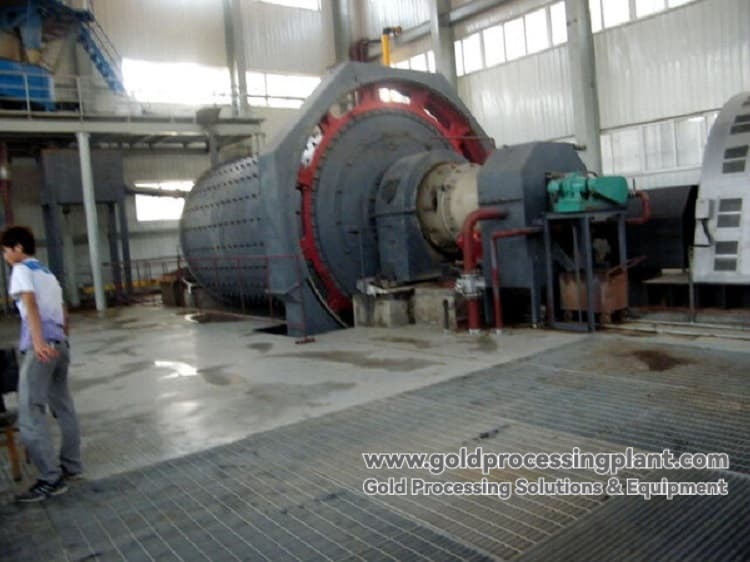
V. Mineral Processing Tests and Equipment Selection Validation: Don\'t Choose Equipment on a Whim
The selection of shaking tables, along with their processing capacity, bed surface type, and parameter settings, must ultimately be verified through mineral processing tests.In terms of the process flow, start by conducting gravity recovery tests on representative ore samples to determine the gold\'s recoverability, feed particle size, and expected enrichment ratio; then select the shaker model and number of units based on these results. The test report should provide a recommended process flow, a list of selected equipment, and a preliminary budget, allowing the project to proceed directly to the design phase.
GoldProcessingPlant\'s collaborative process emphasizes “understanding the ore first, then selecting equipment”: mineral processing tests and process validation cover gravity separation tests, flotation tests, cyanide leaching tests, and more. Standard validation takes approximately 3–4 weeks, while a complete proposal report typically takes 30–45 days.As a concentration device, the selection of a shaking table is determined based on the properties of the concentrate from the upstream processing stage, rather than simply copying configurations used by peers.
VI. Equipment Supply and Delivery
Shaking tables are typically supplied as part of a package that includes chutes, centrifugal separators, sand pumps, and feed systems. GoldProcessingPlant can provide individual shaking tables (6-S shaking tables, multi-deck suspended shaking tables) or complete equipment configurations for the gravity separation stage, tailored to the specific characteristics of the ore and process requirements—rather than based on inventory availability.
Delivery options are flexible: customers may purchase a single shaking table, opt for a complete gravity separation section package that includes installation guidance and commissioning training, or incorporate the project into a turnkey EPC scope.Initial ore processing test and design fees can be fully offset against the equipment cost when a subsequent equipment or EPC contract is signed. During the commissioning phase, engineers will be on-site to provide guidance, teaching the client\'s team step-by-step how to adjust stroke length, stroke frequency, slope, feed concentration, and water flow, ensuring they can independently operate and make adjustments after production begins.
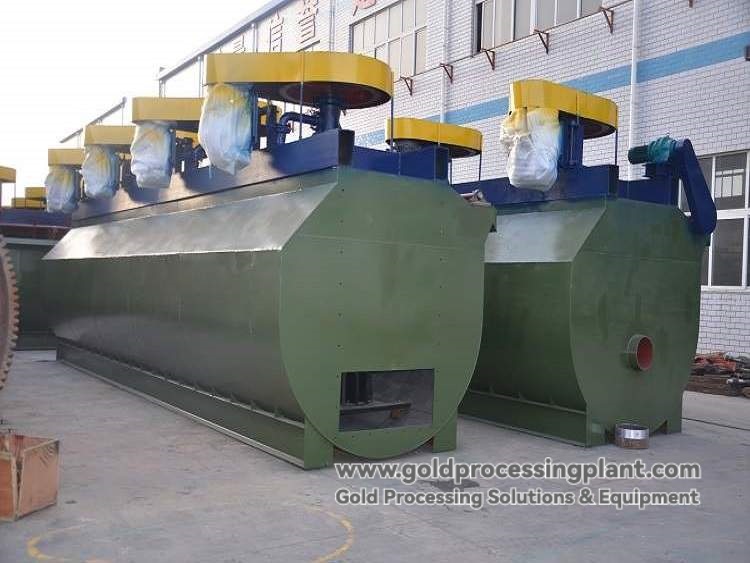
When selecting a gold ore shaking table, the key lies in three considerations: choose the table surface type based on feed particle size; select a single-deck or multi-deck model based on throughput; and determine its position in the process flow based on the required separation precision.If parameters are not properly adjusted, even high-quality equipment will not deliver optimal performance; if the process flow is not properly configured, even the most precise shaking table cannot prevent the loss of fine-grain gold. First, conduct mineral processing tests to determine the properties of the ore; then, based on the feed conditions, select the shaking table, design the process flow, and set the parameters. Only then can the recovery rate of fine-grain gold and the grade of the concentrate be stabilized.