


How should tailings discharge be designed for gold ore pre-concentration and beneficiation? Complete production line solution for a gold concentration plant
How Should Tailings Disposal Be Designed for Gold Ore Pre-concentration and Separation? Complete Production Line Solution for a Gold Concentration Plant
Gold ore pre-concentration has become an increasingly popular approach in recent years for gold mining projects: before proceeding to the costly grinding and leaching processes, methods such as gravity separation and flotation are used to remove gangue and concentrate gold-bearing minerals in advance, thereby significantly reducing the processing load for subsequent stages.With reduced processing capacity, capital expenditures, energy consumption, and chemical usage also decrease, making the mine\'s overall operations financially viable.
However, pre-concentration raises an unavoidable related issue:How should tailings disposal be designed? The tailings generated during the pre-concentration stage are voluminous, coarse-grained, and have different moisture content compared to conventional cyanide tailings. If tailings disposal is improperly designed, the consequences range from poor water recirculation and rising operating costs to failure to meet environmental standards and project delays.This article begins with tailings discharge design, systematically reviews discharge solutions for tailings from gold pre-concentration and beneficiation processes, and outlines the configuration logic for a complete production line at a gold pre-concentration plant.
I. First, Let\'s Clarify: How Do Pre-concentration Tailings Differ from Conventional Tailings?
The first step in tailings discharge design is not selecting equipment, but rather understanding the nature of the tailings. Compared to conventional cyanide tailings, pre-concentration tailings exhibit several distinct differences:
1. High discharge volume and low grade. The core logic of pre-concentration is “discharge more, discharge early”; the proportion of tailings discharged relative to the original ore can be very high. A large volume of tailings means that the scale of tailings conveyance, thickening, and stockpiling must be correspondingly increased, and the processing capacity of the discharge system must match the tailings discharge volume from the pre-concentration stage.
2. Coarse particle size and relatively good settling properties. Pre-concentration typically occurs before or after grinding; the discharged tailings have a coarser particle size than cyanidation tailings and settle more quickly, so the selection of thickeners and the configuration of filter presses differ from those used for fine-grained tailings.However, it should be noted that if ore washing or wet screening is performed prior to pre-concentration, the tailings may contain a relatively high proportion of silt, which requires separate evaluation.
3. They contain virtually no cyanide, so environmental pressures are relatively manageable. Since pre-concentration tailings are discharged before entering the cyanidation process, they generally pose no risk of cyanide or heavy metal leaching, which provides relatively favorable conditions for dry tailings discharge, dry stacking, or resource recovery. However, leaching toxicity tests must still be conducted in accordance with local environmental regulations to confirm whether they qualify as general industrial solid waste.
4. The quality of the recycled water affects its reuse. The clarified water from pre-enriched tailings can be reused in processes such as ore washing and as make-up water for gravity separation. The quality of the recycled water (suspended solids content) directly determines the reuse rate and whether further purification is required.
Once these four points are clarified, the direction of the tailings disposal plan is essentially established: whether to opt for wet disposal (tailings pond) or dry disposal (dry stacking yard), the degree of concentration and dewatering required, and how to recycle the reclaimed water—all of these decisions will have a sound basis.
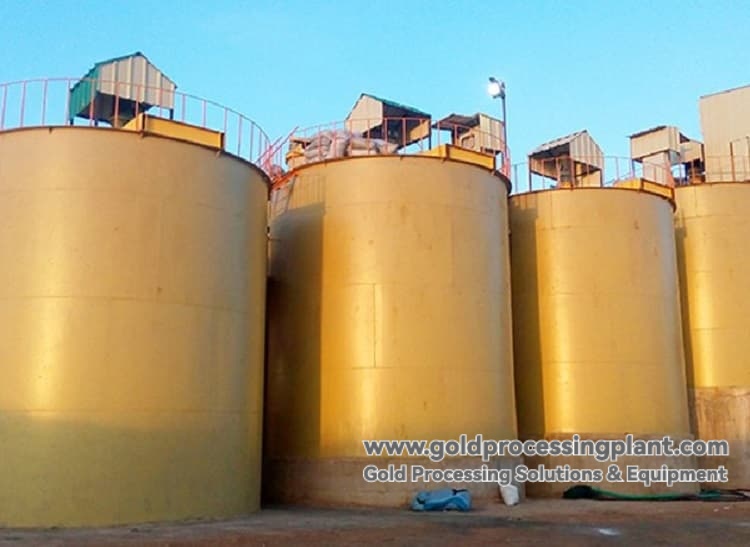
II. Three Mainstream Tailings Disposal Design Schemes
Option 1: Wet Tailings Discharge (Traditional Tailings Pond). After being concentrated in a thickener, the tailings are pumped as underflow to a tailings pond for storage, and the clarified water is reused.The advantages include a simple process, relatively low investment, and good adaptability to fine-grained tailings; the disadvantages are large land requirements, constraints imposed by topography and environmental approvals, and high costs associated with tailings pond safety and closure. This approach is suitable for projects where topographical conditions permit, tailings pond approvals are feasible, and the tailings have a relatively fine particle size.
Option 2: Dry Tailings Disposal (Dry Storage Yard). After being concentrated in a thickener, the tailings are processed in a filter press to form a filter cake with low moisture content, which is then transported to a dry storage yard for stockpiling or shipped off for comprehensive utilization.Advantages include a high water recovery rate (up to 90% or more), a small footprint, low environmental risks, and ease of tailings pond closure and resource recovery; disadvantages include high capital and operating costs for filter press equipment, and the need to verify filtration efficiency for coarse-grained tailings.For pre-concentrated tailings—which are relatively coarse-grained and cyanide-free—dry discharge is often the preferred option, as it conserves water and reduces environmental risks.
Option 3: Combination of wet and dry tailings disposal. Coarse-grained tailings are prioritized for dry disposal or sold as construction aggregate, while fine-grained tailings are discharged wet into the tailings dam. This combined approach is suitable for projects with a wide tailings particle size distribution or established channels for resource recovery, striking a balance between investment and environmental protection.
The specific choice depends on the nature of the tailings, local environmental requirements, topographical conditions, water resource costs, and project scale. There is no one-size-fits-all answer; a technical and economic comparison must be conducted based on the project\'s actual circumstances.
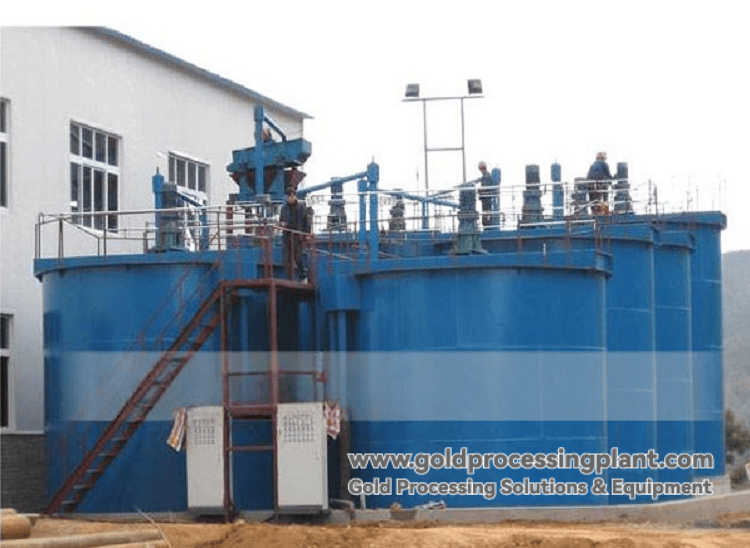
III. Key Equipment Configuration for Tailings Dry-Discharge Systems
Taking pre-enriched tailings dry discharge as an example, a typical tailings treatment system is configured as follows:
Tailings Conveyance: Slurry pumps transport tailings slurry from the pre-enrichment and sorting section to the tailings thickening section. Pump selection must be based on the maximum discharge rate and slurry concentration, with some margin built in.
Thickening Stage: Thickeners (center-drive thickeners or high-efficiency thickeners) perform preliminary sedimentation and dewatering of the tailings slurry. The underflow, with its concentration increased, is sent to a filter press, while the clarified overflow is directed to the return tank.High-efficiency thickeners can significantly reduce the footprint and are suitable for projects with limited space. If the tailings have a high clay content and slow settling rate, the addition of a flocculant to aid settling may be considered.
Filter Press Stage: Plate-and-frame filter presses (or chamber filter presses) compress the concentrated tailings slurry into filter cakes with low moisture content, which directly meet transportation and stockpiling requirements. Filter presses are key equipment for dry tailings disposal; their selection must be based on tailings particle size, processing capacity, and target moisture content.Coarse-grained tailings exhibit high filtration efficiency, while fine-grained tailings require an assessment of the filtration cycle and filter cloth selection.
Reclaimed Water System: Overflow from the thickener and filter liquid from the filter press enter the reclaimed water tank and are pumped back to water-consuming processes such as ore washing, gravity separation, and grinding.The water recovery rate is a core indicator of the economic viability of a tailings dry-stacking plan; during design, the water balance must be calculated to determine the water recovery ratio and sources of makeup water. Reclaimed water with suspended solids exceeding standards must undergo clarification or filtration treatment before reuse.
Dry Tailings Storage Facilities and Leakage Prevention: Dry tailings storage facilities must be equipped with bottom impermeable liners, drainage ditches, and leachate collection systems; closure and reclamation designs must comply with local environmental protection requirements. The method of filter cake transportation and the storage slope must also be specified in the design.
Monitoring and Emergency Response: The tailings discharge system must be equipped with flow, concentration, and liquid level monitoring. Displacement and seepage monitoring points must be installed at the dry storage yard, and an emergency response plan must be developed.
IV. Complete Production Line Solution for the Gold Concentration Plant: From Pre-concentration to Dry Tailings Discharge
When considering tailings discharge design within the context of the entire production line, the production line scheme for a gold concentration plant is typically divided into the following stages:
Stage 1: Crushing and Screening. Primary crushing with a jaw crusher + secondary and fine crushing with a cone crusher, followed by classification using a circular vibrating screen. The crushing stage adheres to the principle of “more crushing, less grinding” to provide the appropriate particle size for pre-concentration and subsequent grinding.
Second Stage: Ore Washing and Screening (when clay content is high). Cylindrical ore washers/spiral ore washers combined with trommel screens remove clay to prevent clogging of downstream equipment while creating the necessary conditions for pre-concentration.
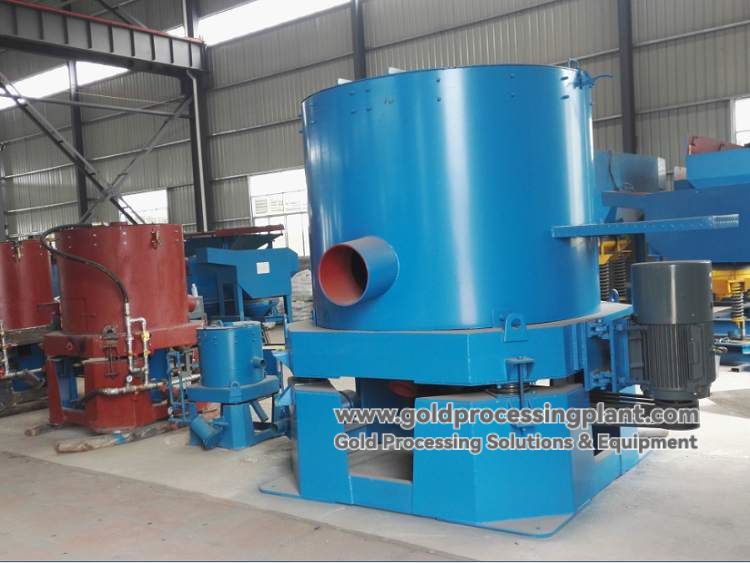
Third Stage: Pre-concentration Separation. The pre-concentration method is selected based on the characteristics of the ore: gravity separation (jig, centrifugal separator, spiral chute) to remove gangue in advance and recover coarse-grained gold; flotation (SF-type/XCF/KYF-type flotation cells) to concentrate gold-bearing sulfides.The goal of pre-concentration is to remove as much gangue as possible at a low cost, thereby improving the grade of the material for subsequent processing.
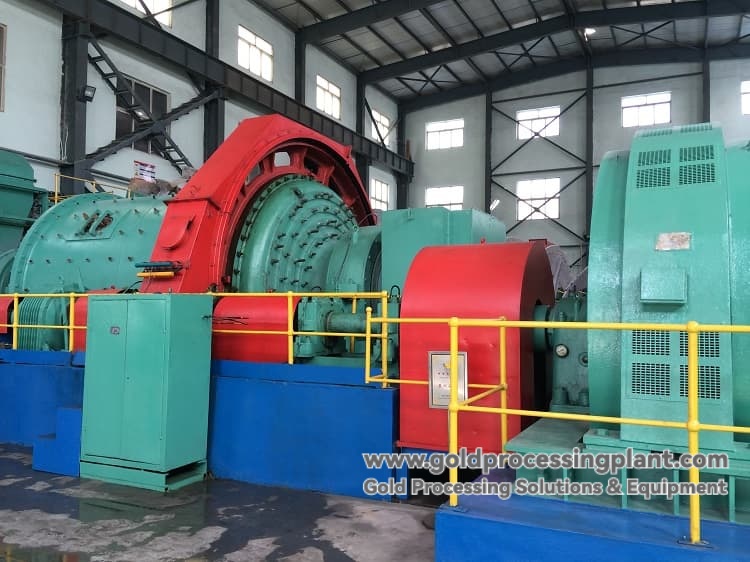
Fourth Stage: Concentrate Processing. The pre-concentrate enters the grinding process (ball mill + classifier in a closed circuit) and subsequent separation/leaching processes (flotation concentrate is sent for smelting or cyanidation; gravity separation concentrate undergoes shaking table concentration followed by smelting), with specific procedures determined by the type of ore.
Section 5: Tailings Treatment. Pre-concentration tailings enter a thickener + filter press dry-discharge system; clarified water and filtrate are reused, while the filter cake is stockpiled or transported off-site.
Auxiliary Systems: Feeders, belt conveyors, slurry pumps, return water pumps, agitation tanks, electrical control systems, etc.
The core logic of this production line is as follows: The pre-enrichment section uses low-cost methods to “reject as much as possible as early as possible,” thereby reducing the processing volume; the dry tailings disposal section properly treats the rejected tailings and recovers water. Only through the coordination of these two sections can the investment and operating costs of the processing plant be reduced, and environmental risks effectively controlled.
V. Design Key Points and Common Misconceptions
Misconception 1: Designing only the beneficiation section and adding the tailings section later. Since the pre-concentration stage generates a large volume of discarded tailings, the scale and investment of the tailings treatment system must be designed simultaneously with the beneficiation section. If the beneficiation section is designed for 100 metric tons per day while the tailings section is configured for only 50 metric tons per day, the process will inevitably be bottlenecked at the tailings stage after commissioning.
Misconception 2: Neglecting to test tailings properties. The particle size distribution, clay content, settling velocity, and leaching toxicity of tailings directly determine the selection of thickening and filter press equipment as well as the discharge plan. Selecting equipment without conducting these tests is like a blind man feeling an elephant.
Misconception 3: Failing to Accurately Calculate the Water Recovery Rate. The economic viability of dry tailings disposal relies heavily on the water recovery rate. If the water balance is not calculated accurately, after production begins, either the cost of water supplementation will exceed expectations, or excess recovered water will be discharged in violation of regulations.
Misconception 4: Lack of design for dry stacking yard impermeabilization and site closure. A dry stacking yard is not simply a vacant lot for piling filter cake; impermeabilization, drainage, leachate collection, and site closure and reclamation must all be clearly defined during the design phase; otherwise, environmental acceptance will not be granted.
VI. EPC Scope of Work and Flexible Services
For the construction of the Gold Concentration Plant, GoldProcessingPlant offers turnkey EPC services, coordinating process design, equipment manufacturing, installation guidance, integrated commissioning, and personnel training, while taking full responsibility for meeting final production targets.The scope of delivery is clearly defined: GoldProcessingPlant is responsible for technology, equipment, and commissioning, while the client is responsible for civil engineering, local installation labor, site “utility connections and land grading,” and local compliance procedures. This approach ensures project quality while helping clients save significant labor costs.
At the same time, there are no mandatory bundling requirements: clients may choose to conduct only mineral processing tests and process validation; purchase only process design and equipment selection quotes; obtain only engineering drawings; procure individual units or complete sets of equipment; or hire engineers for on-site commissioning.Upfront payments for mineral processing test fees and design fees can be fully offset against the equipment cost when subsequently signing an equipment or EPC contract.
Regarding project timelines, conventional gold mining projects typically take approximately 8–15 months from the start of process design to production commencement. The manufacturing and commissioning of equipment for the dry tailings discharge system must be incorporated into the overall schedule, and overseas projects should allow for a buffer period for customs clearance and logistics.
The design of tailings discharge for gold ore pre-concentration and beneficiation centers on three key aspects: thoroughly understanding the properties of the tailings, selecting the appropriate discharge method (wet discharge, dry discharge, or a combination), and properly configuring the thickening, filter press, and water recirculation equipment.The tailings section is not merely an “afterthought” of the processing plant; rather, it is a critical component that determines the project\'s environmental compliance and operating costs. Only by effectively integrating the pre-concentration strategy of “maximizing and accelerating rejection” with the dry tailings discharge strategy of “water conservation and compliance” can the overall financials of a gold pre-concentration plant be balanced.