


How to Select “Gold-Bearing” Ore? CIP/CIL Processes and Complete Mineral Processing Equipment Solutions
How to Select “Pyrite-Bearing” Ore? CIP/CIL Processes and Complete Mineral Processing Equipment Solutions
Carbonaceous gold ores are globally recognized as one of the most difficult types of gold ores to process and are a major headache for many mine owners.The core issue lies in “gold entrapment”: carbonaceous materials in the ore (such as graphite, activated carbon, and humic acid) possess adsorption properties similar to activated carbon, causing gold cyanide complexes that have already dissolved into the solution to be re-adsorbed back onto the solid phase—resulting in a situation where “gold is leached out but not recovered.”Conventional cyanide leaching recovery rates typically range from only 20–50%, while reagent consumption remains high. Many mine owners have replaced their equipment twice, yet recovery rates still fail to improve; the root cause often lies not in the equipment itself, but in the failure to effectively treat the carbonaceous materials prior to leaching.
Starting from the mechanism of “gold hijacking,” this article systematically outlines the mineral processing approach for carbonaceous gold deposits, how to combine CIP/CIL processes with pretreatment, how to configure the entire mineral processing equipment set, and the key issues to consider when implementing the solution. It aims to help carbonaceous gold deposit developers select the right process, match the appropriate equipment, and increase recovery rates.
I. What Exactly Is “Gold Hijacking”?
To select the right process, one must first understand the mechanism of “gold hijacking.”
1. Carbonaceous materials act as “natural activated carbon.”
Carbonaceous materials in carbonaceous gold ores—such as graphite, activated carbon-like substances, and humic acid—possess a large number of active adsorption sites on their surfaces, with adsorption properties similar to those of activated carbon.During cyanide leaching, gold is dissolved into the solution as gold-cyanide complexes; however, the carbonaceous materials—much like activated carbon—adsorb this dissolved gold, effectively “reclaiming” it back into the solid phase.The result is that while the gold is leached out, it cannot be recovered, leading to excessively high tailings grades and low leaching recovery rates.
2. The type of carbonaceous material determines its “gold-sequestration” capacity.
The gold-snatching capacity varies significantly among different carbon-based materials: activated carbon has the strongest adsorption capacity, followed by graphite, while humic acid-based materials are relatively weaker.The higher the carbon content and the greater the activity, the more severe the gold-snatching effect becomes, and the greater the need for pretreatment. This explains why, even among carbon-bearing ores, some achieve leaching rates of over 90% after pretreatment, while others consistently remain at low levels.
3. Often associated with arsenic and sulfur, compounding processing difficulties.
Carbonaceous gold ores are often associated with arsenic-bearing pyrite, arsenopyrite, and other minerals. Arsenic encapsulates the gold within sulfides, making it impossible to extract no matter how finely the ore is ground; carbon, in turn, reabsorbs the dissolved gold.Under these dual interferences, conventional cyanide leaching yields are pitifully low, and the reagents are entirely wasted on ineffective reactions.
4. Direct leaching is not economically viable.
Direct cyanidation without pretreatment not only results in low leaching rates but also high cyanide consumption, making it extremely uneconomical. Carbonaceous gold ore must undergo “passivation” or removal of carbonaceous material prior to leaching to eliminate the gold-sequestration effect; only then can subsequent cyanide recovery rates return to normal levels.
To sum it up in one sentence: Carbonaceous gold ores are difficult to process—not because the gold is hard to leach, but because the leached gold is “snatched” away by the carbonaceous material. The key to solving this problem lies in pre-treating the carbonaceous material before leaching.
II. What Are the Pre-Treatment Approaches to Address “Gold Hijacking”?
To address the gold-snatching effect of carbonaceous material, the industry primarily employs the following categories of pretreatment approaches. The choice of method depends on the content, type, and occurrence state of the carbonaceous material and must be verified through comparative mineral processing tests.
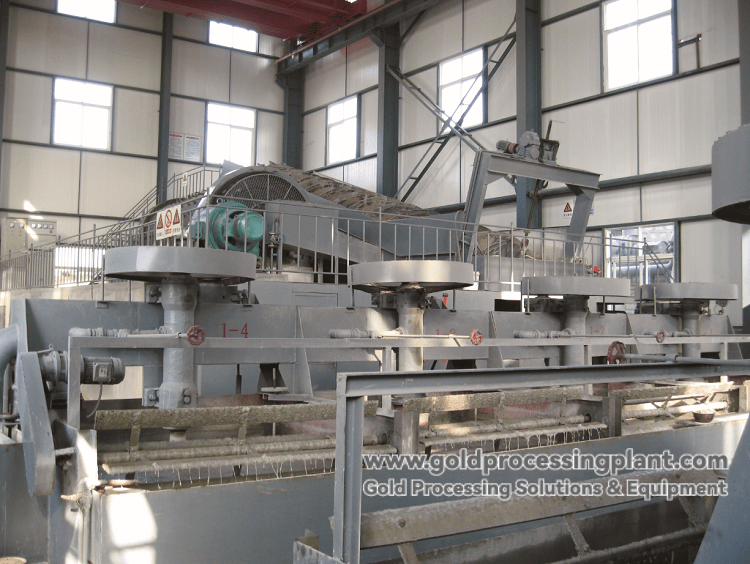
1. Suppressing carbonaceous materials during flotation.
Add carbon-bearing material inhibitors during the flotation stage to suppress the flotation of carbon-bearing materials, preventing them from being concentrated with the concentrate or interfering with the flotation foam; or employ preferential flotation, first floating out the carbon-bearing materials before floating the gold sulfides.One of the objectives of flotation is to concentrate gold-bearing sulfides into concentrate, thereby reducing the volume of material requiring subsequent pretreatment—processing only the concentrate rather than the entire ore load significantly lowers pretreatment costs.
2. Chlorination/chemical oxidation pretreatment.
Oxidizing and passivating carbonaceous material using chlorinating agents (such as sodium hypochlorite or chlorine gas) or other oxidizing agents destroys its surface-active adsorption sites, thereby eliminating the material\'s ability to adsorb gold cyanide complexes.Chlorinating agents are highly oxidative and can effectively reduce the gold-sequestration capacity of carbonaceous materials. This is one of the mainstream approaches for the pretreatment of carbonaceous gold ores; the key lies in controlling the dosage of chemicals and reaction conditions to passivate the carbonaceous materials while avoiding excessive oxidation that could adversely affect subsequent leaching.
3. Roasting Pretreatment.
High-temperature roasting is used to oxidize and remove carbonaceous material and sulfides, eliminating the gold-sequestration effect and breaking open the sulfide capsules. Roasting is a thorough treatment but involves high energy consumption and environmental protection costs; it is suitable for ores with high carbon content where other methods are ineffective.
4. Bio-oxidation Pretreatment.
This process utilizes microorganisms to oxidize and decompose sulfides, releasing the gold trapped within them, while also degrading carbonaceous matter to some extent. Bio-oxidation is relatively low-cost and environmentally friendly, but it has a long reaction cycle and is highly dependent on ore type and operating conditions.
5. Pressurized oxidation pretreatment.
This method oxidizes sulfides and carbonaceous matter under high-temperature, high-pressure conditions. It offers excellent treatment results and rapid reaction rates, but involves high equipment investment and operating costs, making it suitable for large-scale projects and highly refractory ores.
It is important to emphasize that no single pretreatment method is a one-size-fits-all solution.The selection of a pretreatment method for carbon-in-leach gold ores depends on the carbon, arsenic, and antimony content and their occurrence conditions. It must be verified through comparative mineral processing tests, and the economic trade-off between the increase in leaching efficiency and pretreatment costs must be carefully calculated. If, after diagnosis, it is confirmed that the ore has no economic value, this should be honestly disclosed; blind sales pitches should be avoided.
III. CIP/CIL Processes: Stably Recovering Dissolved Gold
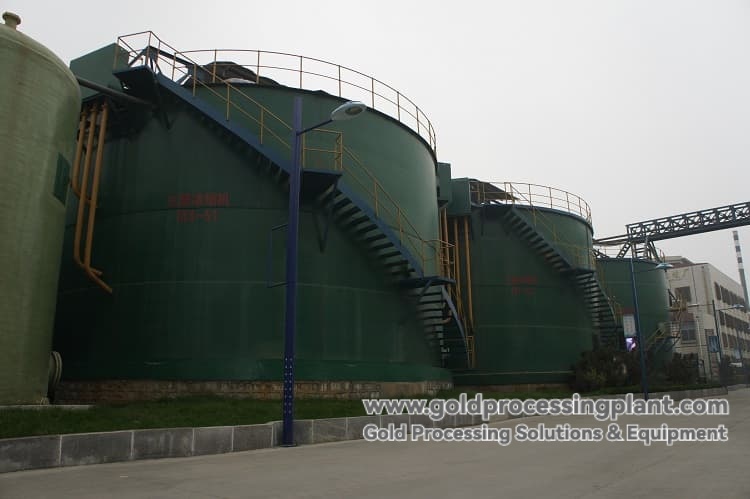
Once pretreatment has resolved the issue of “gold loss,” the next step is to recover the dissolved gold. The primary processes for this step are cyanide leaching combined with activated carbon adsorption, namely CIL (carbon-in-leach) and CIP (carbon-in-pulp).
CIL (Carbon-in-Leach): Simultaneous leaching and adsorption in a compact process. Under alkaline conditions (pH 10–11), a cyanide solution dissolves gold into gold-cyanide complexes, while activated carbon is added to the same leaching tank to adsorb the gold; leaching and adsorption occur simultaneously.Activated carbon is added to the final tank, moves forward in a countercurrent flow, and comes into contact with the ore slurry in the opposite direction. CIL is suitable for small- to medium-sized and large-scale processing plants; with its compact layout and fewer tanks, it is a commonly used recovery process for carbonaceous gold ores following pretreatment.
CIP (Carbon-in-Pulp): Leaching precedes adsorption, allowing for more precise control. Leaching is completed first; activated carbon is added only after the pulp enters the adsorption tank. Leaching and adsorption occur in separate tanks, allowing for a more thorough leaching process. CIP is suitable for ores with relatively fast leaching rates that require staged control and is commonly used in large-scale processing plants.
Key differences between CIP and CIL: CIL combines leaching and adsorption, saving on tanks and offering a compact process; CIP involves leaching first followed by adsorption, allowing for a more thorough leaching period and finer control.The choice between the two depends on the ore\'s leaching rate, processing capacity, and operational control requirements. For pretreated carbonaceous gold ores, where the gold-snatching effect has been eliminated, the compact CIL process is often more economical; if the ore\'s leaching rate is slow or precise control of leaching time is required, CIP is more suitable.
Downstream Recovery Process: After screening and separation, the gold-bearing carbon enters the acid washing and desorption-electrolysis stages, where the gold is leached out and electrolytically converted into gold slime, which is then smelted in a furnace to produce refined gold; the tailings are thickened, dewatered via filter presses, and either dry-stored or discharged in compliance with regulatory standards.Throughout the entire process, the carbon-retaining screen prevents activated carbon from being carried away with the slurry, while the carbon-lifting device lifts and extracts the gold-bearing carbon from the tank; these specific pieces of equipment directly impact carbon consumption and recovery rates.
IV. How to Configure the Complete Mineral Processing Equipment Solution
The complete equipment configuration for the “pretreatment + CIP/CIL” combined process for carbonaceous gold ore is organized by process stage as follows:
Crushing and Grinding Section:
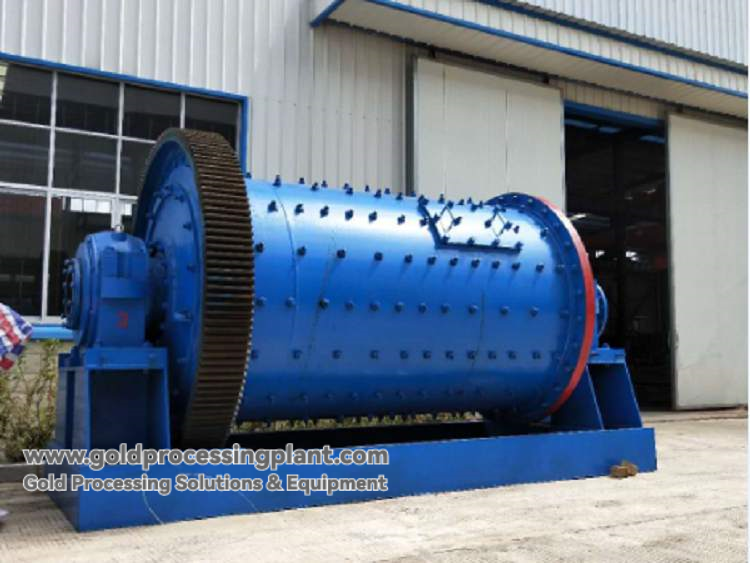
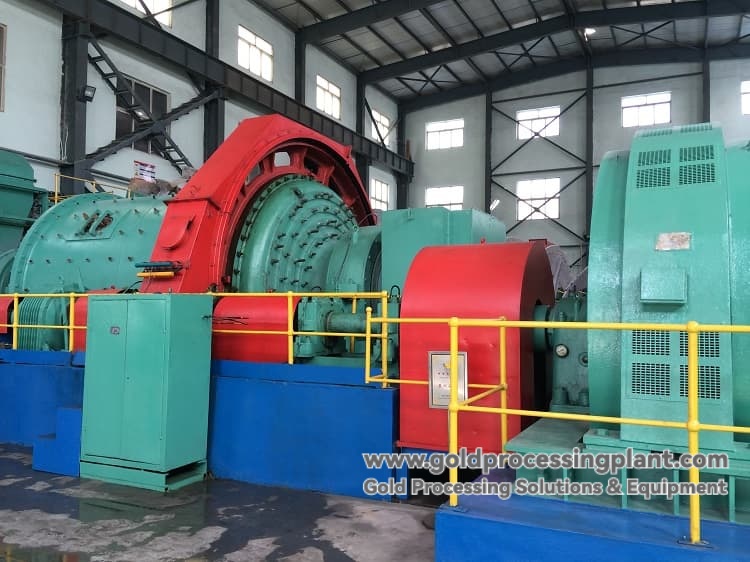
Jaw crusher (primary crushing) + cone crusher (secondary and tertiary crushing) + ball mill (two-stage grinding: grid type + overflow type) + spiral classifier/hydrocyclone (closed-circuit classification).The grinding fineness must ensure the individual liberation of gold-bearing minerals while avoiding over-grinding.
Flotation Section:
Floating machine series (SF-type self-aspirating pulp, XCF/KYF-type aerated types; large-scale direct-current cells are the preferred configuration), combined roughing, scavenging, and concentrating units; accompanied by agitation tanks and dosing systems. Carbon-bearing ore requires the addition of carbonaceous inhibitors in this stage.
Pre-treatment Section:
Pre-treatment reaction tanks (with agitation and corrosion-resistant lining), chlorinating agent/oxidizing agent dosing systems, pH adjustment systems, and ventilation and exhaust gas treatment systems.Equipment materials must be upgraded with corrosion-resistant modifications (corrosion-resistant stainless steel or internal corrosion-resistant coatings) to withstand the corrosive chloride/oxidizing environment. This is a detail often overlooked in many projects—choosing the wrong materials can significantly shorten the equipment\'s service life.
Leaching and Adsorption Section (CIP/CIL):
Leaching tank (with agitation and aeration), activated carbon adsorption system, gold-loaded carbon separation screen (carbon separator/air lifter), carbon recovery unit, desorption electrolysis equipment (room temperature and atmospheric pressure for conventional processing; high temperature and high pressure for large-scale or hard-to-desorb ores), gold smelting furnace.
Concentration and Dewatering Section:
Thickener (for concentrate and tailings dewatering) + filter press (for dry tailings discharge) + dewatering screen.
Auxiliary Equipment:
Vibrating feeders, belt conveyors, slurry pumps, carbon recovery pumps, clean water pumps.
The key principle for equipment configuration is “matching equipment to the ore,” rather than “matching equipment to inventory.” Ore characteristics—such as carbon content, the floatability of gold-bearing sulfides, and leaching rates—directly determine the number of flotation stages, the volume of pretreatment reaction tanks, the number of leaching tanks, and the choice of desorption method.GoldProcessingPlant operates its own manufacturing facility, where crushers, ball mills, flotation cells, leaching tanks, and desorption/electrolysis equipment are all manufactured in-house. Process engineers and mechanical engineers collaborate within the same team, ensuring that equipment is manufactured strictly in accordance with process design drawings to avoid discrepancies such as “mismatched dimensions between design drawings and actual equipment.”To address the corrosive conditions associated with chloride-based pretreatment, customized corrosion-resistant upgrades can be applied to flow-through components and tank linings.
V. Implementation of the Solution: Testing First, Equipment Later
The complexity of carbon-bearing gold ore means that solutions cannot be decided on a whim. GoldProcessingPlant\'s collaboration process emphasizes “understanding the ore first, then selecting equipment”:
Step 1: Mineral Processing Testing and Process Validation.
Representative ore samples undergo chemical analysis and beneficiation tests, covering flotation tests, comparative tests of different pretreatment methods (chlorination/oxidation/roasting/bio-oxidation), cyanide leaching tests, and CIL/CIP comparative tests.The test report not only provides recommended processes and expected recovery rates but also directly includes a list of recommended equipment and a preliminary budget. Standard validation takes approximately 3–4 weeks, and a complete proposal report is typically issued within 30–45 days; if the ore properties are particularly complex, additional validation steps are required, and the timeline will be extended accordingly.
Step 2: Process Design, Equipment Selection, and Quotation.
Based on the test data, we determine the pre-treatment + CIP/CIL process route and parameters, and provide a process flow diagram, equipment configuration list, equipment selection plan, and budget quotation.
Step 3: Engineering Drawings and Equipment Manufacturing.
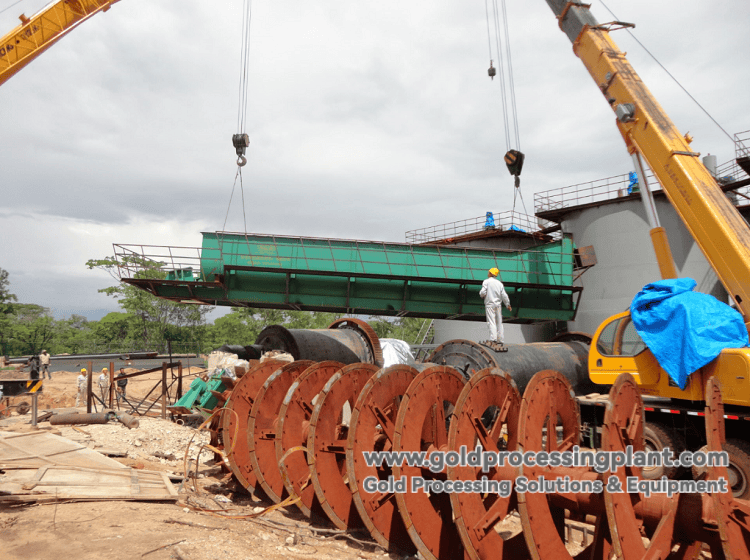
We provide site layout plans, equipment foundation drawings, layout diagrams, piping diagrams, and civil engineering requirement drawings. Core equipment is manufactured according to the drawings, and non-standard components are custom-made as needed.
Step 4: Installation, Commissioning, and Personnel Training.
We will dispatch engineers to provide on-site installation guidance, lead the commissioning of individual units and integrated trial runs with feed material, and optimize the pre-treatment chemical regimen, grinding fineness, and leaching parameters until qualified, compliant gold is produced; we will also provide theoretical and hands-on training to the client\'s team to ensure they can independently adjust the chemical regimen, grinding fineness, and leaching parameters.
Regarding Performance Commitments: Recovery rates are determined by the inherent characteristics of the ore (particle size distribution, association with other minerals, occurrence state, and type of carbonaceous material); we do not commit to absolute figures that are detached from reality.What we can commit to is: through rigorous process design, we will develop a process capable of achieving the highest attainable recovery rate under the specific conditions of this ore, and we will strive for excellence in equipment selection and process control. Both parties will agree in the contract on reasonable acceptance criteria based on the same ore source and the same operating conditions.
VI. Flexible Service Models and Project Timelines
Investments in carbonaceous gold ore projects carry high risks. GoldProcessingPlant does not require bundled contracts and offers flexible, phased services: clients may opt for mineral processing trials only (to first assess the feasibility and economic viability of pre-treatment),obtain only a quote for process design and equipment selection, purchase only engineering drawings, procure individual units or complete sets of equipment, or hire engineers for on-site commissioning; alternatively, clients may opt for a turnkey EPC solution, which comprehensively manages design, equipment, installation guidance, and commissioning training, and assumes responsibility for the final production targets.The upfront costs for mineral processing tests and design fees can be fully offset against the equipment cost when subsequently signing an equipment or EPC contract.
Regarding the project timeline, the overall duration from the start of process design to final production launch is typically around 8 to 15 months.Key milestones: Process design and equipment selection quotation (7–15 days) → Engineering drawing design (20–30 days) → Equipment manufacturing (60–120 days) → Logistics (30–60 days) → Installation and commissioning (60–150 days).Commissioning for integrated processes that include pretreatment plus CIP/CIL takes relatively longer, so a sufficient commissioning period must be allocated; for overseas projects, additional buffer time must be set aside for customs clearance (approximately 30 days) and flexibility during the transition period (approximately 30 days).
Carbon-bearing material is not waste ore; it is a resource in the wrong place. “Gold-trapping” ores are difficult to process, but it is precisely with these challenging ores that we must conduct rigorous process validation and seek breakthroughs. If others have not achieved good results, it may be because the process was not tailored to the specific conditions or the reagent regimen was incorrect—do not give up easily. The core logic is clear:First, conduct mineral processing tests to identify the type of carbonaceous material and its gold-trapping capacity; then, select the appropriate pretreatment path to eliminate interfering factors before leaching; finally, use CIP/CIL processes to reliably recover the dissolved gold. Equipment should be configured according to the process, and materials upgraded based on operating conditions—only when every step is supported by data can recovery rates be guaranteed.