


Suppliers of Recovery and Beneficiation Solutions and Complete Equipment Sets for Quartz Vein-Type Gold Deposits
Supplier of Recovery and Beneficiation Solutions and Complete Equipment Sets for Quartz Vein-Type Gold Deposits
Quartz vein-type gold deposits are one of the most common types of primary gold deposits in mining regions such as Jiaodong, China, and also account for the largest proportion of primary gold deposits in global mining operations.In this type of ore, gold minerals primarily consist of fissure gold and intergranular gold, which are closely associated with pyrite; coarse-grained and fine-grained gold may coexist—a characteristic that makes it difficult for any single beneficiation process to achieve complete gold recovery.Taking GoldProcessingPlant\'s quartz vein-type gold ore recovery and beneficiation solution as an example, this article systematically outlines the complete process—from ore characteristics, process flow, and core equipment configuration to the supply of complete equipment sets and EPC delivery—to provide gold mine investors with actionable decision-making guidance.
I. Ore Characteristics of Quartz Vein-Type Gold Deposits: Why a Single Process Cannot Achieve Complete Recovery
The typical characteristics of quartz vein-type gold deposits determine the fundamental logic of their beneficiation processes:
1. Gold minerals are primarily fissure gold and intergranular gold.
Gold is hosted within quartz fissures and between pyrite grains, and is closely associated with sulfides (primarily pyrite). Fissure gold has a relatively coarse grain size, while intergranular gold consists of a mixture of coarse and fine grains; the coexistence of these two forms means that recovery methods must “address both coarse and fine particles.”
2. Coarse-grained and fine-grained gold coexist.
Coarse-grained gold is suitable for early recovery via gravity separation, while fine-grained gold requires flotation or cyanidation as a backup. If only flotation is used, coarse-grained gold is prone to overgrinding and loss during the grinding circuit; if only gravity separation is used, fine-grained gold cannot be fully recovered. The recovery rate ceiling for a single-process approach is clearly limited.
3. Gold-bearing sulfides exhibit good flotability.
Gold-bearing pyrite is a typical characteristic of quartz vein-type gold deposits. Flotation can recover the sulfides along with the gold, and the concentrate is then sent for smelting or cyanidation—this is the most economical route for recovering fine-grained gold.
4. The degree of oxidation influences process selection.
If the ore is highly oxidized and free of interfering elements such as copper, arsenic, antimony, and carbon, direct whole-ore cyanidation (CIL/CIP) can be used; if the sulfide content is high, flotation is the primary method.
Summary: In quartz vein-type gold deposits, gold is present in pyrite and quartz fissures in both coarse and fine grains; a single process cannot achieve complete recovery, and a combined process is the most reliable approach.
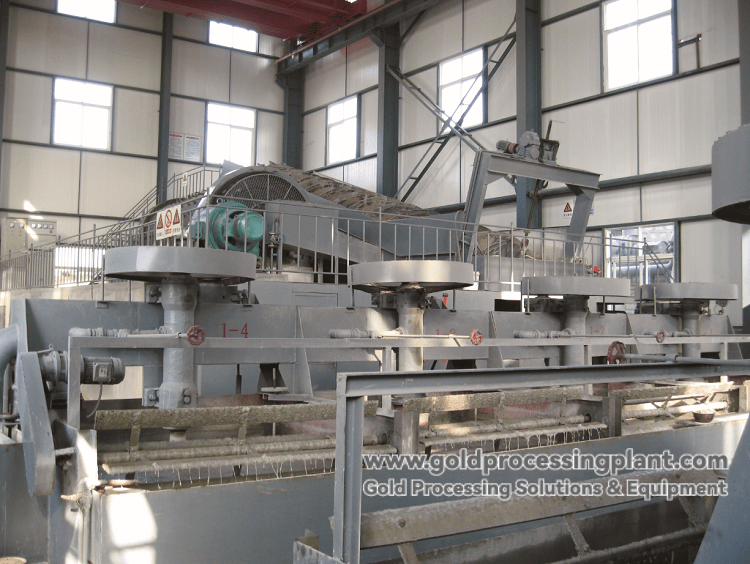
II. Recommended Process Route: Combined Gravity Separation and Flotation, with Early Recovery of Coarse-Grained Gold and Final Recovery of Fine-Grained Gold
Given the characteristics of quartz vein-type gold ore, GoldProcessingPlant recommends a combined gravity separation and flotation process, or direct cyanidation/flotation depending on the degree of oxidation. The core logic is “early and maximum recovery of coarse-grained gold, with flotation serving as a safety net for fine-grained gold.”
Step 1: Crushing and Grinding. Coarse crushing is performed using a jaw crusher, followed by medium and fine crushing with a cone crusher, adhering to the principle of “more crushing, less grinding.”Grinding employs a two-stage process using a grid-type ball mill followed by an overflow-type ball mill, with the second stage forming a closed-circuit with a spiral classifier or hydrocyclone. The fineness of grinding determines the degree of liberation—which is the foundation for the effectiveness of gravity separation and flotation; if the grinding fineness is incorrect, all subsequent steps will be in vain.
Step 2: Recover coarse-grain gold via gravity separation in the grinding circuit. Install a centrifugal separator (such as a Nelson centrifuge) or a jig within the grinding circuit to recover coarse-grain free gold at an early stage.This is a critical step for “early and maximum recovery” in quartz vein-type gold deposits—recovering coarse-grain gold early in the grinding circuit prevents gold loss to tailings caused by over-grinding. The gravity concentration concentrate is sent to a shaking table for final concentration, producing gold of marketable quality or concentrate for sale.
Step 3: Recover gold-bearing sulfides via flotation. The gravity separation tailings are fed into the flotation circuit, which employs a process ranging from “one roughing, two cleaning, two scavenging” to “one roughing, three cleaning, three scavenging” to float gold-bearing sulfides such as pyrite along with the gold.The flotation reagent regime is adjusted to suit the characteristics of gold-bearing pyrite; the type and dosage of collectors, pH adjusters, and the selection of activators/inhibitors determine the selectivity of the flotation process. The flotation concentrate is sent for smelting or cyanide leaching, while the tailings are dewatered and discharged.
Step 4: Cyanidation or direct smelting of the flotation concentrate. Since flotation concentrates have a low yield but high grade, sending them to smelting is the most economical option; if they contain interfering elements such as arsenic, they may be pretreated before cyanidation. For ore with a high degree of oxidation and no interfering elements, flotation can be bypassed in favor of direct whole-ore cyanidation (CIL/CIP).
Key Process Considerations: For coarse-grained gold, adhere to the principle of “early recovery and maximum recovery” to avoid gold loss to tailings due to over-grinding; adjust the flotation reagent regime to account for the gold-bearing characteristics of pyrite; the placement of gravity separation within the grinding circuit and whether to regrind and re-leach flotation tailings are critical decisions that determine the overall recovery rate and must be verified through mineral processing tests.
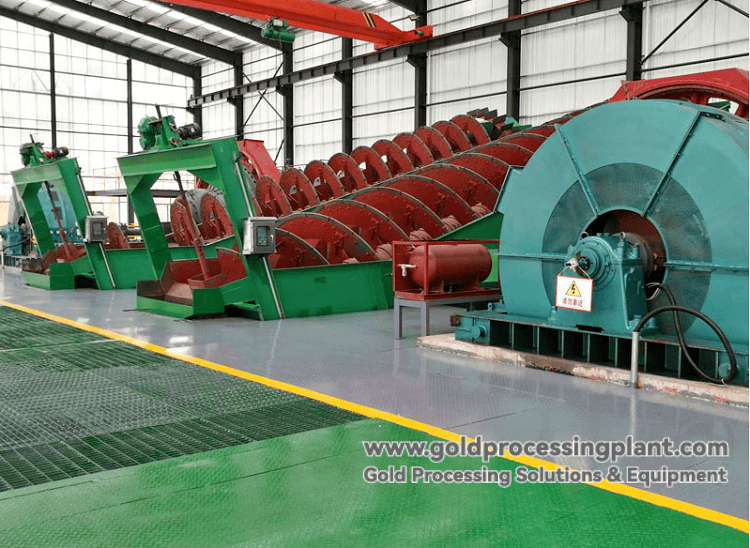
III. Complete Equipment Configuration: Full Process List from Crushing to Dry Tailings Discharge
The core equipment configuration for a quartz vein-type gold ore mining and beneficiation production line is as follows:
Crushing Stage:
Jaw crusher (primary crushing; handles large chunks of raw ore; high compressive strength; simple structure and durable) + cone crusher (secondary and tertiary crushing; highly efficient at processing hard rock; uniform product size).
Grinding and Classification Section:
Grid-type ball mill (first stage: forced discharge, high throughput, resistant to over-grinding) + overflow-type ball mill (second stage: finer grinding) + spiral classifier/hydrocyclone (operating in a closed-circuit system with the mills; qualified fine powder is discharged, while coarse sand is returned for regrinding).
Gravity Separation Section:
Centrifugal separator (Nielsen centrifuge, recovers coarse free gold from the grinding circuit) + shaking table (6-S shaking table/multi-deck suspended shaking table, for concentrating the gravity concentrate) + sand pump.
Flotation Section:
Floating machine series (SF-type self-priming slurry machines, suitable for the front end of roughing and scavenging; XCF/KYF-type aerated machines, the preferred choice for large-scale direct-flow cell configurations; JJF-type), configured as roughing, scavenging, and concentrating units.
Thickening and Dewatering Section:
Thickener (for preliminary sedimentation and dewatering of concentrate and tailings) + filter press (for dry tailings discharge and concentrate dewatering) + dewatering screen.
Auxiliary Equipment:
Vibrating feeders, belt conveyors, mixing tanks (for reagent mixing prior to flotation), slurry pumps.
Cyanidation Section (if applicable):
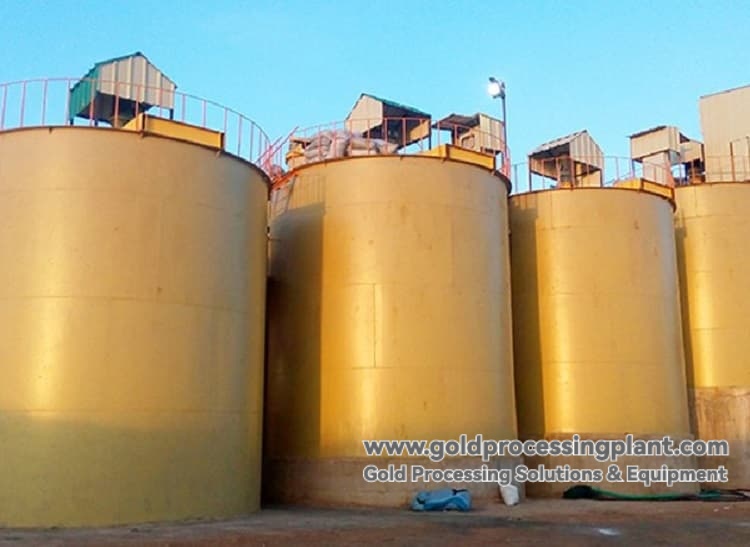
CIL/CIP leaching and adsorption system, including leaching tanks, activated carbon adsorption system, gold-bearing carbon separation screen, desorption and electrolysis equipment, and gold smelting furnace.
It is worth emphasizing that GoldProcessingPlant operates two major in-house manufacturing bases in Shandong and Jiangxi, China, where all core equipment—including crushers, ball mills, centrifugal mineral separators, flotation cells, and CIL leaching tanks—is manufactured in-house.Process engineers and mechanical engineers work collaboratively within the same team, ensuring that equipment is manufactured strictly in accordance with process design drawings, thereby avoiding discrepancies such as “mismatches between design drawings and actual equipment dimensions.”
IV. Key Details in Equipment Selection: How to Choose Ball Mills and Flotation Machines
There are two frequently asked questions regarding equipment selection for quartz vein-type gold mines:
Should a grid-type or overflow-type ball mill be selected? This primarily depends on process requirements. Grid-type mills feature forced discharge, handle large throughput, are suitable for coarse grinding or the first grinding stage, and are less prone to over-grinding; overflow-type mills rely on gravity overflow, achieve finer grinding fineness, and are suitable for fine grinding or the second grinding stage.Quartz vein-type gold mines typically employ a two-stage grinding configuration consisting of a first-stage grid-type mill followed by a second-stage overflow-type mill; the specific configuration depends on the degree of liberation of the gold ore.
With so many types of flotation cells available, how do you choose? If the process requires self-priming of the slurry (such as in the initial stages of roughing or scavenging), SF or BF types are commonly used; for large-scale direct-flow cell configurations, XCF/KYF or JJF types are more suitable. The specific selection must be based on the required throughput and aeration capacity.
How are wear resistance and corrosion resistance ensured? For abrasive gold ore with high silica content, the flow components can be replaced with high-chromium alloy or wear-resistant rubber; for acidic leaching environments, the equipment can be upgraded with corrosion-resistant stainless steel or lined with a corrosion-resistant coating. Customized material upgrades can be made based on the properties of the ore.
V. Selecting a Turnkey Equipment Supplier: Why “Matching Equipment to the Ore” Is More Important Than “Matching from Stock”
There is no shortage of equipment for processing quartz vein-type gold ore; what is lacking is someone willing to first understand the ore and then select the appropriate equipment. The same flotation machine can yield a 20-point difference in recovery rates when used on quartz vein-type versus Carlin-type ores; similarly, with the same centrifugal separator, if the grinding fineness is incorrect, coarse-grained gold will still end up in the tailings.
GoldProcessingPlant positions itself as a full-service provider for the entire gold ore beneficiation process, rather than merely a seller of gold mining equipment. Its core differentiation lies in three points:
First, shifting from “selling equipment” to “selecting equipment based on the ore.”
Whether the ore is quartz vein-type or altered rock-type, whether it contains fissure gold or inclusional gold, what the grinding fineness should be, how flotation reagents should be formulated, and where gravity separation should be placed in the grinding circuit—every equipment selection decision is based on the characteristics of the ore, rather than simply selecting equipment from inventory.
Second, we have shifted from “piecing together production lines” to “integrated process and equipment solutions.”
Crushers, ball mills, centrifugal concentrators, flotation cells, and CIL leaching systems are all manufactured in-house. Mechanical engineers have a clear understanding of both upstream slurry volumes and downstream separation requirements, ensuring seamless interfaces and no capacity mismatches.
Third, from “delivery is the end” to “commissioning isn\'t complete until gold is produced.”
The arrival of equipment is just the beginning. Engineers are stationed on-site to guide installation, lead integrated commissioning tests with actual feed, and train operators to adjust reagent regimens and grinding fineness. Commissioning targets—achieving the promised recovery rate and throughput—are explicitly stated in the contract.
VI. EPC Turnkey and Flexible Phased Services: No Mandatory Bundling
For clients who prefer to “deal with a single team,” GoldProcessingPlant offers EPC turnkey services, coordinating process design, equipment manufacturing, installation guidance, integrated commissioning, and personnel training, while taking full responsibility for the final production targets.The scope of delivery is clearly defined: GoldProcessingPlant is responsible for technology, equipment, and commissioning, while the client is responsible for civil engineering, local installation workers, site “utility connections and land grading,” and local compliance procedures.This division of labor not only ensures accountability for project quality but also helps clients achieve tangible savings on labor costs—sending a large number of workers from China to the site would drive up costs due to airfare, visas, room and board, and high daily wages;By having the client organize local labor while we dispatch engineers to provide on-site technical guidance, labor costs can be reduced by at least half.
At the same time, GoldProcessingPlant does not require bundled contracts.Clients may choose to conduct only mineral processing tests, purchase only process flow design and equipment selection quotes, obtain only engineering drawings, procure individual units or complete equipment sets, or hire engineers for on-site commissioning; alternatively, they may combine services such as “testing + design,” “equipment + installation guidance,” or “design + equipment + commissioning.”Upfront payments for mineral processing test fees and design fees can be fully offset against the equipment cost when a subsequent equipment or EPC contract is signed.
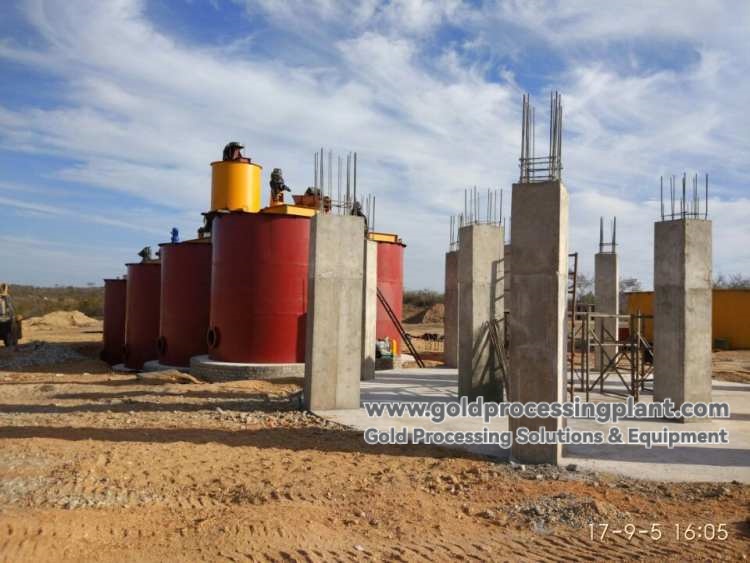
VII. Project Timeline and Global Delivery Experience
For quartz vein gold projects, the overall timeline from the start of process design to final production commencement is typically between 8 and 15 months. Key milestones:Process design and equipment selection quotation: 7–15 days → Engineering drawing design: 20–30 days → Equipment manufacturing: 60–120 days → Logistics: 30–60 days → Installation and commissioning: 60–150 days. The total project duration can be shortened by appropriately overlapping these phases; for overseas projects, additional buffer time should be allocated for customs clearance.
Gold Processing Plant projects span Africa (Ghana, Mali, Tanzania, Sudan), South America (Peru, Colombia),Central Asia (Russia, Kazakhstan), and Southeast Asia—covering major gold-producing countries worldwide. Processing capacities range from 30 metric tons per day to 5,000 metric tons per day, encompassing rock gold, placer gold, hard-to-process ores, and tailings reprocessing.Our experience with overseas projects includes: providing diesel generator sets to address unstable power supplies in Africa; pre-stocking materials to overcome transportation difficulties during the rainy season; and providing hands-on training for local workers with limited technical skills, along with fully English-language or bilingual technical coordination, with engineers available to travel to the site.
First, we understand the ore; then, we select the equipment; finally, we work with you to fine-tune the process until gold is recovered. For recovery and beneficiation solutions for quartz vein gold deposits, the key is not simply stacking equipment, but ensuring seamless integration between “ore—process—equipment.”Prioritize gravity separation for coarse-grain gold, use flotation as a backup for fine-grain gold, strictly control grinding fineness, and optimize the reagent regimen—with someone accountable for every step and someone taking full responsibility for every performance indicator. This is the value a turnkey equipment supplier should deliver.