


EPC Turnkey Solution for a Rande-Type Gold Ore Mining and Beneficiation Production Line: A Comprehensive Path from Ore Characteristics to Production Commencement and Compliance with Standards
EPC Turnkey Solution for a Rand-Type Gold Mine Processing Line: A Comprehensive Path from Ore Characteristics to Production and Compliance
Introduction: Rand-Type Gold Deposits—The Global Benchmark for Rock-Type Gold Deposits
Rand-type gold deposits, typified by the Witwatersrand Basin in South Africa, represent the world\'s most significant type of ancient conglomerate gold-uranium deposits.These deposits are characterized by quartz cobble conglomerate as the primary gold-bearing rock type, with gold primarily occurring in a free state, accompanied by pyrite, uranium minerals, and other associated minerals. They are characterized by uneven grade distribution, a mixture of coarse and fine gold grains, a high gravel content, and specific requirements for grinding and liberation.
For investors planning to develop Rand-type gold deposits, the greatest challenge is not finding the equipment, but rather resolving the interplay between “ore—process—equipment.”Even with the same gravity separation equipment, recovery rates can differ by more than 20 percentage points when processing Rand-type ore—which has a high proportion of coarse-grained free gold—compared to processing fine-grained, encapsulated ore.Taking GoldProcessingPlant\'s EPC turnkey solution for a Rand-type gold ore mining and beneficiation production line as an example, this article systematically outlines the complete process—from ore characteristic analysis, process route design, and core equipment configuration to the scope of delivery and project timeline—to provide gold mine investors with actionable decision-making guidance.
I. Ore Characteristics and Processing Challenges of Rand-Type Gold Deposits
The typical characteristics of Rand-type gold deposits determine the basic logic of their beneficiation processes:
1. Gold is primarily in a free state, with a high proportion of coarse-grained gold.
In Rand-type conglomerates, gold is predominantly present in a free, individual form between quartz gravel and cementing material, with particle sizes ranging from the micrometer to several millimeters.The presence of coarse-grained gold necessitates adherence to the principle of “early and maximum recovery,” ensuring recovery as early as possible in the grinding circuit to prevent gold loss to tailings due to over-grinding.
2. The high gravel content necessitates special requirements for grinding and liberation.
Quartz cobble conglomerate is highly hard and abrasive; during grinding, it is necessary to ensure the liberation of free gold particles while preventing over-grinding. The grinding fineness must be determined through testing; if it is too coarse, liberation will be insufficient, and if it is too fine, coarse-grained gold will be ground too finely to be recovered by gravity separation.
3. Associated pyrite and uranium minerals.
Some Rand-type ores contain gold-bearing pyrite and uranium minerals, necessitating a combined gravity separation and flotation process to recover gold-bearing sulfides via flotation and to pre-recover coarse free gold through gravity separation.
4. Uneven Grade Distribution Requires Enhanced Process Adaptability.
Grade fluctuations in Rand-type ore bodies are significant; process design must allow for flexibility, and operations must have a high tolerance for variations to prevent significant fluctuations in overall process performance caused by localized grade changes.
These characteristics mean that a single process template cannot be applied to Rand-type gold deposits; the combination of gravity separation, flotation, and cyanidation must be determined through mineral processing tests, and equipment must be configured accordingly.
II. The Core Logic of the EPC Turnkey Solution: Understand the Ore First, Then Select Equipment
The core principle of GoldProcessingPlant\'s EPC turnkey solution is “Understand the ore first, then select equipment, and finally work with you to fine-tune the process until gold is produced.” It is specifically divided into eight phases:
Phase 1: Requirements Discussion and Preliminary Assessment.
We assess the mining rights status, ore type, raw ore grade, expected processing capacity, target product specifications, and site conditions (water and electricity supply, transportation, and topography). Our team of experts conducts a preliminary feasibility assessment to determine the project\'s general direction and identify the appropriate gold processing technology. Clients need only provide basic mine information or existing laboratory test data.
Stage 2: Mineral Processing Tests and Process Flow Design.
We conduct laboratory analysis and process tests on representative ore samples, covering gravity separation tests, open-circuit and closed-circuit flotation tests, and cyanide leaching tests. Based on the test data, we determine a combined process route involving gravity separation, flotation, and cyanide leaching, and provide a process flow diagram, equipment configuration list, equipment selection plan, and budget quotation.The test report includes an equipment selection list and a preliminary budget, allowing for immediate progression to the design phase.
Phase 3: Proposal Confirmation and Commercial Contract.
Confirm each item of the process flow, equipment list, scope of delivery, construction schedule, and division of responsibilities between both parties. The contract clearly specifies GoldProcessingPlant\'s responsibilities and the client\'s responsibilities, with no hidden costs.
Phase 4: Engineering Drawing Design.
We will produce site layout plans, site planning diagrams, equipment foundation drawings, equipment layout diagrams, piping route diagrams, electrical control diagrams, and civil engineering diagrams, and provide a comprehensive technical briefing to ensure that civil construction and equipment installation are carried out in accordance with the drawings.
Phase 5: Equipment Manufacturing and Supply.
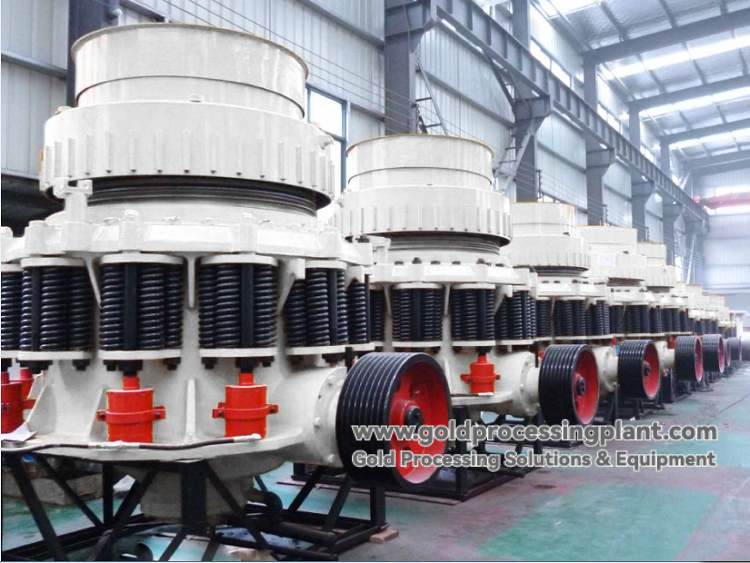
Core equipment (jaw crushers, cone crushers, ball mills, centrifugal mineral separators, flotation machines, CIL/CIP leaching and adsorption systems, thickeners, filter presses, etc.) will be manufactured according to the drawings; standard auxiliary equipment not produced in-house will be procured through centralized quality inspection.
Phase 6: Logistics and Shipping.
Coordinate equipment packaging, shipping, and transportation by sea or land; process export documentation and customs clearance materials; and track logistics milestones until the equipment arrives on-site.
Phase 7: On-site Construction Guidance, Installation, and Commissioning.
Dispatch engineers to the site to supervise equipment positioning, pipeline connections, and electrical installations; lead the commissioning of individual units and integrated trial runs with water and feed material; and optimize grinding fineness, reagent regimes, and leaching parameters until the first batch of qualified gold concentrate or blended gold is produced.
Phase 8: Personnel Training and After-Sales Support.
We provide systematic theoretical and hands-on training for the client\'s operators and maintenance teams, complete the acceptance and handover, and transition into a phase of long-term spare parts supply and technical support.
III. Core Equipment Configuration for the Rand-Type Gold Mine Processing Line
Based on the ore characteristics of Rand-type gold deposits, the core equipment configuration for a typical mining and beneficiation production line is as follows:
Crushing Stage:
Jaw crushers handle primary crushing, while cone crushers handle secondary and tertiary crushing. Following the principle of “more crushing, less grinding,” the crushing stage performs the bulk of the work, thereby reducing power consumption in the grinding stage.
Grinding Stage:
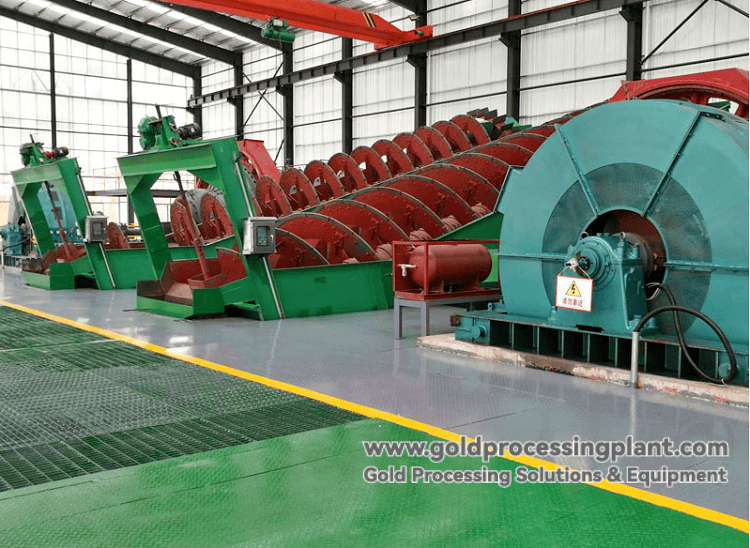
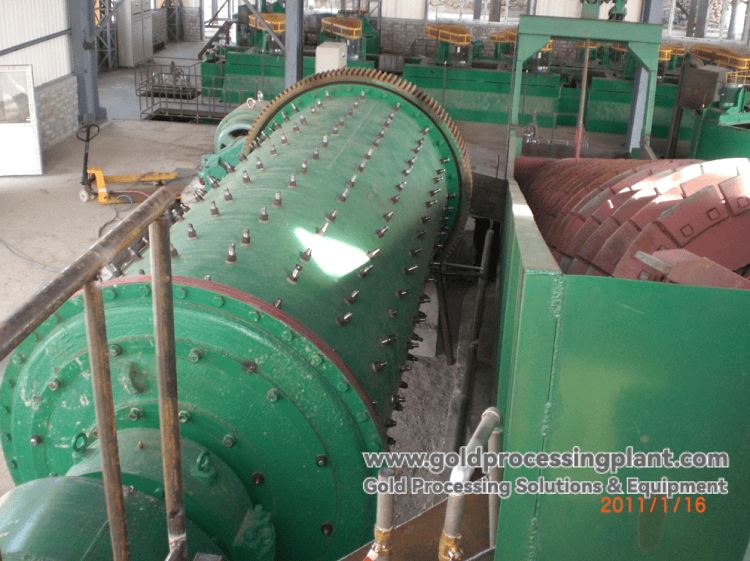
A two-stage grinding process is employed, consisting of a single-stage grid-type ball mill followed by an overflow-type ball mill. The second stage forms a closed-circuit with a spiral classifier or hydrocyclone. The grid-type mill features forced discharge, high throughput, and resistance to over-grinding, making it suitable for the first stage; the overflow-type mill achieves a finer grind and is suitable for the second stage of fine grinding.
Gravity Separation Section:
A centrifugal separator (such as a Nelson centrifuge) is installed in the grinding circuit to recover coarse-grained free gold early on, and the gravity concentrate is sent to a shaking table for further concentration. This is a key step in the “early and maximum recovery” strategy for Land-type gold deposits, as recovering coarse-grained gold early in the grinding circuit prevents over-grinding and loss in subsequent processes.
Flotation Stage:
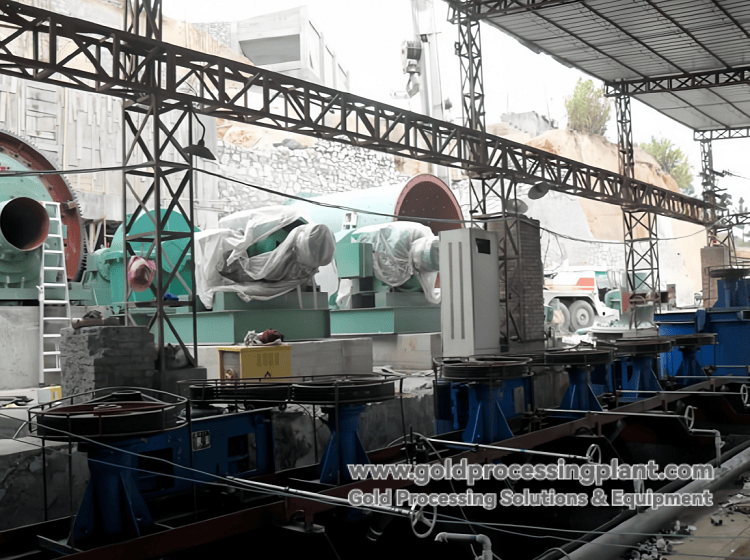
For gold-bearing sulfides, SF-type (self-aspirating) or XCF/KYF-type (air-agitated) flotation cells are configured in a combination of roughing, scavenging, and concentrating units. The flotation concentrate is sent to smelting or cyanide leaching.
Cyanidation Section (if applicable):
For scenarios involving the cyanidation of flotation tailings or whole-ore slurry, a CIL/CIP leaching and adsorption system is configured, including leaching tanks, an activated carbon adsorption system, a gold-bearing carbon separation screen, desorption and electrolysis equipment, and a gold smelting furnace.
Concentration and Dewatering Section:
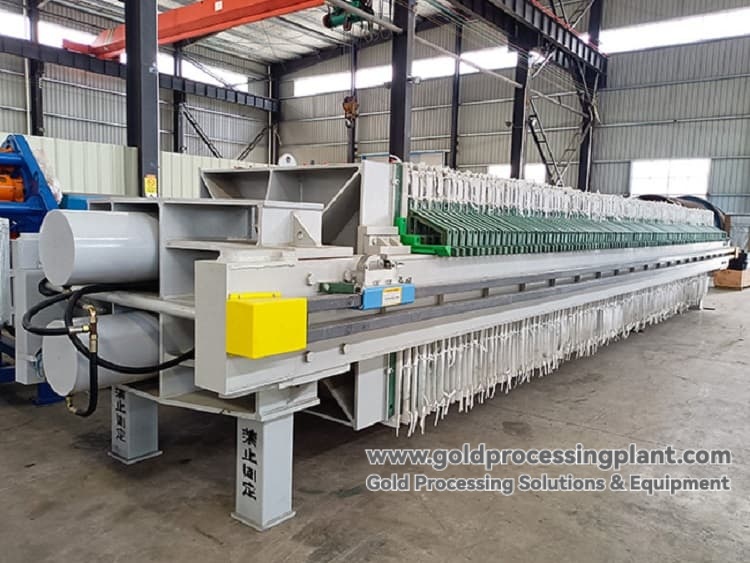
Thickening tanks are used for preliminary sedimentation and dewatering of concentrate and tailings, while filter presses are used for dry tailings disposal and concentrate dewatering.
Auxiliary Equipment:
Vibrating feeders, belt conveyors, slurry pumps, agitation tanks, etc.
IV. EPC Scope of Work: Clarify Responsibilities Before Signing the Contract
Most disputes and delays in mineral processing plant construction stem from a failure to clearly define “who does what” before signing the contract. The core principle of GoldProcessingPlant\'s EPC services is: we take full responsibility for what falls under our purview; for tasks requiring client cooperation, we provide advance briefings.
GoldProcessingPlant is responsible for:
Process design and technical solutions, engineering design and drawings, manufacturing of core equipment and supply of supporting components, on-site installation technical guidance, commissioning and personnel training, after-sales service and spare parts supply.
The client is responsible for:
Civil construction (to be organized independently based on the civil engineering condition drawings provided by us), organizing local installation workers (our engineers will provide on-site guidance on installation procedures; the client is responsible for organizing the workforce), on-site “three utilities and one leveling” (water, electricity, and access roads; site grading), and local compliance procedures.
The rationale behind this division of labor is practical: if we were to dispatch a large number of Chinese workers overseas or to remote locations for construction, the costs—including airfare, visas, room and board, plus high daily wages—would be astronomical.By having the client recruit local general installation workers and having our technical engineers provide on-site guidance, we can save at least half of the labor costs. Additionally, communication with local workers is easier, and they can adapt more flexibly to the progress of on-site civil engineering work, avoiding delays caused by waiting for visas or flights.We still assume full responsibility for technical risks—although the workers are sourced by the client, our engineers make the final on-site decisions regarding installation methods and standards, and GoldProcessingPlant is responsible for the final outcome of the equipment and processes.If the client is truly unable to find a local construction team, a turnkey solution can be negotiated, with both parties separately defining the scope and calculating costs in the contract.
V. Estimated Project Duration: 8 to 15 months from project initiation to production start-up
Based on experience with typical gold mining projects, the overall timeline from the start of process design to final production commencement is usually around 8 to 15 months. The time allocation for each phase is as follows:
| Phase | Estimated Duration | Key Notes |
|---|---|---|
| Process Design and Technical Solution | 7–15 days | The sooner the ore samples are provided, the better; the timeline may be extended if complex ores require expanded testing |
| Concentrator Engineering Design | 20–30 days | May overlap with equipment manufacturing |
| Equipment Manufacturing | 60–120 days | May be extended for custom-made equipment and overseas power supply systems |
| Logistics and Shipping | 30–60 days | Projects in Africa, South America, and Central Asia are significantly affected by flight routes and shipping schedules |
| Installation and Commissioning | 60–150 days | Joint process commissioning takes longer |
| Customs Clearance and Unforeseeable Delays | Approx. 30 days (allotted) | Mandatory for cross-border projects |
| Transition period (technical handover, acceptance testing, etc.) | Approx. 30 days (allotted) | Often overlooked; it is recommended to allow for flexibility |
Many gold mining projects suffer from severe delays, often not because the equipment cannot be manufactured, but due to indecision in the early stages or a lack of proper coordination between project phases. Providing representative ore samples as early as possible to initiate process design is the first step toward shortening the overall project timeline.Once the core parameters of the process design are finalized (grinding fineness, number of flotation stages, leaching time), drawings for non-standard equipment can be sent to the factory for manufacturing immediately—there is no need to wait for the complete set of drawings to be flawless before starting production. Civil construction can proceed simultaneously while equipment is being manufactured and shipped.
VI. Why Choose the EPC Turnkey Model
When building a gold ore processing plant, there are typically four options: procuring equipment independently and handling construction in-house; commissioning a design institute to prepare drawings while handling procurement and construction in-house; purchasing equipment as a complete package or through a trading company; or entrusting the entire project to an EPC general contractor. These four models differ significantly in terms of scope of responsibility, project duration, implementation risks, and cash flow.
Under the self-procurement model, equipment from different manufacturers is prone to mismatches in interfaces, production capacity, and energy consumption. When system performance falls short of standards, equipment manufacturers and contractors tend to shift blame onto each other, leaving the investor to act as the “referee.”In the design institute model, design institutes focus on theoretical calculations and have limited involvement in actual equipment operating conditions, which may lead to discrepancies between “design parameters” and “equipment performance.” In the trading company turnkey model, standardized equipment may not be suitable for complex ore types; cross-border after-sales response times are slow, and process optimization and technical support are difficult to guarantee.
The EPC turnkey model features a single entity responsible for the project, ensuring high compatibility between processes and equipment while reducing the hidden costs associated with coordinating multiple parties. This model is particularly suitable for investors lacking professional engineering management teams, or for Rand-type gold mine projects characterized by complex processes and high requirements for final recovery rates.
As a full-service provider integrating process design, engineering design, equipment manufacturing, installation, and commissioning, GoldProcessingPlant operates two proprietary manufacturing bases in Shandong and Jiangxi, China. These facilities cover a total area of approximately 50,000 square meters, including 20,000 square meters of modern, standardized factory space, with an annual production capacity exceeding 500 units. The company exports its products to more than 50 countries and regions.Projects span major gold-producing regions worldwide, including Africa (Ghana, Mali, Tanzania, Sudan), South America (Peru, Colombia),Central Asia (Russia, Kazakhstan), and Southeast Asia—covering processing capacities ranging from 30 metric tons per day to 5,000 metric tons per day, and encompassing the processing of rock gold, placer gold, hard-to-process ores, and tailings reprocessing.
VII. Flexible Modular Services: No Mandatory Bundling; Choose as Needed
EPC turnkey delivery is the standard approach, but GoldProcessingPlant does not require bundled services. Clients may select individual or partial services based on their specific needs.