EPC supplier for gold ore processing equipment production lines—what is the processing capacity? What is the price?
EPC Suppliers for Gold Ore Processing Equipment Production Lines: What Is the Processing Capacity? What Is the Price?
When looking for an EPC supplier for gold ore beneficiation equipment production lines, the two questions clients ask most frequently are: “What is your maximum processing capacity?” and “How much does a complete system cost?” These questions may seem simple, but the answers cannot be guessed off the top of one\'s head—processing capacity determines equipment specifications and configuration logic, while price depends on ore type, process flow, scope of delivery, and on-site conditions.This article clearly outlines the range of processing capacities and price ranges, and explains the factors influencing pricing, helping you have a clear understanding when preparing a preliminary investment estimate.
I. Processing Capacity Range: 30–5,000 metric tons per day
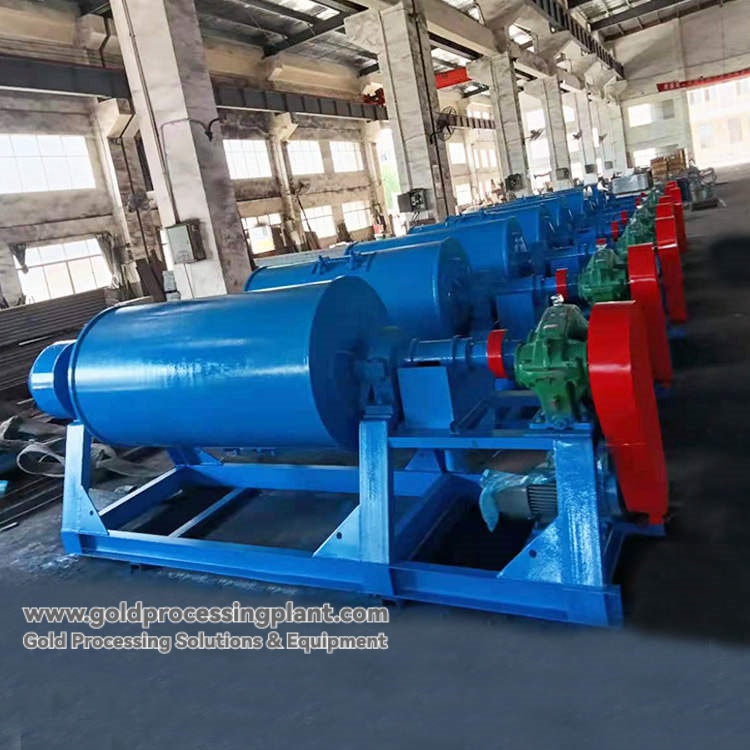
As an EPC supplier of gold ore processing equipment production lines, GoldProcessingPlant handles projects ranging from 30 metric tons per day to 5,000 metric tons per day, capable of undertaking everything from pilot plants to large-scale industrial production lines.
Configuration logic varies depending on the scale:
| Capacity Tier | Daily Processing Capacity (metric tons/day) | Typical Scenarios | Configuration Features |
|---|---|---|---|
| Small | 30–200 | Decentralized mining sites, new small-scale plants, pilot lines | Compact process flow, standardized equipment, investment-sensitive |
| Medium | 200–1,000 | Mainstream scale for conventional processing plants | Wide range of process options, balancing capital and operating costs |
| Large | 1,000–5,000 | Large-scale mines, mass production | Large-scale equipment, high automation requirements, and priority given to system stability |
Scale affects equipment configuration and budget but does not impact design or process standards. Both a small plant processing 30 metric tons per day and a large plant processing 5,000 metric tons per day undergo the same ore characterization analysis and process design; the only differences lie in equipment specifications and the level of configuration detail.
Conversion of processing capacity units: In addition to metric tons per day (TPD), comparisons can also be made using metric tons per hour (TPH), metric tons per month (TPM), and metric tons per year (TPA).For example, a 500 metric tons per day plant operating 330 days per year equates to approximately 165,000 metric tons per year; assuming 20 hours of effective operation per day, this equates to approximately 25 metric tons per hour.
II. Pricing: Reference Range for Complete Sets of Main Equipment
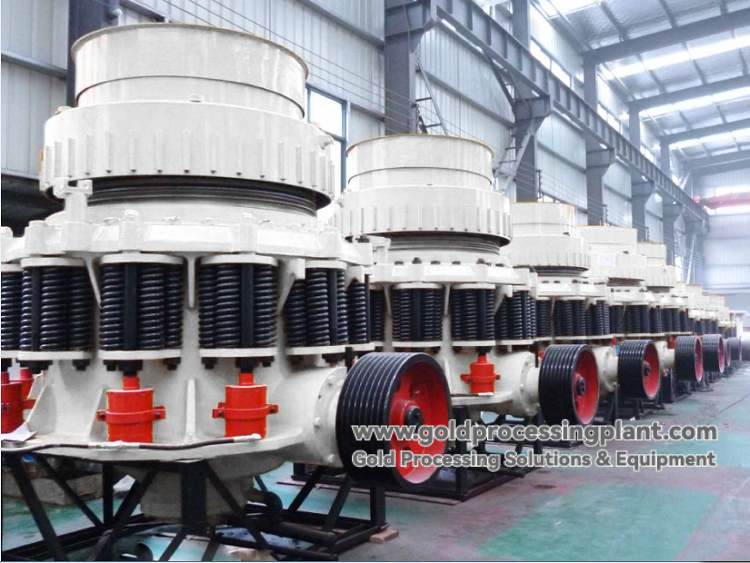
Based on the GoldProcessingPlant pricing system for complete sets of main equipment (CIP/CIL/whole-ore cyanidation/leaching processes), prices are quoted in U.S. thousands of dollars and represent price ranges for the complete sets of main equipment, excluding civil engineering, installation, logistics, and auxiliary materials:
| Daily Processing Capacity (metric tons/day) | Price Range for Complete Set of Main Equipment (US$10,000) |
|---|---|
| 30 | 20–35 |
| 50 | 25–40 |
| 100 | 35–50 |
| 150 | 40–65 |
| 200 | 45–75 |
| 250 | 55–85 |
| 300 | 60–90 |
| 400 | 75–110 |
| 500 | 90–135 |
| 700 | 115–165 |
| 800 | 125–170 |
| 1,000 | 150–190 |
| 1,500 | 205–270 |
| 2,000 | 265–335 |
| 2,500 | 300–380 |
- The lower limit of the range corresponds to standard configurations, typical ores, and standard operating conditions (stable utility power, convenient transportation, and flat terrain);
- The upper limit of the range corresponds to non-standard customization, complex ores, special operating conditions, or solutions with more comprehensive configurations;
- The table above shows reference prices for complete sets of main equipment for CIP, CIL, whole-ore cyanidation, and leaching processes. Other process routes (such as flotation-based, gravity separation-based, or pretreatment plus cyanidation) have different pricing structures and must be calculated separately based on the specific process configuration.
III. Behind the Prices: Five Influencing Factors
Even for the same 500 metric tons per day capacity, quotes may fall at different points within the $900,000–$1.35 million range, depending on:
① Ore Type and Process Route
Easy-to-process ores use CIP/CIL, which feature shorter processes and fewer pieces of equipment, resulting in prices closer to the lower end of the range; difficult-to-process ores (containing arsenic or carbon) require additional flotation and pretreatment steps, leading to more complex equipment configurations and higher prices. Different process routes result in completely different equipment lists.
② Configuration Standards
Standard configurations versus custom designs (e.g., special wear-resistant materials, adaptations for extreme cold or high altitudes, diesel generator sets for unstable power grids in Africa) result in significant price differences. Upgrading equipment materials (e.g., high-chromium alloys, wear-resistant rubber, corrosion-resistant stainless steel) also drives up the price.
③ Level of Automation
Basic manual control vs. automated control systems (PLC, online monitoring, centralized control); solutions with more comprehensive configurations command higher prices.
④ Scope of Delivery
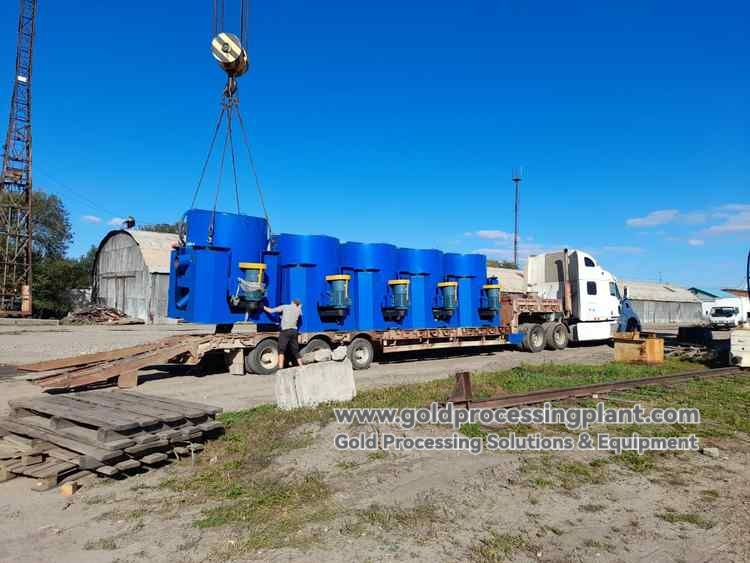
The price of the complete set of main equipment does not include civil engineering, installation labor, logistics and transportation, electrical accessories, or spare parts.In an EPC turnkey solution, the supplier is responsible for equipment manufacturing, process design, installation guidance, and commissioning training, while the client organizes local civil engineering and general installation labor—under this scope, the client saves significant costs on dispatching personnel, and the total investment is more manageable.If a full-service package (including civil engineering and installation labor) is required, the total price will increase accordingly.
⑤ Site Conditions
Logistics and customs clearance costs for overseas projects, transportation challenges in remote mining areas, the need for backup generators due to unstable power supply, and increased civil engineering work resulting from complex terrain will all affect the final quote.
In short: The quoted price may fluctuate depending on configuration standards, ore complexity, and site conditions. A specific quote must be determined based on ore characteristics, process flow, and site conditions; this price is provided solely as a preliminary reference for investment estimates.
IV. What EPC Suppliers Can Offer: More Than Just Equipment Quotes
When selecting an EPC supplier, one should not focus solely on the equipment price list. A comprehensive EPC solution should include:
① Process validation based on ore testing
First, conduct ore property analysis and beneficiation tests to use data to determine the process route and recovery rate targets before discussing equipment configuration and pricing. A quote without test data is like “a blind man feeling an elephant.”
② Equipment List and Selection Criteria
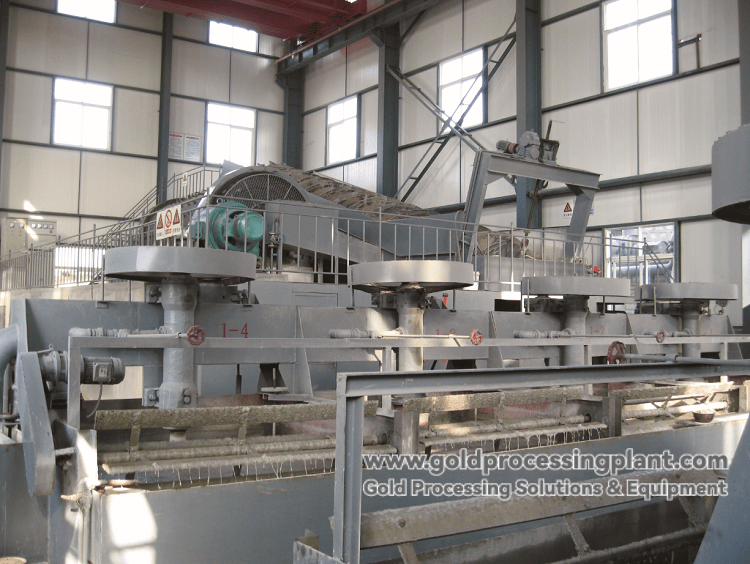
The specifications, capacity, and parameters of each piece of equipment are process-driven, ensuring seamless interface compatibility between crushing, grinding, leaching, adsorption, desorption, and electrolysis equipment.
③ Engineering Drawings and Technical Briefings
Site layout plans, equipment foundation drawings, pipeline routing diagrams, and civil engineering condition drawings can be directly used for construction bidding and on-site organization.
④ Clear Scope of Delivery
The supplier is responsible for equipment manufacturing, process design, installation guidance, and commissioning training; the client organizes civil engineering and local installation workers, with the supplier dispatching engineers to provide on-site guidance. These responsibilities are clearly defined in the contract to avoid disputes later on.
⑤ Commissioning Targets and After-Sales Commitments
Recovery rates and processing capacity targets are specified in the contract; the supplier assumes full responsibility for equipment quality during the warranty period and provides long-term spare parts supply and process optimization support after the warranty expires.
⑥ Flexible Services with No Lock-in
Customers may choose to purchase only equipment, only drawings, commission only testing, or hire engineers for commissioning only; alternatively, they may opt for full-process EPC. Initial design fees may be offset against subsequent equipment or EPC contracts.
V. How to Calculate the Investment Estimate: A Three-Step Approach
Step 1: Determine Processing Capacity and Process Flow
Determine the daily processing capacity based on mineral reserve reserves, mining capacity, and funding schedules; determine the process route (CIP/CIL, flotation, gravity separation, or combined processes) based on ore test data.
Step 2: Research Reference Prices for Complete Sets of Major Equipment
Compare the processing capacity with price ranges to obtain a preliminary estimate of equipment investment; then add costs for civil engineering, installation, logistics, auxiliary materials, spare parts, and other expenses to arrive at the total project investment estimate.
Step 3: Calculate the Payback Period and Perform a Sensitivity Analysis
Calculate annual output value and net profit based on grade, recovery rate, and gold price to determine the payback period; conduct a sensitivity analysis for grade variations of ±1 g/t, gold price fluctuations of ±10%, and recovery rate changes of ±5% to ensure a sufficient margin of safety.
Important Note: Any quotation or payback period commitment that is not based on ore test data is unreliable. GoldProcessingPlant does not promise unrealistic absolute figures; what we do promise is this: through rigorous process design, we will design a process that achieves the highest possible recovery rate under the conditions of your ore, and we will strive for excellence in equipment selection and process control.
VI. GoldProcessingPlant: Overview of EPC Supplier Capabilities
- Processing Capacity: 30–5,000 metric tons per day, covering everything from pilot plants to large-scale industrial production lines;
- Process Coverage: Washing and gravity separation of placer gold; crushing, grinding, flotation, gravity separation, and cyanidation (CIP/CIL) of lode gold; pretreatment of difficult-to-process ores; and tailings reprocessing;
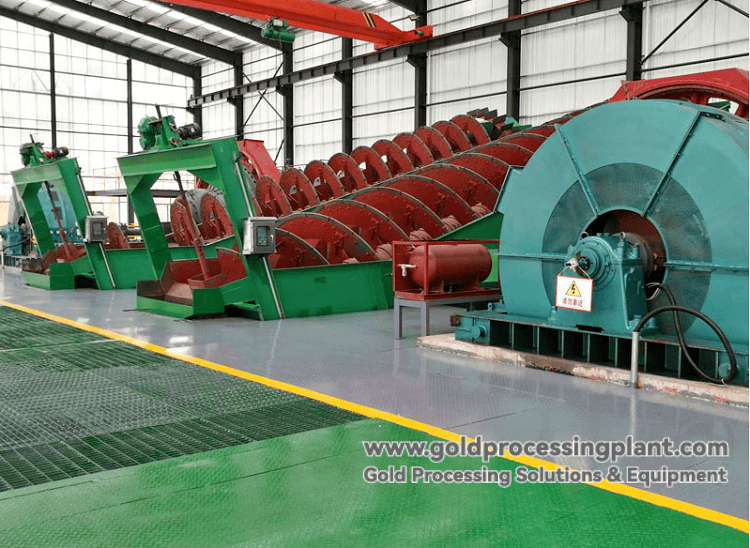
- In-House Manufacturing: Two major manufacturing bases in Shandong and Jiangxi, China (covering approximately 50,000 square meters, with 20,000 square meters of modern standard factory space), with an annual production capacity exceeding 500 units, certified to ISO 9001 and CE standards;
- EPC Capabilities: Comprehensive coordination of the entire process—including process design, engineering drawings, equipment manufacturing, installation guidance, integrated commissioning, and personnel training—with commissioning targets specified in the contract;
- Project Experience: Africa (Ghana, Mali, Tanzania, Sudan), South America (Peru, Colombia), Central Asia (Russia, Kazakhstan), and Southeast Asia; well-versed in international logistics, customs clearance, and on-site operating conditions;
- Flexible Services: Individual equipment units, complete equipment packages, engineering drawings, installation and commissioning guidance, and turnkey EPC solutions—customers can choose based on their needs without mandatory bundling.