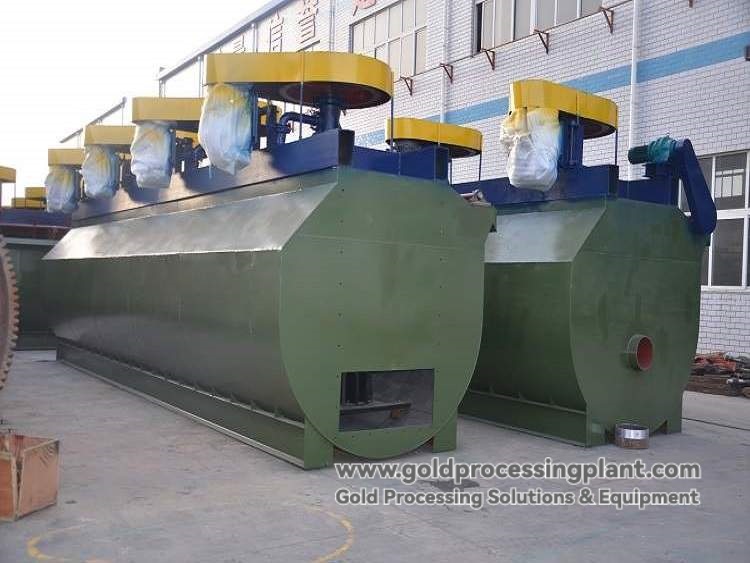
Easy-to-Process Gold Ore Carbon-in-Pulp Plant—High-Efficiency Gold Extraction Equipment and Process Solutions—Professional Mineral Processing Manufacturer
Easy-to-Process Gold Ore Carbon-in-Pulp Plant—High-Efficiency Gold Extraction Equipment and Process Solutions—Professional Mineral Processing Manufacturer
In the field of gold ore beneficiation, attention is often drawn to “difficult-to-process ores”—those containing arsenic, carbon, or fine-grained inclusions—which involve complex processes and are frequently the subject of discussion.However, what truly underpins the bulk of gold production is the vast amount of easy-to-process gold ore: gold exists in a free state or as simple sulfide-bearing gold, with clean gangue that contains no interfering elements.For this type of ore, carbon-in-pulp (CIP) plants feature short processing flows, high recovery rates, and rapid return on investment, making them the “most certain” category of projects in gold mining investments.
However, “easy to process” does not mean “you can just throw anything together.”Even with the same CIP production line, if the grinding fineness is slightly off, the leaching time is cut short, or adsorption management is lax, the recovery rate will still drop. For CIP plants processing easy-to-process ore, the key is to take “simple processes” to “maximum efficiency”—ensuring precise equipment configuration, stable parameter control, and low operating costs.
Based on the characteristics of easy-to-process gold ore, this article explains how to select the appropriate CIP plant configuration, how to configure CIP equipment, and what solutions professional mineral processing manufacturers can provide.
I. First, Let\'s Define: What Constitutes “Easy-to-Process” Ore
Easy-to-process gold ore typically exhibits the following characteristics:
① Gold is primarily in a free state or hosted in simple sulfides that are easily flotable and leachable
Gold occurs in free, individual particles or is associated with simple sulfides such as pyrite; the grain size of the ore is relatively coarse, and conventional grinding can achieve good individual liberation.
② Clean gangue, free of interfering elements
It contains no interfering elements such as arsenic, carbon, antimony, or copper—or only trace amounts—meaning there is no “gold-stealing” effect from carbonaceous matter, no arsenic compounds encapsulating the gold, and a “clean” cyanide leaching process.
③ Moderate oxidation or stable ore properties
Both oxidized and primary ores are suitable, provided that the ore properties exhibit minimal variation, the leaching kinetics are stable, and no complex pretreatment is required.
④ High Expected Leaching Recovery
Conventional whole-ore cyanide leaching recovery rates typically exceed 90%, ensuring reliable recovery and providing high certainty in investment calculations.
Typical ore types: quartz vein ores (highly oxidized, free of interfering elements), certain conglomerate ores, simple sulfide-bearing gold ores, and iron cap ores (when clay content is low).
In a nutshell: For CIP plants processing easy-to-process ores, the process flow is simple and straightforward—crushing and grinding → thickening → leaching and adsorption (CIP) → desorption and electrolysis → smelting. With no flotation and no pretreatment required, ensuring optimal efficiency at every stage is the core competitive advantage.
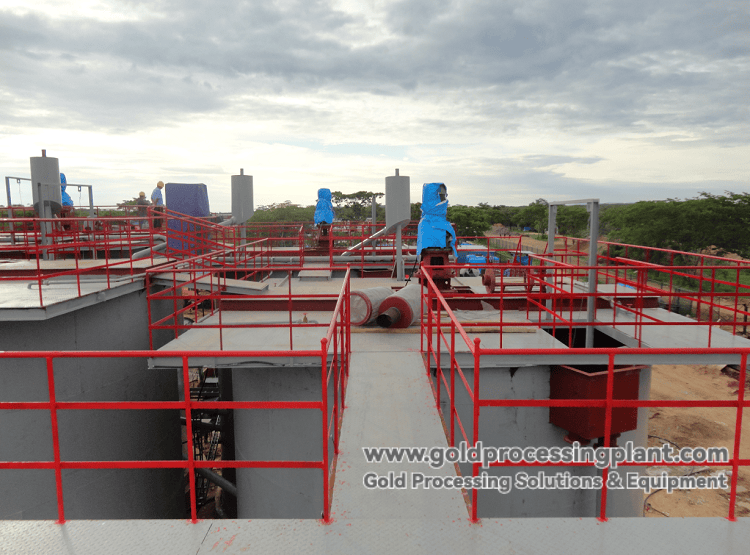
II. CPC Plants for Easily Processed Ore: CIP or CIL
For CIP plants processing easily treatable gold ore, both CIP and CIL are viable options; the choice depends on the ore\'s leaching characteristics and the scale of operations:
| Comparison Criteria | CIL (Carbon-in-Leach) | CIP (Carbon-in-Pulp) |
|---|---|---|
| Process Logic | Leaching and adsorption occur simultaneously; leaching and adsorption take place concurrently | Leaching is completed first, followed by transfer to the adsorption tank |
| Process Characteristics | Compact process, fewer tanks, and lower capital investment | More thorough leaching time and precise segmented control |
| Suitable Applications | Small- and medium-sized processing plants handling easily treatable ores with relatively fast leaching rates | Large-scale processing plants requiring staged control and seeking thorough leaching |
Selection Recommendations: For easily processable ores with fast leaching rates, the CIL process is compact and offers manageable investment costs, making it the preferred choice for small and medium-sized processing plants; for large-scale processing plants or projects with stringent leaching time requirements, the CIP process provides more precise segmented control and more thorough leaching. Equipment specifications for both processes are interchangeable; the specific choice should be determined based on test data and project scale.
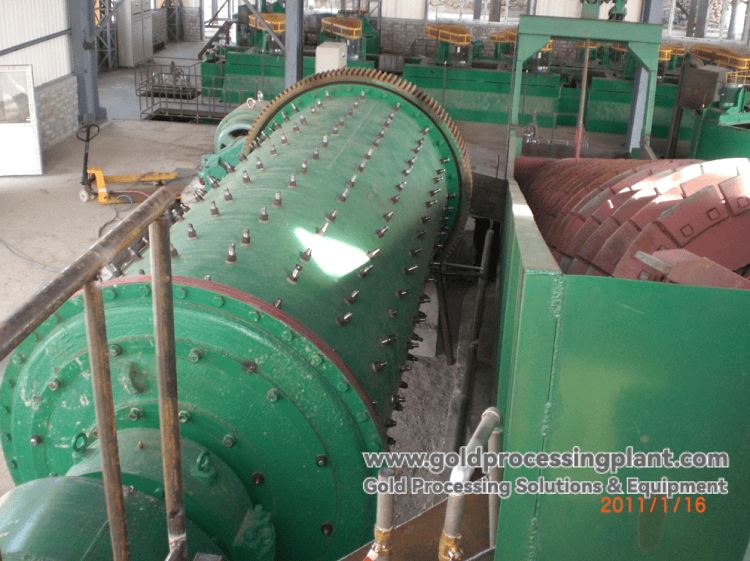
III. Core Equipment Configuration for a Five-Stage CIP Carbon-in-Pulp Plant
For CIP carbon-in-pulp plants processing easily treatable ores, equipment configuration centers on “high-efficiency leaching, thorough adsorption, and clean desorption”:
1. Crushing and Grinding Section—Liberation is the Foundation of Recovery Rate
- Crushing: Jaw crusher for coarse crushing + cone crusher for medium and fine crushing, following the principle of “more crushing, less grinding” to reduce grinding energy consumption;
- Grinding: First-stage grid-type ball mill + second-stage overflow-type ball mill, forming a closed-circuit with a hydrocyclone or spiral classifier;
- Key Selection Criteria: The ore being processed has a relatively coarse grain size, but the grinding fineness must still ensure individual liberation—insufficient fineness will directly reduce the leaching rate. Mill specifications are matched to throughput, and classification efficiency determines whether qualified fine powder can be discharged in a timely manner.
2. Thickening and Dewatering Section — Controlling Slurry Concentration
Before leaching, the slurry is concentrated to an appropriate concentration. Thickeners are selected based on throughput and sedimentation characteristics; high-efficiency thickeners can reduce the footprint. Easily processable ores have a low degree of sludging, so thickening efficiency is typically good.
3. Leaching and Adsorption Section—The Core of CIP
- Leaching Tanks: Equipped with agitation and aeration, multiple tanks are connected in series. Cyanide and lime are added to adjust the pH to 10–11, preventing cyanide loss through volatilization;
- Adsorption Tank: After leaching is complete, the slurry enters the adsorption tank where activated carbon is added; the gold-loaded carbon moves forward in a countercurrent flow, coming into contact with the slurry in the opposite direction;
- Gold-Loaded Carbon Separation Screen: A carbon-retention screen or air lifter prevents activated carbon from being carried away with the slurry;
- Key Selection Criteria: Matching leaching time with adsorption time; the number of tanks and their series configuration; agitation and aeration efficiency; activated carbon concentration and management of gold-loaded carbon—these factors determine whether both leaching and adsorption rates can meet the required standards.
4. Desorption and Electrolysis Stage—From Gold-Loaded Activated Carbon to Gold Slime
- Desorption Column: Desorption at ambient temperature and pressure (gold-loaded activated carbon from easily processed ores typically desorbs readily, so ambient conditions suffice) or high-temperature, high-pressure desorption (for large-scale operations seeking high desorption rates);
- Electrolysis Tanks: Sized to match the volume of precious metal solution and gold concentration; focus on current efficiency and gold slurry grade;
- Supporting Equipment: Rectifier power supply, heating and circulation system, gold slurry filter press, and smelting equipment;
- Key Selection Criteria: Ensure desorption capacity matches carbon production rate to prevent interruptions in the carbon recycling loop; select an electrolytic cell that is neither too large nor too small to maintain stable gold slurry grade and minimize smelting costs.
5. Tailings Treatment Section — Environmental Compliance
- Thickener/Filter Press: Tailings dewatering for dry discharge or treatment to meet regulatory standards;
- Selection Criteria: Environmental pressure is relatively low for tailings from easily processable ores, but local environmental requirements must still be met; for overseas projects, plan tailings ponds and dry-discharge solutions in advance.
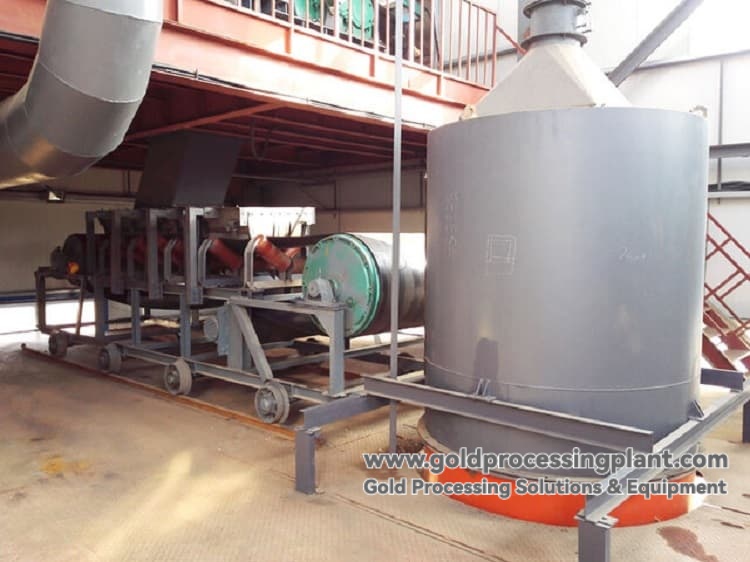
IV. The “Efficiency Secret” for Carbon Slurry Plants Processing Easily Processable Ore: Three Non-Negotiables
The process for easily processable ores is simple, but “simple” does not mean “effortless.” There are three key steps that cannot be compromised:
① Grinding Fineness Must Not Be Compromised
The grain size distribution of easily processable ores is relatively coarse, but “relatively” does not mean “grinding can be done haphazardly.” If the grinding fineness does not meet standards, gold encapsulated within intergrown bodies cannot be leached out, and the recovery rate will still drop. The optimal grinding fineness must be determined through testing, and the closed-circuit configuration of the grinding mill and classifier must be properly implemented.
② Leaching time must not be compromised
Insufficient leaching time results in incomplete gold dissolution; no matter how efficient the subsequent adsorption process is, there will be “no gold left to adsorb.” The number of tanks in a series CIP system and the total residence time must be configured according to the leaching kinetics determined by testing; tanks must not be reduced to save on investment.
③ Adsorption management must not be neglected
Activated carbon concentration, the frequency of gold-loaded carbon extraction, and the management of carbon wear and regeneration directly affect the adsorption rate and the gold content in spent carbon. Even with easily processable ores that leach quickly, if adsorption-stage management fails to keep pace, dissolved gold will still end up in the tailings.
In short: For CPC plants processing easily treatable ores, success depends not on complex processes, but on executing the “standard procedures” for each stage correctly.
V. What Professional Mineral Processing Manufacturers Can Offer: A Complete Solution from Ore Sample to Gold Production
As a professional mineral processing manufacturer, GoldProcessingPlant offers the following for CPC plants processing easily treatable gold ore:
① Mineral Processing Testing and Process Validation
We conduct chemical analysis and process feasibility tests on representative ore samples, covering cyanide leaching tests and whole-ore CIL/CIP comparison tests, to determine grinding fineness, leaching time, and reagent regimes. The test reports are accompanied by a list of recommended equipment and a preliminary budget.
② Process Design and Equipment Selection
Based on test data, we provide process flow diagrams, equipment configuration lists, equipment selection proposals, and investment estimates. The CIP/CIL route is determined based on ore characteristics and project scale—we do not use one-size-fits-all templates.
③ In-House Manufacturing of Core Equipment
The entire process—including crushers, ball mills, thickeners, leaching tanks, adsorption tanks, gold-loaded carbon separation screens, desorption and electrolysis equipment, and filter presses—is manufactured in-house. The same team handles both process engineering and equipment design, ensuring seamless interfaces and no mismatches in production capacity.
④ EPC Turnkey or Flexible Phased Delivery
We offer full-process EPC (process design + equipment manufacturing + installation guidance + integrated commissioning + personnel training, with responsibility for production targets), or can provide only pilot testing, equipment procurement, design drawings, or engineer-led commissioning. Initial design fees can be offset against subsequent equipment or EPC contracts.
⑤ Clear Scope of Work
We are responsible for equipment manufacturing, process design, installation guidance, and commissioning training; civil construction and general installation labor are organized locally by the client, with our engineers stationed on-site to provide guidance—ensuring quality while saving significant costs on dispatching personnel.
⑥ Global Project Experience
Our projects span Africa, South America, Central Asia, and Southeast Asia, with processing capacities ranging from 30 to 5,000 metric tons per day. We are well-versed in international logistics, customs clearance, and adapting to on-site operating conditions.
Our Principle: While the processing of easily treatable ores involves simple processes, our solutions must not be simplistic—we first conduct tests to confirm ore characteristics, then determine the CIP/CIL route and equipment specifications, and finally dispatch engineers to the site to fine-tune operations until gold is recovered. We do not promise absolute recovery rates that are detached from the actual ore conditions; instead, we commit to processes that achieve the highest recoverable rates based on scientifically validated data.
VI. Investment Reference for Easy-to-Process Ore Carbon-in-Pulp Plants
Based on GoldProcessingPlant\'s pricing system for complete sets of main equipment, the reference price range for CIP/CIL complete sets of main equipment (excluding civil engineering, installation, logistics, and auxiliary materials) is as follows:
| Daily Processing Capacity (metric tons/day) | Price of Complete Set of Main Equipment (US$10,000) |
|---|---|
| 100 | 35–50 |
| 200 | 45–75 |
| 300 | 60–90 |
| 500 | 90–135 |
| 800 | 125–170 |
| 1,000 | 150–190 |
The lower limit of the range corresponds to standard configurations, conventional ores, and typical operating conditions; the upper limit corresponds to non-standard customizations, complex ores, and more comprehensive solutions. Specific quotations must be determined based on ore characteristics, process routes, and on-site conditions.
Project Timeline: For standard, easily processed ore projects, the timeline from contract signing to production start-up is 8–15 months, broken down as follows: 30–45 days for process design and equipment selection/quotation; approximately 30 days for engineering drawings; 60–120 days for equipment manufacturing; 30–60 days for logistics; and 60–150 days for installation and commissioning.Processes for easily treatable ores are straightforward, and the commissioning period is typically shorter; initiating process design as early as possible is key to reducing the overall project timeline.