


EPC Turnkey Solutions for Gold Ore Processing Plants: Process Design Based on Ore Characteristics and Production Capacity
EPC Turnkey Solutions for Gold Ore Processing Plants: Process Design Based on Ore Characteristics and Production Capacity
The biggest misconception in building a gold ore processing plant is selecting equipment first and then searching for ore. Equipment is selected based on what\'s in stock, but ore is a natural product—whether it\'s quartz vein or Carlin-type gold deposits, fissure gold, or inclusional gold. Using the same flotation machine with the wrong process flow can result in a recovery rate difference of as much as 20 percentage points.The value of an EPC turnkey solution lies not in “bundling equipment for sale,” but in first determining the process flow based on ore characteristics, then selecting equipment specifications based on production capacity, and finally taking responsibility for achieving production targets.
This article explains how an EPC turnkey solution achieves “process design based on ore characteristics and equipment selection based on capacity,” as well as how to select process routes and equipment configurations for different ore types and production capacity scales.
I. Why It Is Essential to “Determine the Process Based on Ore Properties”
The occurrence of gold ore varies greatly, so process routes cannot be determined using a one-size-fits-all approach. Even within the category of rock gold ore, different ore types require completely different process logics:
| Ore Type | Gold Occurrence Characteristics | Recommended Process Flow | Key Control Points |
|---|---|---|---|
| Quartz Vein Type | Fissure gold and intergranular gold, closely associated with pyrite; both coarse and fine grains coexist | Combined gravity separation and flotation, or direct cyanidation/flotation | Grinding circuit designed to recover coarse-grained gold early, preventing loss due to overgrinding |
| Altered Rock Type | Primarily fine- to ultrafine-grained, with high content of silicified minerals | Predominantly flotation, supplemented by gravity separation to recover coarse-grained gold | Desliming operations, grinding fineness, and reagent regimen |
| Kalin-type (ultrafine-grained disseminated) | Invisible gold is encapsulated within sulfides and cannot be liberated by conventional grinding | Fine grinding → flotation to concentrate sulfides → pretreatment → cyanidation | Selection of pretreatment methods, flotation concentrate grade |
| Arsenic-, carbon-, or antimony-bearing ores that are difficult to process | Gold is associated with arsenopyrite, carbonaceous material, and stibnite; conventional cyanide leaching recovery is only 20–50% | Pre-treatment + cyanidation (pre-treatment after flotation enrichment) | Inhibits arsenopyrite and carbonaceous matter; eliminates gold hijacking |
| Iron-cap type | Gold is hosted in the pores and fissures of limonite | Combined gravity separation and cyanidation | Effect of clay content on slurry rheology |
| Lateritic Type | High clay mineral content, prone to agglomeration and obstruction of permeability | Cyanide leaching is the primary method; for high-clay content, consider pelletization and heap leaching | Use dispersants to adjust slurry consistency or produce pellets to improve permeability |
| Sand Gold Deposits | Free, individual particles; no grinding required | Full-process flow: washing—gravity separation | Adjust the intensity of ore washing and the recovery rate of coarse-grain gold |
| Conglomerate-type | Primarily fine-grained free gold, with some associated with sulfides; large-scale deposits | Whole-ore cyanidation (CIL/CIP), gravity separation + cyanidation, flotation + cyanidation | High-throughput configuration, fine grinding and liberation |
| Tailings re-processing | Relatively high grade; low recovery rate with current process | First assess the value of the ore, then determine whether to use gravity separation, flotation, or leaching | Take samples and conduct laboratory tests to confirm the recoverable form and economic viability |
Core Logic: The process route is determined by “what the gold looks like”—whether it is in a free or bound state, coarse or fine-grained, and whether there is interference from arsenic, carbon, or antimony. If the route is chosen incorrectly, even the best equipment will not achieve complete recovery.
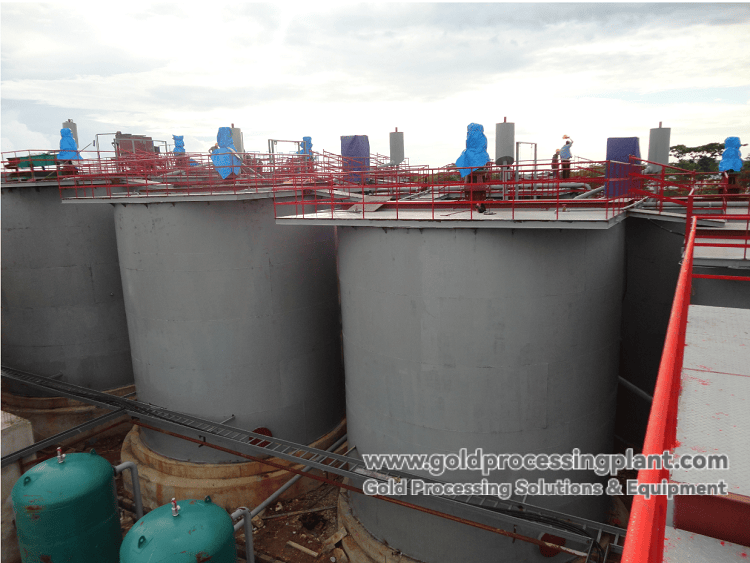
II. Determining the Process Based on Ore Properties: How to Choose Among the Three Main Routes
Approach 1: Predominantly free gold → Gravity separation/cyanidation route
Applicable to: placer gold deposits, quartz vein deposits (highly oxidized, no interfering elements), iron cap deposits, and conglomerate deposits.
Process Logic:
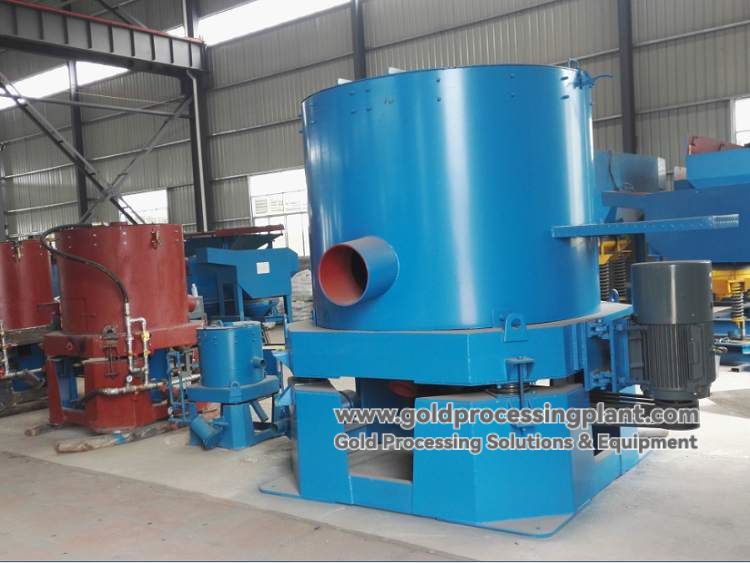
- Placer gold deposits: Ore washing—screening—gravity separation (trommel screen/ore washer → chute → centrifuge → shaking table);
- Coarse-grained gold in rock deposits: The grinding circuit is equipped with a centrifugal separator or jig to recover coarse-grained gold in advance; the gravity concentration concentrate is further refined using a shaking table;
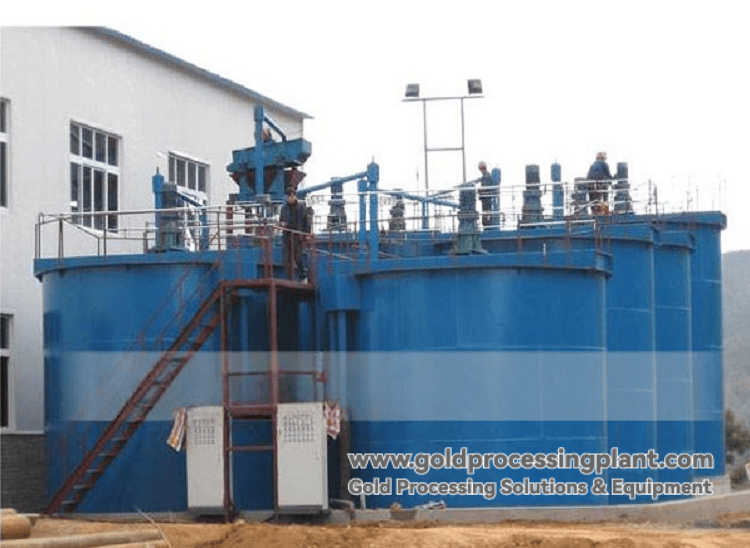
- Fine-grained free gold: Whole-ore cyanidation (CIL/CIP), with leaching and adsorption recovery.
Key Equipment Configuration Points: Gravity separation equipment is selected based on coarse gold content and recovery particle size; for CIL/CIP, the number of tanks and series configuration are determined by throughput and leaching characteristics.
Main Process Line 2: Gold-bearing sulfides/fine-grained disseminated gold → Flotation route
Applicable to: altered rock-type deposits, sulfide-bearing gold deposits, polymetallic gold deposits, and certain conglomerate-type deposits.
Process Logic: Crushing and grinding → Slurry adjustment and reagent addition → Roughing → Scavenging → Concentrating → Gold concentrate sent to smelting or cyanidation → Tailings dewatering.
Key Equipment Configuration Points: Select flotation cell models based on process requirements (SF-type self-aspirating cells, XCF/KYF-type large-scale cells preferred, BF-type, JJF-type); the number of flotation stages (ranging from one roughing, two concentrating, and two scavenging stages to one roughing, three concentrating, and three scavenging stages) should be determined through testing;Arsenic-bearing ores require suppression of arsenopyrite or separate flotation of arsenic-gold concentrate.
Main Route 3: Encased Gold/Refractory Ores → Pretreatment + Cyanidation Route
Applicable to: Carlin-type ores and difficult-to-process ores containing arsenic, carbon, and antimony.
Process Logic: Fine grinding → Flotation to concentrate gold-bearing sulfides → Pretreatment (proprietary reagents/roasting/pressurized oxidation/biological oxidation/chemical oxidation) → Cyanide leaching (CIP/CIL) → Stripping and electrolysis.
Key Equipment Configuration Points: The pre-treatment method accounts for the bulk of capital and operating costs; economic feasibility must be evaluated based on comparative test data. Carbon-bearing ores must be passivated or have carbonaceous matter removed prior to leaching. The grade of the flotation concentrate and the sulfur recovery rate directly affect the pre-treatment throughput.
Combined Processes: When coarse-grained and fine-grained gold coexist, or when recovery rates from a single process fall short of targets, combinations such as gravity separation + flotation, gravity separation + cyanidation, or flotation + cyanidation should be selected based on the characteristics of the ore.The selection of process nodes in a combined process—such as the placement of gravity separation within the grinding circuit and whether flotation tailings are reground and re-leached—determines the overall recovery rate.
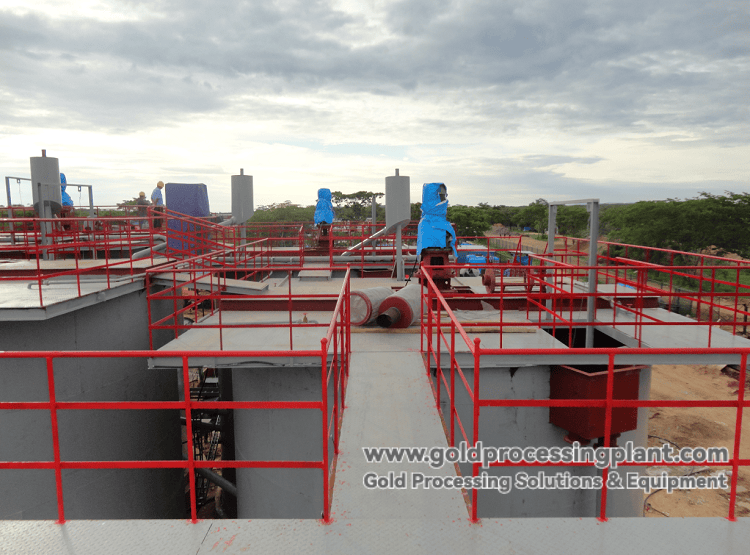
III. Equipment Selection Based on Production Capacity: Scale Determines Configuration Logic
Once the process flow is determined, equipment specifications are matched to the processing capacity. The GoldProcessingPlant project covers processing scales ranging from 30 to 5,000 metric tons per day, with different configuration logics for each scale:
Small-scale (30–200 metric tons per day)
- Characteristics: Investment-sensitive, relatively simple processes; suitable for dispersed ore deposits, new small-scale plants, and pilot plants;
- Configuration Logic: Prioritize solutions with compact processes (such as CIL with simultaneous leaching and absorption), high equipment standardization, and minimal custom-made components;
- Reference Investment: Complete set of main equipment costs approximately $200,000–$750,000 (based on CIP/CIL processes, for the 30–200 metric tons per day range).
Medium-scale (200–1,000 metric tons per day)
- Characteristics: The mainstream scale for conventional processing plants; offers significant flexibility in process selection; equipment configuration must balance capital and operating costs;
- Configuration Logic: Select CIL or CIP based on ore type; configure crushing and grinding according to the “more crushing, less grinding” principle; determine the number of leaching and adsorption tanks based on leaching time; match desorption and electrolysis capacity with carbon production rate;
- Reference Investment: Complete set of main equipment costs approximately $450,000–$1.9 million (for the 200–1,000 metric tons per day range).
Large-scale (1,000–5,000 metric tons per day)
- Characteristics: Significant economies of scale; high requirements for large-scale equipment and automation; system stability is a top priority;
- Configuration Logic: Floatation prioritizes large-scale XCF/KYF aerated configurations; multi-stage closed-circuit grinding; leaching and adsorption involve multiple tanks in series with segmented control; desorption and electrolysis prioritize high-temperature, high-pressure processes (for hard-to-desorb carbon and large-scale operations); integrated automated control systems;
- Reference Investment: Complete set of main equipment approximately US$1.5–3.8 million (for the 1,000–5,000 metric tons per day range).
Note: The above represents the reference price range for the complete set of main equipment (excluding civil engineering, installation, logistics, and auxiliary materials). The lower limit of the range corresponds to standard configurations and conventional ores, while the upper limit corresponds to non-standard customizations, complex ores, and special operating conditions. Specific quotations must be determined based on ore characteristics, process routes, and on-site conditions.
IV. EPC Turnkey Solution: A Complete Process from Ore Samples to Production
GoldProcessingPlant\'s EPC turnkey solution proceeds in eight phases, with each phase centered on the principle of “tailoring processes to the ore and equipment to the volume”:
Phase 1: Requirements Discussion and Preliminary Assessment
We assess the type of gold deposit, ore grade, expected processing capacity, target product specifications, and site conditions to determine a preliminary process direction. The client provides basic mine data or laboratory test results.
Phase 2: Process Design and Equipment Selection/Quotation
Based on ore data and site conditions, we determine the processing route (gravity separation, flotation, cyanidation, or a combined process) and provide an equipment configuration list, equipment selection plan, and preliminary investment estimate.
Phase 3: Proposal Confirmation and Commercial Contract
Confirm the process flow, equipment list, scope of delivery, project schedule, and responsibilities of both parties item by item. The contract clearly defines the responsibilities of the general contractor and the client, with no hidden costs.
Phase 4: Engineering Drawing Design
Prepare site layout plans, equipment foundation drawings, layout diagrams, piping route diagrams, electrical control schematics, and civil engineering drawings, and provide a comprehensive technical briefing.
Phase 5: Equipment Manufacturing and Supply
Core equipment is manufactured in accordance with drawings and process standards; standard auxiliary equipment not produced in-house is procured through centralized quality inspection. The client simultaneously advances the “three utilities and one leveling” and the construction of the plant foundation.
Phase 6: Logistics and Shipping
Coordinate packaging, shipping, ocean/land transport, customs clearance documentation, and milestone tracking; for overseas projects, plan shipping routes and schedules in advance and allow for a customs clearance buffer.
Phase 7: On-Site Construction Supervision, Installation, and Commissioning
Dispatch engineers to guide equipment positioning, pipeline connections, and electrical installation; lead individual unit commissioning and integrated commissioning tests with water and feed materials; and optimize grinding fineness, chemical dosing regimens, and leaching parameters until the first batch of qualified gold concentrate or blended gold is produced.
Phase 8: Personnel Training and After-Sales Support
Comprehensive theoretical and hands-on training is provided to ensure the client\'s team can independently adjust reagent regimes, grinding fineness, and leaching parameters; upon completion of acceptance and handover, the project transitions to long-term spare parts supply and technical support.
Scope of Delivery: The EPC contractor is responsible for equipment manufacturing, process design, installation guidance, and commissioning training; civil construction and general installation labor are organized locally by the client, with our engineers providing technical briefings on-site—ensuring quality while significantly reducing the costs associated with dispatching domestic workers overseas. If the client truly lacks local construction capabilities, a turnkey solution may be negotiated.
Reference Timeline: For standard projects, 8–15 months, including 30–45 days for process design and equipment selection/quotation, approximately 30 days for engineering drawings, 60–120 days for equipment manufacturing, 30–60 days for logistics, and 60–150 days for installation and commissioning;Additional buffer time should be allocated for difficult-to-process ores, remote overseas mining sites, or projects involving a large volume of non-standard custom work.
V. Three Principles for Determining Processes Based on the Mine
Principle 1: Test First, Then Select Equipment
Without representative ore sample data, any equipment selection is like “the blind men and the elephant.”The grain size distribution, degree of silicification, and associated elements in gold ore vary widely; only by thoroughly understanding these details can the most profitable gold processing flow be designed. Routine validation takes approximately 3–4 weeks, and a complete proposal report takes 30–45 days; complex ores (including those containing arsenic and carbon, or with fine-grained inclusions) require additional validation steps.
Principle 2: Process Design and Equipment Manufacturing by the Same Team
When a design institute produces drawings and an equipment manufacturer produces equipment based on those drawings, it is easy for “drawing parameters to mismatch with equipment performance.” Having the same team handle both process design and equipment manufacturing ensures that mechanical engineers clearly understand the upstream slurry volume and downstream separation requirements, preventing interface conflicts and production capacity mismatches.
Principle 3: Define Scope of Work in the Contract
The EPC contractor is responsible for end-to-end management, while the client\'s local team handles preliminary briefings. If these boundaries are unclear, it is highly likely that disputes will arise later, such as “work stoppages while waiting for workers” or “mutual blame and demands for additional payments.”