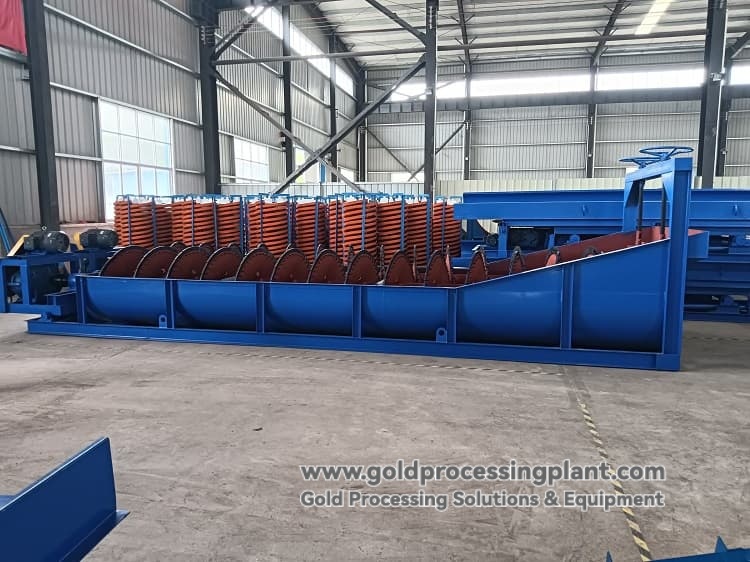
How to Select a Carlin-Type Gold Carbon-in-Pulp Plant? Complete CIP/CIL Equipment and EPC Turnkey Solutions
How to Select a Carbon-in-Pulp (CIP) Plant for Carlin-Type Gold Deposits? Complete CIP/CIL Equipment and EPC Turnkey Solutions
Kalin-type gold deposits are widely recognized as difficult to process—gold is encapsulated in the form of “invisible gold” within sulfides such as pyrite and arsenopyrite, which cannot be liberated through conventional grinding. Direct whole-ore cyanide leaching recovery rates are often only 20%–50%.When selecting a carbon-in-pulp (CIP/CIL) plant for this type of ore, the key is not simply “purchasing a set of leaching and adsorption equipment,” but rather first solving the problem of “gold not being released” before addressing “how to recover the leached gold.”
Based on the ore characteristics of Carlin-type gold deposits, this article explains how to select a carbon-in-leach plant, how to configure the complete CIP/CIL equipment set, what an EPC turnkey solution includes, and the most common pitfalls in selecting equipment for Carlin-type deposits.
I. Understanding the Basics: Why Conventional CIP/CIL Cannot Be Directly Applied to Carlin-Type Gold Deposits
Typical characteristics of Carlin-type gold deposits (fine-grained disseminated type):
① Gold is encapsulated within sulfides in a form that is invisible to the naked eye
Gold exists in microscopic to submicroscopic particles embedded within gold-bearing sulfides such as pyrite and arsenopyrite; conventional grinding cannot achieve single-particle liberation of the gold. This is the most fundamental difference compared to quartz vein-type and conglomerate-type gold deposits.
② Low direct cyanide leaching recovery
Enclosed gold does not come into contact with the cyanide solution; the direct whole-ore cyanide leaching recovery rate is typically only 20%–50%, making the process economically unfeasible.
③ Frequent association with interfering elements such as arsenic, carbon, and antimony
Arsenic-bearing minerals (such as arsenopyrite and arsenopyrite) can encapsulate gold and consume reagents; carbon-bearing materials can cause a “gold-snatching” effect by adsorbing already dissolved gold cyanide complexes; and antimony also interferes with leaching.
④ Flotation enrichment is a critical preliminary step
The conventional process flow for Carlin-type gold deposits is: fine grinding → flotation enrichment of gold-bearing sulfides → pre-treatment to release encapsulated gold → cyanide leaching (CIP/CIL) → electrolytic recovery.The purpose of flotation is to concentrate gold-bearing sulfides into concentrate, thereby reducing the feed volume for subsequent pretreatment and lowering processing costs.
In short: A carbon-in-leach (CIL) plant for Carlin-type gold deposits does not “directly leach the raw ore,” but rather “processes flotation concentrates (or pretreated material).” The first step in plant design is to determine the pre-treatment route; the second step is to configure the CIP/CIL equipment.
II. How to Determine the Process Flow for a Carlin-Type Gold Mine Carbon-in-Pulp Plant
The design of a carbon-in-leach plant for Carlin-type gold deposits depends on the choice of pretreatment method:
Route 1: Flotation concentrate → Pretreatment → Cyanidation (CIP/CIL)
Applicable to: Typical Carlin-type ores containing arsenic, carbon, and finely dispersed, encapsulated particles.
Process Logic: Crushing and grinding (fine grinding to achieve single-particle liberation of sulfides)→ Flotation to concentrate gold-bearing sulfides (carbon-bearing ores require suppression of carbon-rich materials) → Concentrate pretreatment (proprietary reagents/roasting/pressurized oxidation/biological oxidation/chemical oxidation) → Cyanide leaching → CIP/CIL adsorption → Desorption electrolysis → Gold slime smelting.
Key Considerations for Process Selection: The pretreatment method is the core variable. Roasting, pressurized oxidation, and bio-oxidation vary significantly in capital and operating costs and must be determined through pilot testing; the grade of the flotation concentrate and the sulfur recovery rate directly impact the economic viability of subsequent pretreatment.
Route 2: Flotation Concentrate → Direct Cyanidation (CIP/CIL)
Applicable to: Ore with low encapsulation and acceptable leaching rates after pretreatment, or cases where gold can be partially liberated after fine grinding of the flotation concentrate.
Process Logic: Flotation enrichment → Concentrate regrinding → Cyanide leaching → CIP/CIL adsorption → Desorption electrolysis.
Key Considerations: Pilot testing is required to confirm whether direct leaching of the concentrate is economically viable; the fineness of the concentrate regrinding is a critical parameter.
Route 3: Raw Ore Pretreatment → Whole-Slurry Cyanidation (CIP/CIL)
Applicable to: Ore containing carbonaceous material that causes gold entrapment but where the gold is not deeply encapsulated.
Process Logic: Crushing and grinding of raw ore → Pretreatment to eliminate the gold-capture effect (e.g., suppression of carbon-bearing materials, passivation treatment) → Whole-slurry cyanidation → CIP/CIL → Desorption electrolysis.
Key Considerations for Selection: Pretreatment must be highly targeted, and the effectiveness of eliminating the gold-sequestration effect must be verified through testing.
Core Principle: When selecting a carbon-in-leach plant for Carlin-type gold deposits, it is essential to first conduct ore characterization and pre-treatment tests to determine the pre-treatment route and leaching parameters based on data before discussing CIP/CIL equipment configuration. Skipping pre-treatment and proceeding directly to carbon-in-leach equipment selection is the biggest mistake in Carlin-type mine design.
III. How to Configure the Complete CIP/CIL Equipment Set: Five Core Stages
The complete CIP/CIL equipment set for a Carlin-type gold ore carbon-in-leach plant typically consists of the following five stages:
1. Crushing and Grinding Stage—Fine grinding is a prerequisite for liberation
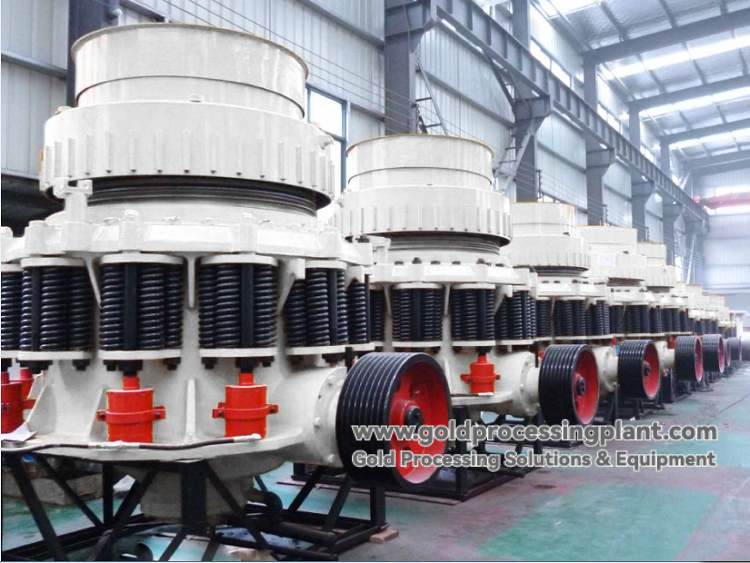
- Crushing: Jaw crusher for coarse crushing + cone crusher for medium and fine crushing, following the principle of “more crushing, less grinding”;
- Grinding: Ball mills (two-stage grinding: grid type + overflow type) in a closed circuit with hydrocyclones, grinding to achieve individual liberation of gold-bearing sulfides;
- Key Selection Criteria: Carlin-type ores have a fine grain size distribution and require high grinding fineness; the mill specifications and classification efficiency directly determine the effectiveness of flotation and leaching.
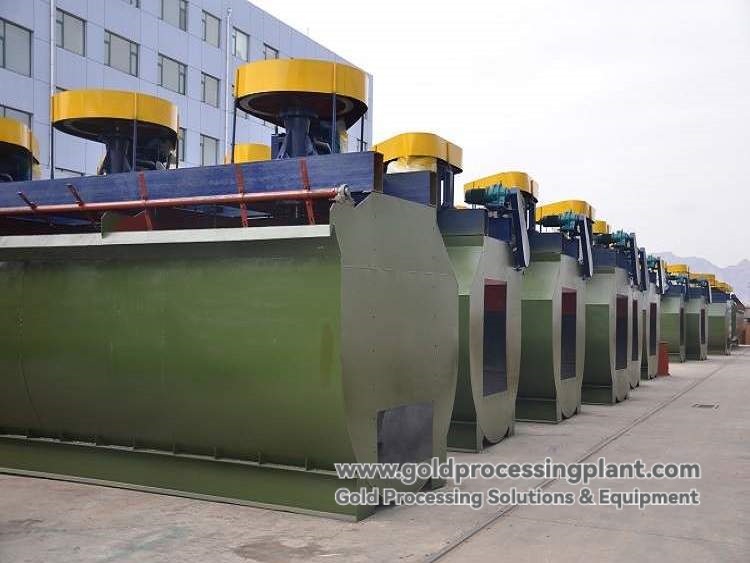
2. Flotation Circuit (specific to Carlin-type ores) — Enrichment of gold-bearing sulfides
- Floating machines: SF type (self-aspirating), XCF/KYF type (air-agitated, preferred for large-scale operations), BF type, and JJF type, configured into roughing, scavenging, and cleaning units;
- Reagent Regimen: Collectors, frothers, pH adjusters, and inhibitors (to suppress carbon-bearing materials in carbon-bearing ores and arsenopyrite in arsenic-bearing ores, or for the separate flotation of arsenic-gold concentrate);
- Key Considerations for Selection: The number of flotation stages and the reagent regime determine the concentrate grade and sulfur recovery rate, directly affecting subsequent pretreatment costs.
3. Pretreatment Stage—Unwrapping and Eliminating Interferences
- Method Selection: Proprietary chemical pretreatment, roasting, pressurized oxidation, biological oxidation, or chemical oxidation—determined based on ore properties and test data;
- Key Considerations: Pretreatment accounts for the lion\'s share of capital and operating costs for Carlin-type ores; the economic viability of different methods must be evaluated through comparative testing. Carbon-bearing ores must be passivated or have their carbonaceous matter removed prior to leaching.
4. Leaching and Adsorption Section—The Core of CIP/CIL
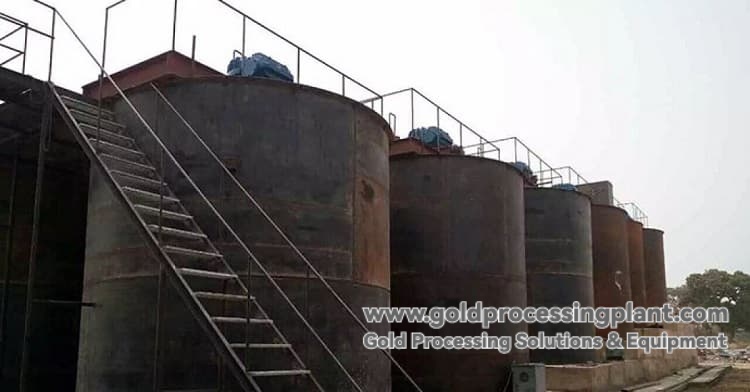
- Leaching Tanks: Equipped with agitation and aeration; multiple tanks connected in series; cyanide and lime are added to adjust the pH to 10–11;
- Activated Carbon Adsorption System: CIL employs simultaneous leaching and adsorption (compact process), while CIP uses sequential leaching followed by adsorption (allowing for precise segmented control); activated carbon concentration and management of gold-loaded carbon are critical;
- Gold-Loaded Carbon Separation Screen: Carbon retention screen/air lift to prevent carbon loss;
- Design Considerations: Matching leaching and adsorption times, the number of tanks and their series configuration, and the efficiency of agitation and aeration—all determined based on the leaching characteristics of the material after pretreatment.
5. Desorption, Electrolysis, and Tailings Section
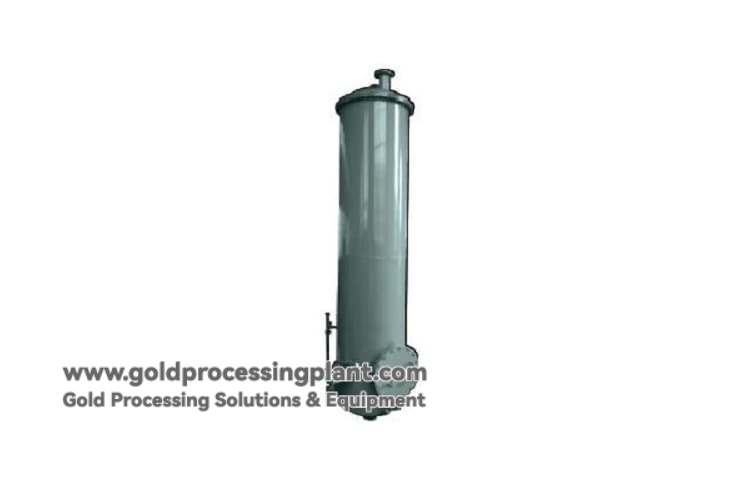
- Desorption Column: Ambient temperature and pressure or high temperature and high pressure, determined by the difficulty of desorbing gold-loaded carbon;
- Electrolysis tanks: Sized to match the volume of precious metal solution and gold concentration; focus on current efficiency and gold slurry grade;
- Tailings Treatment: Dry discharge via filter presses or treatment to meet regulatory standards after thickening; for arsenic-containing tailings, environmental requirements such as stabilization and solidification must be considered;
- Key Selection Considerations: Tailings from arsenic- and carbon-bearing ores are subject to stringent environmental compliance requirements; for overseas projects, local environmental standards must be considered in advance.
IV. What Is Included in an EPC Turnkey Solution: Special Requirements for Carlin-Type Deposits
EPC turnkey solutions for Carlin-type gold deposits include two additional key components compared to conventional gold deposits: pilot testing and a pre-treatment process package.
The EPC contractor is responsible for
- Mineral processing testing and process validation: analysis of ore characteristics, flotation tests, pre-treatment tests, and cyanide leaching tests, using data to determine the process flow and performance targets;
- Process design and technical solutions: Determining the number of flotation stages, pre-treatment methods, CIP/CIL processes, and reagent regimens;
- Engineering Design and Drawings: Plant layout, equipment foundations, piping, and civil engineering condition drawings;
- Manufacturing and Supply of Core Equipment: Crushing and grinding, flotation cells, pretreatment equipment, CIP/CIL leaching, adsorption, desorption, electrolysis, and the entire tailings treatment process;
- On-site Installation Technical Guidance: Engineers stationed on-site to provide guidance;
- Integration Testing and Personnel Training: Commissioning objectives specified in the contract; training of operators to adjust reagent regimes and leaching parameters;
- After-sales Service and Spare Parts Supply: Full coverage during the warranty period, with long-term technical support.
Organized by the client locally
- Civil engineering construction (in accordance with civil engineering drawings);
- Local installation workers (supervised on-site by our engineers);
- “Three Connections and One Leveling” and materials for water, electricity, and commissioning;
- Local compliance procedures (with particular attention to environmental approvals for arsenic-containing tailings).
Estimated Timeline: For Carlin-type gold deposits, the testing and commissioning periods are longer than for conventional deposits due to the addition of flotation and pre-treatment stages. Conventional validation takes approximately 3–4 weeks, and a comprehensive proposal report takes 30–45 days; the overall project duration is 8–15 months, with additional buffer time required for difficult-to-process ores.
V. Five Pitfalls to Avoid When Selecting a Carbon-in-Leach Plant for Carlin-Type Gold Deposits
Pitfall 1: Skipping Testing and Procuring Equipment Directly
The degree of “invisible gold” encapsulation varies greatly in Carlin-type ores. Procuring CIP/CIL equipment without conducting flotation and pre-treatment tests is like “a blind man feeling an elephant.” If the leaching rate remains low, even the best equipment will be useless.
Pitfall 2: Choosing the Wrong Pretreatment Method
The capital and operating costs of roasting, pressurized oxidation, bio-oxidation, and chemical oxidation vary significantly. Economic feasibility must be evaluated using comparative test data; simply copying competitors\' solutions is not advisable.
Pitfall 3: Neglecting the Gold-Snatching Effect of Carbon-Bearing Ore
Carbon-bearing materials adsorb dissolved gold; if they are not passivated or removed before leaching, the dissolved gold is “reclaimed,” resulting in a complete waste of reagents.
Pitfall 4: Disconnect Between Flotation and Leaching
The grade of the flotation concentrate and the sulfur recovery rate directly impact the pre-treatment throughput and economic viability; the flotation and leaching stages must be designed as an integrated system and cannot operate in isolation.
Pitfall 5: Underestimating Environmental Compliance Requirements for Tailings
The stabilization/solidification treatment of arsenic-containing tailings and environmental approvals are hard constraints for Carlin-type deposits. Overseas projects, in particular, must plan ahead to avoid facing environmental remediation immediately upon commencement of operations.
VI. GoldProcessingPlant\'s Solutions for Carlin-Type Gold Deposits
GoldProcessingPlant is a full-service provider for gold mines, integrating process design, engineering design, equipment manufacturing, installation, and commissioning. For Carlin-type gold deposits, we offer:
- Pilot Testing First: Ore characterization, flotation tests, pre-treatment tests, and cyanide leaching tests—using data to determine the optimal processing route;
- Specialized Pre-treatment Capabilities: For arsenic-bearing, carbon-bearing, and ultrafine disseminated ores, we provide proprietary chemical pre-treatment, combined processes, and customized reagent regimes to unlock encapsulated gold;
- In-House Manufacturing of Complete CIP/CIL Equipment: Covering the entire process—from crushing and grinding to flotation cells, leaching tanks, adsorption systems, desorption electrolysis, and concentration and dewatering—with the same team handling both process design and equipment manufacturing to ensure seamless integration;
- EPC Turnkey Solutions: Comprehensive coordination of process design, equipment manufacturing, installation guidance, integrated commissioning, and personnel training, with commissioning targets specified in the contract;
- Global project experience: Projects span Africa, South America, Central Asia, and Southeast Asia, with processing capacities ranging from 30 to 5,000 metric tons per day, covering ore gold, placer gold, difficult-to-process ores, and tailings reprocessing;
- Flexible Services: We can provide pilot testing only, equipment sales only, drawings only, or engineer commissioning services only; alternatively, we offer full-process EPC. Initial design fees can be offset against subsequent contracts.
Our Principle: For Carlin-type gold deposits, we first conduct pilot tests to determine the degree of gold encapsulation, then establish the pre-treatment route, select CIP/CIL equipment, and finally dispatch engineers to the site to commission the plant until gold is recovered. We do not promise absolute recovery rates that are detached from the actual ore conditions; we only commit to processes that achieve the highest recoverable rates based on scientifically validated methods.