


EPC General Contractor for Gold Mine Mining—One-Stop General Contracting for Mineral Processing Plant Construction—Professional Mining Engineering Service Provider
EPC General Contractor for Gold Mine Mining—One-Stop General Contracting for Mineral Processing Plant Construction—Professional Mining Engineering Service Provider
When building a gold ore processing plant, the biggest concern isn\'t the high cost of equipment—it\'s spending the money, completing the plant, yet failing to achieve the desired recovery rate, while all parties involved pass the blame onto one another.The design institute claims the drawings are flawless, the equipment manufacturer insists the equipment meets standards, and the construction team asserts they built according to the plans—yet when performance targets are ultimately not met, the investor is left to act as the “referee.”
The value of a gold mining EPC general contractor lies in consolidating this chain of responsibility into a single point of accountability: from process design and equipment manufacturing to installation and commissioning, a single team takes full responsibility from start to finish, ensuring someone is ultimately accountable for meeting production targets upon commissioning.However, EPC is not as simple as “I provide the funds, and you handle everything.” Before signing the contract, it must be clearly defined where the scope of work begins and ends, which stages the general contractor is responsible for, and which aspects are more cost-effective for the client to organize locally.
This article explains exactly what a gold mine concentrator EPC contract covers, how to select a contractor, and how to define the scope of delivery—helping you understand exactly where your money is going in a turnkey EPC project.
I. Building a Gold Ore Concentrator: How to Choose Among Four Models
When building a gold ore processing plant, you typically face four options, each with significantly different boundaries of responsibility and risk:
| Model | Approach | Advantages | Risks |
|---|---|---|---|
| Independent Procurement + In-House Construction | Purchasing equipment and hiring a construction crew separately | Transparent unit pricing and high degree of autonomy | Equipment interfaces may not be compatible; parties may shift blame when problems arise |
| Design Institute Provides Drawings + Independent Procurement and Construction | Design institute provides drawings; equipment is purchased and construction organized according to the drawings | Drawings comply with specifications and meet approval requirements | Discrepancies between drawing specifications and equipment performance; unclear delineation of responsibility |
| Comprehensive procurement / bundled packages from trading companies | Directly purchase large-scale equipment or engage a trading company | Convenient | Standardized equipment may not be suitable for complex ore types, and after-sales response is slow |
| Full-process EPC turnkey contracting | Process design + equipment + installation guidance + commissioning—entrusted entirely to a single contractor | Single point of responsibility; high compatibility between process and equipment | Requires selecting a team with end-to-end capabilities |
Who is EPC suitable for: Investors lacking a professional engineering management team, or projects involving complex gold mining processes with high requirements for final recovery rates. For simple ore types where the investor has in-house engineering management capabilities, phased procurement may be a viable option. However, for most gold mining projects—especially overseas ones—the value of EPC\'s comprehensive liability coverage far outweighs the coordination costs saved.
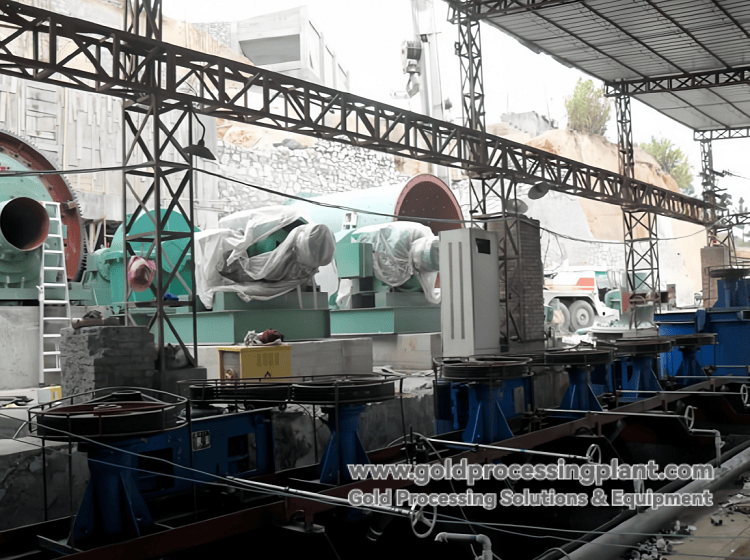
II. What Exactly Does a Gold Mine EPC Contract Cover? Six Core Phases
The core principle of GoldProcessingPlant\'s EPC services is: we take full responsibility for what falls under our purview; for matters requiring client cooperation, we provide advance briefings.
Six Key Aspects Covered by the General Contractor
① Process Design and Technical Solutions
Analysis of ore characteristics, determination of the gold processing flow (gravity separation/flotation/cyanidation/combined processes), and reagent regimes; preparation of proposal documents including equipment selection and preliminary quotations. This is the starting point of the entire project; if the approach is wrong from the beginning, all subsequent efforts will be in vain.
② Engineering Design and Drawings
Core design drawings, including site layout plans, equipment layout plans, equipment foundation plans, pipeline routing diagrams, and civil engineering condition drawings, along with a comprehensive technical briefing to ensure that civil construction and equipment installation are carried out in accordance with the drawings.
③ Manufacturing of Core Equipment and Supporting Supplies
Manufacture core equipment (crushers, ball mills, centrifugal concentrators, flotation cells, CIL/CIP leaching and adsorption systems, desorption and electrolysis equipment, thickeners, filter presses, etc.) according to the drawings, and coordinate the supply of auxiliary materials such as pumps, piping, and electrical controls to ensure seamless integration between hardware and process.Process design and equipment manufacturing are handled by the same team to avoid “mismatches between design drawings and equipment dimensions.”
④ On-Site Installation Technical Guidance
Dispatch a team of experienced engineers to the site to supervise equipment positioning, pipeline connections, and electrical and instrumentation installation, ensuring that construction crews follow the drawings precisely.
⑤ Integrated Commissioning and Personnel Training
We lead the commissioning of individual units and full-process integrated trial runs with water and feed material, optimizing grinding fineness, chemical dosing regimens, and leaching parameters until the first batch of qualified gold concentrate or blended gold is produced; we also provide theoretical and hands-on training to the client\'s team.
⑥ After-Sales Service and Spare Parts Supply
We assume responsibility for equipment quality during the warranty period and provide long-term spare parts supply and process optimization recommendations.
Four Phases Organized Locally by the Client
- ① Civil Engineering Construction: The client shall independently organize construction in accordance with the civil engineering drawings provided by us (equipment foundations, loads, reserved openings, water and electricity connections, etc.); complete architectural construction drawings involving plant structures, foundation reinforcement, and other structural elements shall be prepared by a qualified local design institute.
- ② Organization of Local Installation Workers: Specific installation tasks—such as equipment positioning, pipe welding, and cable laying—shall be carried out by workers recruited locally by the customer. Our engineers will provide on-site guidance on installation procedures, while the customer is responsible for organizing the workforce to perform the work.
- ③ On-site Infrastructure: The client is responsible for providing “three utilities and one leveling” (water, electricity, and access roads, as well as site grading), as well as preparing the water, electricity, and materials required for equipment hoisting and commissioning.
- ④ Local Compliance Procedures: The client is responsible for obtaining local approvals, such as environmental protection, safety, and construction permits, at the project site.
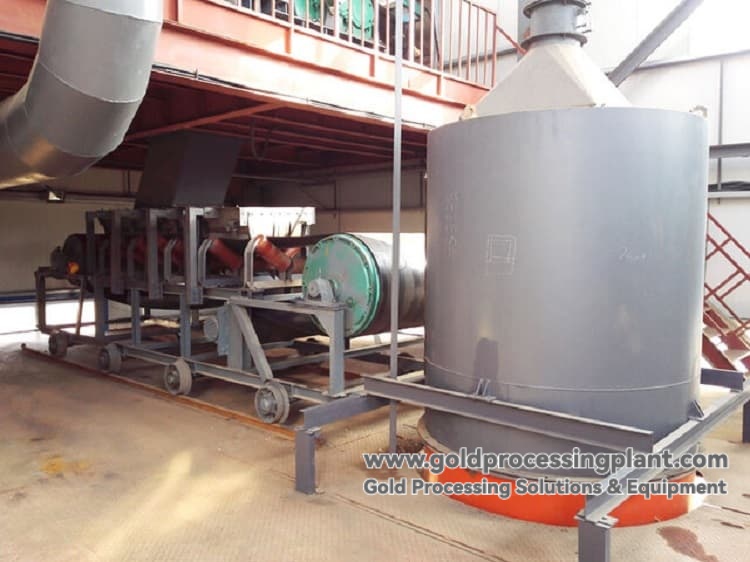
III. Why This Division of Labor Is More Cost-Effective: The Logic Behind EPC Scope
Many people assume that an EPC general contract is a “turnkey” solution; however, bundling civil engineering and general installation labor into the contract actually drives up costs:
Labor Cost Differences
If the general contractor dispatches a large number of Chinese workers to work overseas—covering airfare, visas, room and board, plus high daily wages—the costs become astronomical. By having the client recruit local general installation workers, with the general contractor providing technical engineers for guidance, labor costs can be reduced by at least half.
Greater Flexibility
Communication with local workers is easier, and they can adapt more flexibly to the progress of on-site civil engineering work, avoiding project delays caused by waiting for visas or flights.
Full Coverage of Technical Risks
Although the workers are sourced by the client, our engineers make the final on-site decisions regarding installation methods and standards. If there are any issues with the equipment or process design we provide, we assume full responsibility and will never shirk our obligations.
If the client truly requires a turnkey solution: If no local construction teams can be found, or if the client wishes us to take full responsibility for both civil construction and installation workers, the scope of work and associated costs can be separately stipulated in the contract based on the actual conditions at the project site.
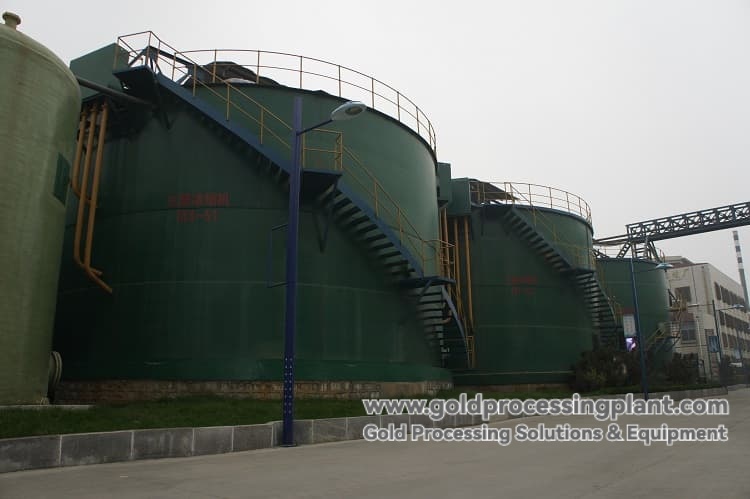
IV. How to Select a Gold Mine EPC General Contractor: Five Key Criteria
① Does the contractor possess end-to-end capabilities, rather than acting as a “subcontractor”?
A true EPC general contractor should possess end-to-end capabilities in process design, equipment manufacturing, and installation and commissioning. If a company merely subcontracts design work to a design institute, procures equipment from the open market, and hires construction crews for on-site work, it is essentially a “middleman,” and the chain of responsibility remains broken.GoldProcessingPlant operates two proprietary manufacturing bases in Shandong and Jiangxi, China, where process engineers and mechanical engineers collaborate within the same team.
② Is the process design based on ore testing, rather than using templates?
The occurrence of gold ore varies greatly; the processing flows for fissure gold and encapsulated gold differ, and the equipment configurations for quartz vein-type and Carlin-type deposits are distinct. A qualified EPC general contractor should first conduct ore characterization and beneficiation tests, using data to determine the process route rather than simply copying competitors\' drawings.
③ Are the scope of work and delivery boundaries clearly defined and included in the contract?
Before signing the contract, it is essential to clearly define “who is responsible for what.”The general contractor is responsible for equipment manufacturing, process design, installation guidance, and commissioning and training; the client is responsible for civil engineering, local installation labor, site preparation (three utilities and one leveling), and local compliance. If these boundaries are unclear, it is highly likely that disputes will arise later, such as “work stoppages while waiting for workers” or “mutual buck-passing leading to cost increases.”
④ Are commissioning targets specified in the contract?
Recovery rates and processing capacity targets should be specified in the contract, with clear acceptance criteria (based on the same ore source and operating conditions). We do not commit to absolute figures that are detached from the actual ore characteristics, but we do commit to a process that achieves the highest recoverable rate based on scientific validation.
⑤ Experience with cross-border projects
Overseas gold mining projects involve complex factors such as logistics, customs clearance, local compliance, unstable power supply, and the technical proficiency of workers. An experienced EPC contractor will plan shipping routes and schedules in advance, allow for customs clearance buffers, provide diesel generator sets, and provide hands-on training for local workers.GoldProcessingPlant projects span Africa (Ghana, Mali, Tanzania, Sudan), South America (Peru, Colombia), Central Asia (Russia, Kazakhstan), and Southeast Asia, with processing capacities ranging from 30 to 5,000 metric tons per day.
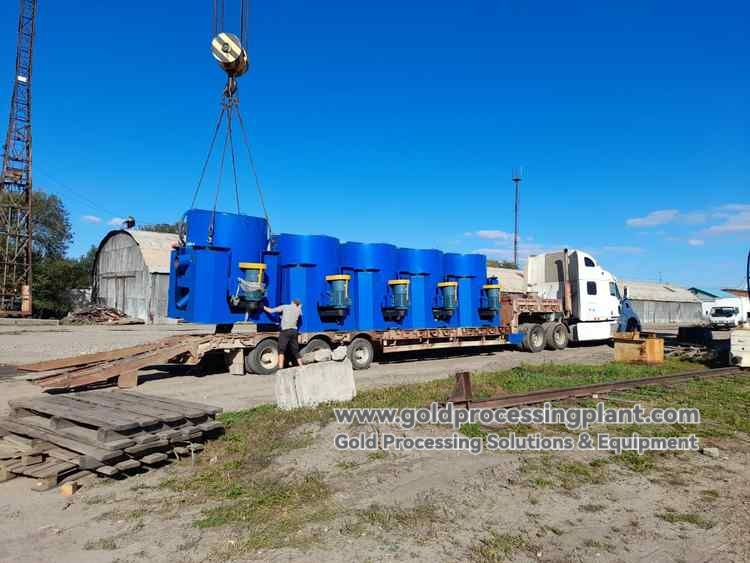
V. Gold Mine EPC Project Timeline: 8–15 Months—How to Schedule
For standard gold mine projects, the overall cycle from contract signing to production commencement is typically 8–15 months. Key milestones:
| Phase | Reference Duration | Key Notes |
|---|---|---|
| Process Design, Equipment Selection, and Quotation | 30–45 days | The sooner the ore samples are provided, the better; this timeframe may be extended if complex ores require expanded testing |
| Engineering Drawing Design | Approximately 30 days | May overlap with equipment manufacturing |
| Equipment Manufacturing | 60–120 days | May be extended for custom designs or overseas power supply configurations |
| Logistics and Shipping | 30–60 days | Overseas projects are highly dependent on shipping routes and schedules; a buffer period is required |
| Installation and Commissioning | 60–150 days | Joint process commissioning takes longer |
| Customs clearance and uncontrollable delays | Allow approximately 30 days | Mandatory for cross-border projects |
| Transition period (technical handover, acceptance testing, etc.) | Allow approximately 30 days | Often overlooked; it is recommended to allow for flexibility |
Key to compressing the overall project schedule: Provide representative ore samples as early as possible to initiate process design; once process parameters are finalized, drawings for custom-made equipment can be sent to the factory for manufacturing, allowing for concurrent design and manufacturing; while equipment is being manufactured and shipped, the client should simultaneously carry out “three utilities and one leveling” and plant foundation construction; for overseas projects, allow sufficient logistics buffer time.
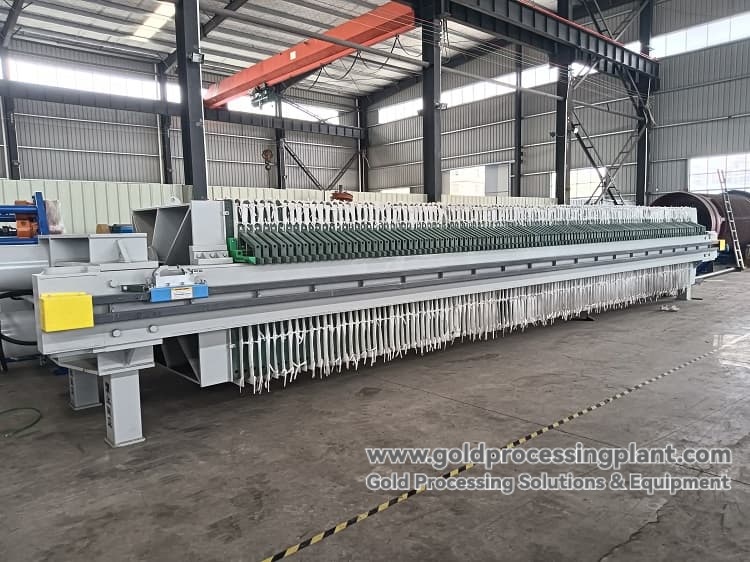
VI. GoldProcessingPlant: One-Stop EPC Service Provider for Gold Ore Processing Plants
GoldProcessingPlant is a full-process service provider for gold mines, integrating process design, engineering design, equipment manufacturing, installation, and commissioning. The company operates two proprietary manufacturing bases in Shandong and Jiangxi, China (covering approximately 50,000 square meters, with 20,000 square meters of modern standard factory space), with an annual production capacity exceeding 500 units.with products exported to more than 50 countries and regions. The company is certified under the ISO 9001 Quality Management System and holds CE certification.
EPC Services Include:
- Process Design and Technical Solutions (based on ore testing, not template-based)
- Engineering Design and Drawings (plant layout, equipment foundations, piping, and civil engineering condition drawings)
- Manufacturing of core equipment and supply of supporting components (covering the entire process: crushing, grinding, gravity separation, flotation, CIL/CIP, stripping and electrolysis, and thickening and dewatering)
- On-site Installation Technical Guidance (with resident engineers)
- Integrated Commissioning and Personnel Training (commissioning objectives specified in the contract)
- After-Sales Service and Spare Parts Supply (Full coverage during the warranty period; long-term technical support)
Flexible, Non-Bundled Approach: Clients may choose to purchase only process design, only drawings, only equipment, or only on-site commissioning services by engineers; alternatively, they may opt for full-process EPC. Preliminary design fees are fully creditable toward subsequent equipment or EPC contracts.
Project Experience: Major gold-producing countries worldwide, including Ghana, Mali, Tanzania, and Sudan in Africa; Peru and Colombia in South America; Russia and Kazakhstan in Central Asia; and Southeast Asia, with processing capacities ranging from 30 to 5,000 metric tons per day, covering lode gold, placer gold, difficult-to-process ores, and tailings reprocessing.