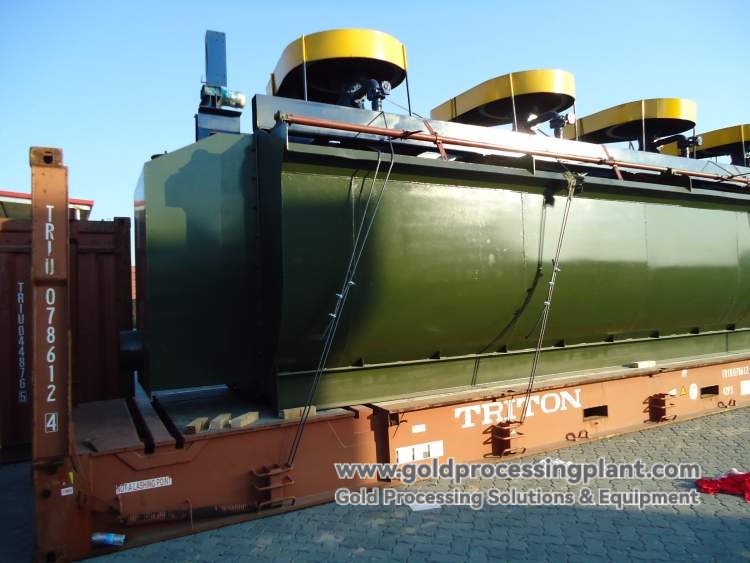
Processing of Gravel-Type Gold Deposits—Professional Gold Ore Beneficiation Equipment and Process Solutions—High-Efficiency Gold Extraction Technology
Processing of Conglomerate-Type Gold Deposits—Professional Gold Ore Beneficiation Equipment and Process Solutions—High-Efficiency Gold Extraction Technology
Gravel-type gold deposits are one of the most prevalent types of gold deposits in global gold production, with the Witwatersrand Basin in South Africa being the most typical example.These deposits are large in scale and have relatively stable grades, but the nature of the ore differs significantly from that of quartz vein-type and altered rock-type deposits—gold occurs as fine-grained free gold or is associated with pyrite and uranium minerals, and the properties of the gravel and cement vary, so the logic behind grinding and beneficiation cannot be applied directly.Selecting the correct process route and equipment configuration is a prerequisite for achieving efficient gold recovery from conglomerate-type gold deposits.
Based on the ore characteristics of conglomerate-type gold deposits, this article systematically explains how to determine processing methods, configure equipment, and select a comprehensive solution.
I. Ore Characteristics of Conglomerate-Hosted Gold Deposits: Understand First, Then Select
Typical characteristics of conglomerate-hosted gold deposits:
1. Large-scale deposits with high processing capacity
Conglomerate-hosted gold deposits often occur as large or super-large deposits, with processing capacities typically in the range of thousands or even tens of thousands of metric tons per day. Equipment selection must be configured for large-scale continuous production, with high requirements for production capacity redundancy and system stability.
2. Gold is primarily present as fine-grained free gold, with some occurring in association with sulfides
Gold is predominantly present in a fine-grained, free state within the cement between gravel particles; some is associated with sulfides such as pyrite and arsenopyrite, and a few deposits also contain associated uranium minerals. Given the fine grain size of the gold, the grinding fineness must ensure single-particle liberation.
3. Significant differences in the properties of gravel and cement
The ore consists of gravel (quartzite, flint, etc.) and cement (siliceous, clayey, carbonaceous, etc.). Due to differences in hardness and grindability between the two, selective grinding is likely to occur during the grinding process, affecting the uniformity of liberation.
4. Some ores contain high levels of carbonaceous material or sulfides
Carbon-bearing breccias can cause a “gold-snatching” effect, while gold bound to sulfides can affect cyanide leaching rates; laboratory testing is required to determine whether flotation enrichment or pretreatment should be performed first.
5. Associated components may affect the processing flow
Some conglomerate-type gold deposits contain associated elements such as uranium and pyrite; during beneficiation, consideration must be given to comprehensive recovery or the elimination of interference.
In short: Conglomerate-type gold deposits are characterized by “large scale, fine grain size, and complex composition”; the processing route must be determined through testing, and equipment must be configured to handle high throughput and fine grinding requirements.
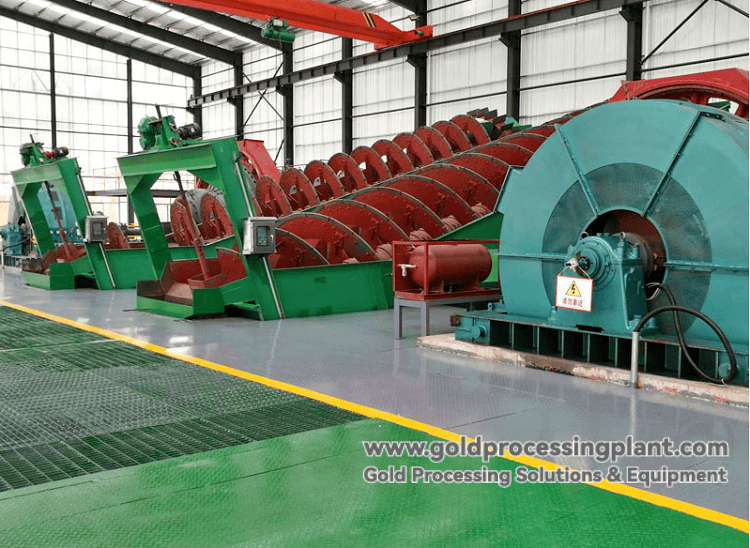
II. How to Determine the Processing Route for Conglomerate-Type Gold Deposits
The selection of a processing route for conglomerate-type gold deposits hinges primarily on the form in which gold occurs and the presence of interfering elements:
Route 1: Whole-ore cyanidation (CIL/CIP)—the preferred choice for conventional conglomerate-type gold deposits
Applicable Conditions: Gold is primarily present in a fine-grained, free state; gangue is simple; the ore contains no or low levels of carbonaceous material; and sulfide content is not high.
Process Logic: Crushing and grinding → Thickening and dewatering → Leaching tanks (addition of cyanide and lime to adjust pH) → Activated carbon adsorption (CIL: simultaneous leaching and adsorption / CIP: leaching followed by adsorption) → Electrolysis to elute gold from carbon → Gold slurry smelting → Tailings treatment.
Advantages: Short process flow, high recovery rates, and thorough recovery of fine-grained free gold. This is the mainstream process for most conventional conglomerate-type gold deposits.
Route 2: Combined Gravity Separation and Cyanidation — When Coarse-Grained Gold Is Present
Applicable Conditions: Coarse-grained gold coexists with fine-grained gold in the ore, or early recovery of coarse-grained free gold is required in the grinding circuit.
Process Logic: Install a centrifugal separator or jig in the crushing and grinding circuit to recover coarse-grained gold → Fine-grained gold is selectively recovered from the gravity concentration concentrate using a shaking table → Gravity separation tailings are fed into CIL/CIP leaching to recover fine-grained gold.
Advantages: “Early and increased recovery” of coarse-grain gold, preventing loss due to overgrinding and improving overall recovery rates.
Route 3: Combined Flotation and Cyanidation — Gold Bearing in Sulfides or Carbonaceous Materials
Applicable Conditions: Gold is closely associated with sulfides such as pyrite and arsenopyrite, or carbonaceous material causes a gold-shadowing effect.
Process Logic: Crushing and grinding → Flotation to concentrate gold-bearing sulfides (carbon-bearing ores require suppression of carbon-bearing materials) → Flotation concentrate sent for smelting or cyanidation after pretreatment → Flotation tailings are re-leached based on grade.
Advantages: Reduces the volume of subsequent processing, mitigates interference from carbonaceous material, and is suitable for difficult-to-process conglomerate ores.
Route 4: Pretreatment + Cyanidation — Difficult-to-Process Arsenic- and Carbon-Bearing Ores
Applicable Conditions: Arsenic-bearing, carbon-bearing, and fine-grained gold-bearing ores with low conventional cyanide leaching recovery rates.
Process Logic: Flotation enrichment → Pre-treatment using proprietary reagents, roasting, bio-oxidation, or pressurized oxidation → Cyanide leaching → Desorption and electrolysis.
Advantages: Uncaps the gold, eliminates the gold-snatching effect, and transforms “difficult-to-process” ore into “recoverable” ore.
Core Selection Principle: Conduct ore characterization and leaching tests first; use data to determine the process route rather than relying on a one-size-fits-all template.
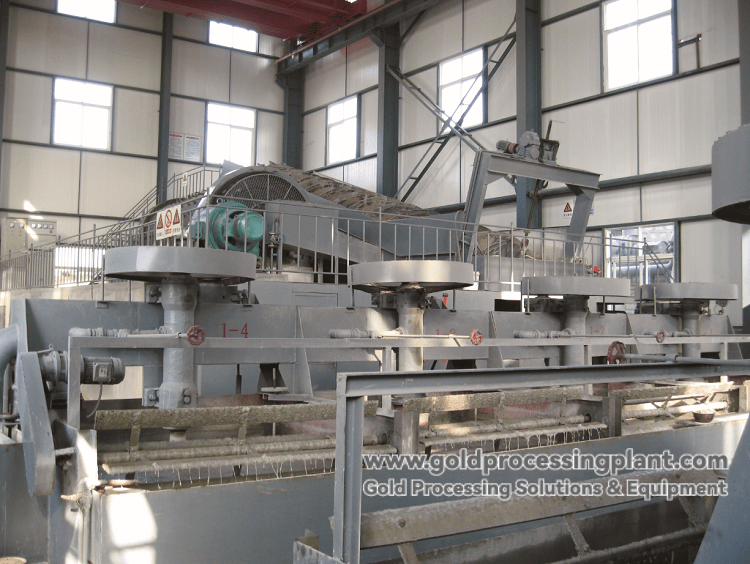
III. How to Configure Processing Equipment for Conglomerate-Type Gold Deposits: Five-Stage Core Configuration
1. Crushing and Grinding Stage — High Throughput + Fine Grinding for Disassociation
- Crushing: Jaw crusher for primary crushing + cone crusher for secondary and tertiary crushing; prioritize crushing over grinding to reduce grinding energy consumption; large-scale projects may adopt multi-stage crushing combined with closed-circuit screening.
- Grinding: Grid-type ball mill (first-stage coarse grinding) + overflow-type ball mill (second-stage fine grinding), forming a closed-circuit with hydrocyclones. Since gold in conglomerate deposits is finely disseminated, two-stage grinding plus fine grinding is key to ensuring adequate liberation.
- Selection Criteria: Match the mill specifications to the processing capacity to avoid “over-sizing the equipment”; since the grindability of gravel and cemented material varies significantly, grinding time and fineness must be determined through testing.
2. Gravity Separation Section (if configured) — Early Recovery of Coarse-Grained Gold
- Centrifugal separator: Recovers coarse free gold from the grinding circuit to prevent loss due to over-grinding;
- Shaking tables: For the final concentration of gravity concentrate;
- Selection Criteria: The placement of the gravity separation stage within the grinding circuit and the target recovery size range must be determined based on the ore\'s coarse-grain gold content.
3. Leaching and Adsorption Section — Core of CIL/CIP
- Leaching tanks: Equipped with agitation and aeration; multiple tanks connected in series; cyanide and lime are added to adjust the pH to 10–11;
- Activated Carbon Adsorption System: CIL employs simultaneous leaching and adsorption (compact process), while CIP uses sequential leaching followed by adsorption (for precise segmented control); activated carbon concentration and management of gold-loaded carbon are critical;
- Gold-Loaded Carbon Separation Screens: Carbon retention screens or air lifters to prevent carbon loss;
- Key Selection Criteria: Matching leaching and adsorption times, number of tanks and series configuration, and agitation and aeration efficiency—determined based on test data and scale.
4. Desorption and Electrolysis Stage—From Gold-Loaded Carbon to Pure Gold
- Desorption column: ambient temperature and pressure (for conventional ores and small-to-medium-scale operations) or high temperature and pressure (for hard-to-desorb carbon and large-scale operations);
- Electrolysis Tanks: Matched to the volume of precious metal solution and gold concentration; focus on current efficiency and gold sludge grade;
- Supporting Equipment: Rectifier power supply, heating and circulation system, gold slurry filter press and smelting equipment;
- Selection Criteria: Ensure desorption capacity matches carbon production rate to prevent interruptions in the carbon recycling cycle.
5. Concentration, Dewatering, and Tailings Section—Environmental Compliance
- Thickener: Slurry concentration prior to leaching, tailings dewatering;
- Filter Press: Dry discharge of tailings and dewatering of concentrate;
- Selection Criteria: Tailings treatment must comply with local environmental regulations; for overseas projects, consider tailings storage facilities and dry-discharge plans in advance.
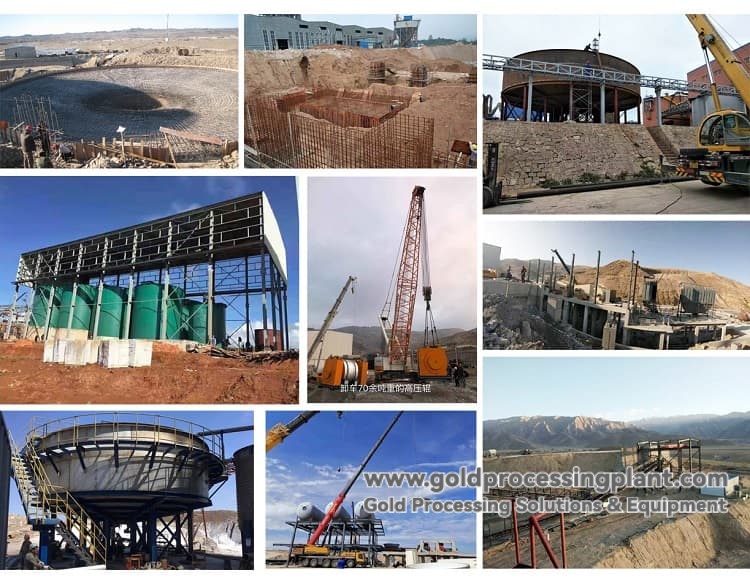
IV. How to Select a Complete Solution: Five Key Metrics for Evaluating a Manufacturer\'s Capabilities
When seeking a complete solution for a gravel-type gold mine from equipment manufacturers, focus on the following:
① Whether there is a process validation based on ore testing
Claystone-type gold ores are characterized by complex composition and fine particle size; ore sample testing is essential to confirm the process route, grinding fineness, and leaching conditions. A solution without test data is like “a blind man feeling an elephant.”
② Is the equipment configured to meet high-throughput and fine-grinding requirements?
Conglomerate gold deposits are large-scale operations; the production capacity of crushing and grinding equipment, the number of leaching and adsorption tanks, and the desorption and electrolysis capacity must all be scaled to match the processing volume to avoid capacity bottlenecks.
③ Are the Process Design and Equipment Manufacturing Handled by the Same Team?
When a design institute produces drawings and an equipment manufacturer produces equipment based on those drawings, there is a high risk of a disconnect between the parameters on the drawings and the actual performance of the equipment. Only when the process design and equipment manufacturing are handled by the same team can interface conflicts be avoided.
④ Are the scope of delivery boundaries clearly defined?
The manufacturer is responsible for equipment manufacturing, installation guidance, and commissioning training; the client organizes civil engineering and local installation workers, with the manufacturer dispatching engineers to provide on-site guidance—ensuring quality while saving on labor costs. These responsibilities must be clearly defined in the contract.
⑤ Are there commitments regarding commissioning targets and after-sales support?
Recovery rates and processing capacity targets must be specified in the contract. The manufacturer assumes full responsibility for equipment quality during the warranty period and provides long-term spare parts supply and process optimization support after the warranty expires.
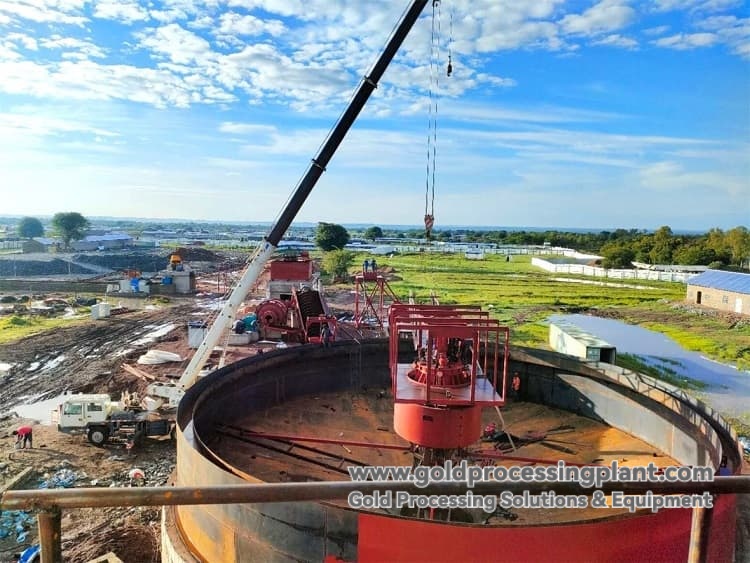
V. GoldProcessingPlant\'s Solution for Conglomerate Gold Deposits
GoldProcessingPlant is a full-service gold mining provider integrating process design, engineering design, equipment manufacturing, installation, and commissioning. For conglomerate-type gold deposits, we offer:
- Customized Process Flows: Whole-ore cyanidation (CIL/CIP), combined gravity separation and cyanidation, combined flotation and cyanidation, and pre-treatment followed by cyanidation—tailored to the characteristics of the ore;
- In-House Manufacturing of Core Equipment: Comprehensive coverage of the entire process, including jaw crushers/cone crushers, ball mills, centrifugal separators, flotation cells, CIL/CIP leaching and adsorption systems, desorption and electrolysis equipment, thickeners, and filter presses;
- High-capacity adaptability: Project processing capacities range from 30 to 5,000 metric tons per day, with equipment capacity configured according to scale;
- Seamless Process-Equipment Integration: Mineral processing engineers define the process flow, and mechanical engineers manufacture equipment according to process drawings to prevent interface mismatches;
- Global project experience: Projects span Africa (Ghana, Mali, Tanzania, Sudan), South America (Peru, Colombia), Central Asia (Russia, Kazakhstan), and Southeast Asia, with expertise in international logistics, customs clearance, and on-site operating conditions;
- Flexible Services: We can supply individual units or complete equipment packages, as well as provide process design, drawings, installation and commissioning guidance, or turnkey EPC solutions. Initial design fees can be offset against subsequent equipment or EPC contracts.
Our Principle: First, we thoroughly understand your ore; then, we determine the processing route; next, we select the appropriate equipment; and finally, we dispatch engineers to the site to commission the system until gold is produced. We do not promise absolute recovery rates that are detached from the actual characteristics of the ore; instead, we commit to processes that achieve the highest recovery rates based on scientifically validated methods.
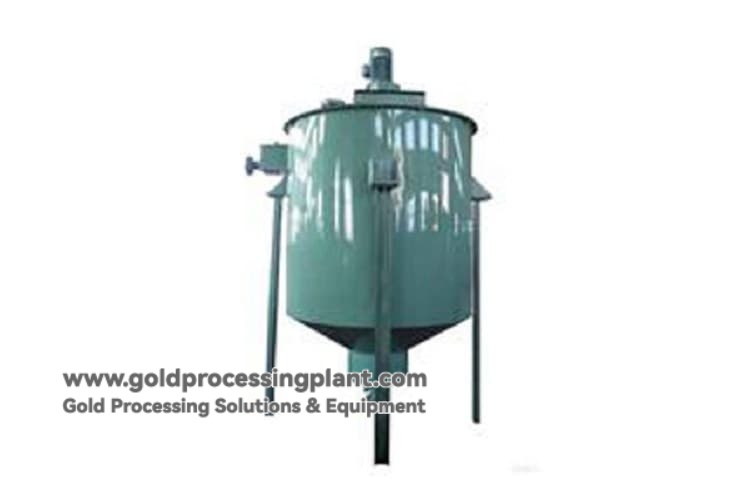
VI. Action Checklist for Processing and Equipment Selection for Conglomerate-Type Gold Deposits
- Send samples for testing: Ore property analysis (gold occurrence state, grain size distribution, sulfide/carbon content) + leaching tests to confirm the process route;
- Determine Scale and Process Route: Determine equipment specifications for the crushing and grinding, leaching and adsorption, and desorption and electrolysis stages based on processing capacity;
- Select Core Equipment: Select equipment for the five stages—crushing and grinding, gravity separation (if applicable), leaching and adsorption, stripping and electrolysis, and tailings treatment—based on process parameters;
- Confirm Scope of Delivery: Specify in the contract the division of responsibilities regarding equipment, drawings, installation instructions, and commissioning and training;
- Finalize commissioning targets: Specify recovery rates and processing capacity targets in the contract to clarify acceptance criteria.