How to Choose a CIL/CIP Gold Ore Processing Production Line for Large-Vein Deposits? Gold Mining Equipment Manufacturers Provide Complete Solutions
How to Choose a CIL/CIP Processing Line for Large-Vein Gold Deposits? Gold Mining Equipment Manufacturers Provide Complete Solutions
Large-vein gold deposits (quartz vein type) are among the most common types of rock gold deposits in China and are also the mineral type for which the CIL/CIP whole-ore cyanidation process is most widely applied.However, “being suitable for CIL/CIP” and “selecting the right CIL/CIP production line” are two different matters—the same leaching and adsorption system can achieve recovery rates of over 90% when applied to quartz vein deposits, but if the process flow is mismatched or the equipment is incompatible, recovery rates may not even reach 80%.
Starting with the ore characteristics of large-vein gold deposits, this article explains how to select a CIL/CIP production line, how to configure the equipment, and what a manufacturer\'s turnkey solution should include—helping you ensure your investment is spent wisely.
I. First, Understand: Why Large-Vein Gold Deposits Are Suitable for CIL/CIP
Large-vein gold deposits (quartz vein type) are typically characterized by: gold minerals primarily consisting of fissure gold and intergranular gold, closely associated with sulfides such as pyrite, and the potential coexistence of coarse-grained and fine-grained gold;When the ore is highly oxidized, the gangue consists mainly of quartz, and there are no interfering elements such as copper, arsenic, antimony, or carbon, direct whole-ore cyanidation (CIL/CIP) is the most straightforward process route.
Compared to the flotation route, the advantages of CIL/CIP are:
- Short process flow: Leaching and adsorption follow immediately after crushing and grinding, eliminating the need for flotation and concentrate processing;
- High recovery rates: Thorough recovery of free and fine-grained gold, preventing gold loss in flotation tailings;
- High adaptability: It has a certain tolerance for fluctuations in ore properties and allows for significant operational flexibility.
However, this is contingent on the ore containing no interfering elements, meeting the required grinding fineness, and having well-controlled leaching conditions. If the ore contains arsenic, carbon, or is primarily gold-bearing sulfides, flotation enrichment or pretreatment is required first; whole-ore cyanidation should not be implemented blindly.
The first step in process selection is not choosing equipment, but selecting the process route. First, conduct ore characterization and leaching tests to confirm the suitability of CIL/CIP; only then should production line configuration be discussed.
II. CIL or CIP? Distinguish Between Them Before Selecting a Process
Both involve whole-ore cyanidation for gold extraction, but the core difference lies in the relationship between leaching and adsorption:
| Comparison Points | CIL (Carbon-in-Leach) | CIP (Carbon-in-Pulp) |
|---|---|---|
| Process Logic | Leaching and adsorption occur simultaneously; leaching and adsorption take place concurrently | Leaching is completed first, followed by transfer to the adsorption tank |
| Process Characteristics | Compact process, fewer tanks, and lower capital investment | More thorough leaching time and precise segmented control |
| Suitable Applications | Small- to large-scale processing plants handling ores with relatively fast leaching rates | Large-scale processing plants handling ores with relatively fast leaching rates that require staged control |
| Activated Carbon Addition | Added in the final tank and moves forward in a countercurrent flow | After leaching is complete, the solution enters the adsorption tank where activated carbon is added |
Selection Recommendations: For conventional ore from large-vein gold deposits, the CIL process offers a compact layout and manageable investment, making it the preferred choice for small- to medium-sized processing plants; for large-scale processing plants or projects with strict leaching time requirements, the CIP process provides more precise stage-by-stage control. Equipment specifications are interchangeable between the two processes; specific selection should be based on test data and project scale.
III. How to Configure a CIL/CIP Production Line: Five Core Stages
A complete CIL/CIP production line for large-vein gold ore typically consists of the following five sections, with the equipment selection for each section affecting the final recovery rate:
1. Crushing and Grinding Section—Liberation Is Key
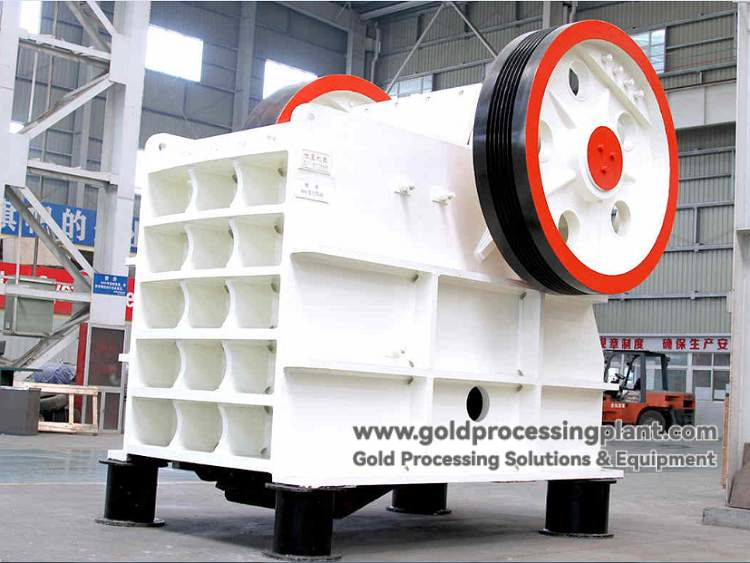
- Crushing: Primary crushing with a jaw crusher + secondary and fine crushing with a cone crusher, following the principle of “crush more, grind less” to reduce grinding energy consumption;
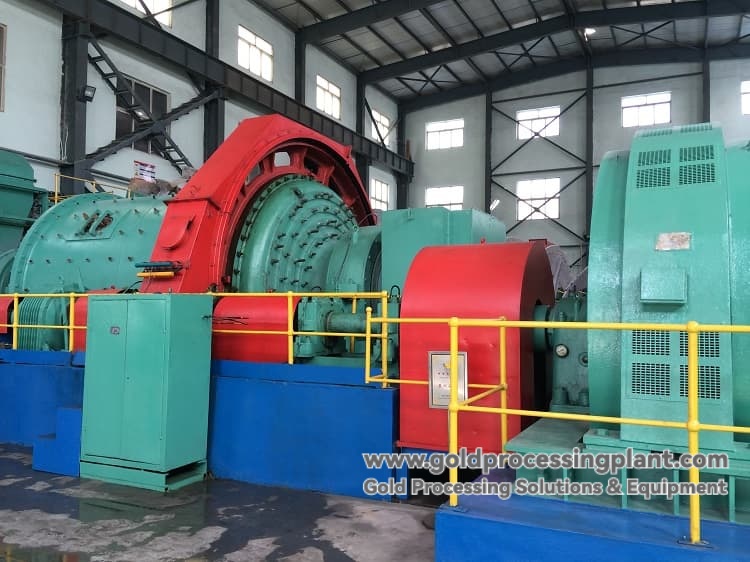
- Grinding: First-stage grid-type ball mill + second-stage overflow-type ball mill, forming a closed-circuit system with a spiral classifier or hydrocyclone;
- Key Parameter: The grinding fineness must ensure the liberation of gold particles; insufficient fineness will directly reduce the leaching rate. This is the most commonly underestimated aspect in CIL/CIP process design.
2. Thickening and Dewatering Stage — Controlling Slurry Concentration
Prior to leaching, the slurry must be concentrated to an appropriate concentration. Thickener selection is based on processing capacity and sedimentation characteristics; high-efficiency thickeners can reduce the footprint.
3. Leaching and Adsorption Stage — The Core of CIL/CIP
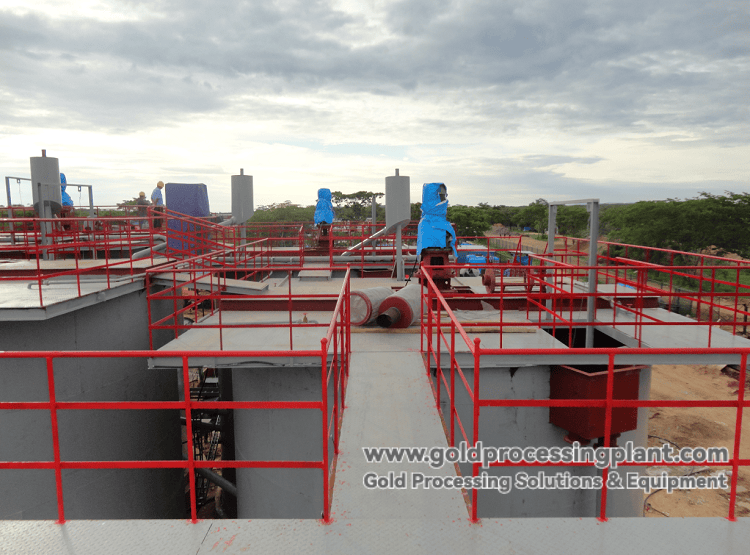
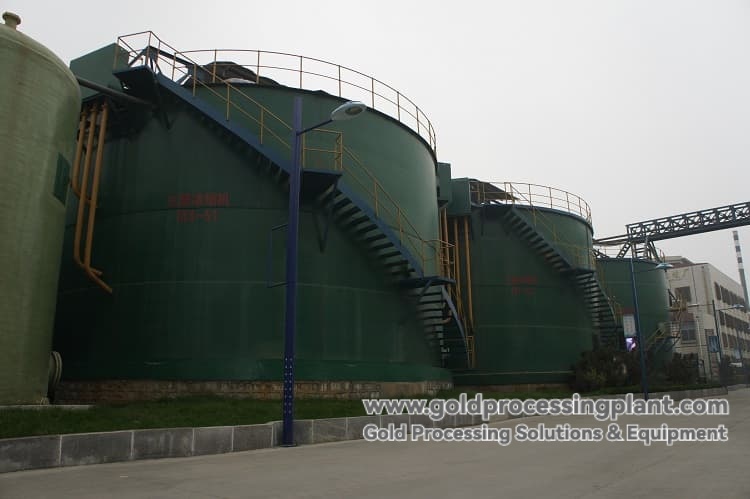
- Leaching Tanks: Equipped with agitation and aeration; cyanide and lime are added to adjust the pH (10–11) and prevent cyanide volatilization losses;
- Activated Carbon Adsorption System: CIL employs simultaneous leaching and adsorption, while CIP uses separate tanks for adsorption; managing activated carbon concentration and gold-loaded carbon is critical;
- Gold-Loaded Carbon Separation Screens: Carbon-retention screens or air lifters prevent activated carbon from being carried away with the slurry;
- Key Design Considerations: Matching leaching and adsorption times; number of tanks and series configuration; agitation and aeration efficiency.
4. Stripping and Electrolysis Section—From Gold-Loaded Carbon to Gold Slime
After acid washing, the gold-loaded carbon enters the desorption and electrolysis system: desorption column (at ambient temperature and pressure or high temperature and pressure) → electrolytic cell → gold slurry. Desorption rate, current efficiency, and gold slurry grade directly impact final profitability. Desorption capacity must match carbon production rate to avoid interruptions in the carbon circulation cycle.
5. Tailings Treatment Section—Environmental Compliance
Tailings are treated to meet regulatory standards after being dry-discharged via a filter press or thickened; this involves environmental approvals and tailings pond management. For overseas projects, local environmental requirements must be considered in advance.
IV. What a Complete Solution Should Include: Five Key Criteria for Selecting a Manufacturer
When seeking a complete solution from a gold mining equipment manufacturer, do not rely solely on the quotation. A qualified CIL/CIP turnkey solution should include:
① Process route validation based on ore testing
This is not a template-based approach; rather, it involves using ore sample test data to confirm the suitability of CIL/CIP, grinding fineness, leaching time, and reagent regimens. Solutions not supported by test data cannot guarantee effective implementation.
② Equipment List and Selection Criteria
The specifications, capacity, and parameters of each piece of equipment must be backed by process justification. Interfaces between crushing, grinding, leaching, adsorption, desorption, and electrolysis equipment must be properly matched to avoid situations where “design drawings do not align with actual equipment dimensions.”
③ Engineering Drawings and Technical Briefings
Site layout plans, equipment foundation drawings, pipeline routing diagrams, and civil engineering condition drawings must be directly usable for construction bidding and on-site organization.
④ Clear Scope of Work
The manufacturer is responsible for equipment manufacturing, installation guidance, and commissioning training; the client organizes civil engineering and local installation workers, with the manufacturer dispatching engineers to provide on-site guidance—ensuring quality while saving on labor costs. These responsibilities must be clearly defined in the contract to avoid disputes later on.
⑤ Commissioning Targets and After-Sales Commitments
Commissioning targets (recovery rate, processing capacity) are specified in the contract; the manufacturer assumes full responsibility for equipment quality during the warranty period; after the warranty expires, long-term spare parts supply and process optimization support are provided.
V. Why Choose a Manufacturer with a Single Team for Both “Process + Equipment”
The greatest risk with CIL/CIP production lines is not overpaying for individual pieces of equipment, but rather a disconnect between the process and the equipment:
- Design institutes produce drawings, and equipment manufacturers produce equipment based on those drawings, but the parameters in the drawings do not match the actual equipment performance;
- Crushers, ball mills, leaching tanks, and stripping/electrolysis equipment come from different manufacturers, resulting in incompatible interfaces and reduced production capacity;
- When the system fails to meet standards, the design firm, equipment suppliers, and contractors pass the blame onto one another, leaving the investor to act as the “referee.”
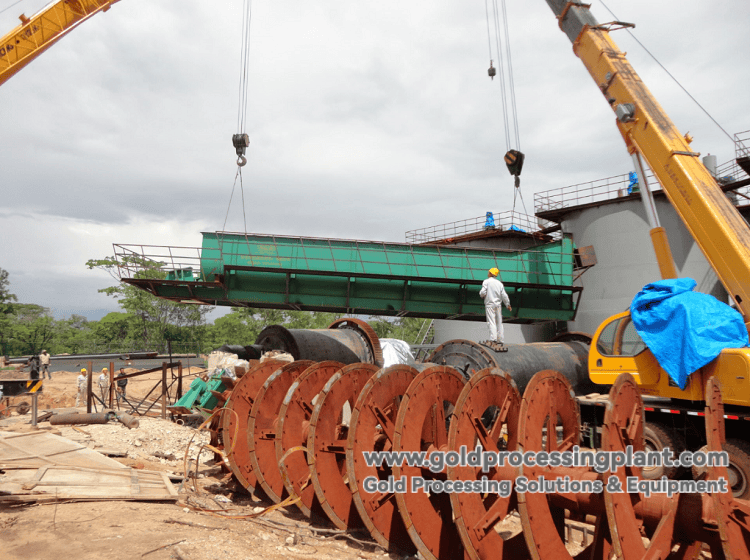
GoldProcessingPlant\'s approach is to integrate process design and equipment manufacturing within a single team. Mineral processing engineers define the process flow, while mechanical engineers manufacture equipment based on process drawings. Crushers, ball mills, flotation machines, CIL/CIP leaching and adsorption systems, and desorption-electrolysis equipment are all manufactured in-house, ensuring seamless interfaces and no capacity mismatches.During the commissioning phase, engineers are stationed on-site to lead individual equipment commissioning and integrated trial runs with actual feed material until the first batch of qualified, specification-compliant gold is produced.
VI. Action Checklist for CIL/CIP Selection in Large-Vein Gold Deposits
- Submit ore samples for testing: Ore property analysis + whole-slurry cyanide leaching tests to confirm CIL/CIP suitability and grinding fineness;
- Determine Scale and Process Flow: Based on processing capacity (30–5,000 metric tons/day), determine whether to use CIL or CIP, as well as the number of tanks and their series configuration;
- Select core equipment: Select equipment for the five process stages—crushing and grinding, thickening, leaching and adsorption, desorption and electrolysis, and tailings treatment—based on process parameters;
- Confirm Scope of Delivery: Define the division of responsibilities for equipment, drawings, installation guidance, and commissioning training, and include these in the contract;
- Set Commissioning Targets: Specify recovery rates and processing capacity targets in the contract, and clearly define acceptance criteria.