


Process Design for Gold Ore Beneficiation Equipment? EPC Turnkey Project for a CIP Plant with a Daily Processing Capacity of 100 Metric Tons
Process Design for Gold Ore Beneficiation Equipment? EPC Turnkey Project for a 100-Metric-Ton-Per-Day CIP Processing Plant
A 100-metric-ton-per-day CIP gold processing plant is one of the most common scale categories for small-scale gold mines.Compared to the 50-metric-ton class, it requires greater “process integrity,” yet unlike plants processing several hundred metric tons, it lacks ample investment flexibility—selecting larger equipment results in overcapacity, while choosing smaller equipment limits production capacity and prevents full utilization; if the process route is chosen incorrectly, a 100-metric-ton plant cannot justify the cost of rework.Therefore, the core challenge for a 100-metric-ton-per-day CIP processing plant is not “which equipment to buy,” but rather “getting the process, equipment, and EPC scope precisely aligned for a 100-metric-ton capacity in one go.”This article clarifies the configuration logic for a 100-metric-ton-per-day CIP processing plant from three perspectives: how to determine the process scheme, how to select equipment, and how to implement the EPC turnkey project.
I. Defining the Process First: Prerequisites for a CIP Scheme
The CIP (Carbon-in-Pulp) process consists of: crushing → grinding and classification → thickening → serial leaching in multiple tanks → carbon addition in the adsorption tank → separation of gold-bearing carbon → desorption and electrolysis → smelting.It is suitable for ores with a high degree of oxidation, where gold is primarily in a free state and the ore does not contain severe interfering elements such as copper, arsenic, antimony, or carbon. Before finalizing the CIP scheme for a 100-metric-ton-per-day processing plant, three tasks must be completed:
First, mineral processing tests. Representative ore samples must be collected for multi-element chemical analysis, gold phase analysis, and leaching tests to determine parameters such as leaching time, cyanide concentration, pH, and activated carbon dosage.The test report should include a list of equipment selections and a preliminary budget—the equipment specifications, number of tanks, and installed power for a 100 metric tons per day plant are all derived from this data and cannot be based on empirical values.
Second, the selection between CIP and CIL. CIP first completes leaching in a series of tanks before proceeding to the adsorption tank for carbon addition; it allows for a more thorough leaching time and finer-grained stage-by-stage control, making it suitable for ores with relatively slow leaching rates or those requiring staged control. CIL combines leaching and adsorption, uses fewer tanks, features a compact process flow, and requires less capital investment.For a 100 metric tons per day scale, if test results indicate an acceptable leaching rate, CIL can be considered as an alternative; if the ore\'s leaching kinetics are slow, CIP is the safer choice. The selection should be based on leaching rate curves, not on guesswork.
Third, screening for interfering elements. Ores containing arsenic, carbon, or antimony cannot be processed directly using CIP—arsenic consumes cyanide, carbon displaces gold, and antimony interferes with leaching. Pretreatment tests (such as proprietary chemical pretreatment or oxidation) must be conducted first to confirm feasibility before determining the process.Ores with high clay content require pre-washing to remove clay and optimization of leaching parameters.
II. Equipment Configuration for a 100-Metric-Ton-Per-Day CIP Processing Plant
Based on the CIP process, the core equipment configuration for a 100-metric-ton-per-day processing plant is as follows:
Crushing Module: Jaw crusher for primary crushing (select model based on maximum raw ore particle size) + vibrating feeder + belt conveyor; for high-hardness ores, a cone crusher can be added for secondary crushing to follow the principle of “more crushing, less grinding” and reduce grinding energy consumption.The crusher and feeder can be integrated into a steel frame, with on-site foundation installation and interface connections.
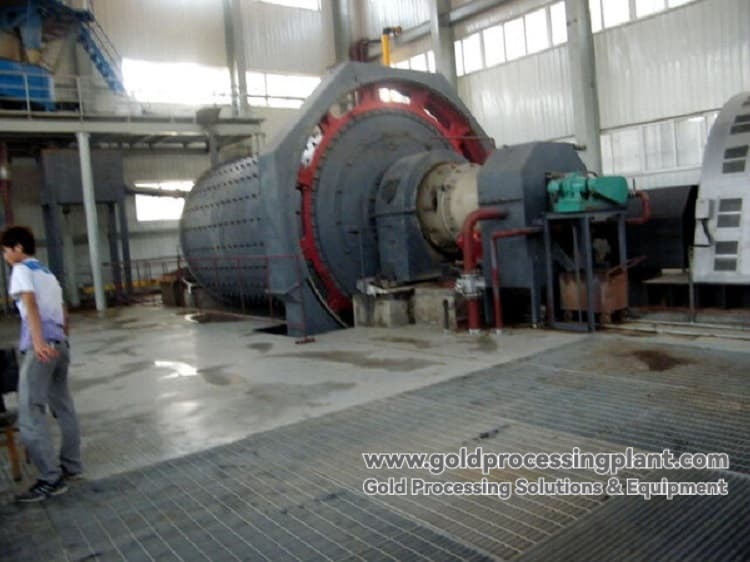
Grinding and Classification Module: Small ball mill (grate type, with forced discharge to prevent over-grinding) + spiral classifier or hydrocyclone in a closed-circuit system; the grinding fineness is determined by testing (typically 65%–80% by weight of -200 mesh).The grinding module imposes high demands on foundation load-bearing capacity and alignment; it is supplied in a modular configuration consisting of “equipment + base + local piping,” with the foundation poured on-site.
Thickening Module: A small, high-efficiency thickener (or inclined-tube thickener) concentrates the overflow from the grinding and classification process to the appropriate leaching concentration; the overflow water is recycled. The slurry contains a flocculant dosing system.
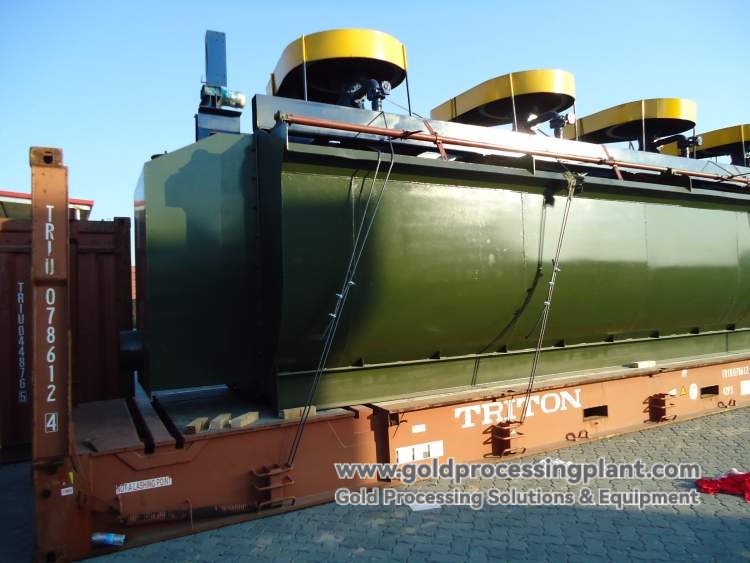
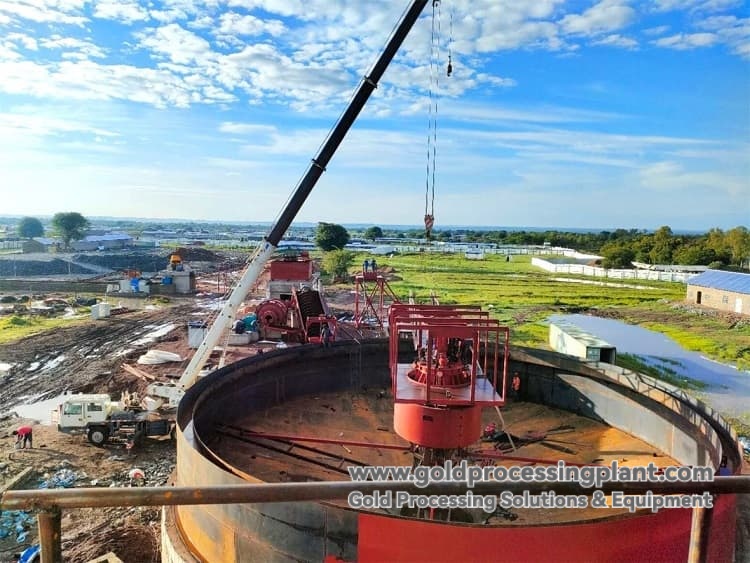
Leaching and Adsorption Module (CIP Core): Multiple leaching tanks connected in series (equipped with agitation and aeration; 4–6 tanks are typically used for 100 metric tons per day) + adsorption tank (with activated carbon) + carbon separator screen + carbon extractor + carbon extraction pump.A key feature of the CIP process is that the slurry enters the adsorption tank only after leaching is complete, allowing for a more thorough leaching process. This module contains a dense network of piping and valves, making it ideal for factory pre-integration—leaching tanks, adsorption tanks, piping, valves, and instruments are pre-assembled and tested at the manufacturing facility, then positioned and connected on-site according to their serial numbers.The agitation method in the leaching tank must ensure that the slurry does not settle at the bottom and that aeration is uniform; for operations involving sludge, specific designs to prevent bottom buildup must be implemented.
Desorption and Electrolysis Module: After acid washing, the gold-loaded carbon enters the desorption column (for 100 metric tons per day, standard room-temperature and atmospheric-pressure desorption is commonly used, as it requires lower investment and is simple to operate; high-temperature and high-pressure desorption is selected when the volume of gold-loaded carbon is large or desorption requirements are high). The desorption solution is electrolyzed to produce gold slurry, which is then sent to the gold smelting furnace to produce refined gold.This module can be fully integrated into a skid-mounted unit.
Concentration and Dewatering Module: High-efficiency thickeners, plate-and-frame filter presses (for dry tailings discharge and concentrate dewatering), dewatering screens, and an accompanying circulating water system.
Power Distribution and Control Module: Soft-start/variable-frequency drive configurations to reduce inrush current; PLC control system; integrated supply of instruments and cable trays; in areas with unstable power supply, diesel generator sets can be integrated as the main or backup power source.
Components requiring on-site construction: Equipment foundations, plant structures (or simple steel-frame sheds), certain long-distance piping, and tailings ponds/tailings dry-discharge facilities. Complete architectural construction drawings are to be provided by a qualified local design institute designated by the client.
GoldProcessingPlant operates two major in-house manufacturing bases in Shandong and Jiangxi. The core equipment listed above is manufactured in-house, with process engineers and mechanical engineers collaborating as a single team to ensure module interfaces are reserved according to drawings, thereby avoiding mismatches between design drawings and equipment dimensions.For a 100 metric tons per day capacity, equipment specifications are precisely matched to the actual processing volume, avoiding over-specified configurations; material and structural customization is available for operating conditions involving slurry or corrosion.
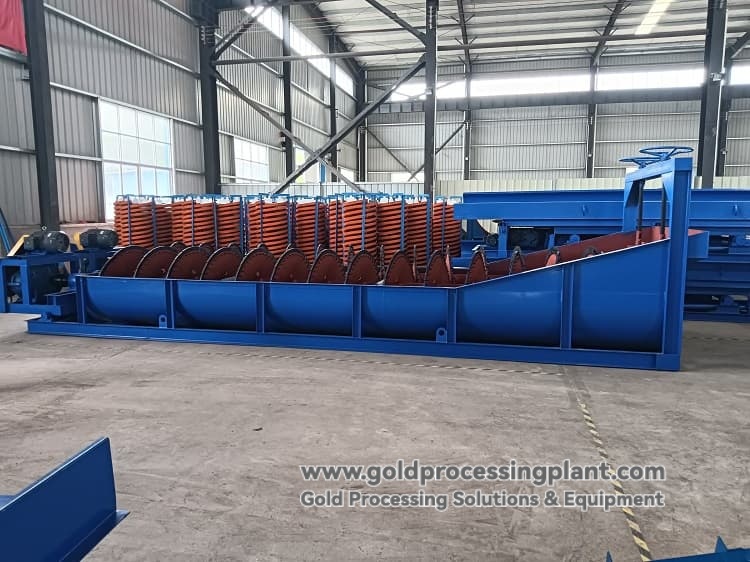
III. EPC Turnkey: Scope and Timeline for the 100 metric tons per day Project
The core principle of EPC turnkey projects is “we take full responsibility for our tasks and provide advance briefings on areas requiring client cooperation”:
We are responsible for: process design and technical solutions (ore property analysis, process determination, chemical dosing regimens); engineering design and drawings (site layout plans, equipment layout drawings, civil engineering condition drawings); manufacturing of core equipment and module integration; coordination of supporting materials; on-site installation technical guidance; integrated commissioning and personnel training; after-sales service and spare parts supply.
The client is responsible for: civil construction (organized according to the civil engineering layout drawings), organizing local installation workers (with our engineers providing on-site installation guidance), on-site “three utilities and one leveling” as well as conditions for hoisting and commissioning, and local compliance procedures.
Economic rationale for this division of labor: For a 100 metric tons per day project, dispatching a large number of workers from China to the site would significantly increase the proportion of labor costs due to airfare, visas, accommodation, meals, and daily wages.By having the client organize local general installation workers and our engineers provide on-site technical guidance, we ensure construction standards are met while keeping labor costs down. If local construction resources are truly unavailable, a turnkey solution may be negotiated separately and stipulated in the contract.
Reference Project Timeline: Process design, equipment selection, and quotation: 7–15 days → Engineering drawings: 20–30 days → Equipment manufacturing and module prefabrication: 60–90 days → Logistics: 30–60 days → Installation and commissioning: 30–60 days.For a 100 metric tons/day project, the typical timeframe from the start of process design to production commencement is approximately 6–10 months (depending on logistics and on-site conditions); for overseas projects, allow approximately 30 days as a buffer for customs clearance.Reasonable overlap between phases can shorten the total project duration—once core process parameters are finalized, modules can be sent to the factory for manufacturing, while the client simultaneously carries out site preparation (“three utilities and one leveling”) and foundation construction.
GoldProcessingPlant does not require bundled services: clients may opt for mineral processing trials only, purchase only process design or engineering drawings, procure individual units or complete equipment sets, or hire engineers for on-site commissioning only; a full turnkey EPC solution is also available. Initial trial and design fees can be fully offset against the cost of subsequent equipment or EPC contracts.
IV. Quality Assurance: Even for a 100-metric-ton small plant, performance targets are explicitly included in the contract
Although a 100-metric-ton-per-day plant is considered small, recovery rate specifications must be clearly defined. GoldProcessingPlant commits to: setting recovery rate targets based on ore characteristics and test data; incorporating commissioning targets into the contract; and establishing reasonable acceptance criteria based on the same ore source and operating conditions;The warranty period is 12 months; during this period, spare parts will be replaced free of charge for equipment quality issues. After the warranty expires, we will continue to supply spare parts and provide process optimization recommendations—addressing changes in ore properties, fluctuations in reagent costs, and variations in recovery rates, while continuously supporting customers through commissioning adjustments.
The company implements the ISO 9001 quality management system, and its products are CE-certified. With an annual production capacity exceeding 500 units, our projects span major gold-producing regions including Africa, South America, Central Asia, and Southeast Asia, handling processing capacities ranging from 30 to 5,000 metric tons per day.A 100-metric-ton-per-day processing plant follows the same design logic and process standards as larger plants; the only difference lies in equipment specifications.
For a 100-metric-ton-per-day CIP processing plant under an EPC turnkey contract, the key is not “purchasing a cheap set of equipment,” but rather “calibrating the testing, process, modules, equipment, and responsibilities all at once based on a 100-metric-ton capacity.” Testing determines the process; the process determines the modules; the modules determine the equipment; and the EPC contract defines responsibilities. GoldProcessingPlant—Understand the ore first, then select the equipment.