


High-Efficiency Carbon-in-Leach Gold Extraction for Carlin-Type Gold Deposits | Professional Mineral Processing Technologies to Support Gold Mine Development
High-Efficiency Carbon-in-Leach Gold Extraction Solution for Carlin-Type Gold Deposits | Professional Mineral Processing Technology Supports Gold Mine Development
Carlin-type gold deposits are the most typical example of difficult-to-process gold deposits, and they are also the type most likely to lead mine owners to “misjudge” their potential. While laboratory grades are not low and the ore appears normal, once cyanide leaching begins, recovery rates drop to only 30–40 percent—and there is only one reason for this:The gold is “invisible gold,” encapsulated at submicroscopic and submicroscopic particle sizes within the crystal lattices or fissures of sulfides such as pyrite and arsenopyrite. Conventional grinding simply cannot liberate it, so the cyanide cannot reach the gold, and the leaching rate naturally remains low.The carbon-in-leach (CIL) process for Carlin-type gold deposits does not involve simply grinding the ore finely and feeding it directly into the CIL tank; instead, it employs a comprehensive approach: “fine grinding—flotation enrichment—pre-treatment to release the encapsulated gold—carbon-in-leach gold extraction.”This article begins by discussing the ore characteristics of Carlin-type gold deposits and clearly explains the process logic, equipment configuration, and implementation path for efficient gold extraction via carbon-in-leach (CIL).
I. Why Doesn\'t “Direct Leaching” Work for Carlin-Type Gold Deposits?
Carlin-type gold deposits (fine-grained disseminated gold deposits) have four typical characteristics:
Gold exists in an invisible form. Gold particles are typically in the micrometer to submicrometer range, invisible to the naked eye or under a standard microscope, and are encapsulated within the crystal lattices or crystal fissures of gold-bearing sulfides such as pyrite and arsenopyrite. Even after conventional grinding to -200 mesh—which accounts for about 80% of the ore—the gold remains unliberated.
The gold-bearing minerals are primarily pyrite and arsenopyrite. Gold is closely associated with sulfides; flotation can concentrate the gold-bearing sulfides, and the gold is carried away along with the sulfides.
Interfering elements such as arsenic, carbon, and antimony are commonly associated with these ores. In arsenic-bearing ores, arsenic occurs in association with gold, and arsenopyrite consumes cyanide; in carbon-bearing ores, carbonaceous material “steals gold”—adsorbing dissolved gold-cyanide complexes and causing leaching rates to plummet;in antimony-bearing ores, stibnite interferes with leaching. This is the primary reason why leaching rates in Carlin-type gold deposits range from only 20% to 50%.
The ore is heavily altered and may have a high clay content. Silicification and clay alteration are common, and clay content affects all stages of grinding, flotation, and leaching.
Why doesn\'t direct whole-ore cyanidation work?First, the gold is encapsulated, preventing contact with cyanide; second, arsenic, carbon, and antimony consume cyanide or sequester gold, resulting in a complete waste of reagents. Therefore, Carlin-type gold deposits must follow a “pretreatment + cyanidation” process, with flotation and fine grinding serving as the preliminary stages of pretreatment.
II. The Process Logic Behind Efficient Gold Recovery via Carbon-in-Leach (CIL)
GoldProcessingPlant\'s recommended main process flow for Carlin-type gold deposits is: fine grinding → flotation to concentrate sulfides → pre-treatment to release encapsulated gold → carbon-in-leach (CIL) for gold extraction. Specifically, it consists of four steps:
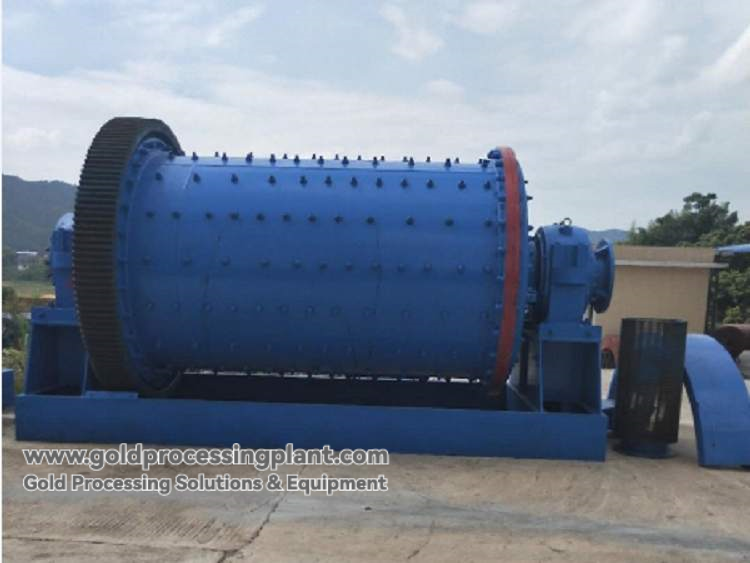
Step 1: Fine Grinding. The gold-bearing sulfides in Carlin-type gold deposits are finely disseminated, requiring fine grinding to ensure sufficient liberation of the sulfides from the gangue and to create conditions for flotation enrichment.The grinding fineness is determined through testing and is typically finer than that for conventional rock-type gold deposits (e.g., a higher proportion of particles smaller than -325 mesh). A two-stage grinding process using a grid ball mill followed by an overflow ball mill is employed, combined with a closed-circuit hydrocyclone system to prevent overgrinding and slime formation.The purpose of fine grinding is to “dissociate the sulfides,” not to “directly dissociate the gold.”
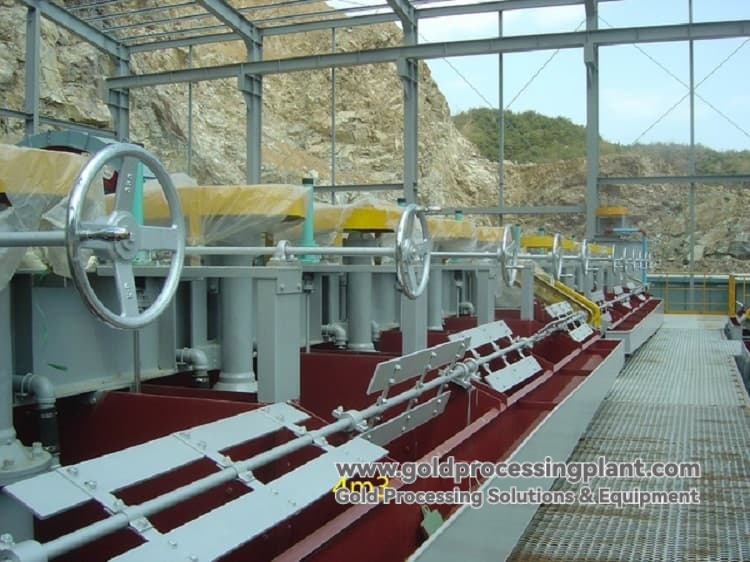
Step 2: Flotation Enrichment of Gold-Bearing Sulfides. Through flotation, gold-bearing sulfides such as pyrite and arsenopyrite are enriched into gold concentrate, significantly reducing the feed volume for subsequent pre-treatment——this is the key to the economic viability of the Carlin-type gold deposit scheme: pre-processing the entire pile of raw ore is extremely costly; by first using flotation to “reduce the feed volume” and processing only the concentrate, both capital investment and reagent consumption can be kept under control.The flotation process employs either a “one rough, two cleaners, two scavengers” or “one rough, three cleaners, three scavengers” flow sheet. For arsenic-bearing ores, arsenopyrite must be suppressed or the arsenic-gold concentrate must be floated separately; for carbon-bearing ores, carbonaceous material must be suppressed. The grade of the flotation concentrate and the sulfur recovery rate directly impact the economics of subsequent pre-treatment.
Step 3: Pre-treatment to release encapsulated gold. This is the “crucial factor” for Carlin-type gold deposits. Pre-treatment methods include: proprietary chemical pre-treatment, roasting, pressurized oxidation, bio-oxidation, and chemical oxidation.The selection criteria are based on the content and occurrence of arsenic, carbon, and antimony; the degree of gold entrapment; project scale; and local environmental regulations:
- Proprietary chemical pretreatment: Utilizes a customized chemical system to passivate carbon-bearing materials and oxidize encapsulated sulfides. The process is relatively simple and requires lower investment, making it suitable for medium-difficulty arsenic- and carbon-bearing ores;
- Roasting: Suitable for concentrates with high arsenic and sulfur content, but requires integrated flue gas acid production and arsenic treatment, with stringent environmental requirements;
- Pressurized oxidation/biological oxidation: Suitable for difficult-to-process concentrates with high arsenic content and a high degree of encapsulation; while capital and operating costs are higher, this method thoroughly breaks down the encapsulation.
The effectiveness of pretreatment directly determines the recovery rate of the subsequent carbon-in-leach (CIL) process—if the arsenic is not properly released, further optimization of the CIL process will be futile.
Step 4: Gold extraction via carbon-in-leach (CIL). The pretreated material (or concentrate) is slurried and fed into the CIL system: Cyanide and lime are added to the leaching tank to adjust the pH to 10–11; activated carbon is added during leaching for adsorption (the activated carbon is added to the final tank and moves forward in a countercurrent flow, coming into contact with the slurry in the opposite direction);gold-bearing carbon is separated by screening, acid-washed, desorbed via electrolysis, and the gold slime is smelted to produce refined gold.The CIL process features simultaneous leaching and adsorption, a compact layout, and a small number of tanks, making it suitable for Karinn-type gold deposits where leaching rates are relatively fast after pre-treatment; if leaching rates are slow, the CIP process (leaching followed by adsorption) can be selected to allow for a more thorough leaching period.
III. Core Equipment Configuration for the Carbon-in-Leach Process
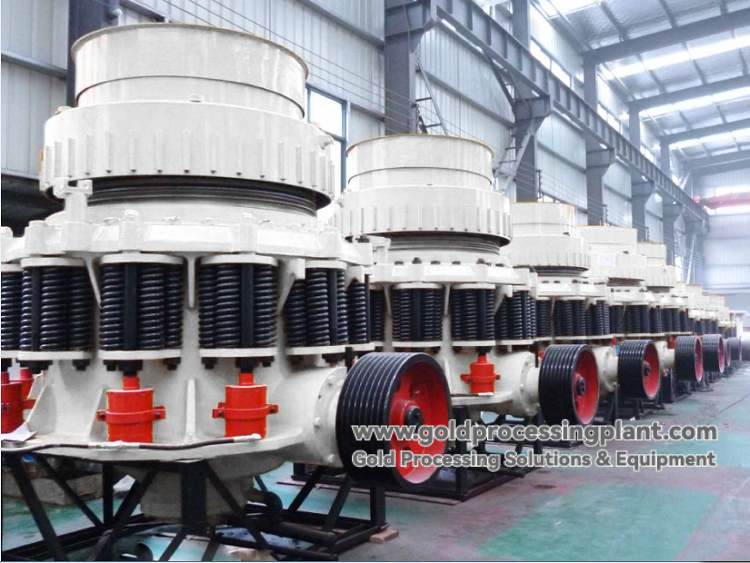
Crushing and Grinding Section: Jaw crusher for coarse crushing, cone crusher for medium and fine crushing, two-stage grinding with a grid-type ball mill followed by an overflow-type ball mill, and a closed-circuit system using hydrocyclones or spiral classifiers.Under fine grinding conditions, energy consumption and abrasion are high; therefore, the flow components require upgrades to enhance wear resistance.
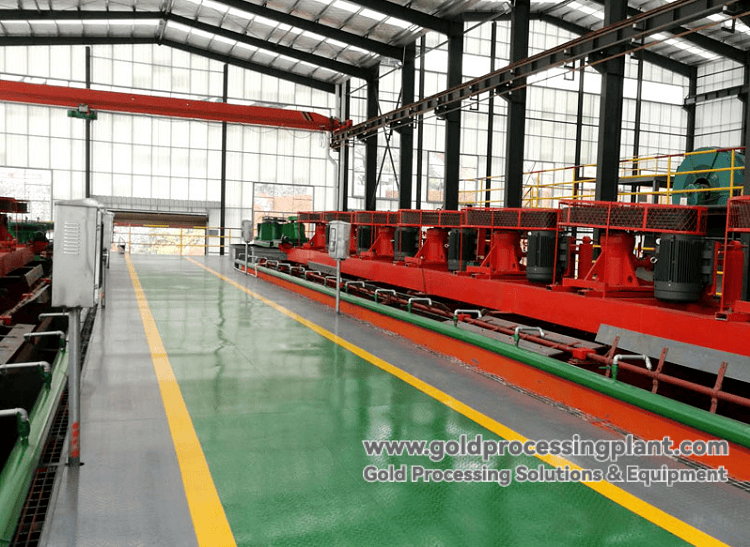
Flotation Section: SF-type (self-aspirating), XCF/KYF-type (aerated, preferred for large-scale operations), BF-type, and JJF-type flotation cells, configured as combined roughing, scavenging, and cleaning units;Accompanied by inhibitor, collector, and frother dosing systems; the chemical regimen for arsenic- and carbon-bearing ores requires specialized design.
Pre-treatment Section: Configured according to the process route—chemical pre-treatment includes agitation reaction tanks and chemical preparation systems; roasting includes roasting furnaces and flue gas treatment; pressurized oxidation includes autoclaves; biological oxidation includes bioreactors. This section requires high-grade materials (acid-resistant, corrosion-resistant, pressure-resistant) and must be custom-made.
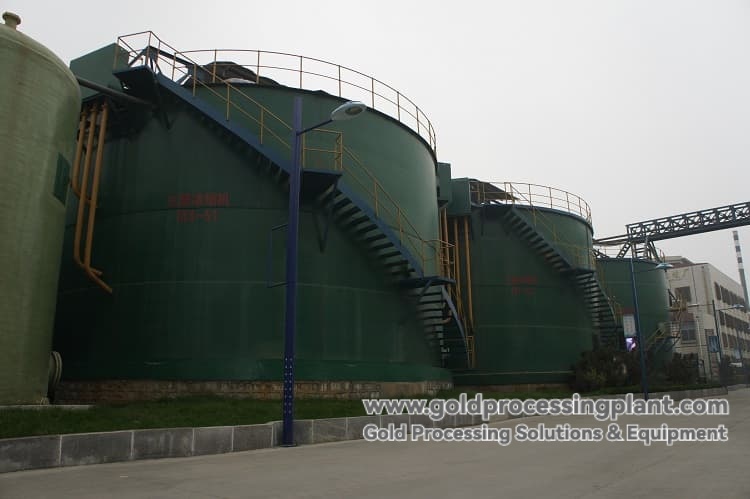
Carbon Leaching and Adsorption Section: Leaching tanks (with agitation and aeration), high-efficiency dual-impeller carbon leaching tanks, activated carbon adsorption systems, carbon separation screens, carbon lifters, and carbon lift pumps.
Desorption, Electrolysis, and Smelting Section: Ambient-temperature and -pressure or high-temperature and high-pressure desorption columns, electrolytic cells, and gold smelting furnaces, which can be integrated into skid-mounted units.
Concentration and Dewatering Section: High-efficiency thickeners, plate-and-frame filter presses (for dry tailings discharge and concentrate dewatering), and dewatering screens.
Auxiliary Systems: Slurry pumps, clean water pumps, circulating water systems, cyanide-containing wastewater treatment systems, power distribution and control systems; diesel generator sets can be integrated for overseas projects.
GoldProcessingPlant operates two major in-house manufacturing bases in Shandong and Jiangxi, where the aforementioned core equipment is manufactured in-house. Process engineers and mechanical engineers collaborate as a single team to ensure that equipment is manufactured according to process drawings, with precise interface matching and optimized production capacity.For the fine grinding of Carlin-type gold deposits and corrosive operating conditions involving arsenic and carbon, we offer custom solutions for equipment materials, agitator designs, and motor power ratings.
IV. Why Is “Professional Mineral Processing Technology” Key to the Development of Carlin-Type Gold Deposits?
The investment risks associated with Carlin-type gold deposits are far higher than those of conventional rock gold deposits—if the processing route is chosen incorrectly, the result is not merely “slightly lower recovery rates,” but rather “the gold cannot be leached out at all.” The value of professional mineral processing technology is reflected in four aspects:
First, testing determines the process route. Carlin-type gold deposits require systematic process mineralogy analysis and beneficiation testing: gold phase analysis to determine the degree of encapsulation; flotation tests to assess sulfide enrichment efficiency; comparative pretreatment tests to identify the economically viable route (reagent treatment, roasting, or oxidation); and carbon-in-leach (CIL) tests to establish leaching parameters.Without this data, any plan is a castle in the air.
Second, the choice of pre-treatment route directly determines the scale of investment. The investment gap between chemical pre-treatment and pressurized oxidation can be several-fold; the selection should be based on the degree of gold encapsulation and economic feasibility calculations, rather than the notion that “the more thorough, the better.”
Third, the integration of flotation and pretreatment must be evaluated holistically. If the flotation concentrate grade is high and the throughput is low, pretreatment investment is lower, but the loss in flotation recovery rate must be factored in; conversely, if the flotation recovery rate is increased and the concentrate volume grows, pretreatment investment rises. This balance must be determined through testing and economic analysis.
Fourth, parameter optimization during the commissioning phase determines the final performance metrics. Pre-treatment effectiveness, leaching time, cyanide concentration, activated carbon dosage, and pH control—each of these factors influences recovery rates. On-site engineers lead integrated commissioning tests using actual feed material and gradually optimize parameters; this is a critical step in transforming “test metrics” into “production metrics.”
The GoldProcessingPlant team consists of mineral processing engineers, metallurgical experts, mechanical designers, and a project management team. Core members have over 20 years of industry experience and possess specialized expertise in the pre-treatment and carbon-in-leach (CIL) processes for difficult-to-process arsenic- and carbon-bearing gold ores.We do not promise absolute figures divorced from the actual ore conditions; instead, we commit to: using test data to define the strategy, using process design to establish the workflow, ensuring implementation through equipment manufacturing, and dispatching engineers to the site to fine-tune operations until gold is recovered.
V. Implementation Path and Cooperation Models
Implementation Path for Carlin-Type Gold Mine Projects:
Step 1: Mineral Processing Testing and Process Validation. Samples are collected for multi-element chemical analysis, gold phase analysis, and grain size distribution analysis. We conduct fine grinding tests, open-circuit and closed-circuit flotation tests, comparative tests of pre-treatment routes, and comparative tests of carbon-in-leach (CIL) versus carbon-in-pulp (CIP) processes. The report includes a list of recommended equipment and a preliminary budget.
Step 2: Process Design and Engineering Drawings. Prepare process flow diagrams, equipment configuration lists, plant layout plans, equipment foundation drawings, and civil engineering requirement drawings.
Step 3: Equipment Manufacturing and Shipping. Manufacture core equipment, coordinate auxiliary materials, and conduct factory quality inspections; for overseas projects, plan shipping schedules in advance and allow for customs clearance lead time.
Step 4: Installation Guidance and Integrated Commissioning. Dispatch engineers to supervise equipment positioning, piping connections, and electrical installation; lead individual unit commissioning and integrated trial runs with feed material; optimize pre-treatment parameters, grinding fineness, reagent regimes, and leaching parameters until qualified gold is produced; and provide training to the client\'s team.
Reference Project Timeline: For standard projects, the timeline from the start of process design to production commencement is approximately 8–15 months. For Carlin-type gold deposits—where the process involves a multi-stage combination of fine grinding, flotation, pre-treatment, and carbon-in-leach (CIL)—the testing and commissioning periods are longer. Additional buffer time should be allocated for difficult-to-process ores, remote overseas mining sites, or projects involving a significant amount of non-standard customization.
GoldProcessingPlant does not require bundled services: clients may opt for mineral processing trials and process validation only; purchase process design or engineering drawings only; procure equipment only; or hire engineers for on-site commissioning only. Alternatively, a comprehensive EPC turnkey solution is available. Initial trial and design fees can be fully offset against the cost of subsequent equipment or EPC contracts.The warranty period is 12 months; during this period, spare parts are replaced free of charge for equipment quality issues. After the warranty expires, we continue to supply spare parts long-term and provide recommendations for process optimization.
When developing a Karine-type gold deposit, you\'re not just selecting a carbon-in-leach (CIL) system—you\'re choosing a team that first identifies where the gold is contained, determines the best method to extract it, and then tailors the process and equipment based on the data. GoldProcessingPlant—understand the ore first, then select the equipment.