


How to Select a Beneficiation Process for Iron-Bearing Gold Deposits? EPC Turnkey Solution for a Complete Beneficiation Plant Production Line
How to Select a Processing Method for Railway Construction-Type Gold Deposits? Turnkey EPC Solutions for Complete Mineral Processing Plant Production Lines
"Iron-bearing gold deposits" is not a standard genesis classification in industry literature;but in practice, it generally refers to gold deposits characterized by intense iron mineralization, where iron minerals (limonite, hematite, magnetite) are either associated with gold or act as cementing agents, and where iron-related alteration is prominent. These deposits are commonly found in iron-cap-type, tectonically altered rock-type, and certain contact metamorphic-type ore bodies.The defining characteristic of this type of deposit is “high iron content with gold as an impurity”: iron minerals may serve as gold carriers or associated minerals, but they can also interfere with gravity separation, flotation, and cyanidation processes.If the mineral processing process is selected incorrectly, either the iron minerals will “dilute” the gold into the iron concentrate, or cyanide and reagent consumption will be high while recovery rates remain low.This article focuses on the logic behind process selection for iron-hosted (iron-associated/iron-stained) gold deposits, explaining how to determine the process flow, configure equipment, and implement a complete EPC turnkey solution for the entire mineral processing plant production line.
I. First, Understand the Relationship Between “Iron” and “Gold”
The core of process selection for iron-bearing gold deposits lies in answering three questions:
First, what is the relationship between gold and iron? Is the gold hosted in the pores and fissures of limonite (a “iron-capped” characteristic, where gold is primarily in a free state), or is it encapsulated within sulfides and co-occurring with iron minerals (requiring flotation to concentrate gold-bearing sulfides), or is it associated with magnetite and other minerals but not closely bound (allowing iron to be recovered separately)?This determines whether gold recovery will follow a gravity separation, flotation, or cyanidation process.
Second, are the iron minerals a “carrier” or an “interference”? The porous structure of limonite facilitates leachate penetration, which is beneficial for cyanidation; however, excessively high iron mineral content dilutes the concentrate grade and increases transportation and smelting costs.When magnetite content is high, magnetic separation for iron recovery and comprehensive recovery may be considered; when hematite and limonite are present in large quantities, the focus shifts to gold recovery efficiency, with iron evaluated as a byproduct.
Third, what are the associated elements? The content of copper, arsenic, antimony, carbon, and sulfur directly determines whether direct cyanidation is feasible.Arsenic content requires suppression of arsenopyrite or separate flotation of arsenic-gold concentrate; carbon content requires pretreatment to eliminate the “gold-stealing” effect; high copper content increases cyanide consumption, necessitating an evaluation of whether to prioritize flotation or staged leaching.
These three questions must be answered through mineral processing tests: chemical multi-element analysis, gold phase analysis, iron phase analysis, and grain size distribution analysis, combined with gravity separation, flotation, magnetic separation, and cyanide leaching tests. Determining a process flow without test data is like a blind man feeling an elephant.
II. How to Select a Process Route? Four Main Approaches
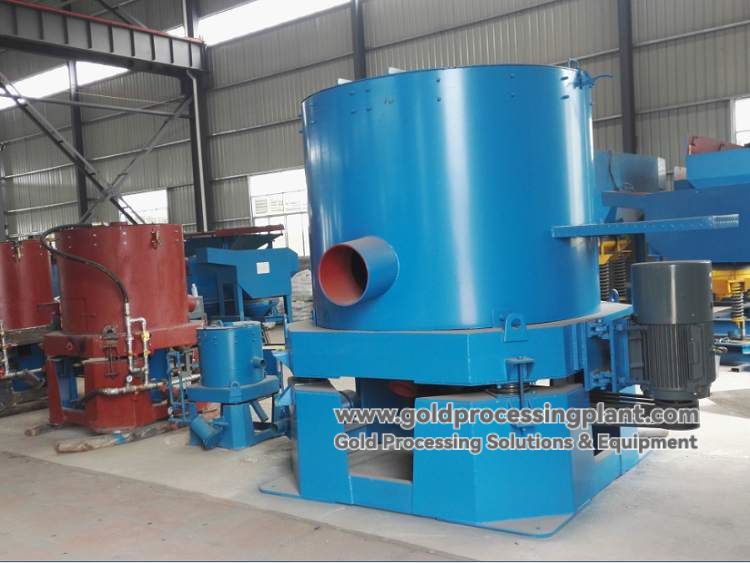
Route 1: Gravity separation combined with cyanidation (primarily iron cap or iron-stained oxidation types). Suitable for ore bodies where gold occurs in a free state within the pores and fractures of limonite, with a high degree of oxidation and few interfering elements.The grinding circuit is configured with a centrifugal separator to recover coarse-grained free gold in advance, while the gravity separation tailings are fed into CIL/CIP cyanide leaching to recover fine-grained gold. The porous structure of limonite is conducive to leaching; however, when clay content is high, enhanced ore washing and desliming are required, along with optimization of leaching parameters.
Route 2: Combined flotation and cyanidation (primarily for gold-bearing iron sulfides). This route is suitable for ore bodies where gold is hosted in gold-bearing sulfides such as pyrite and arsenopyrite, and is associated with iron minerals. Flotation is used to concentrate the gold-bearing sulfides to produce a gold concentrate, which is then sent for smelting or cyanide leaching; depending on the gold grade, flotation tailings may be re-processed or dewatered and discharged.In arsenic-bearing ore sections, arsenopyrite must be suppressed, or arsenic-gold concentrate must be floated separately to prevent arsenic from entering the cyanidation system and consuming cyanide.
Processing Route 3: Combined Gravity Separation and Flotation (coexistence of coarse-grained gold and gold-bearing sulfides). In the grinding circuit, gravity separation is used to capture coarse-grained gold, while flotation recovers gold-bearing sulfides; this is the most common combination for mercury-free retrofits and iron-bearing gold mines. It is suitable for ore bodies with quartz-iron alteration and complex gold occurrence patterns.
Option 4: Combined Magnetic Separation and Gold Recovery (Magnetite-Associated Type). If the ore contains a high proportion of magnetite that is not closely associated with gold, magnetic separation can be added to the process to recover iron concentrate. The magnetic separation tailings can then be processed via gravity separation, flotation, or cyanidation to recover gold, thereby achieving integrated iron-gold recovery and improving the project\'s economic viability.Magnetic separation equipment options include wet permanent magnet separators and high-gradient magnetic separators.
Criteria for Equipment Selection: Gold occurrence state (proportion of free gold, types of gold-bearing minerals), types and content of iron minerals, oxidation rate, associated elements, and proportion of coarse-grained gold. Different ore zones may require different processing routes; the design must be tailored to the specific ore zone composition and allow for flexibility.
III. Equipment Configuration for the Complete Processing Plant Production Line
Based on the above processing routes, the core equipment for a complete gold processing plant in an iron-bearing ore deposit includes:
Crushing and Screening: Jaw crusher (primary crushing), cone crusher (secondary and tertiary crushing), circular vibrating screen/linear vibrating screen, vibrating feeder, belt conveyor.
Ore Washing and Desliming (for clayey or iron-stained clay ore sections): Cylindrical ore washer/screw ore washer, trommel screen, high-frequency vibrating screen, hydrocyclone.
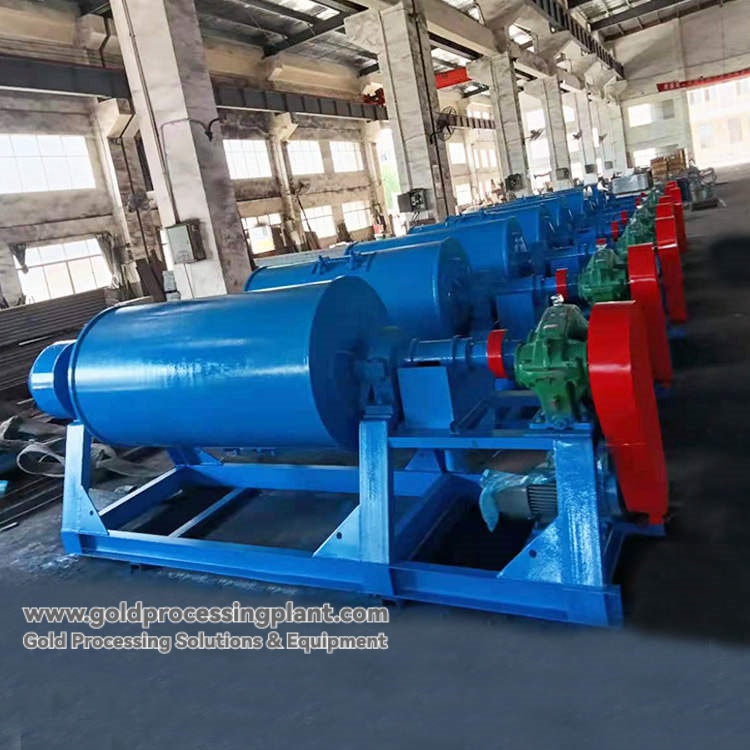
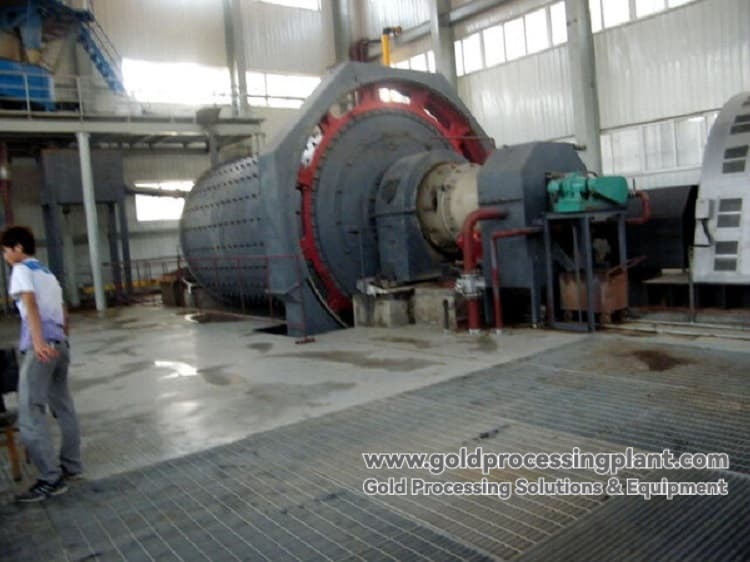
Grinding and Classification: Grid-type ball mill (first stage) + overflow-type ball mill (second stage) or single-stage configuration, paired with a spiral classifier or hydrocyclone in a closed-circuit system.
Gravity separation equipment: Centrifugal separators (for recovering coarse-grain gold from the grinding circuit), jigs, 6-S shaking tables/multi-deck shaking tables, spiral chutes.
Magnetic Separation Equipment (as needed): Wet/dry permanent magnet separators, high-gradient magnetic separators, used for magnetite recovery or iron removal.
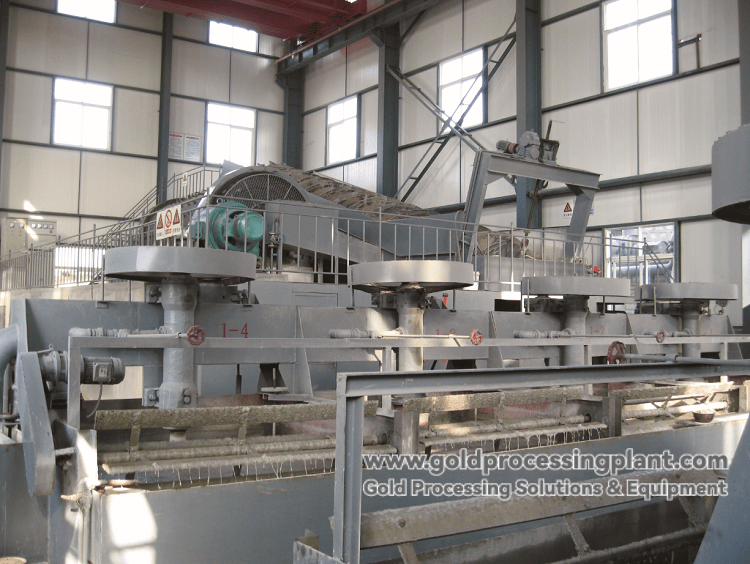
Flotation Equipment: SF-type, XCF/KYF-type, BF-type, and JJF-type flotation cells, configured as combined roughing, scavenging, and concentrating units.
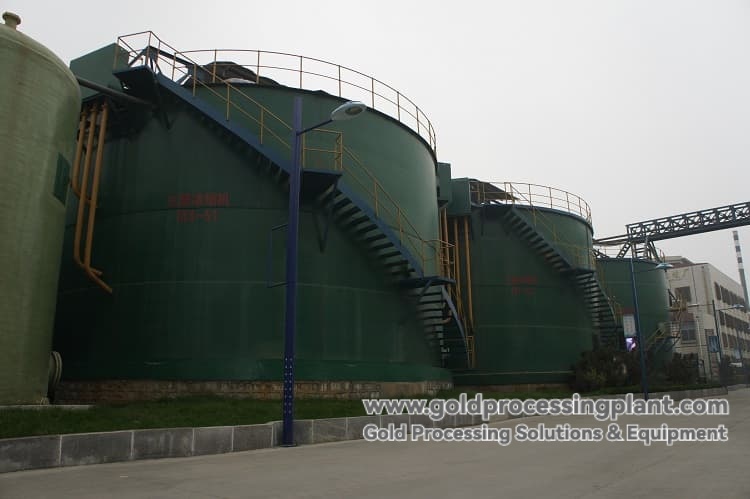
Leaching, Adsorption, and Desorption/Electrolysis (as needed): Leaching tanks, high-efficiency dual-impeller carbon-in-leach (CIL) tanks, activated carbon adsorption systems, carbon separation screens, carbon recovery units, desorption/electrolysis equipment, and gold smelting furnaces.
Thickening and Dewatering: High-efficiency thickeners, plate-and-frame filter presses (for dry tailings discharge and concentrate dewatering), and dewatering screens.
Auxiliary systems: Slurry pumps, carbon-recovery pumps, clean water pumps, circulating water systems, power distribution and control systems; diesel generator sets can be integrated for overseas projects.
GoldProcessingPlant operates two major in-house manufacturing bases in Shandong and Jiangxi, where the aforementioned core equipment is manufactured in-house. Process engineers and mechanical engineers collaborate as a unified team to ensure equipment is manufactured according to process drawings, with precise interface matching and optimized production capacity.For ferrous abrasive ores, flow components can be upgraded to high-chromium alloy or wear-resistant rubber; for acidic leaching environments, custom corrosion-resistant stainless steel or lined coatings can be provided.
IV. EPC Turnkey: Scope and Timeline of the Complete Mineral Processing Plant Production Line
For the EPC turnkey delivery of a complete mineral processing plant production line, the core principle is “we take full responsibility for what falls under our purview and provide advance briefings on what requires client cooperation”:
We are responsible for: process design and technical solutions (ore property analysis, process determination, reagent regimens); engineering design and drawings (site layout plans, equipment layout diagrams, civil engineering condition drawings); manufacturing of core equipment and supply of supporting components; on-site installation technical guidance; commissioning and personnel training; after-sales service and spare parts supply.
The client is responsible for: civil construction (organized according to civil engineering requirement drawings; complete architectural and structural construction drawings must be provided by a locally qualified design institute), organizing local installation workers (our engineers will provide on-site guidance on installation procedures), on-site “three utilities and one leveling” (water, electricity, and road access) as well as conditions for hoisting and commissioning, and local compliance procedures.
The economic rationale behind this division of labor: Sending a large number of workers from China to overseas sites—including airfare, visas, room and board, plus high daily wages—would significantly drive up construction costs; having the client organize local general installation workers while our engineers provide on-site technical guidance ensures construction standards are met while saving substantial labor costs.If there is truly no local construction workforce available, a turnkey solution can be negotiated separately and stipulated in the contract.
Project Timeline Reference: For standard projects, the timeline from the start of process design to production commencement is approximately 8–15 months—including 7–15 days for process design, equipment selection, and quotation; 20–30 days for engineering drawings; 60–120 days for equipment manufacturing; 30–60 days for logistics; and 60–150 days for installation and commissioning.For iron-ore-type gold mines, where the process may involve a multi-stage combination of gravity separation, magnetic separation, flotation, and cyanidation, commissioning requirements are high; therefore, it is recommended to allow for a more generous buffer period for testing and commissioning. For overseas projects, allow approximately 30 days as a buffer for customs clearance.
GoldProcessingPlant does not require bundled services: clients may opt to conduct mineral processing tests only, purchase process design or engineering drawings only, procure equipment only, or hire engineers for on-site commissioning only; alternatively, a comprehensive EPC turnkey solution is available. Initial testing and design fees can be fully offset against the cost of subsequent equipment or EPC contracts.
V. Quality Assurance: Metrics Are Based on Ore Characteristics; Liability Is Stipulated in the Contract
The recovery rate of a gold mine with iron-bearing ore is influenced by multiple factors, including the occurrence of gold, the types and content of iron minerals, grain size distribution, associated elements, and the proportion of coarse-grained gold; absolute commitments made without reference to test data are unreliable.GoldProcessingPlant commits to: designing a process for your ore that achieves the highest recoverable rate feasible under the given conditions through rigorous process validation and tailored design;Commissioning targets will be specified in the contract, with reasonable acceptance criteria agreed upon based on the same ore source and operating conditions; the warranty period is 12 months, during which spare parts will be replaced free of charge for equipment quality issues; after the warranty period expires, we will continue to supply spare parts long-term and provide process optimization recommendations.
Our projects span major global gold-producing regions, including Africa, South America, Central Asia, and Southeast Asia, with processing capacities ranging from 30 to 5,000 metric tons per day, covering bedrock gold, placer gold, difficult-to-process ores, and tailings reprocessing.Combined configurations of gravity separation, magnetic separation, flotation, and cyanidation for iron-bearing or iron-stained gold deposits are among our standard solutions.
When extracting gold from iron-bearing or iron-stained deposits, you\'re not just selecting a set of equipment—you\'re choosing a team that first clarifies the relationship between iron and gold, then determines the process flow, configures the entire line according to that flow, and guarantees production targets. GoldProcessingPlant—Understand the ore first, then select the equipment.