


Gold Tailings Leaching Plant—High-Efficiency Gold Extraction Equipment and Environmentally Friendly Processes—Professional Tailings Treatment Solutions
Gold Tailings Leaching Plant—High-Efficiency Gold Extraction Equipment and Environmentally Friendly Processes—Professional Tailings Treatment Solutions
Gold tailings ponds are often seen as a “burden” by many mine owners: piled up in quantities of tens of hundreds of thousands of metric tons or even millions, with low recovery rates from the original processing methods and tailings grades significantly higher than current discharge standards, they appear to be a dormant asset;But when it comes to actually re-processing them, there\'s a fear that the investment will go down the drain—what if the gold exists in a form that cannot be recovered? Building a leaching plant could end up creating yet another financial burden. The key to tailings reprocessing has never been to buy equipment first, but rather to answer one question: Can the gold in this batch of tailings still be recovered economically?This article begins with an assessment of the value of tailings reprocessing and clearly explains the high-efficiency gold extraction equipment, environmentally friendly processes, and implementation strategies for leaching plants.
I. Tailings Re-processing: Assess Value First, Then Consider Equipment
Whether gold tailings have value for reprocessing depends on four factors:
First, the grade and metal content of the tailings. When the recovery rate of the original beneficiation process was low (such as tailings left over from early gravity separation or simple flotation), the tailings grade is often significantly higher than current discharge standards, and the metal content is substantial; conversely, if the original process already achieved a high recovery rate, the tailings grade is close to the economic threshold, leaving limited room for re-processing.
Second, the form in which gold is present. This is the decisive factor. Gold in tailings may exist in three forms: First, free gold that was not liberated during the original processing, which can be recovered through gravity separation or flotation/cyanidation following regrinding;second, gold encapsulated within sulfides or gangue, which requires fine grinding or pretreatment to release it; and third, fine-grained gold that has been lost during processing, which is difficult and costly to recover. The form of occurrence must be determined through sampling, laboratory testing, and process mineralogy analysis.
Third, the feasibility of the re-processing method. Tailings are materials that have “already been ground and processed once”; they typically have a fine particle size and may exhibit a high degree of muddiness, resulting in different processing behavior compared to primary ore.Targeted re-processing tests are required: gravity separation tests (to recover free coarse-grained gold), flotation tests (to recover gold-bearing sulfides), cyanide leaching tests (to recover free fine-grained gold), and comparative studies of combined processes, using data to determine which route offers the optimal recovery rate and economic viability.
Fourth, environmental and regulatory constraints. Tailings pond reprocessing involves tailings reclamation, secondary discharge, and tailings water treatment; environmental permits, dry tailings disposal, and cyanide management must be designed concurrently. Environmental compliance is not a “financial burden,” but rather a prerequisite for the project\'s implementation.
GoldProcessingPlant\'s approach is as follows: First, we take samples from existing tailings for laboratory analysis. If gold with recovery value is present, we design a specialized reprocessing or retrofitting process; if the analysis confirms there is no economic value, we will honestly inform the client and will not blindly promote equipment.
II. Mainstream Process Routes for Gold Tailings Leaching Plants
The choice of process for tailings re-processing depends on the nature of the tailings and the form in which the gold is present. There are four common routes:
Route 1: Gravity Re-processing. Suitable for scenarios where coarse-grained free gold remains in the tailings (e.g., tailings from early-stage gravity separation where recovery was incomplete, or from chute or shaking table tailings).Recovery is achieved using a combination of centrifugal separators, jigs, and shaking tables. This process is simple, requires low investment, and incurs no chemical costs, serving as the “first line of screening” for tailings re-processing. The gravity concentration can be directly smelted or sold externally.
Route 2: Flotation followed by re-processing. Suitable for scenarios where gold in tailings is present in sulfides, or where tailings have a high sulfur content suitable for flotation. Gold-bearing sulfides are concentrated through flotation, and the resulting gold concentrate is sent for smelting or cyanidation. Since tailings have a fine particle size, regrinding or desliming may be required prior to flotation, and the reagent regimen must be adjusted accordingly.
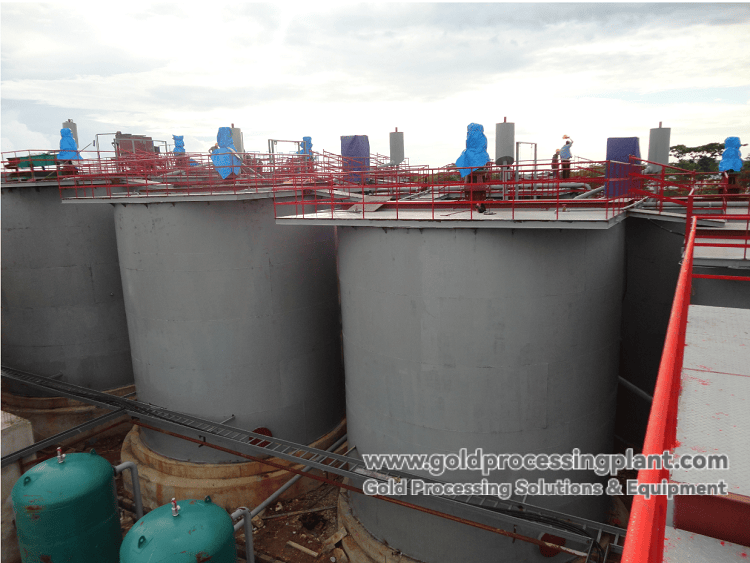
Route 3: Whole-slurry cyanide leaching (CIL/CIP). Suitable for scenarios where gold in the tailings is primarily in a free state, contains no interfering elements such as copper, arsenic, antimony, or carbon, and the particle size already meets leaching requirements.This is the core process of a “leaching plant”: tailings reclaiming and slurry preparation → thickening → leaching and adsorption → desorption and electrolysis → smelting. Fine tailings particle size actually benefits leaching kinetics; however, when sludge formation is severe, enhanced thickening and washing, as well as control of slurry rheology, are required.
Route 4: Combined Process. Recovering free coarse-grained gold via gravity separation first, followed by flotation or cyanidation to recover fine-grained gold and gold-bearing sulfides, is the most common high-recovery combination for tailings reprocessing. The selection of process nodes in the combined process—such as where to position gravity separation and whether to regrind and re-leach flotation tailings—determines the overall recovery rate; economic viability must be verified through pilot testing.
Special Cases: If the tailings contain arsenic and carbon and conventional leaching rates are low, additional pretreatment steps (such as pretreatment with proprietary reagents or oxidation) are required;If the tailings have low grade, a massive stockpile, and terrain conditions permit, the feasibility of heap leaching or pelletized heap leaching can be evaluated; however, column leaching tests are required to verify permeability and leaching rates.
III. Configuration of High-Efficiency Gold Extraction Equipment for Leaching Plants
Core equipment for gold tailings leaching plants is configured according to the process flow:
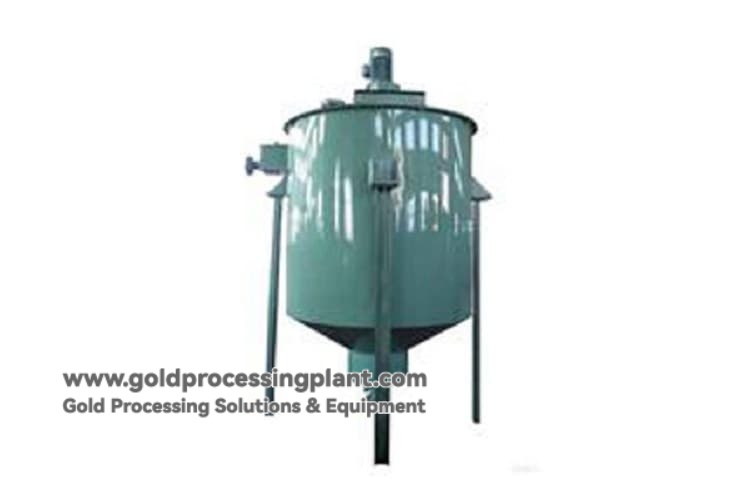
Tailings Retrieval and Slurry Conditioning: Tailings retrieval equipment (excavators/hydraulic retrieval), slurry conditioning tanks, de-contamination screens, and slurry pumps. Retrieved tailings often contain debris and agglomerates; the slurry conditioning and de-contamination steps cannot be omitted.
Gravity Separation Equipment: Centrifugal separators, jigs, 6-S shaking tables/multi-deck shaking tables, spiral chutes, and sand pumps.
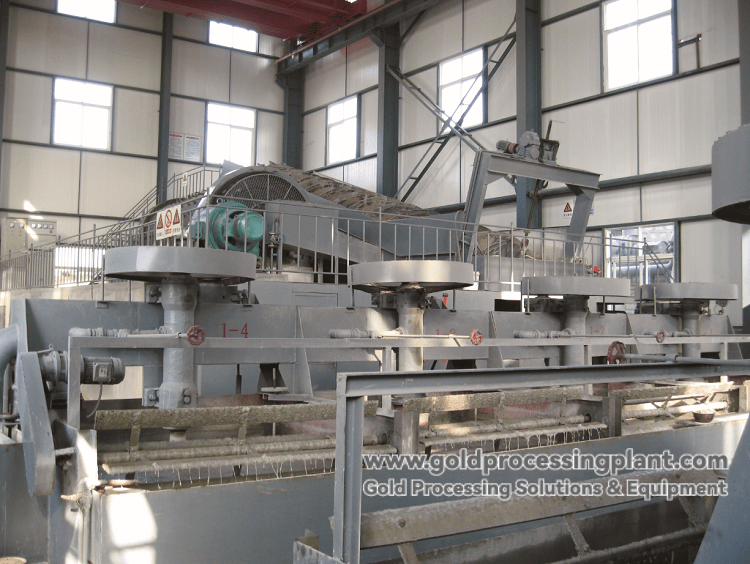
Floating Separation Equipment: SF-type, XCF/KYF-type, BF-type, and JJF-type flotation cells, configured into roughing, scavenging, and concentrating units; supporting regrinding equipment (as needed).
Leaching and Adsorption Equipment (CIL/CIP): Leaching tanks (with agitation and aeration), high-efficiency dual-impeller carbon-in-leach tanks, activated carbon adsorption systems, carbon separation screens, carbon lifters, and carbon lift pumps; the agitation configuration and anti-sludge design for slurried tailings must be tailored to specific requirements.
Desorption, Electrolysis, and Smelting: Ambient-temperature and ambient-pressure or high-temperature and high-pressure desorption columns, electrolytic cells, and gold smelting furnaces; can be integrated into skid-mounted units.
Concentration and Dewatering: High-efficiency thickeners (with flocculant addition), plate-and-frame filter presses (for dry tailings discharge), and dewatering screens.
Auxiliary Systems: Slurry pumps, clean water pumps, circulating water systems, chemical dosing systems, power distribution and control systems; diesel generator sets can be integrated for overseas projects.
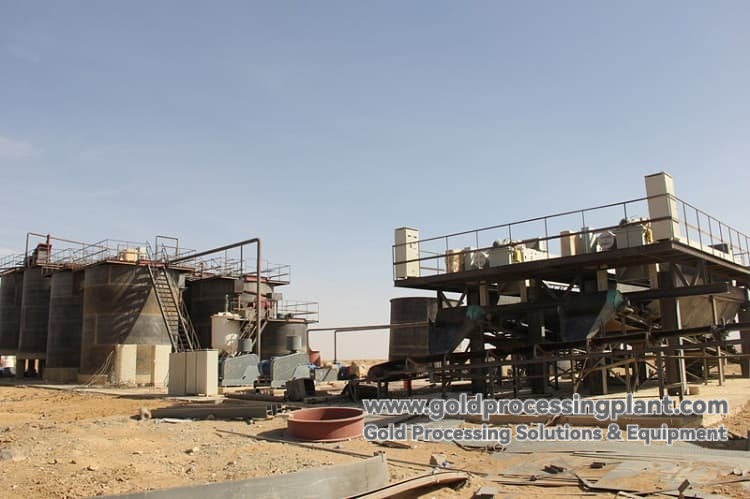
GoldProcessingPlant operates two major in-house manufacturing bases in Shandong and Jiangxi, where the aforementioned core equipment is manufactured in-house. Process engineers and mechanical engineers collaborate within the same team to ensure that equipment is manufactured according to process drawings, with precise interface matching and optimized production capacity.To address the characteristics of fine-grained, highly muddified tailings, targeted optimizations can be made to the agitation structure of leaching tanks, the selection of thickeners, and the configuration of filter presses.
IV. Environmental Protection Processes: Tailings Treatment Cannot Be Evaluated Solely on the Basis of Gold Returns
The environmental design of tailings reprocessing projects is just as important as the gold extraction process:
Dry Tailings Discharge. Tailings from the re-processing stage are concentrated and filtered to form filter cakes for dry discharge, reducing the land area required for tailings dams and the risk of dam failure, while filtrate is recovered and recycled. This is the current mainstream approach to tailings treatment and a key focus of environmental approval processes.
Tailings Water and Cyanide Management. The precious liquid and tailings water from the cyanide leaching system must be circulated in a closed loop. Cyanide-containing wastewater must be treated in accordance with regulations (e.g., alkaline chlorination, hydrogen peroxide methods), and after meeting discharge standards, it may be reused or discharged; chemical storage, conveyance, and emergency storage tanks must be configured in accordance with regulations.
Dust and Noise Control. Dust collection systems must be installed in the crushing, screening, and conveying processes, and noise-reducing and vibration-damping devices must be added to high-noise equipment.
Safety in Tailings Dam Reclamation. Tailings reclamation requires an assessment of dam stability and reclamation sequence to avoid damaging the tailings dam structure; reclamation plans should be advanced in tandem with environmental protection and safety procedures.
Resource Recovery. After gold extraction, certain tailings may be evaluated for resource recovery applications, such as raw materials for construction or backfill, thereby reducing the final stockpile volume.
Environmental protection measures are not optional extras; rather, they are prerequisites for the approval and long-term, stable operation of tailings reprocessing projects. Dry discharge, water treatment, and reclamation safety must be considered together during the design phase, rather than addressed after production begins.
V. Implementation Pathways and Project Timeline
Implementation Path for Gold Tailings Re-processing Projects:
Step 1: Tailings Sampling and Value Assessment. Samples are collected from different areas and depths of the tailings dam. Grade analysis, gold phase analysis, and particle size analysis are conducted to determine the feasibility of reprocessing.
Step 2: Re-processing Trials and Process Validation. Conduct comparative trials of gravity separation, flotation, cyanide leaching, and combined processes to determine recovery rates, specific reagent consumption, and product specifications. The report should include a list of equipment selections and a preliminary budget.
Step 3: Process Design and Engineering Drawings. Prepare process flow diagrams, equipment configuration lists, plant layout plans, equipment foundation drawings, and civil engineering requirement drawings, while simultaneously completing the environmental protection process design.
Step 4: Equipment Manufacturing and Shipping. Manufacture core equipment, coordinate auxiliary materials, and conduct factory quality inspections; for overseas projects, plan shipping schedules in advance and allow for customs clearance lead time.
Step 5: Installation Guidance and Integrated Commissioning. Dispatch engineers to oversee equipment positioning, piping connections, and electrical installation; lead individual unit commissioning and integrated trial runs with feed material; optimize leaching parameters and reagent regimens until qualified gold or gold concentrate is produced; and provide training to the client\'s team.
Project Timeline Reference: Tailings reprocessing projects typically take approximately 8–15 months from the start of process design to production, depending on the scale of tailings processing, process complexity, and the progress of environmental approval procedures. Tailings recovery and environmental engineering may constitute the critical path of the project schedule; early planning is recommended.
GoldProcessingPlant does not require bundled services: clients may opt for tailings sampling, analysis, and re-processing trials only; purchase process design or engineering drawings only; procure equipment only; or hire engineers for on-site commissioning only. Alternatively, a comprehensive EPC turnkey solution is available.Preliminary testing and design fees can be fully offset against the cost of subsequent equipment or EPC contracts.
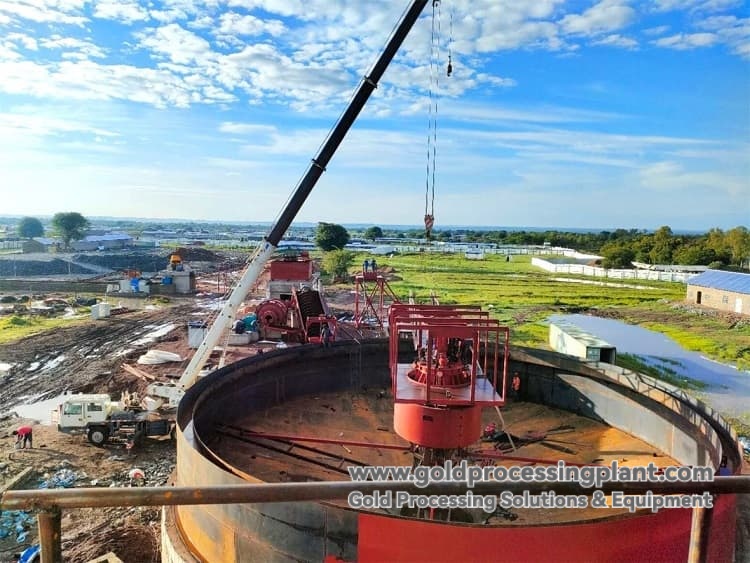
VI. Quality Assurance: Assess Value First, Then Commit to Targets
The recovery rate for tailings re-processing is influenced by multiple factors, including tailings grade, gold occurrence, particle size distribution, degree of siltying, and associated elements; performance indicators may vary significantly across different tailings ponds and regions.GoldProcessingPlant does not commit to absolute figures divorced from test data. Instead, we commit to the following: First, we conduct sampling, laboratory analysis, and reprocessing tests to assess feasibility based on data; we will only design the process and select equipment if recovery is economically viable. If our assessment confirms there is no economic value, we will inform you honestly and will not engage in blind sales.Commissioning objectives are specified in the contract, with reasonable acceptance criteria agreed upon based on the same ore source and operating conditions; the warranty period is 12 months, during which spare parts are replaced free of charge for equipment quality issues. After the warranty period expires, we continue to supply spare parts long-term and provide recommendations for process optimization.
Our projects span major global gold-producing regions, including Africa, South America, Central Asia, and Southeast Asia, with processing capacities ranging from 30 to 5,000 metric tons per day. We handle ore gold, placer gold, difficult-to-process ores, and tailings reprocessing. Tailings are not waste; they are resources in the wrong place—but only if we assess them first before taking action.
When selecting a gold tailings leaching plant, you\'re not just choosing a set of leaching equipment—you\'re choosing a team that first helps you determine whether your tailings are worth processing and then designs gold recovery and environmental solutions based on that data. GoldProcessingPlant—understand the ore first, then select the equipment.