


Processing of Conglomerate-Type Gold Ore—High-Efficiency Gold Extraction Processes and Equipment Solutions—Customized for Professional Mineral Processing Plants
Processing of Conglomerate-Type Gold Deposits—High-Efficiency Gold Extraction Processes and Equipment Solutions—Customized for Professional Mineral Processing Plants
Conglomerate-type gold ore is a category within the gold ore family that is “easily misjudged by its appearance.”Conglomerate itself is a product of tectonic activity or volcanic processes, and the ore consists of conglomerate fragments of varying sizes and cementing material—gold may be present within the fragments or concentrated in the cementing material; the cementing material may be siliceous, ferrous, argillaceous, or carbonate.This “dual-host + variable composition” structure means that within the same ore body, gold grades and occurrence patterns in conglomerate-type gold deposits can fluctuate significantly. Selecting equipment and determining processes based on a single ore type can easily lead to a situation where “as soon as a new section is mined, the indicators drop.”This article focuses on the processing logic of conglomerate-type gold deposits to clarify how to determine efficient gold extraction processes, configure equipment solutions, and customize processing plants.
I. Ore Characteristics and Processing Challenges of Conglomerate-Type Gold Deposits
The typical characteristics of brecciated gold deposits can be summarized in four points:
Structurally, they consist of a dual matrix of “conglomerate + cement.” The conglomerate has a complex composition; it may consist of early-stage country rock, early-stage mineralization bodies, or hydrothermal replacement products. The cement fills the spaces between the conglomerate grains, with compositions ranging from siliceous and ferrous to clayey and carbonate.The location of gold enrichment is often closely related to the type of cement—gold is more clearly enriched in ferrous and siliceous cements, while clay-rich cements tend to cause interference during mineral processing.
The occurrence of gold is highly variable. Gold may occur in a free state within the fractures of the gravel and the pores of the cement, or it may be encapsulated in the form of micro-gold or submicroscopic gold within sulfides (such as pyrite and arsenopyrite) or siliceous cement. The coexistence of coarse-grained and fine-grained gold is common.
It is often associated with sulfides and clay-rich material. The presence of gold in sulfides indicates that flotation is a viable processing route; however, when the content of clay-rich cement is high, slurry viscosity increases, grinding sludge formation worsens, and flotation foam quality deteriorates, presenting processing challenges similar to those encountered with clay-bearing gold ores.
Grade and properties within the ore body fluctuate significantly. The composition of the breccia and the type of cementing material may vary markedly across different breccia zones and at different depths; therefore, the adaptability of the processing plant\'s workflow must be ensured through ore blending and parameter adjustments.
This corresponds to the following processing challenges:
- Gold is unevenly distributed, and a single process cannot achieve complete recovery. Coarse-grained gold within the breccia is recovered early via gravity separation, while fine-grained gold and gold-bearing sulfides within the cement are recovered via flotation or cyanidation; a combined process is the norm.
- The type of cementation determines the process flow. If siliceous or ferrous cementation predominates, flotation or cyanidation proceeds relatively smoothly; if clay-based cementation predominates, it is essential to first intensify ore washing to remove clay and optimize grinding fineness; otherwise, the entire subsequent process will be disrupted.
- Oscillations in ore quality require the process to have adjustment margins. When designing the plan, it is essential to consider the differences in properties among various ore sections and to allow for operational adjustments and the possibility of localized process switching.
II. How to Determine a High-Efficiency Gold Recovery Process?
There is no “one-size-fits-all” process for brecciated gold deposits; the recommended approaches are based on ore characteristics:
Route 1: Combined gravity separation and flotation. Suitable for ore sections where gold is primarily in a free state, coarse-grained gold coexists with gold-bearing sulfides, and the cemented material is predominantly siliceous or ferrous.The grinding circuit is equipped with a centrifugal separator (such as a Nelson centrifuge) or a jig to recover coarse-grained free gold in advance; the gravity concentration concentrate is further refined on shaking tables before being sent for smelting or sold externally;The gravity separation tailings are fed into the flotation circuit, where gold-bearing sulfides are floated using a “one rough, two clean, two scavenger” or “one rough, three clean, three scavenger” process. The resulting gold concentrate is sent for smelting or cyanidation. This is the most commonly used main process for brecciated gold deposits.
Route 2: Combined flotation and cyanidation. This is suitable for ore bodies where gold is primarily hosted in sulfides and flotation can effectively concentrate gold-bearing minerals. After gold concentrate is produced by flotation, it undergoes cyanide leaching (CIL/CIP) or is sold directly for smelting; flotation tailings are either re-processed or directly dewatered and discharged, depending on the gold grade.In ore sections containing arsenic, realgar must be suppressed during flotation, or arsenic-gold concentrate must be floated separately to prevent arsenic from entering the subsequent cyanidation system and consuming cyanide.
Option 3: Whole-ore cyanidation (CIL/CIP). This method is suitable for ore bodies with a high degree of oxidation, where gold is primarily in a free state, and which do not contain interfering elements such as copper, arsenic, antimony, or carbon, and have simple cemented material. The process consists of crushing and grinding → thickening → leaching and adsorption → desorption and electrolysis → smelting.If the slurry contains a high proportion of cemented material, pre-treatment washing to remove slime is required, along with optimization of leaching parameters.
Route 4: Combined gravity separation + flotation + cyanidation. Suitable for complex ore sections where coarse and fine grains coexist and recovery rates cannot be met by a single process. The process flow is lengthy, involves numerous pieces of equipment, and requires extensive commissioning, but it offers the strongest safety net for recovery rates.
Criteria for route selection: Gold-mineral phase analysis (proportions of free gold, gold encapsulated in sulfides, and gold encapsulated in gangue), types of gold-bearing minerals, composition and clay content of cemented material, associated elements (arsenic, carbon, antimony, copper), oxidation rate, and proportion of coarse-grained gold.These data must be derived from mineral processing tests—since there are significant variations among different ore bodies in conglomerate-type gold deposits, sampling must ensure the representativeness of the ore blend. It is best to conduct separate tests for each ore body and then comprehensively determine the main process flow and adjustment plan.
III. How Should the Equipment Configuration Be Determined?
Based on the above process flow, the core equipment configuration for a conglomerate-type gold ore processing plant includes:
Crushing and Screening: Jaw crusher (primary crushing), cone crusher (secondary and tertiary crushing), circular vibrating screen/linear vibrating screen, vibrating feeder, belt conveyor.For hard rock breccias, the “jaw crusher + cone crusher” combination is preferred, as it produces a uniform particle size and offers good wear resistance.
Ore Washing and Desliming (mandatory for clay-cemented ore sections): Cylindrical ore washer/spiral ore washer, trommel screen, high-frequency vibrating screen, and hydrocyclone. Clay-cemented material must be removed before grinding to prevent slurry interference throughout the entire process.
Grinding and Classification: Grid-type ball mill (first stage, forced discharge, resistant to over-grinding) + overflow-type ball mill (second stage, fine grinding) or a single-stage configuration, paired with a spiral classifier or hydrocyclone in a closed-circuit system. The grinding fineness is determined based on gold liberation tests.
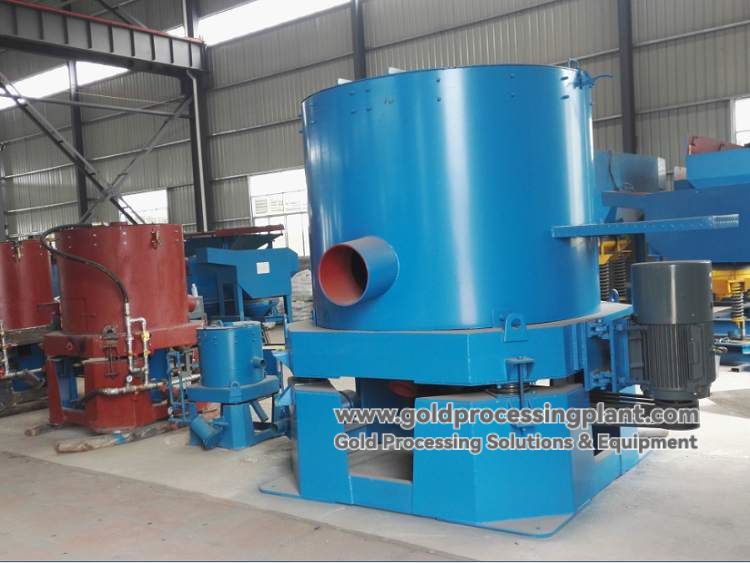
Gravity Separation Equipment: Centrifugal separators (primary equipment for recovering coarse-grain gold from the grinding circuit), jigs, 6-S shaking tables/multi-deck shaking tables (refining), and spiral chutes (roughing and tailings disposal).
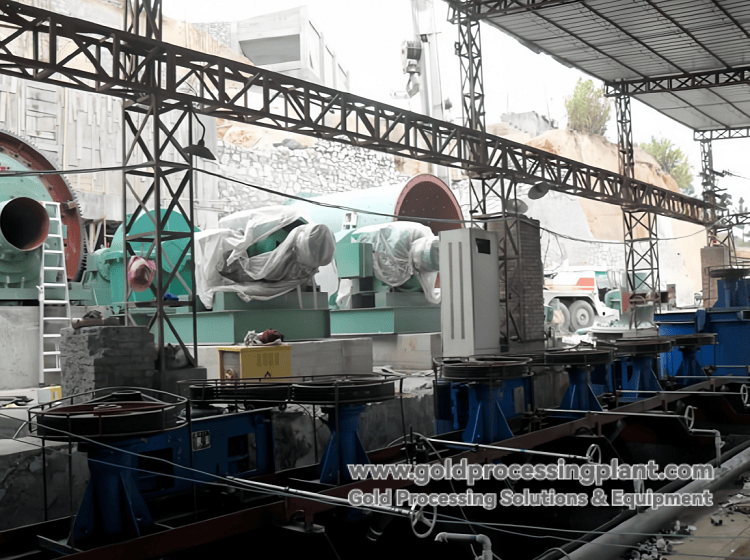
Flotation Equipment: Full series of SF-type (self-suction pulp), XCF/KYF-type (air-agitated, preferred for large-scale operations), BF-type, and JJF-type machines, configured into roughing, scavenging, and concentrating units; sections processing arsenic-bearing ore must be equipped with corresponding inhibitor dosing systems.
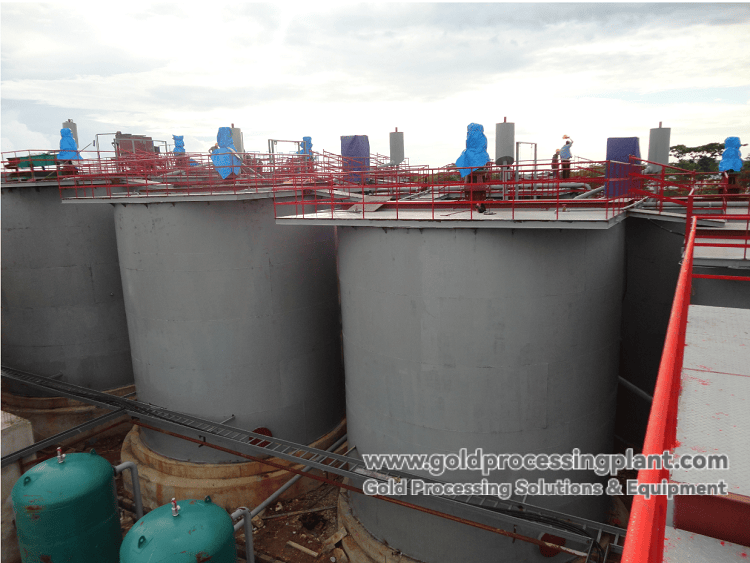
Cyanide Leaching and Adsorption (configured as needed): Leaching tanks, high-efficiency dual-impeller carbon-in-leach tanks, activated carbon adsorption systems, carbon-separating screens, carbon recovery units, desorption and electrolysis equipment, and gold smelting furnaces; for slurry-type ore sections, the agitation method, aeration method, and anti-sludge-building design of leaching tanks must be specifically configured.
Concentration and Dewatering: High-efficiency thickeners (with flocculant addition for slurry-type ores), plate-and-frame filter presses (for dry tailings discharge and concentrate dewatering), and dewatering screens.
Auxiliary Systems: Slurry pumps, carbon-recovery pumps, clean water pumps, circulating water systems, power distribution and control systems; diesel generator sets may be integrated for overseas projects.
GoldProcessingPlant operates two major in-house manufacturing bases in Shandong and Jiangxi, where the aforementioned core equipment is manufactured in-house. Process engineers and mechanical engineers collaborate within the same team to ensure that equipment is manufactured according to process drawings, with precise interface matching and seamless integration of production capacities.To address the variability of ore from brecciated gold deposits, design flexibility is incorporated: the number of flotation stages can be adjusted based on the ore body, the placement of gravity separation equipment can be optimized according to the proportion of coarse-grained gold, and leaching parameters can be adjusted based on the clay content.Wear-resistant materials are upgraded for high-silica, abrasive ores, and corrosion-resistant customizations are implemented for acidic leaching environments.
IV. Customized Specialized Mineral Processing Plants: The Path from Ore Sample to Gold Production
The customization of a processing plant for conglomerate-type gold deposits proceeds in five steps:
Step 1: Mineral Processing Testing and Process Validation. Representative ore samples are collected from each ore body to conduct multi-element chemical analysis, gold phase analysis, and grain size distribution analysis. This is followed by gravity separation tests, open-circuit/closed-circuit flotation tests, and cyanide leaching tests (including CIL/CIP comparisons). Where necessary, ore washing and desliming tests, as well as sedimentation performance tests, are conducted.The test report includes a list of selected equipment and a preliminary budget.
Step 2: Process Design and Engineering Drawings. Based on the test data, we produce process flow diagrams, equipment configuration lists, plant layout plans, equipment foundation drawings, and civil engineering requirement drawings. We also provide operating adjustment ranges and technical briefings to account for ore variability.
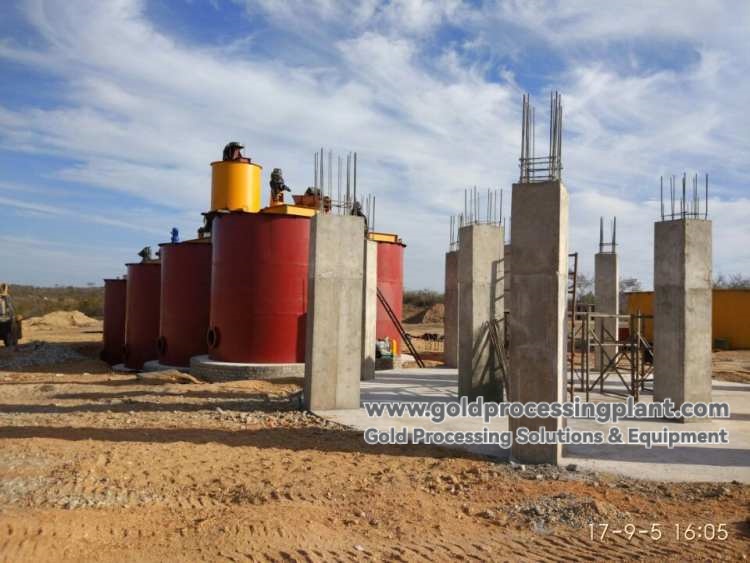
Step 3: Equipment Manufacturing and Modular Supply. Production of core equipment, coordination of supporting auxiliary materials, and factory quality inspection.A gold ore processing plant for brecciated gold deposits can be broken down according to a modular approach—crushing, grinding and classification, flotation, leaching and adsorption, desorption and electrolysis, and power distribution and control modules are prefabricated in the factory and rapidly assembled on-site, shortening the construction period and ensuring quality control.
Step 4: Installation Guidance and Integrated Commissioning. On-site engineers will guide equipment positioning, pipeline connections, and electrical installation; lead individual unit commissioning and integrated trial runs with actual feed; and optimize grinding fineness, flotation reagent regimes, gravity separation parameters, and leaching parameters until qualified gold concentrate or blended gold is produced. They will also train the client\'s team and explain key points for parameter adjustments across different ore sections.
Step 5: Long-Term Technical Support. The warranty period is 12 months; during this period, spare parts are replaced free of charge for equipment quality issues. After the warranty expires, we continue to supply spare parts and provide process optimization recommendations—addressing changes in ore properties, fluctuations in reagent costs, and variations in recovery rates—while continuously supporting the client in making adjustments.
GoldProcessingPlant does not require bundled services: clients may opt for mineral processing trials only, purchase process designs or engineering drawings only, procure individual units or complete equipment sets only, or hire engineers for on-site commissioning only; a full-scale EPC turnkey solution is also available. Initial trial and design fees can be fully offset against the cost of subsequent equipment or EPC contracts.For standard projects, the timeline from the start of process design to production commencement is approximately 8–15 months; the total project duration can be shortened by appropriately overlapping various phases. A buffer period is included for customs clearance in overseas projects.
V. Quality Assurance: Performance metrics are based on the specific ore; we reject cookie-cutter solutions
The recovery rate for conglomerate-type gold deposits is influenced by multiple factors, including the type of conglomerate and cementing material, the state of gold occurrence, gold-bearing minerals, clay content, associated elements, and the proportion of coarse-grained gold; performance metrics may vary significantly between different ore sections.GoldProcessingPlant does not commit to absolute figures divorced from test data; rather, we commit to: conducting tests by ore section, defining processes based on data, and configuring equipment according to those processes—all to design a solution that achieves the highest recoverable rate feasible under your specific conditions;Commissioning objectives are specified in the contract, with reasonable acceptance criteria agreed upon based on the same ore source and operating conditions; the design of the solution allows for flexibility to accommodate ore variations, and the operational boundaries are clearly communicated to the client\'s team during training.
Our projects span major global gold-producing regions, including Africa, South America, Central Asia, and Southeast Asia, with processing capacities ranging from 30 to 5,000 metric tons per day. We handle rock gold, placer gold, difficult-to-process ores, and tailings reprocessing.The configuration of integrated processing flowsheets and customized plant designs for structurally altered gold deposits—such as brecciated deposits—are precisely our core strengths.
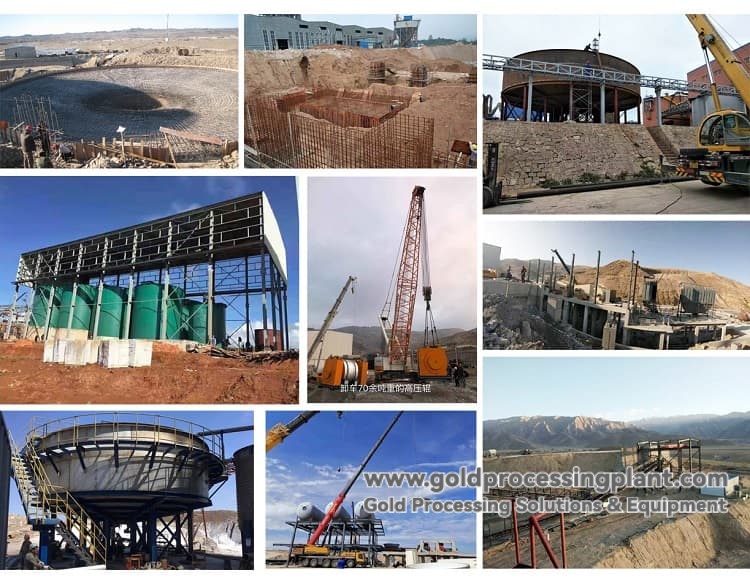
When processing conglomerate-type gold deposits, you\'re not just selecting a set of equipment—you\'re choosing a team that first identifies the characteristics of gold in both the conglomerate and the cementing material, then determines the process flow and customizes the processing plant accordingly. GoldProcessingPlant—Understand the ore first, then select the equipment.