


How Should Modular Equipment Be Configured for a Small-Scale Gold Ore Processing Plant? CIP Production Line Solution with a Daily Capacity of 50 Metric Tons
How Should Modular Equipment Be Configured for a Small-Scale Gold Ore Processing Plant? A CIP Production Line Solution with a Daily Capacity of 50 Metric Tons
Small-scale gold ore processing plants are the scenarios most prone to being severely undermined by the “build-it-like-a-large-plant” mindset.For a 50-metric-ton-per-day operation, if you simply copy the configuration logic of a plant handling several hundred metric tons—large buildings, massive tanks, and full automation—the payback period will be extremely long. Conversely, if you merely piece together individual machines to save money, incompatible interfaces and leaching that fails to meet standards will still prevent you from producing gold.A 50 metric tons per day capacity falls within the ideal range for modular processing plants: equipment specifications are moderate, components can be prefabricated in a factory and quickly assembled on-site, investment costs are manageable, and commissioning is fast. This article explains the configuration logic for a 50 metric tons per day CIP production line, detailing how to break down modules, match equipment, and define EPC responsibilities.
I. Clarifying the Prerequisites: What Kind of Ore Is Suitable for a 50 metric tons per day Plant?
A small-scale processing plant with a capacity of 50 metric tons per day typically corresponds to three scenarios: small-scale bedrock gold deposits, centralized processing of dispersed ore sites, and preliminary pilot production (building a small plant first to validate the process, followed by later expansion).CIP (carbon-in-pulp) is suitable for ores with a high degree of oxidation, where gold is primarily in a free state, and which do not contain severe interfering elements such as copper, arsenic, antimony, or carbon; if the ore contains arsenic, carbon, or antimony, pretreatment tests must be conducted first—CIP cannot be applied directly.
Key Prerequisite: Conduct mineral processing tests before selecting equipment. Although a 50 metric tons per day scale is small, the process logic cannot be overlooked—grinding fineness, leaching time, cyanide concentration, and activated carbon consumption must be determined based on leaching test data from representative ore samples. The test report should include a list of selected equipment and a preliminary budget to avoid the approach of “buying equipment first and figuring out the process later.”
II. Modular Breakdown of a 50 metric tons per day CIP Production Line
The core of the CIP process is “leaching first, adsorption later.” The flow sequence is: crushing → grinding and classification → thickening → serial leaching in multiple tanks → carbon addition in the adsorption tank → separation of gold-loaded carbon → desorption and electrolysis → smelting. In terms of modular configuration, this can be broken down into six modules:
Module 1: Crushing Module. Primary crushing using a jaw crusher (e.g., the PE series small jaw crusher) + vibrating feeder + belt conveyor, with the final particle size meeting the feed requirements for grinding. For a 50 metric tons per day scale, single-stage crushing is typically sufficient; an additional fine-crushing stage may be added if the ore has high hardness.The crusher and feeder can be integrated into a steel frame, which is installed on-site on a foundation and connected via interfaces.
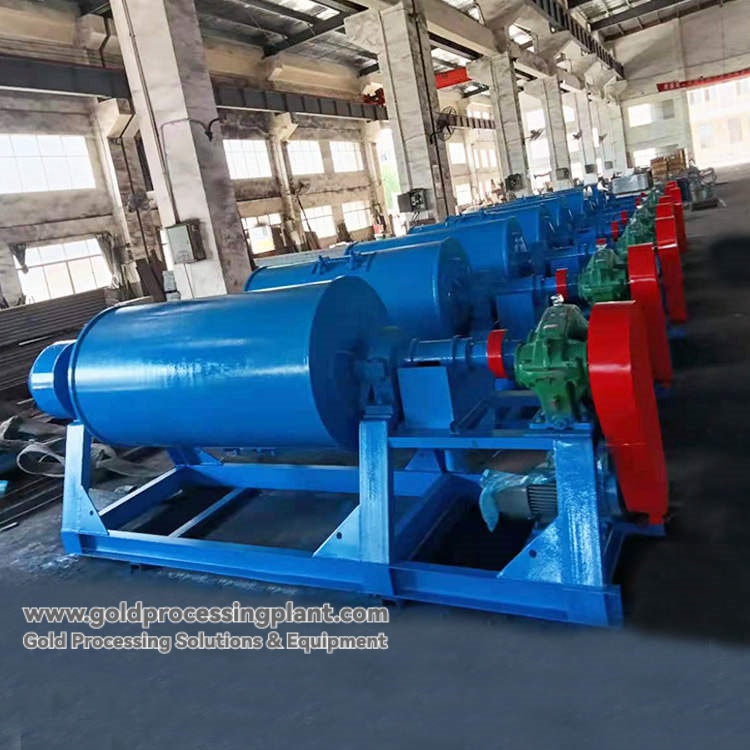
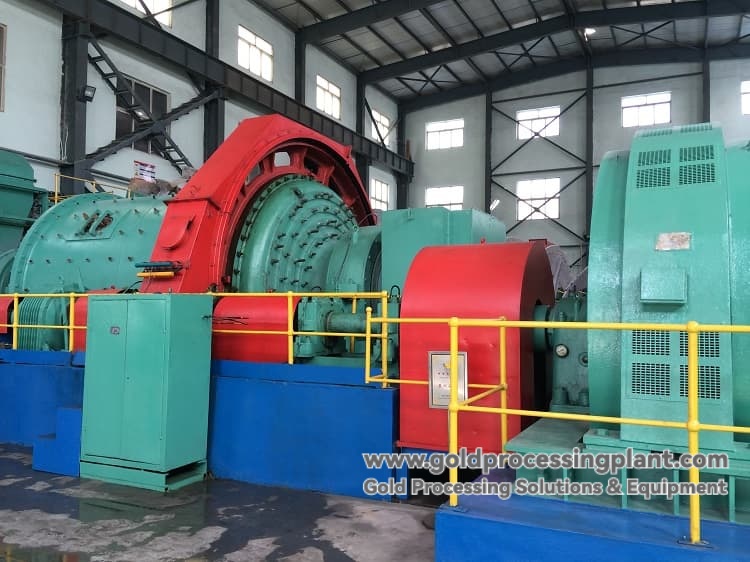
Module 2: Grinding and Classification Module. A small ball mill (grate type, with forced discharge and resistance to over-grinding) + a spiral classifier or a small hydrocyclone in a closed-circuit system.The grinding fineness is determined by testing; typically, the -200 mesh fraction accounts for 65%–80%. The grinding module has high requirements for foundation load-bearing capacity and alignment; it is supplied in a modular configuration consisting of “equipment + base + local piping,” with the foundation poured on-site.
Module 3: Thickening Module. A small, high-efficiency thickener (or inclined-tube thickener) concentrates the overflow from the grinding and classification process to the appropriate leaching concentration; the overflow is recycled. For a 50 metric tons per day capacity, the thickener\'s diameter is relatively small, allowing it to be shipped as a single unit or in sections.
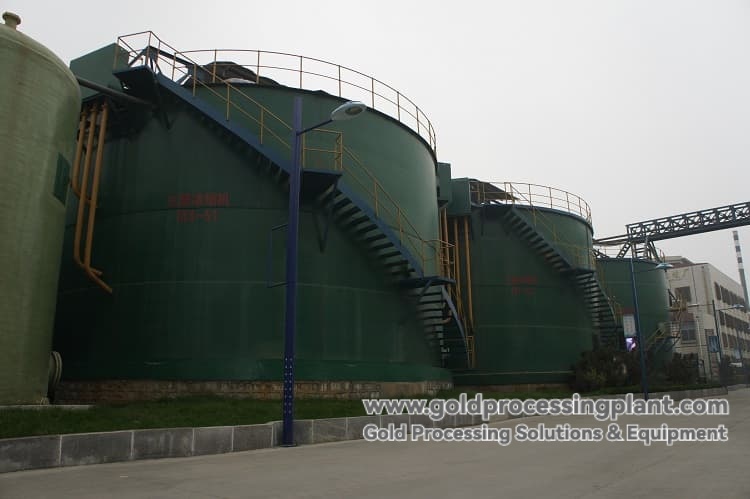
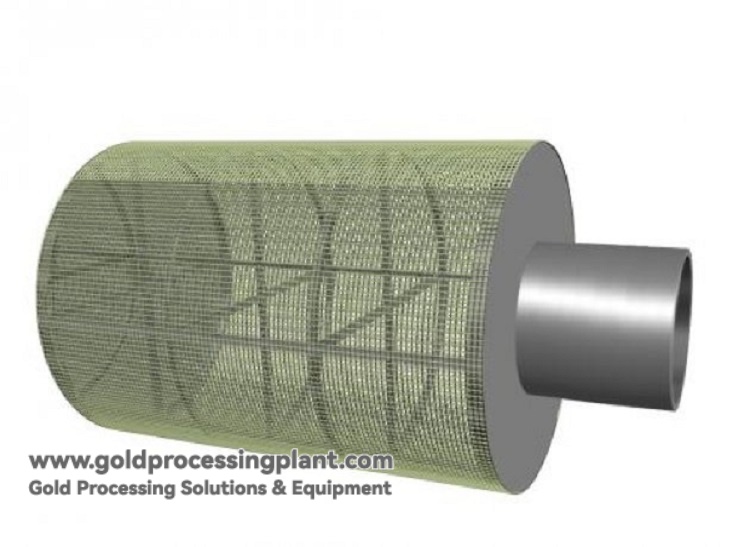
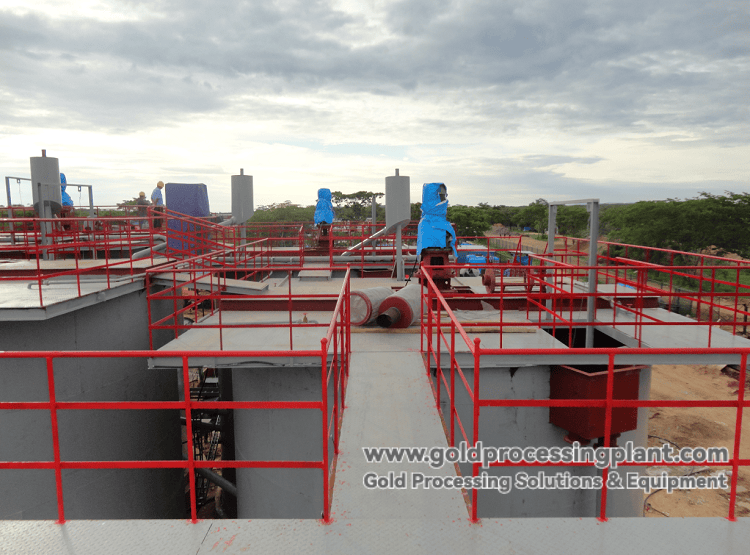
Module 4: Leaching and Adsorption Module (CIP Core). A series of leaching tanks (equipped with agitation and aeration, typically 4–6 tanks) + adsorption tank (with activated carbon) + carbon separator screen + carbon extractor + carbon extraction pump.A key feature of the CIP process is that the solution enters the adsorption tank only after leaching is complete, allowing for a more thorough leaching process. This module contains a dense network of piping and valves, making it the most suitable component for factory pre-integration—the leaching tanks, adsorption tanks, piping, valves, and instruments are pre-assembled and tested at the manufacturing facility; upon arrival at the site, they are positioned according to their serial numbers and connected accordingly.
Module 5: Desorption and Electrolysis Module. Gold-bearing carbon, after acid washing, enters the desorption column (for a 50-metric-ton-per-day scale, desorption is typically conducted at ambient temperature and pressure). The desorption solution is electrolyzed to produce gold slurry, which is then sent to the gold smelting furnace to produce refined gold. This module can be fully integrated into a skid-mounted unit, requiring minimal floor space; on-site installation involves only connecting to power, water, and piping.
Module 6: Power Distribution and Control Module. Soft-start configurations reduce inrush current; the PLC control system, instruments, and cable trays are supplied as an integrated package. In areas with unstable power supply, a small diesel generator set can be integrated as a backup power source.
Components Requiring On-Site Construction: Equipment foundations, plant structures (or simple steel-frame sheds), certain long-distance pipelines, and tailings ponds/tailings dry-stacking facilities. Complete architectural construction drawings must be provided by a qualified local design institute.
III. Key Equipment Configuration Points for a 50-metric-ton/day CIP Production Line
Crushing: Small jaw crusher (model selected based on the maximum particle size of the ore) + vibrating feeder + belt conveyor. Follow the principle of “crush more, grind less”; produce as fine a crushed product as possible to reduce the grinding load.
Grinding and Classification: Small grid-type ball mill + spiral classifier (or hydrocyclone) in a closed-circuit system. Ball mill specifications should be calculated based on a processing capacity of 50 metric tons per day and the tested grinding fineness. Avoid using an “over-sized” mill for a small load, which wastes energy, and avoid undersized equipment that fails to achieve the required fineness.
Leaching and Adsorption: The number of leaching tanks is determined by “leaching time ÷ residence time per tank”; for 50 metric tons per day, 4–6 tanks in series are commonly used. The agitation method must ensure that the slurry does not settle at the bottom and that aeration is uniform;Activated carbon is introduced in a counter-current flow and added in stages; a carbon retention screen prevents activated carbon from being carried away with the slurry, and a carbon recovery unit lifts and extracts the gold-loaded carbon.CIP vs. CIL: If tests indicate a slow leaching rate, a CIP system with leaching followed by adsorption is more reliable; if the leaching rate is acceptable and a compact process with fewer tanks is desired, a CIL system may be considered.
Desorption and Electrolysis: Room-temperature, atmospheric-pressure desorption equipment is suitable for a 50 metric tons per day scale, offering low capital investment and simple operation; high-temperature, high-pressure configurations may be considered when the amount of gold-loaded carbon is large or desorption requirements are stringent.
Concentration and Dewatering: A small, high-efficiency thickener combined with a plate-and-frame filter press (for dry tailings discharge or concentrate dewatering), equipped with a flocculant dosing system and a recirculating water system.
Auxiliary Equipment: Slurry pumps, carbon-extraction pumps, clean water pumps, chemical preparation tanks, and electrical distribution panels.
GoldProcessingPlant operates two major in-house manufacturing bases in Shandong and Jiangxi. The core equipment listed above is manufactured in-house, with process engineers and mechanical engineers collaborating as a single team. Module interfaces are pre-reserved according to drawings to prevent “mismatches between design drawings and equipment dimensions.” For small-scale projects, equipment specifications can be customized based on actual processing capacity, avoiding over-specified configurations.
IV. The Practical Value of Modularization for 50-metric-ton-per-day Projects
Short construction period. Modules are prefabricated and tested at the manufacturing base, then positioned and connected on-site using a “building-block” approach, significantly reducing the installation and commissioning cycle. For a 50 metric tons per day project, the time from the start of process design to production commencement typically ranges from 6 to 10 months (depending on logistics and on-site conditions), which is faster than traditional on-site assembly of individual components.
Controllable quality. Piping routes, electrical wiring, and equipment alignment are completed and tested at the factory, free from interference by on-site weather, worker skill levels, and construction conditions.
Controllable investment. Modular configurations precisely match equipment specifications to processing capacity, avoiding the overcapacity often found in large-scale plants; during phased construction, additional modules can be added as needed, eliminating the need to start from scratch for future capacity expansions.
Relocation-friendly. For dispersed mining sites and short-term mining operations, the modular structure facilitates disassembly, reassembly, and transport.
V. EPC Turnkey: Scope and Timeline for a 50-metric-ton-per-day Project
We are responsible for: process design and technical solutions (ore property analysis, process determination, reagent regimens); engineering design and drawings (equipment layout drawings, civil engineering condition drawings); manufacturing of core equipment and module integration; coordination of supporting materials; on-site installation technical guidance; integrated commissioning and personnel training; after-sales service and spare parts supply.
The client is responsible for: civil construction (organized according to civil engineering drawings), organizing local installation workers (with on-site guidance from our engineers), on-site “three utilities and one leveling” as well as conditions for hoisting and commissioning, and local compliance procedures.
Why this division of labor is more cost-effective: For a 50 metric tons per day project, dispatching a large number of workers from China to the site would significantly increase the proportion of labor costs due to airfare, visas, accommodation, meals, and daily wages. By having the client organize local general installation workers while our engineers provide on-site technical guidance, we ensure construction standards are met while keeping labor costs down.If there is truly no local construction workforce available, a turnkey solution can be negotiated separately and stipulated in the contract.
Project Timeline Reference: Process design, equipment selection, and quotation: 7–15 days → Engineering drawings: 20–30 days → Equipment manufacturing and module prefabrication: 60–90 days (shorter for small-scale projects) → Logistics: 30–60 days → Installation and commissioning: 30–60 days.Allow approximately 30 days as a buffer for customs clearance on overseas projects.
GoldProcessingPlant does not require bundled services: you may opt for mineral processing trials only, purchase process design or drawings only, procure equipment only, or hire engineers for commissioning only; alternatively, you may choose a full EPC turnkey solution. Initial trial and design fees can be fully offset against subsequent equipment or EPC contracts.
VI. Quality Assurance and Long-Term Support
Although a 50 metric tons per day plant is considered small, performance targets must still be specified in the contract.GoldProcessingPlant commits to the following: recovery rate targets are set based on ore characteristics and test data; commissioning objectives are specified in the contract; and reasonable acceptance criteria are agreed upon based on the same ore source and operating conditions. The warranty period is 12 months; during this period, spare parts will be replaced free of charge for equipment quality issues. After the warranty expires, we will continue to supply spare parts long-term and provide recommendations for process optimization.The company implements the ISO 9001 quality management system, and its products are CE-certified. Projects span major gold-producing regions including Africa, South America, Central Asia, and Southeast Asia, with processing capacities ranging from 30 to 5,000 metric tons per day—whether for small or large plants, design and process standards remain consistent, differing only in equipment specifications.
For small-scale gold processing plants, the key to modular configuration is not “buying cheap equipment,” but rather “matching a 50-metric-ton capacity with a 50-metric-ton processing line”: processes are determined through testing, processes determine modules, modules determine equipment, and EPC contracts define responsibilities. GoldProcessingPlant—Understand the ore first, then configure the equipment.