


Pilot Plant Testing Plan and Technical Advantages for Sulfide Gold Ore—Professional Mineral Processing Testing Services
Pilot Plant Testing Plan and Technical Advantages for Sulfide Gold Ore—Professional Mineral Processing Testing Services
Sulfide gold ores constitute the largest category of rock-type gold deposits. Gold is hosted within sulfides such as pyrite, arsenopyrite, and chalcopyrite, and is transported along with the host minerals; flotation is the primary processing method—a principle everyone understands. However, what truly causes headaches for mine owners is that while small-scale test reports look promising, the results often fail to translate to production scale.Recovery rates achieved with a few dozen grams of ore samples in the laboratory can vary significantly when scaled up to pilot-scale equipment due to differences in grinding methods, reagent dosing, slurry circulation, and residence time. Whether to conduct pilot-scale testing before building a sulfide gold ore processing plant—and how to design that pilot-scale plan—directly determines the reliability of equipment selection and investment budgeting.This article focuses on the design of pilot plant test plans and the technical advantages for sulfide gold ore, clearly explaining “why conduct pilot testing, what to test, how to do it, and what results to expect.”
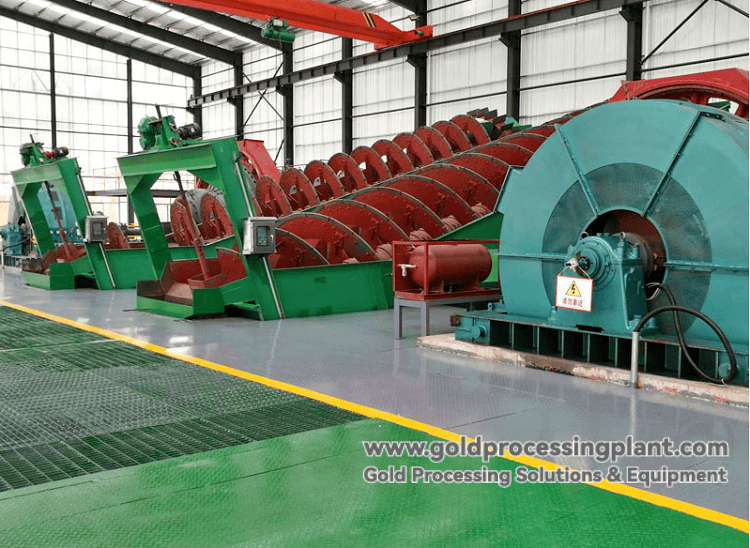
I. Why Is a Pilot Plant Essential for Sulfide Gold Ore?
The challenges in processing sulfide gold ore center on two key concepts: “liberation” and “selectivity.” If the grinding fineness is insufficient, the gold-bearing sulfides will not be sufficiently liberated from the gangue, resulting in low grades and recovery rates in the flotation concentrate;if the grinding is too fine, the sulfides turn to slurry, reagent consumption increases, and flotation foam quality deteriorates. These issues are often masked by “ideal conditions” when testing gram-scale ore samples in small-scale trials; they only become apparent during pilot-scale operations, which are continuous and conducted on a kilogram- to metric-ton scale.
Specifically, the value of pilot-scale testing lies in four aspects:
First, verifying the scalability of the process. Pilot-scale tests are batch operations, whereas pilot-scale operations involve continuous feed and discharge. Only pilot-scale operations can accurately reflect the distribution of slurry residence time, the flow path of reagents within the process, and the impact of circulation load. For closed-circuit flotation tests, pilot-scale data regarding circulation volume and concentrate grade stability are far more reliable than pilot-scale test results.
Second, it provides a solid basis for equipment selection. The relationship between the aeration rate, agitation intensity, cell volume, and residence time in flotation cells, as well as the closed-circuit parameters for ball mills and classifiers, directly affects equipment specifications and the number of units required. Pilot-scale data serves as concrete evidence for equipment selection and investment estimates, rather than relying on empirical values.
Third, it reveals the “hidden variables” in the ore. Sulfide gold ores are often accompanied by interfering elements such as arsenic, carbon, antimony, and copper, which may not be apparent in small-scale tests. During continuous pilot-scale operation, issues such as abnormal reagent consumption, a sudden drop in leaching rates, and activated carbon poisoning will come to light; early detection allows for the timely development of countermeasures.
Fourth, they provide a benchmark for contract acceptance criteria. The recovery rates, concentrate grades, and specific reagent consumption obtained from pilot-scale testing form the scientific basis for subsequent equipment contracts and EPC acceptance standards. Without pilot-scale data to support performance commitments, neither party can feel confident.
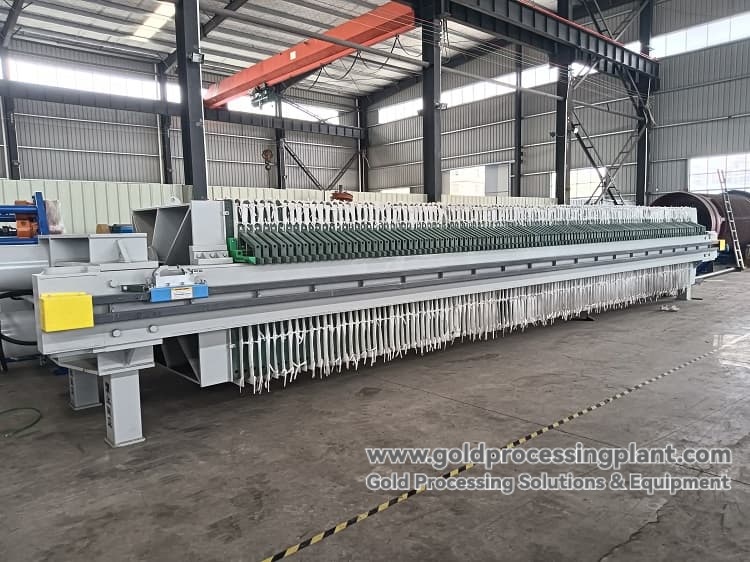
II. How Should a Pilot Plant Test Plan for Sulfide Gold Ore Be Designed?
GoldProcessingPlant\'s pilot test plan for sulfide gold ore proceeds through four phases: “Ore Sample Preparation—Unit Testing—Continuous Pilot Testing—Report Generation”:
Phase One: Ore Sample Preparation and Ore Property Analysis. Representative ore samples are collected (taking into account the blending ratios of different parts of the ore body and varying degrees of oxidation), and multi-element chemical analysis, gold phase analysis (proportions of free gold, sulfide-encased gold, and gangue-encased gold), as well as mineral composition and grain size distribution analysis are conducted.This step determines the direction of subsequent testing: Is gold primarily hosted in pyrite or arsenopyrite? To what extent is it encapsulated? What are the associated elements? Without this data, the pilot-scale test would be conducted blindly.
Phase Two: Unit-Scale Testing. Before proceeding to continuous pilot-scale operations, conduct unit-scale tests to determine key parameters:
- Grinding Fineness Tests: Conduct comparative flotation tests at different grinding fineness levels (e.g., gradients where the -200 mesh fraction accounts for 65%, 75%, or 85%) to determine the optimal fineness that balances liberation efficiency and slime control.
- Flotation condition testing: Systematic optimization of the reagent regimen (types and dosages of pH adjusters, activators, collectors, and frothers), flotation concentration, aeration rate, and flotation time; for arsenic-bearing ores, verify the effectiveness of arsenopyrite suppression or separate flotation of arsenic-gold concentrate; for carbon-bearing ores, verify the effectiveness of carbon suppression.
- Open-Circuit/Closed-Circuit Flotation Tests: Determine the number of roughing, scavenging, and cleaning stages (e.g., one roughing, two cleaning, and two scavenging stages, or one roughing, three cleaning, and three scavenging stages); closed-circuit tests evaluate the impact of intermediate product recycling on concentrate grade and recovery.
- Cyanide Leaching Comparison Tests: Conduct cyanide leaching tests on flotation concentrates and/or flotation tailings, as well as whole-ore cyanide CIL/CIP comparison tests, to determine parameters such as leaching time, cyanide concentration, pH, and activated carbon dosage;For difficult-to-treat arsenic- and carbon-bearing ores, additional pretreatment tests are required (comparing methods such as proprietary reagents, roasting, biological oxidation, and pressurized oxidation).
Phase Three: Continuous Pilot-Scale Operation. Based on the parameters determined in the unit-scale tests, conduct continuous operation on the pilot-scale plant to evaluate:
- Process stability: Whether operational indicators remain stable under continuous feed and discharge conditions, and whether the intermediate product circulation is balanced;
- Reagent Distribution and Specific Consumption: Distribution of reagents at various points in the process, actual specific consumption, and cost calculations;
- Equipment Performance: Actual operational performance in each stage, including aeration and agitation in flotation cells, closed-circuit grinding and classification, thickener washing, and leaching and adsorption;
- Product specifications: Gold concentrate grade, recovery rate, tailings grade, and the content of harmful elements in the concentrate (which affects pricing for external sales).
Phase Four: Test Report and Proposal Output. The report not only provides recommended processes and expected recovery rates but also directly includes an equipment selection list and a preliminary budget estimate—including gold ore property analysis, recommended gold processing flow sheets, key parameters, recovery rates, product grades, equipment lists, and investment estimates—all of which can be used immediately to proceed with design and investment decisions.
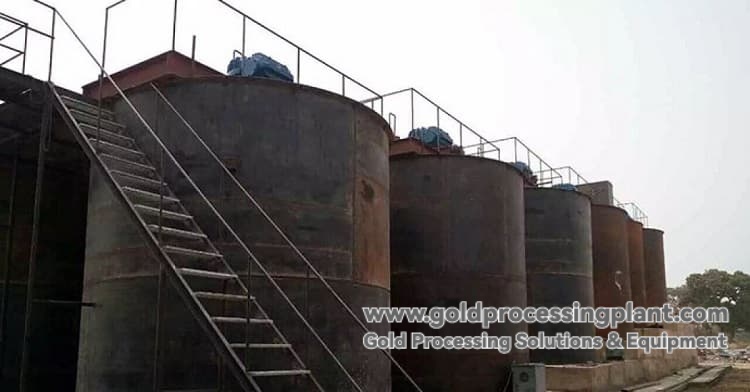
III. What Are the Technical Advantages of the Pilot Plant?
Advantage 1: Integration of the Testing Center and Manufacturing Bases. GoldProcessingPlant operates a mineral processing testing center and owns two major manufacturing bases in Shandong and Jiangxi.Test equipment such as flotation cells, ball mills, and leaching tanks shares the same origin and manufacturing processes as industrial production equipment, resulting in minimal deviation when scaling up pilot-scale data to industrial production; equipment parameters determined during pilot testing can be directly converted into manufacturing drawings, eliminating the disconnect caused by “two separate sets of logic” between test and production equipment.
Advantage 2: Process and equipment managed by the same team. Mineral processing engineers, metallurgical experts, and mechanical designers collaborate within the same team. Equipment compatibility issues identified during pilot testing—such as insufficient aeration in flotation cells or dead zones in leaching tanks—can be directly fed back into the equipment design and selection phases, rather than having to repeat the process with a different manufacturer after testing is complete.
Advantage 3: Specialized Capabilities for Difficult-to-Process Ores. For arsenic-, carbon-, and antimony-bearing ores,finely particle-encased gold sulfide ores—we possess the capability to conduct comparative testing of pretreatment routes. This includes feasibility verification and cost comparisons for exclusive chemical pretreatment, roasting, bio-oxidation, and pressurized oxidation, helping clients answer not only “Can this ore be processed?” but also “Which route is more economical?”
Advantage 4: Data Directly Supports Investment Decisions. Pilot test reports include equipment selection lists and preliminary budgets, allowing clients to assess investment scale immediately upon receipt; upfront testing and design fees can be fully offset against subsequent equipment or EPC contracts, lowering the decision-making threshold.
Advantage 5: Global Experience with Various Mineral Types. Projects span major gold-producing regions including Africa, South America, Central Asia, and Southeast Asia, with processing capacities ranging from 30 to 5,000 metric tons per day, covering ore gold, placer gold, hard-to-process ores, and tailings reprocessing. Our accumulated test data on sulfide gold ores from diverse regions and of varying genesis ensures that pilot plant design avoids unnecessary detours.
IV. Post-Pilot: Bridging the Gap from Testing to Plant Construction
The pilot test is not the end point, but rather the starting point for plant construction. Once the pilot test report confirms the process route, the subsequent steps are:
Process Design and Engineering Drawings: Based on pilot test data, we produce process flow diagrams, equipment configuration lists, plant layout plans, equipment foundation drawings, and civil engineering requirement drawings.
Equipment Manufacturing and Supply: Core equipment (crushing, grinding, flotation, leaching/adsorption, and thickening/dewatering) is manufactured according to the drawings; ancillary materials are coordinated; and the equipment is shipped after passing factory quality inspections.
Installation Guidance and Integrated Commissioning: Engineers are stationed on-site to guide equipment positioning, piping connections, and electrical installation; they lead individual unit commissioning and integrated trial runs with actual feed material; they optimize grinding fineness, flotation reagent regimes, and leaching parameters until qualified gold concentrate is produced; and they provide training to the client\'s team.
Long-Term Technical Support: During the warranty period, spare parts are replaced free of charge for equipment quality issues. After the warranty expires, we continue to supply spare parts and provide process optimization recommendations—addressing changes in ore properties, fluctuations in reagent costs, and variations in recovery rates—while continuously working with the client to fine-tune operations.
GoldProcessingPlant does not require bundled services: Clients may opt for mineral processing tests and pilot-scale validation only; purchase process design or engineering drawings only; procure equipment only; or hire engineers for on-site commissioning only. Alternatively, a comprehensive EPC turnkey solution is available.
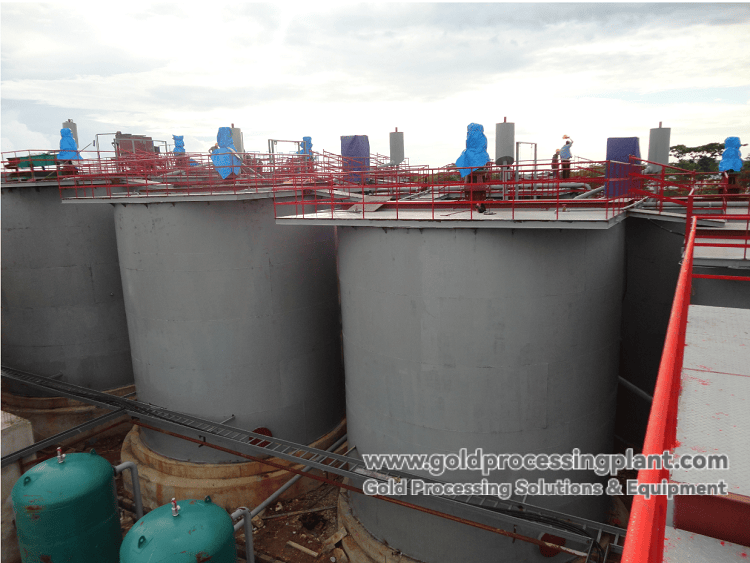
V. Quality Assurance: Let the data speak for itself; performance metrics are contractually guaranteed
The recovery rate of sulfide gold ore is determined by the ore\'s inherent characteristics—the type of gold-bearing minerals, the degree of encapsulation, the grain size of the gold distribution, and associated elements—each of which affects the final performance metrics.GoldProcessingPlant does not promise absolute figures divorced from test data; rather, we commit to designing a process for your ore that achieves the highest recoverable rate feasible under the given conditions through rigorous pilot-scale validation and tailored process design; commissioning targets are specified in the contract, with reasonable acceptance criteria agreed upon based on the same ore source and operating conditions;The equipment selection and budget outlined in the pilot-scale report serve as concrete, binding criteria for investment decisions, not merely reference values.
When building a plant for sulfide gold ore, the most expensive part isn\'t the equipment—it\'s the rework required after choosing the wrong process. Pilot testing costs a little but saves a lot. Test first, determine the process next, and then select equipment—GoldProcessingPlant will guide you through this entire process. GoldProcessingPlant—understand the ore first, then select the equipment.