


How to Determine a Processing Plan for Mud-Bearing Gold Ore? EPC Turnkey Project for a Processing Plant with a Capacity of 1,000 Metric Tons Per Day Using CIP/CIL Processes
How to Determine a Processing Plan for Mud-Bearing Gold Ore? EPC Turnkey Project for a CIP/CIL Plant with a Capacity of 1,000 Metric Tons per Day
Mud-bearing gold ore is the type of ore most prone to being “misjudged” during the construction of a processing plant.While the grade may look promising during sampling, the true nature of the ore becomes apparent as soon as production begins: the slurry is so viscous it cannot be agitated; the thickener overflow is turbid; and the activated carbon becomes clogged with mud, causing the adsorption rate to plummet. Even with a complete CIP/CIL process in place, the recovery rate remains stuck at 70–80 percent and refuses to rise.The problem does not lie with the cyanidation process itself, but rather with the fact that the “slurry” was rushed into the leaching system without proper treatment. A processing plant with a capacity of 1,000 metric tons per day (daily throughput of approximately 1,000 metric tons) is no small operation; a single miscalculation in any stage will amplify both investment waste and production downtime losses.This article begins by explaining the mechanisms of “slurry-related issues” in gold ore containing slurry, and clarifies how to determine the design, select equipment, and define the EPC scope for a 1,000 metric tons per day CIP/CIL processing plant.
I. What Exactly Are the Problems Caused by “Clay Contamination” in Clay-Bearing Gold Ore?
Gold-bearing ores containing clay have high concentrations of clay minerals (such as montmorillonite, kaolinite, and illite), which interfere with the cyanide gold extraction system throughout the entire process:
Deterioration of slurry rheology. As clay absorbs water and swells, the apparent viscosity of the slurry increases significantly. This leads to an increase in dead zones within the leaching tanks, resulting in uneven distribution of cyanide and dissolved oxygen. Leaching kinetics are impaired, forcing an extension of leaching time—a loss that is particularly evident at a processing capacity of 1,000 metric tons per day.
Clay film encapsulation and adsorption interference. Fine clay particles encapsulate gold particles, forming a clay film that hinders the dissolution of gold cyanide complexes; furthermore, due to the high specific surface area of clay, it adsorbs already dissolved gold cyanide complexes, resulting in secondary loss of “already dissolved gold.”
Difficulties in solid-liquid separation. The slurry settles slowly and has poor compressibility; the thickener overflow is turbid, washing efficiency is low, and the clarity of the precious metal solution fails to meet standards, significantly reducing the effectiveness of subsequent activated carbon adsorption or zinc powder displacement.
Activated carbon poisoning. Fine slime and organic matter clog the pores of the activated carbon and cover the adsorption sites, reducing its gold-holding capacity; clay-like substances enter the desorption and electrolysis system along with the ore slurry, affecting desorption efficiency and the quality of the gold slime.
Equipment wear and clogging. Slurry containing fine slime increases the risk of wear and clogging in pumps, piping, and valves, leading to more frequent shutdowns for cleaning.
Therefore, for CIP/CIL processes involving mud-containing gold ore, the sequence must be: treat the mud first, then leach, control parameters, and stabilize adsorption. At a scale of 1,000 metric tons per day, if the mud treatment stage is not handled properly, all subsequent equipment will bear the consequences of the mud.
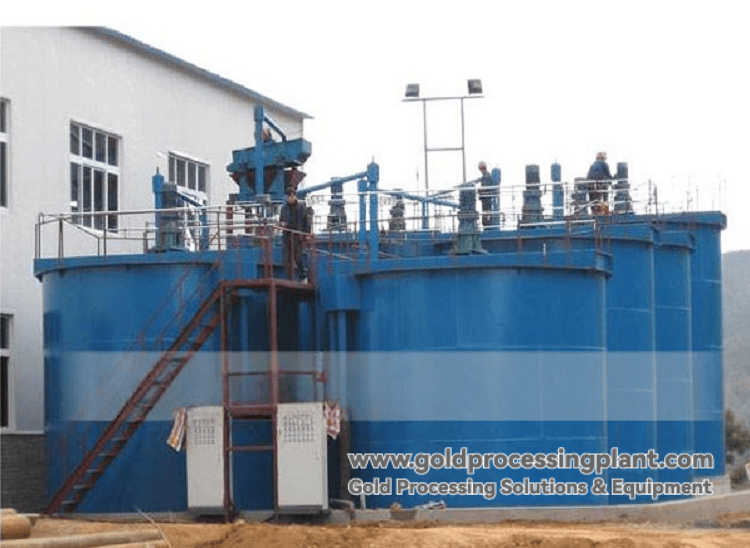
II. Framework for a 1,000 metric tons per day Clay-Containing Gold Ore Solution
Step 1: Intensify ore washing and de-silting. Set up an ore washing operation after crushing and before grinding. Use a cylindrical or spiral ore washer to separate and disperse clay from the ore, combined with a trommel screen or high-frequency vibrating screen for de-silting and classification.The separated fine slurry is diverted based on gold grade: low-grade fine slurry is sent directly to the tailings treatment system to avoid unnecessary chemical consumption; high-grade fine slurry is concentrated separately and then fed into the leaching system to prevent gold from being lost with the slurry. This step forms the foundation of the mud-bearing gold ore processing plan.
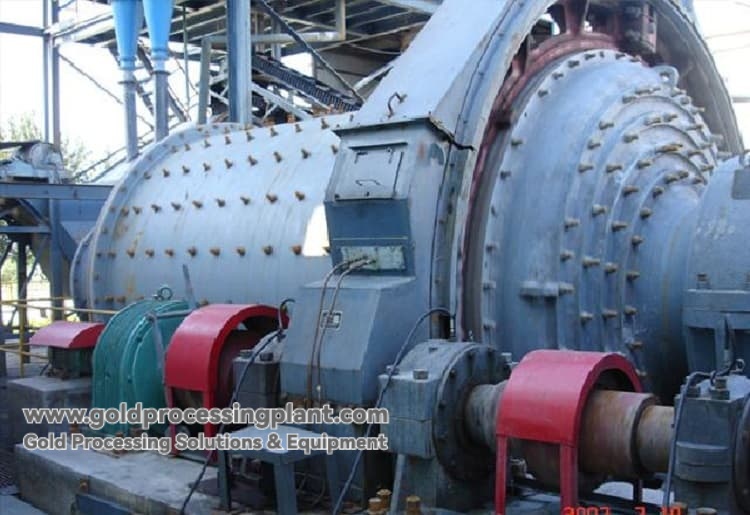
Step 2: Determine the grinding fineness based on the degree of liberation to avoid over-grinding and muddification. Since clay-bearing ore already has a high clay content, excessive grinding during the grinding stage will only make matters worse.Through testing, determine a grinding fineness that balances gold liberation and slime control. Use configurations—such as grid-type ball mills—that feature forced discharge and minimize the risk of overgrinding, combined with hydrocyclone classification to promptly separate liberated fine particles and reduce the need for repeated grinding.
Step 3: Choose between CIL and CIP based on leaching rate. Leaching rates for clay-bearing gold ores are often slow. In CIP, leaching is first completed through a series of connected tanks before entering the adsorption tank, allowing for a more thorough leaching time—a more reliable approach for ores with poor leaching kinetics. If clay control is adequate and slurry conditions are improved, resulting in an acceptable leaching rate,CIL—which combines leaching and adsorption, requires fewer tanks, and features a compact process—offers lower capital costs for a 1,000 metric tons per day operation. The selection should be based on experimental data from leaching rate curves, not on a one-size-fits-all template.
Step 4: Optimization of Leaching and Adsorption Parameters. Maintain a pH of 10–11 to prevent cyanide volatilization losses; add cyanide in stages and adjust the concentration based on actual consumption;ensure adequate aeration and agitation intensity in the leaching tanks; under slurry-containing conditions, the agitation method and anti-sludge-building design must be specifically configured; activated carbon moves in a countercurrent flow and is added in stages; regularly test the gold-holding capacity and replace the carbon promptly to prevent “carbon poisoning.”
Step 5: Concentration, washing, and clarification of the precious liquid. Install high-efficiency thickeners (adding flocculants when necessary) to ensure washing efficiency; the precious liquid entering the adsorption or replacement stage must be clarified, as excessively high levels of suspended solids will significantly deplete the capacity of activated carbon or zinc powder. Tailings are dry-discharged via filter presses to meet environmental requirements and recover process water.
Special Cases: If the ore body has an extremely high clay content, making agitation leaching difficult to operate stably, or if the ore grade is low and the ore bodies are dispersed, pelletization and heap leaching may be considered—after crushing, add cement or lime to form pellets to improve permeability, and perform spray leaching on a impermeable liner; the leaching cycle is 30–90 days.The decision to use heap leaching should be made only after verification through column leaching tests.
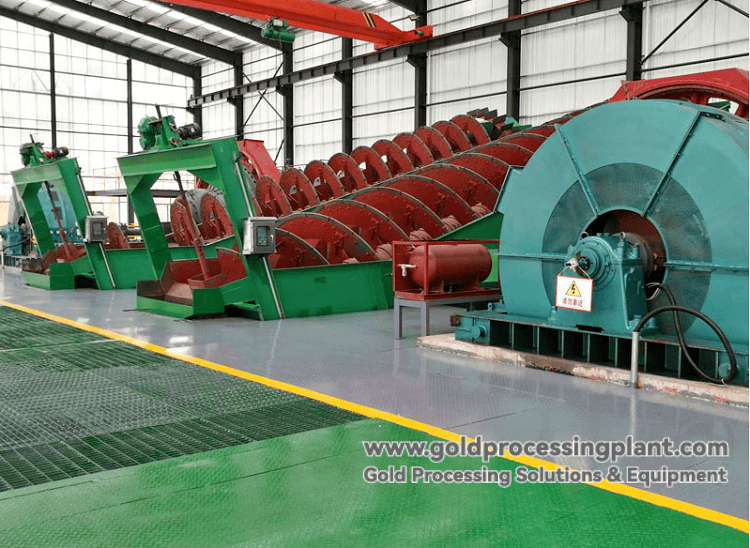
III. Equipment Configuration for a 1,000-metric-ton-per-day CIP/CIL Processing Plant
Ore Washing and Desliming Section: Cylindrical ore washer/screw ore washer, trommel screen, high-frequency vibrating screen, hydrocyclones (classification/desliming/concentration), flocculant dosing system.
Crushing and Grinding Section: Jaw crusher for primary crushing, cone crusher for secondary and fine crushing, grid-type ball mill + hydrocyclone or spiral classifier for closed-circuit grinding.
Leaching and Adsorption Section: Multi-cell series leaching tanks (with agitation and aeration), high-efficiency dual-impeller carbon-in-leach (CIL) tanks, activated carbon adsorption system, carbon-separating screen, carbon recovery unit, carbon recovery pump; under slurry conditions, the agitation method, aeration method, and anti-sludge-building structure of the leaching tanks must be specifically designed.
Desorption and Electrolysis Section: Ambient temperature and pressure or high-temperature, high-pressure desorption columns, electrolytic cells, and gold smelting furnaces; these may be integrated into skid-mounted units.
Concentration and Dewatering Section: High-efficiency thickeners, plate-and-frame filter presses (for dry tailings discharge), and dewatering screens.
Auxiliary Systems: Slurry pumps, clean water pumps, circulating water systems, power distribution and control systems (soft starters/variable frequency drives, voltage stabilizers); for overseas projects, diesel generator sets may be integrated to address unstable power supply.
GoldProcessingPlant operates two major in-house manufacturing bases in Shandong and Jiangxi, where the aforementioned core equipment is manufactured in-house. Process engineers and mechanical engineers collaborate within the same team to ensure equipment is manufactured according to process drawings, with precise interface matching and optimized production capacity. For operations involving slurry-laden conditions and acidic leaching environments, equipment materials, agitator configurations, and motor power ratings can be customized to meet specific requirements.
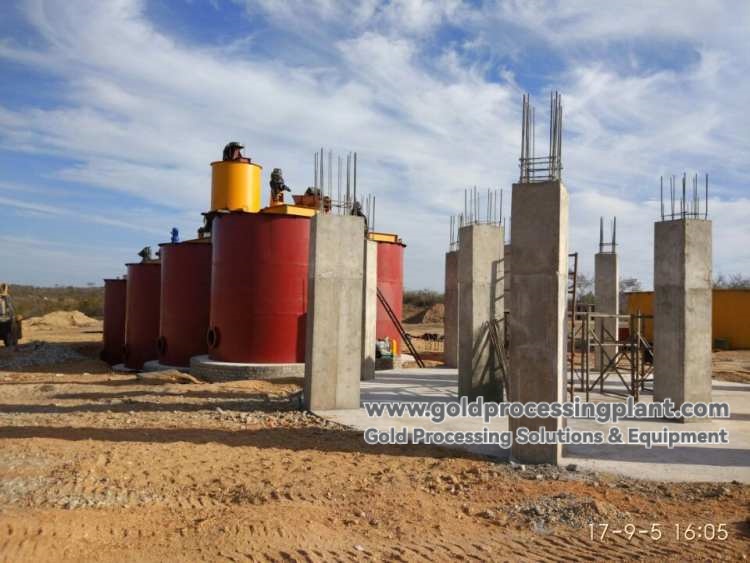
IV. EPC Turnkey Projects: Scope and Timeline for a 1,000-metric-ton-per-day Project
For the EPC turnkey project of a 1,000 metric tons per day processing plant, the core principle is “We take full responsibility for our tasks and provide advance briefings on matters requiring client cooperation”:
We are responsible for: Process design and technical solutions (ore property analysis, process determination, reagent regimens); engineering design and drawings (site layout plans, equipment layout diagrams, civil engineering condition drawings); manufacturing of core equipment and supply of supporting components; on-site installation technical guidance; integrated commissioning and personnel training; after-sales service and spare parts supply.
The client is responsible for: civil construction (organized according to the civil engineering conditions drawings; complete architectural and structural construction drawings must be provided by a locally qualified design institute), organizing local installation workers (our engineers will provide on-site guidance on installation procedures), on-site “three utilities and one leveling” (water, electricity, and road access) as well as conditions for hoisting and commissioning, and local compliance procedures.
The economic rationale behind this division of labor: Sending a large number of workers from China to overseas sites—including airfare, visas, room and board, plus high daily wages—would significantly drive up costs; having the client organize local general installation workers while our engineers provide on-site technical guidance ensures construction standards are met while saving substantial labor costs.If there is truly no local construction workforce available, a turnkey solution can be negotiated separately and stipulated in the contract.
Reference Project Timeline: For a typical gold mine project, the timeline from the start of process design to production commencement is approximately 8–15 months—including 7–15 days for process design, equipment selection, and quotation; 20–30 days for engineering drawings; 60–120 days for equipment manufacturing; 30–60 days for logistics; and 60–150 days for installation and commissioning.Since gold-bearing ore containing clay requires more rigorous mud removal during the ore washing process and more precise leaching parameter adjustments, it is recommended to allow for a more generous buffer period for testing and commissioning; for overseas projects, be sure to allow for a customs clearance buffer (approximately 30 days). Reasonable overlap between various phases can shorten the overall project duration.
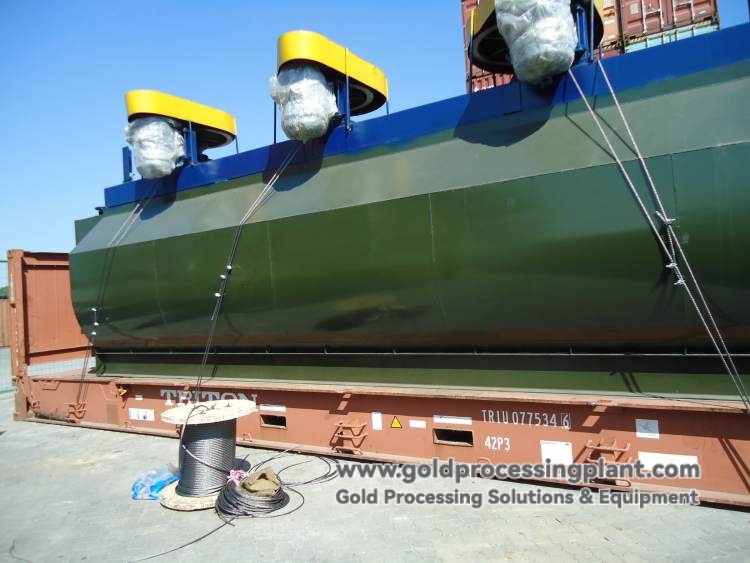
V. Cooperation Models and Quality Assurance
GoldProcessingPlant does not require bundled services:You may opt for mineral processing trials and process validation only (including ore washing and desliming trials, CIL/CIP comparison tests, and sedimentation performance tests); purchase only process design or engineering drawings; procure individual units or complete equipment sets; engage engineers for on-site commissioning only; or choose a comprehensive EPC turnkey solution.Initial testing and design fees can be fully offset against the cost of subsequent equipment or EPC contracts.
Quality Assurance: The company adheres to the ISO 9001 quality management system, and our products are CE-certified. With an annual production capacity exceeding 500 units, our projects span major gold-producing regions including Africa, South America, Central Asia, and Southeast Asia, handling processing capacities ranging from 30 to 5,000 metric tons per day.Recovery rate targets are set based on ore characteristics and process conditions; commissioning objectives are specified in the contract, and reasonable acceptance criteria are agreed upon based on the same ore source and operating conditions;The warranty period is 12 months; during this period, spare parts are replaced free of charge for equipment quality issues. After the warranty expires, we continue to supply spare parts long-term and provide process optimization recommendations—whether due to changes in ore properties, fluctuations in reagent costs, or variations in recovery rates, we will continue to work with you to fine-tune the process.
For a 1,000 metric tons per day CIP/CIL processing plant handling mud-bearing gold ore, our solution focuses not on tank size, but on the sequence of mud treatment; our EPC scope encompasses not just an equipment list, but the entire chain of responsibility—from ore samples to gold output. GoldProcessingPlant—We understand the ore first, then select the equipment.