


Supplier of Iron Cap-Type Gold Ore Beneficiation Processes and Complete Equipment Sets
Supplier of Beneficiation Processes and Complete Equipment Sets for Iron Cap-Type Gold Deposits
Iron Cap-Type gold deposits are often mistakenly considered “easy to process”—since the gold is trapped within the pores and fissures of limonite, the ore appears loose and porous, allowing leaching solutions to penetrate easily, giving the impression that gold can be extracted simply through direct cyanidation.However, once production begins, many processing plants run into problems at both ends of the process: coarse-grained free gold is lost in the grinding and leaching systems, while fine-grained gold is trapped by limonite and clay and cannot be leached out; when the slurry contains too much clay, problems arise in succession with agitation, thickening, and adsorption.The key to the beneficiation logic for “iron-capped” gold deposits lies in “prioritizing coarse-grain recovery through gravity separation and using cyanidation to capture fine-grain gold,” followed by configuring a complete set of equipment based on the actual ore conditions. This article begins with an analysis of ore characteristics and clearly explains the process flow, equipment configuration, and supplier selection.
I. Ore Characteristics and Processing Challenges of “Iron Cap” Gold Deposits
"Iron cap" gold deposits are epigenetic weathering deposits formed when iron-rich residues accumulate as an "iron cap" following long-term oxidation and leaching of primary gold-bearing sulfide ore bodies. Typical characteristics include:
Gold is hosted within the voids and fractures of limonite. After the primary sulfides have been oxidized and leached, a porous goethite skeleton remains, with gold in a free state filling the voids, fractures, and interfaces between goethite and gangue. The particle size distribution is broad, with both coarse and fine-grained gold coexisting.
The porous structure of limonite is conducive to leaching. Compared to dense primary ore, “iron cap” ore has a higher porosity and better leachate penetration conditions, which is a natural advantage for the cyanidation process in iron cap-type gold deposits.
The clay mineral content is the most significant variable. Clay minerals such as kaolinite are often associated with the ore during weathering; high clay content leads to increased slurry viscosity, difficulty in agitation, turbidity in the thickener overflow, and reduced permeability, requiring corresponding adjustments to leaching time and reagent concentration.
Although the associated elements are relatively simple, this does not mean there are no interferences. Most iron-cap ores have low concentrations of interfering elements such as copper, arsenic, antimony, and carbon, making them suitable for cyanidation; however, some ore bodies contain residual sulfides or carbon-bearing substances, so experimental verification is still required, and a blanket conclusion cannot be drawn.
In terms of mineral processing challenges, there are three key issues:
- Loss of coarse-grained gold. If free coarse-grained gold is not recovered early in the grinding circuit, it will settle in the leaching system, become encapsulated, or be discharged with the tailings.
- Unstable leaching recovery of fine-grain gold. Ultrafine gold particles are “trapped” in the pores of limonite or adsorbed onto clay, resulting in poor leaching kinetics and significant fluctuations in recovery rates.
- Clay interferes throughout the entire process. Poor slurry rheology, difficulties in solid-liquid separation, and reduced activated carbon adsorption efficiency are common issues encountered after the Tiehao Mine begins production.
II. Recommended Process Scheme: Combined Gravity Separation and Cyanidation
GoldProcessingPlant\'s recommended main process for Iron Cap-type gold deposits is the “Combined Gravity Separation and Cyanidation Process,” which consists of three specific steps:
Step 1: Crushing and grinding, followed by gravity separation to recover coarse-grained free gold. Coarse crushing is performed using a jaw crusher, and medium-to-fine crushing using a cone crusher, adhering to the principle of “more crushing, less grinding”;The grinding circuit is equipped with a centrifugal separator (such as a Nelson centrifuge) or a jig to recover already-dissociated coarse-grain free gold early in the grinding and classification cycle. The gravity concentration concentrate is further refined on shaking tables before being smelted to produce alloy gold or sold as high-grade concentrate.The core principle of this step is “early and maximum recovery,” which prevents the loss of coarse-grained gold due to over-grinding.
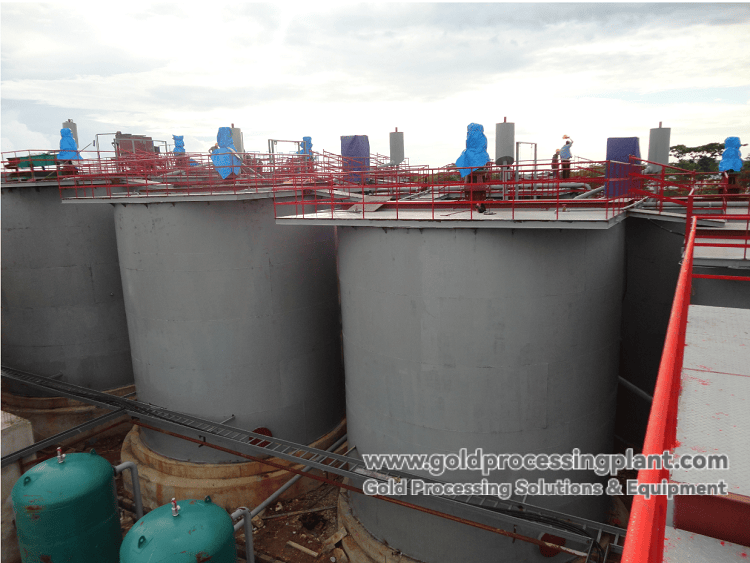
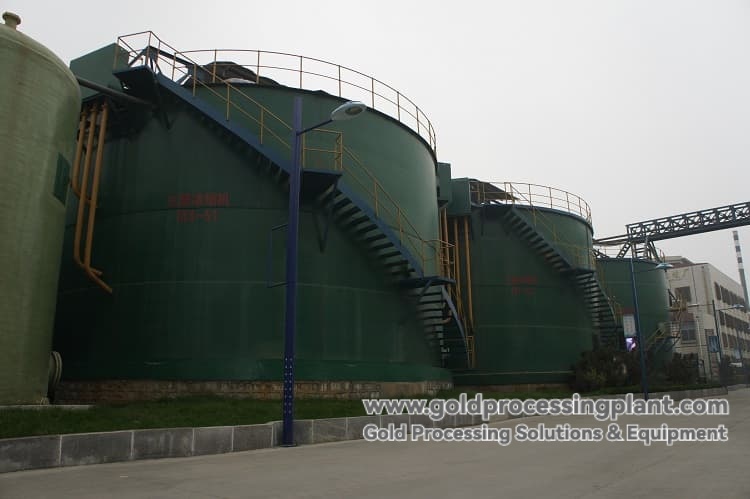
Step 2: Cyanide leaching of gravity separation tailings to recover fine-grain gold. Gravity separation tailings are fed into a CIL (carbon-in-leach) or CIP (carbon-in-pulp) system, where gold is dissolved using cyanide under alkaline conditions (pH 10–11) and recovered by adsorption onto activated carbon.The limonite at the Tiehao Mine is porous, providing relatively favorable leaching conditions; however, leaching time and reagent concentration must be adjusted based on clay content and the degree of gold encapsulation: when clay content is high, leaching time should be appropriately extended and the reagent addition method optimized; if necessary, leaching should be preceded by enhanced ore washing and desliming.
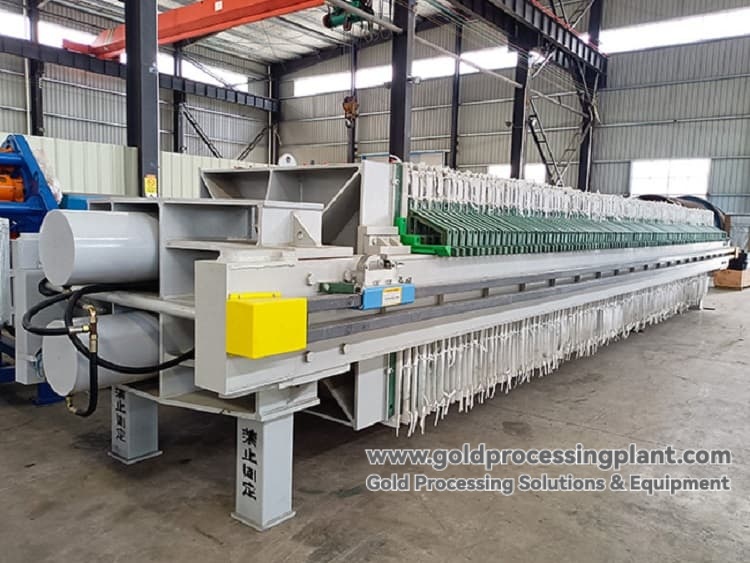
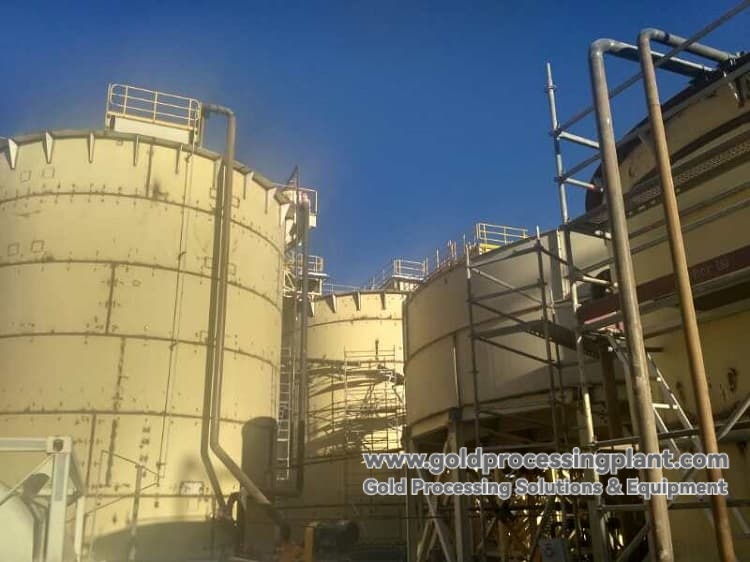
Step 3: Concentration, Dewatering, and Tailings Treatment. Solid-liquid separation is difficult for slurries with high clay content; a high-efficiency thickener (with flocculants added if necessary) must be used to ensure washing efficiency. Tailings are dry-discharged via a filter press to meet environmental requirements and recover process water.
Alternative Processes for Special Cases: If a ore body has extremely high clay content, making agitation leaching difficult to operate stably, or if ore grades are low and the ore bodies are dispersed, pelletization and heap leaching may be considered—after crushing, add cement or lime to form pellets to improve permeability, then spray-leach on an impermeable liner; the leaching cycle typically lasts 30–90 days.The decision to use heap leaching should be made only after verifying permeability and leaching rates through column leaching tests. If the ore body contains a significant amount of residual sulfides and gold is closely associated with them, a flotation stage may be added after gravity separation. This involves first flotating and concentrating gold-bearing sulfides before cyanidation to prevent cyanide consumption by the sulfides.
III. Complete Equipment Configuration: From Crushing to Refined Gold
As a turnkey equipment supplier, GoldProcessingPlant provides a complete set of process equipment tailored to the specific process flow:
Crushing and Screening: Jaw crusher (primary crushing), cone crusher (secondary and tertiary crushing), circular vibrating screen/linear vibrating screen, vibrating feeder, belt conveyor.
Grinding and Classification: Grid-type ball mill (first stage, forced discharge, resistant to over-grinding) or overflow-type ball mill (fine grinding), paired with a spiral classifier or hydrocyclone in a closed-circuit system;For high-clay ore sections, install a cylindrical ore washer or spiral ore washer followed by a drum screen; the ore is washed to remove clay before entering the grinding circuit.
Gravity Separation Equipment: Centrifugal separators (the primary method for recovering coarse-grain gold from the grinding circuit), jigs, 6-S shaking tables/multi-deck shaking tables (refining), spiral chutes (roughing and tailings disposal), and sand pumps.
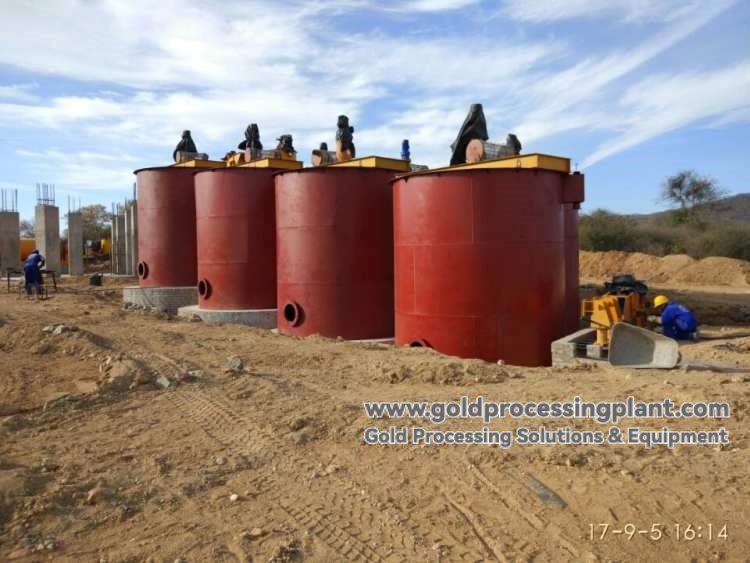
Cyanide Leaching and Adsorption: Leaching tanks (with agitation and aeration), high-efficiency dual-impeller carbon-in-leach (CIL) tanks, activated carbon adsorption systems, carbon separation screens, carbon recovery units, ambient-temperature/atmospheric-pressure or high-temperature/high-pressure desorption and electrolysis equipment, and gold smelting furnaces;If a heap leaching process is used, the following equipment is required: heap leaching pad, spray system, precious metal solution tank, activated carbon adsorption columns, or zinc powder displacement unit.
Concentration and Dewatering: High-efficiency thickeners, plate-and-frame filter presses (for dry tailings discharge and concentrate dewatering), dewatering screens, flocculant dosing systems.
Auxiliary systems: Slurry pumps, carbon recovery pumps, clean water pumps, circulating water systems, power distribution and control systems; for overseas projects, diesel generator sets may be integrated to address unstable power supply.
GoldProcessingPlant operates two major in-house manufacturing bases in Shandong and Jiangxi, where the aforementioned core equipment is manufactured in-house. Process engineers and mechanical engineers collaborate as a single team to ensure equipment is manufactured according to process drawings, with precise interface compatibility and production capacity alignment.To address the abrasive nature of limonite and acidic leaching environments, flow components can be upgraded with wear-resistant materials or corrosion-resistant stainless steel/lining coatings; for high-clay conditions, the leaching tank\'s agitation method, aeration method, and anti-sludge design can be customized accordingly.
IV. Why Choose a Turnkey Equipment Supplier Rather Than Piecing Together Purchases
The processing flow for iron-capped gold deposits spans multiple stages, including crushing, grinding, gravity separation, leaching, adsorption, desorption, and electrolysis. If crushers, ball mills,centrifuges, and leaching tanks are procured from different manufacturers, common consequences include: incompatible interfaces, mismatched production capacities, and cumulative energy consumption. When the system fails to meet standards, equipment manufacturers and contractors often shift blame onto each other, leaving the investor to act as the “referee.” The value of a turnkey equipment supplier lies in:
- Seamless Integration of Process and Equipment: Equipment selection is based on ore characteristics and the process flow, not on matching equipment to inventory. The process determines where gravity separation equipment is placed in the grinding circuit, how many leaching tanks are required, and the flow path for activated carbon countercurrent treatment.
- Interface and Capacity Alignment: The upstream slurry volume and downstream separation requirements are calculated by the same team to avoid situations such as “sufficient crushing capacity but insufficient grinding capacity” or “excess leaching tanks but adsorption processes that cannot keep up.”
- Single Point of Responsibility: The same team is responsible for everything from equipment manufacturing to installation guidance and integrated commissioning. Commissioning objectives are specified in the contract, and the team takes full responsibility for any issues that arise.
- Spare Parts and Long-Term Support: Our in-house manufacturing facilities ensure a continuous supply of spare parts, and we continue to provide technical consultation and process optimization recommendations even after the warranty period expires.
Of course, GoldProcessingPlant does not require bundled services: clients may opt for mineral processing trials only, purchase process designs or engineering drawings only, procure individual units or complete equipment sets only, or hire engineers for on-site commissioning only; alternatively, a full EPC turnkey solution is available.Initial testing and design fees can be fully offset against the cost of subsequent equipment or EPC contracts.
V. Project Implementation Pathway and Timeline
Recommended Implementation Path for Iron Cap-Type Gold Mine Projects:
Step 1: Mineral Processing Tests and Process Validation. Conduct gravity separation tests, cyanide leaching tests (including CIL/CIP comparisons), and tests for clay content and settling performance using representative ore samples. If necessary, perform column leaching tests to assess the feasibility of heap leaching; the report will include a list of selected equipment and a preliminary budget.
Step 2: Process Design and Engineering Drawings. Prepare process flow diagrams, equipment configuration lists, plant layout plans, equipment foundation drawings, and civil engineering requirement drawings.
Step 3: Equipment Manufacturing and Shipment. Manufacture core equipment, coordinate the procurement of supporting materials, and conduct factory quality inspections; for overseas projects, plan shipping schedules in advance and allow for a buffer period for customs clearance.
Step 4: Installation Guidance and Commissioning. Dispatch engineers to oversee equipment positioning, piping connections, and electrical installation; lead individual equipment commissioning and integrated trial runs with feed material; optimize grinding fineness, leaching parameters, and reagent regimes until qualified gold or gold concentrate is produced; and provide training to the client\'s team.
For standard projects, the timeline from the start of process design to production commencement is approximately 8–15 months; however, due to the stringent requirements for ore washing, desliming, and leaching parameter optimization at the Tiehao Mine, it is recommended to allow for a more generous buffer period for testing and commissioning.
VI. Quality Assurance: Metrics Are Based on Ore, and Commitments Are Stipulated in the Contract
The recovery rate of Tiehao-type gold deposits is influenced by multiple factors, including the form of gold occurrence, the proportion of coarse-grained gold, clay content, the pore structure of limonite, and residual sulfides and carbon-bearing materials; absolute commitments made without reference to ore sample data are unreliable.GoldProcessingPlant commits to the following: Through rigorous process validation and tailored design, we will develop a process for your ore that achieves the highest recoverable rate feasible under the given conditions;commissioning targets are specified in the contract, with reasonable acceptance criteria agreed upon based on the same ore source and operating conditions; a 12-month warranty period is provided, during which spare parts for equipment quality issues are replaced free of charge; after the warranty period expires, we continue to supply spare parts long-term and provide recommendations for process optimization.
Our projects span major global gold-producing regions, including Africa, South America, Central Asia, and Southeast Asia, with processing capacities ranging from 30 to 5,000 metric tons per day, covering bedrock gold, placer gold, hard-to-process ores, and tailings reprocessing.A combined gravity separation and cyanidation configuration for “iron cap” and other epiglyptite-type gold deposits is one of our standard solutions.
When it comes to processing iron-cap-type gold deposits, you\'re not just purchasing a set of equipment—you\'re partnering with a full-service equipment supplier who understands how to recover coarse-grain gold, leach fine-grain gold, and treat clay, and who guarantees the entire process from ore sample to refined gold. GoldProcessingPlant—We understand the ore first, then configure the equipment.