How to Choose a Modular Gold-in-Rock Beneficiation Production Line? An Analysis of Throughput and EPC Solutions
How to Choose a Modular Rock-Gold Ore Processing Line? An Analysis of Processing Capacity and EPC Solutions
Inquiries about modular gold ore processing lines have been on the rise over the past two years. Mine owners are attracted to their “factory prefabrication, rapid on-site assembly, and controllable construction schedules,” but when it comes to actual implementation, issues often center on three key areas: how to determine the processing capacity, how to divide and integrate the modules, and how to define the scope of the EPC contract.If the capacity is set too low, it won\'t meet demand, and expanding production later requires tearing everything down and starting over; if it\'s set too high, equipment capacity becomes excessive, prolonging the payback period; if modules are divided improperly, there will still be a mountain of welding work on-site; and if the scope of the EPC contract is unclear, parties will simply pass the blame onto each other when problems arise.This article clarifies the selection logic for modular gold ore beneficiation production lines from four dimensions: processing capacity matching, process flow, module segmentation, and EPC solutions.
I. Determining Throughput First: The First Step in Modular Selection
Processing capacity serves as the “overarching guideline” for the entire production line; it determines equipment specifications, the number of modules, plant floor area, and investment scale—and ultimately dictates whether modularization is cost-effective.Processing capacity for gold-bearing rock is typically expressed in terms of daily throughput (TPD). GoldProcessingPlant covers a range from 30 metric tons per day to 5,000 metric tons per day. When selecting a system, four factors must be comprehensively considered:
First, resource volume and service life. The processing capacity must align with proven recoverable reserves and the service life. A processing capacity that cannot be supported by reserves is equivalent to building a plant that operates at less than full capacity; conversely, setting the processing capacity too low extends the service life, slows down capital recovery, and may not be economically viable.
Second, ore properties and test data. Requirements for grinding fineness, leaching time, and the number of flotation stages all directly affect the specifications of individual pieces of equipment and the number of modules. Difficult-to-process ores (containing arsenic, carbon, or antimony) require additional pretreatment modules, while ores with high clay content require enhanced ore washing and desliming modules—all of which alter the configuration logic of the entire line.
Third, investment timing and phased construction. When funds are limited, construction can be carried out in phases: first, build the core sections—crushing, grinding, and beneficiation—to ensure concentrate production; later, complete the cyanidation, environmental protection, and tailings dry-discharge systems, ensuring that interfaces are properly reserved in the initial design. A modular structure is inherently conducive to phased capacity expansion; additional modules can simply be added without having to start from scratch.
Fourth, site conditions. Site area, power supply capacity, water sources, and transportation logistics will all impose constraints on processing capacity. For remote overseas mining areas, practical considerations such as unstable power supply (requiring diesel generator sets) and transportation during the rainy season (necessitating advance stockpiling) must also be taken into account.
A practical principle: When determining processing capacity, it is better to aim for the upper limit of a “reasonable range of design capacity” and reserve a 10%–20% adjustment margin, rather than selecting equipment based strictly on theoretical values. Increased ore hardness and higher clay content are common variables after a rock gold mine begins production; leaving a margin is far less expensive than retrofitting later.
II. Defining the Process Flow: A Prerequisite for Module Breakdown
How the modules are divided depends on how the process flow is defined. Common process flows for rock gold mines include:
Combined gravity separation and flotation. Suitable for quartz vein-type ores containing both coarse-grained and fine-grained gold. The grinding circuit is configured with a centrifugal separator to recover coarse-grained free gold in advance, while flotation is used to concentrate gold-bearing sulfides; the concentrate is then sent for smelting or cyanidation.The process modules consist of: crushing, grinding and classification, gravity separation, flotation, and thickening and dewatering.
Whole-ore cyanidation (CIL/CIP). Suitable for ores with a high degree of oxidation, free of interfering elements such as copper, arsenic, antimony, and carbon, and where gold is primarily in a free state. The modules consist of: crushing module, grinding and classification module, leaching and adsorption module (CIL or CIL/CIP), desorption and electrolysis module, thickening and dewatering module, and power distribution and control module.
Combined gravity separation + flotation + cyanidation. Suitable for complex ores containing both coarse and fine grains that cannot be fully recovered by a single process. This configuration involves a large number of modules and a lengthy process flow, requiring rigorous commissioning; however, it offers the highest safety margin for recovery rates.
The choice between CIP and CIL also affects module configuration: CIL involves simultaneous leaching and adsorption, requires fewer tanks, and features a compact process flow; CIP involves leaching followed by adsorption, allows for a more thorough leaching period, and is suitable for ores with relatively slow leaching rates or those requiring staged control. The selection should be based on leaching rate curves and ore test data—not on guesswork.
Key Reminder: If the process route is chosen incorrectly, modularization will only accelerate the implementation of that error. Therefore, mineral processing tests and process design must precede module manufacturing—first determine the gold\'s occurrence state, grain size, types of gold-bearing minerals, and interfering elements, then define the process flow, and finally break down the modules.
III. How to Break Down and Integrate Modules
The core of modularization is “factory prefabrication and on-site assembly,” but not all stages are suitable for modularization. The appropriate boundaries for division are typically:
Stages Suitable for Modularization:
- Crushing Module: Crushers, feeders, screens, and conveyors are integrated into a steel frame; on-site installation simply requires placing the module on its foundation and connecting the interfaces.
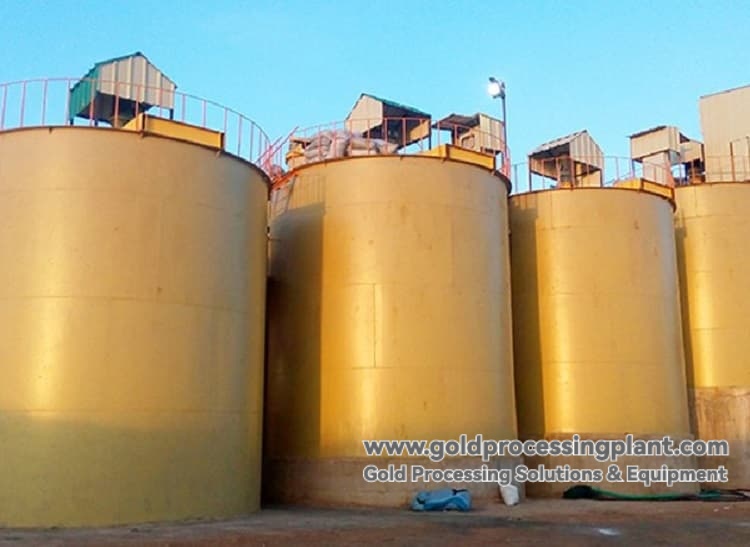
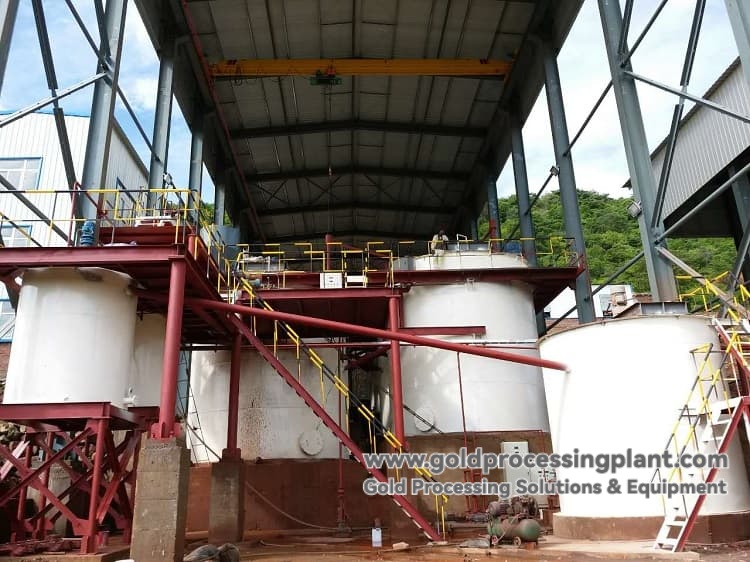
- Leaching and Adsorption Module: With its dense network of piping and numerous valves and instruments, this is the stage most suitable for factory pre-integration. Leaching tanks, adsorption systems, carbon separation screens, and carbon recovery units undergo pre-assembly and testing of piping at the manufacturing facility.
- Desorption and Electrolysis Module: Desorption columns, electrolysis cells, and smelting furnaces can be fully integrated into skid-mounted units.
- Power Distribution and Control Module: Soft starters/variable frequency drives, voltage stabilizers, PLC control systems, and cable trays are supplied as an integrated package; for overseas projects, diesel generator sets can also be integrated.
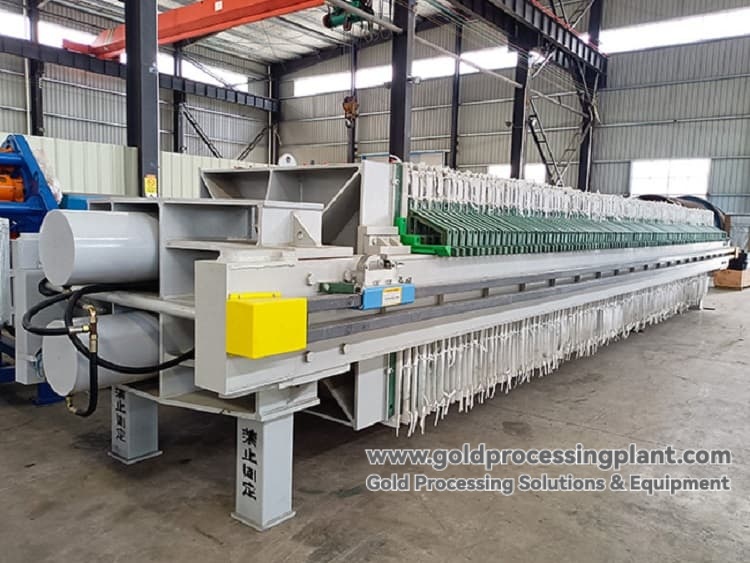
- Concentration and Dehydration Module: Integrated supply of thickeners, filter presses, and associated pumps and valves.
Phases that still primarily rely on on-site construction:
- Civil Engineering Foundations and Plant Structure: Equipment foundations, load-bearing structures, and reserved openings are constructed on-site according to our civil engineering condition drawings; complete architectural construction drawings are provided by a qualified local design institute designated by the client.
- Large Tanks and Certain Piping: Due to transportation size limitations, oversized tanks and long-distance pipelines must still be fabricated and connected on-site.
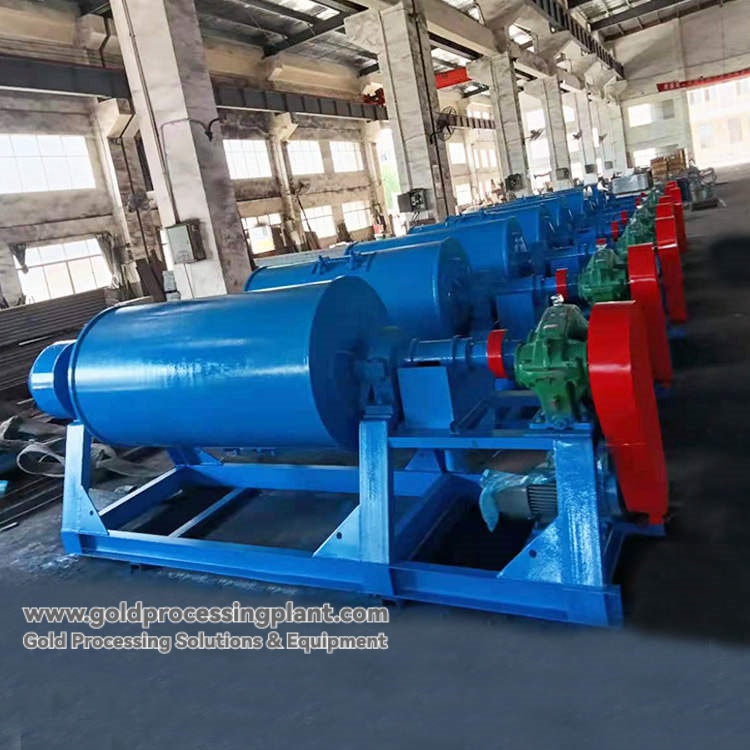
- Foundations and Alignment for the Grinding Module: Ball mills have high requirements for foundation load-bearing capacity and installation accuracy; they are typically supplied in a modular configuration consisting of “equipment + base + partial piping,” with the foundation poured on-site and the equipment aligned on-site.
To determine whether modularization is cost-effective, transportation costs must also be factored in: Module dimensions are constrained by container and road transport limits; excessive subdivision increases the number of on-site interfaces and the workload for connections, while overly coarse subdivision leads to higher costs for oversized cargo transport.The optimal approach is to divide modules based on the dual constraints of “process functionality + transport dimensions,” using standardized interfaces (flanges, quick-connect fittings, prefabricated cables) between modules. Upon arrival, modules are positioned according to their serial numbers and connected accordingly.
IV. EPC Approach: Clear Boundaries Define a True Turnkey Project
Modularization and EPC are a natural fit—modules are prefabricated at the company\'s own manufacturing base, where process engineers and mechanical engineers collaborate as part of the same team to ensure interfaces are reserved according to drawings; on-site, the same team coordinates installation guidance and integrated commissioning, ensuring a seamless chain of responsibility.However, EPC does not mean “I pay, you handle everything”; boundaries must be clearly defined in advance:
GoldProcessingPlant is responsible for: Process design and technical solutions (ore property analysis, process determination, reagent regimens); engineering design and drawings (site layout plans, equipment layout diagrams, civil engineering condition drawings); manufacturing of core equipment and module integration; coordination of supporting materials; on-site installation technical guidance; integrated commissioning and personnel training; after-sales service and spare parts supply.
The client is responsible for: civil construction (organized according to civil engineering drawings), organizing local installation workers (with our engineers providing on-site guidance on installation procedures), on-site “three utilities and one leveling” as well as conditions for hoisting and commissioning, and local compliance procedures.
The economic rationale behind this division of labor: Sending a large number of workers from China to overseas sites—including airfare, visas, room and board, plus high daily wages—would significantly drive up costs; having the client organize local general installation workers while our engineers provide on-site technical guidance ensures construction standards are met while saving substantial labor costs.If there is truly no local construction workforce available, a turnkey solution may be negotiated separately and stipulated in the contract.
Project Timeline Reference: For a typical rock-type gold mine project, the timeline from the start of process design to production commencement is approximately 8–15 months—including 7–15 days for process design, equipment selection, and quotation; 20–30 days for engineering drawings; 60–120 days for equipment manufacturing; 30–60 days for logistics; and 60–150 days for installation and commissioning.The value of modularization lies in its ability to overlap: once core process parameters are finalized, modules can be sent to the factory for manufacturing, while the client simultaneously carries out site preparation (“three utilities and one leveling”) and foundation construction. For overseas projects, it is essential to allow for a customs clearance buffer (approximately 30 days) and flexibility for the transition and handover period; additional buffers are required for difficult-to-process ores, remote mining areas, or a large volume of non-standard customizations.
V. Flexible Collaboration and Quality Assurance
GoldProcessingPlant does not require bundled services: clients may opt for mineral processing trials and process validation only; purchase process designs or engineering drawings only; procure individual units or complete equipment sets only; or engage engineers for on-site commissioning only; or choose a comprehensive EPC turnkey solution.Initial testing and design fees can be fully offset against the cost of equipment or EPC contracts signed at a later stage.
Quality Assurance: The company operates two major in-house manufacturing bases in Shandong and Jiangxi, covering approximately 50,000 square meters with 20,000 square meters of modern, standardized factory space. These facilities are equipped with large-scale CNC machining centers and laser cutters, and feature dedicated equipment testing platforms and mineral processing test centers. We adhere to the ISO 9001 quality management system, and our products are CE-certified, with an annual production capacity exceeding 500 units.projects spanning major gold-producing regions such as Africa, South America, Central Asia, and Southeast Asia. Recovery rate targets are set based on ore characteristics and process conditions; commissioning objectives are specified in the contract, and reasonable acceptance criteria are agreed upon based on the same ore source and operating conditions. The warranty period is 12 months; after expiration, we provide long-term spare parts supply and process optimization recommendations.
How to choose a modular gold ore processing production line? In a nutshell: throughput determines scale, ore characteristics determine process, process determines modules, and EPC determines responsibility. When the sequence is correct, modularization is a time- and cost-saving tool; when the sequence is reversed, it merely solidifies problems in advance. GoldProcessingPlant—Understand the ore first, then select the equipment.