


How to Determine a Recovery and Beneficiation Plan for Low-Grade Gold Ore? CIP/CIL Processes and EPC Suppliers for Complete Production Lines
Determining the right ore processing plan for low-grade gold ore recovery is the first unavoidable challenge when launching many gold mining projects. A low grade does not necessarily mean the ore lacks development value; what truly determines success or failure is whether the process route matches the ore\'s properties and who will coordinate and implement the entire production line.The two cyanide gold extraction processes—CIP and CIL—combined with a reliable EPC contractor for the entire production line, essentially form the core framework of a recovery and beneficiation plan for low-grade gold ore. The following sections will explore this topic based on process principles, applicable conditions, process configurations, construction models, and common misconceptions.
I. What Are the Challenges in Recovering Gold from Low-Grade Deposits?
Low grade in itself is not a fatal flaw.The challenges are concentrated in three areas: fine gold particle distribution, where inadequate grinding prevents gold liberation; high clay content, resulting in a viscous slurry that impedes leachate penetration and mass transfer; and the presence of interfering elements such as arsenic, carbon, and antimony, which significantly reduce conventional cyanide leaching recovery rates.
When formulating a mineral processing plan for low-grade gold ore recovery, the first step is not to select equipment, but to thoroughly understand the occurrence of gold. Fracture gold, intergranular gold, and encapsulated gold each require completely different processing flows.When gold is present in sulfides, flotation can serve as the primary process; when gold is predominantly in a free state and the gangue is simple, whole-ore cyanidation is a more direct approach. If the plan is flawed from the outset, even the most sophisticated equipment selected later will not be able to compensate for it.
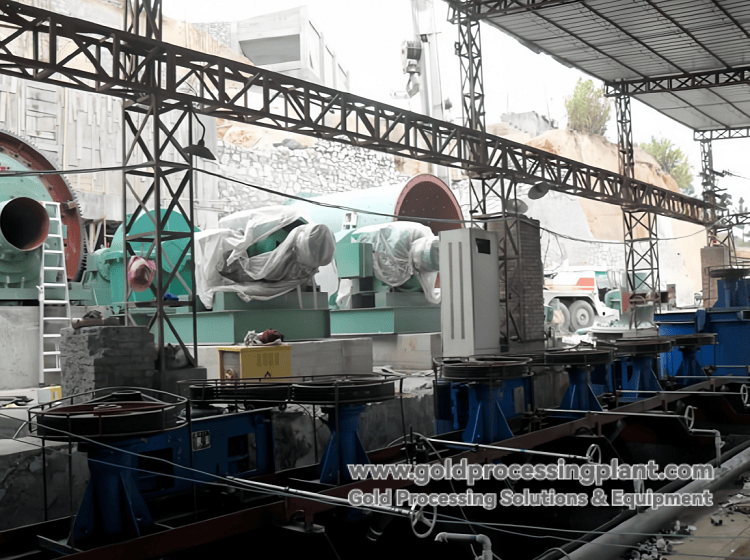
II. Principles and Differences Between CIP and CIL Processes
The essence of cyanide leaching is to dissolve gold into gold-cyanide complexes using a cyanide solution under alkaline conditions, and then recover it from the solution using activated carbon or zinc powder.In layman\'s terms, it is similar to brewing tea: dissolving the useful component in water and then extracting it. The difference lies in the fact that after the gold is leached out, it must be adsorbed by activated carbon.
CIP, or carbon-in-pulp, involves completing leaching first, followed by transfer to an adsorption tank. Leaching and adsorption take place in separate tanks; with ample leaching time and precise process control, this method is suitable for ores with relatively fast leaching rates that require staged control and is commonly used in larger-scale processing plants.
CIL, or carbon-in-leach, involves leaching and adsorption occurring simultaneously in the same tank. Activated carbon is added directly to the leaching tank, and the gold is adsorbed as soon as it is leached out. This process is compact, requires fewer tanks, and saves space, making it suitable for small- to large-scale processing plants and well-suited for conventional gold-bearing rocks.
There is no definitive answer regarding which method to choose. For ores with low clay content, simple mineral composition, and tight investment schedules, CIL is more economical; for ores with high clay content, complex mineral composition, and a need for flexibility in process adjustments, CIP is a more reliable choice.In CIL, the prolonged contact between the carbon and the slurry typically results in higher carbon consumption; however, when processing ore containing silver or associated copper, simultaneous adsorption can sometimes be advantageous. A comparative process evaluation for gold recovery from low-grade ores should be based on mineral processing test data rather than simply replicating methods used at similar mines.
III. Brief Overview of CIP/CIL Process Flows
Taking CIL as an example, a typical process flow is as follows: crushing and grinding to the target fineness, thickening and dewatering, followed by transfer to a leaching tank where cyanide is added and the pH is adjusted with lime. Activated carbon is added simultaneously for adsorption; the gold-loaded carbon is separated by screening, then acid-washed, desorbed, and electrolytically recovered.the gold slurry is smelted to produce refined gold, and the tailings are treated before discharge or dry stacking.
The difference with CIP lies in the fact that the leaching tank and adsorption tank are separated and connected in series; the slurry enters the adsorption stage only after leaching is complete.Common control points for both processes include: grinding fineness determines liberation degree; pH control prevents cyanide volatilization losses; leaching and adsorption times must be matched; and the concentration of gold-loaded carbon and carbon quality management directly affect recovery efficiency.Difficult-to-process ores containing arsenic, carbon, or antimony must undergo pretreatment before leaching; otherwise, the leaching recovery rate will drop significantly.
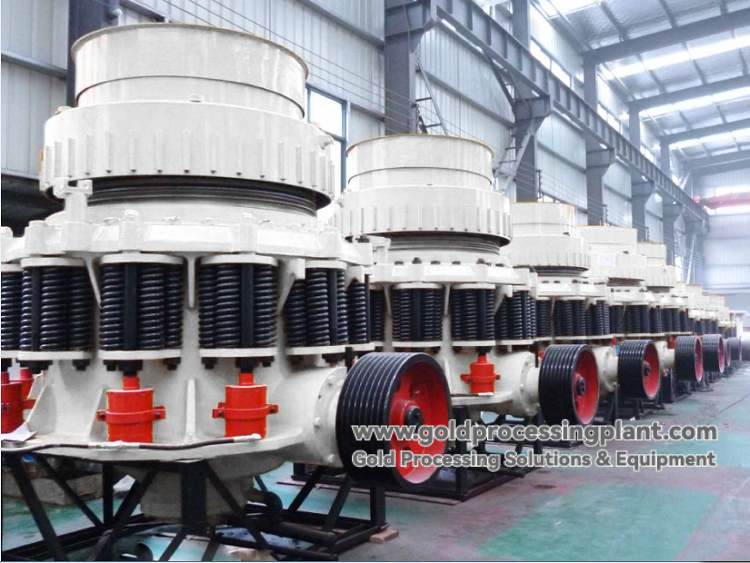
IV. Which Ores Are Suitable for CIP/CIL, and Which Are Not
Suitable: Conventional rock gold ores processed by whole-ore cyanidation; cyanidation of flotation concentrates; oxidized or semi-oxidized gold ores; and ores with clay content within a controllable range.
Not suitable for direct leaching: Ores with high carbon content exhibit a gold-snatching effect, where dissolved gold is re-adsorbed by carbonaceous material; in arsenic- and antimony-bearing ores, gold is encapsulated or its leaching is interfered with;Ores with high levels of coarse-grained free gold should first undergo gravity separation to recover the gold early in the grinding circuit before proceeding to leaching.
This highlights the necessity of combined processes. When coarse-grained and fine-grained gold coexist, a combination of gravity separation and cyanidation often achieves more thorough recovery than a single process. The rationality of a beneficiation plan for low-grade gold ore recovery is largely reflected in the accuracy of selecting the appropriate combined process stages.
V. What Problems Does an EPC Supplier for a Complete Production Line Solve?
Even with the right process, failure to properly integrate the equipment will still result in failure to meet production targets. When crushing, grinding, leaching, and adsorption equipment comes from different manufacturers, mismatches in interfaces, production capacity, and energy consumption can lead to repeated modifications of on-site piping and pump types, prolonging the commissioning period. The hidden costs far exceed the price difference between the equipment.
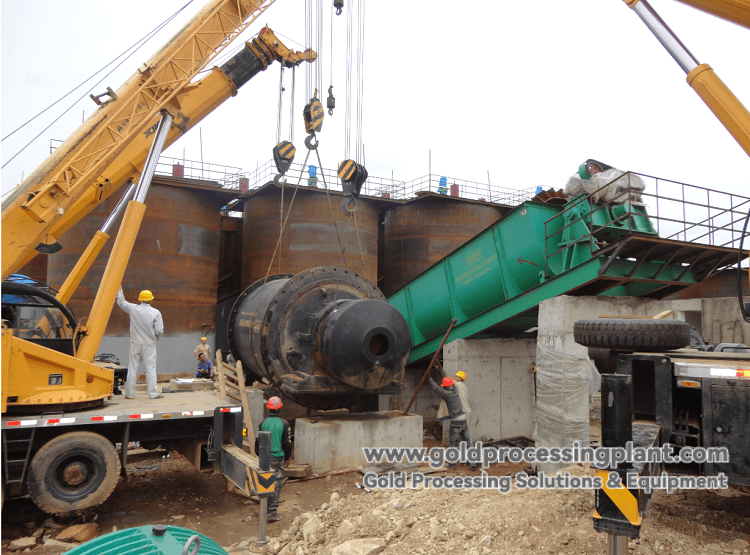
The value of a turnkey production line EPC supplier lies in entrusting a single entity with overall responsibility for process design, engineering design, equipment manufacturing, installation guidance, integrated commissioning, and personnel training—and holding that entity accountable for the final production performance metrics. When selecting a supplier, focus on three key points: whether they possess the capability to design processes based on the specific characteristics of the ore, rather than simply applying templates;whether the process and equipment are managed by the same team to prevent discrepancies between drawings and actual equipment; and whether the supplier is willing to stipulate reasonable acceptance criteria based on the specific conditions of the ore source in the contract. A division of labor model—where the project owner organizes local civil construction and general installation workers, while the supplier dispatches engineers to provide on-site guidance—is relatively common for controlling labor costs and facilitates on-site coordination.
It is important to note that an EPC contract does not cover everything. Clearly defined boundaries are more important than a broad scope; the contract should specify, item by item, which responsibilities fall to the supplier and which require cooperation from the project owner. Once a recovery and beneficiation plan for low-grade gold ore enters the construction phase, ambiguous lines of responsibility are often the primary cause of project delays.
VI. Common Misconceptions
First, the one-sided pursuit of high recovery rates. Each incremental increase in recovery rate typically corresponds to higher investment and operational costs; for low-grade projects, the total cost over the entire life cycle should be calculated rather than focusing on a single metric.
Second, simplistically comparing heap leaching with the carbon-in-leach (CIL) process. Heap leaching has lower costs but limited leaching efficiency and is not suitable for sulfide or carbon-bearing ores; heap leaching should be used only for ores that are suitable for it, and forcing its use on ores that cannot be effectively leached through this method constitutes a waste of resources.
Third, neglecting the selection of activated carbon. Coconut shell carbon and coal-based carbon have different pore size distributions and varying adsorption properties. Since carbon wears down relatively quickly in the CIL process, greater emphasis should be placed on hardness specifications.
Fourth, finalizing the process flow directly without conducting mineral processing tests. Without test data from representative ore samples, there is no basis for selecting any equipment—this is the most common source of risk in low-grade gold mining projects.
VII. Conclusion
How should a recovery and beneficiation plan be determined for low-grade gold ore? The answer can be summarized in one sentence: determine the process based on ore properties, select equipment based on the process, and ensure implementation is coordinated by a single entity with clear accountability.Both CIP and CIL have their respective application limits, and the selection of an EPC contractor for the entire production line determines whether the plan can be faithfully translated into actual production capacity. By conducting thorough testing, thoroughly comparing and selecting processes, and clearly defining the boundaries of responsibility in the construction model, low-grade gold mines can also achieve predictable recovery rates and returns on investment.