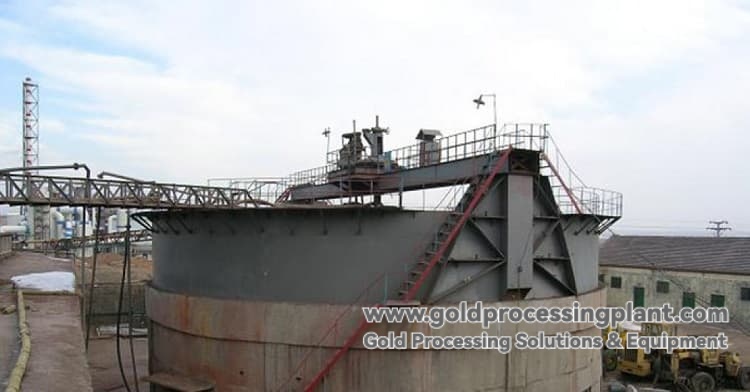
How to Build a Modular Rock Gold Ore Processing Plant? Turnkey EPC Solution for a Complete CIP/CIL Production Line
How to Build a Modular Processing Plant for Rock Gold Ore? Turnkey EPC Solution for a Complete CIP/CIL Production Line
Traditionally, constructing a processing plant for rock gold ore involves “on-site concrete pouring for civil works, shipping individual components, and on-site assembly.” Construction periods often exceed a year, and overseas projects face additional uncertainties related to customs clearance, logistics, and coordination with local construction teams.An increasing number of mine owners are turning to modular processing plants: core process sections are prefabricated as modules in a factory, transported to the site for rapid assembly, and integrated with complete CIP/CIL production lines and EPC turnkey management to reduce construction timelines and minimize implementation risks.However, modularization is not as simple as “packing equipment into containers”—deciding which processes are suitable for modularization, how to choose between CIP and CIL, and how to define the scope of the EPC contract directly determine the project\'s success or failure. This article systematically explains the EPC turnkey solution for a complete CIP/CIL production line, focusing on the construction logic of modular processing plants for rock gold ore.
I. What Is a Modular Processing Plant for Ore-Type Gold?
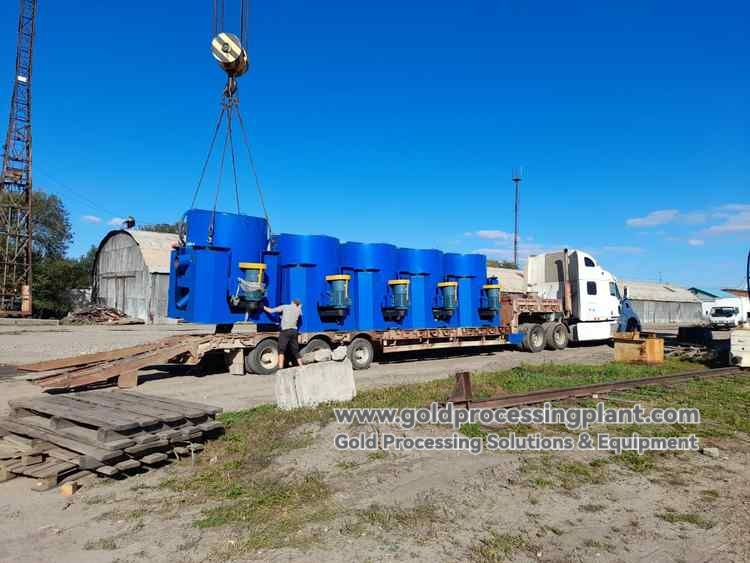
The core concept of a modular processing plant is “factory prefabrication, on-site assembly”: the plant is divided into several modular units based on process functions—crushing, grinding and classification, leaching and adsorption, desorption and electrolysis, concentration and dewatering, and power distribution and control, among others.Each module undergoes equipment integration, pre-installation of piping, electrical wiring, and factory testing at the manufacturing facility before being shipped as a complete unit to the site. Through standardized interfaces between modules, they are rapidly connected, significantly reducing the on-site workload for welding, concrete pouring, and commissioning.
For rock gold mines, the value of modularization is primarily reflected in three aspects:
First, it shortens the construction schedule. On-site civil engineering and module manufacturing can proceed in parallel; once the modules arrive on-site, they are positioned and connected using a “building-block” approach, significantly reducing the installation and commissioning cycle.
Second, controllable quality. Piping routes, electrical wiring, and equipment alignment are completed and tested in the factory, free from interference by on-site weather, worker skill levels, and construction conditions, thereby preventing situations where “the on-site installation does not match the drawings.”
Third, it facilitates relocation and capacity expansion. Modular structures are particularly well-suited for projects with dispersed mining sites or phased construction; future capacity expansions can be achieved by adding modules without having to tear down and rebuild from scratch.
It should be noted that modularization is not universally applicable: civil engineering foundations, plant structures, and large tanks are still primarily constructed on-site; the focus of modularization lies in the process equipment integration and electrical control sections. Only by clearly defining these boundaries can modularization truly save time and money.
II. What Modules Does a Complete CIP/CIL Production Line Include?
The mainstream methods for cyanide leaching of gold from rock ore using whole-ore slurry are CIP (carbon-in-pulp) or CIL (carbon-in-leach). A complete turnkey production line typically consists of the following modules:
1. Crushing module. Primary crushing with a jaw crusher + secondary and fine crushing with a cone crusher, equipped with a vibrating feeder, belt conveyor, and circular vibrating screen, following the principle of “crush more, grind less.”Modular crushing stations integrate crushers, feeders, screens, and conveyors into a steel frame, requiring only foundation installation and interface connections on-site.
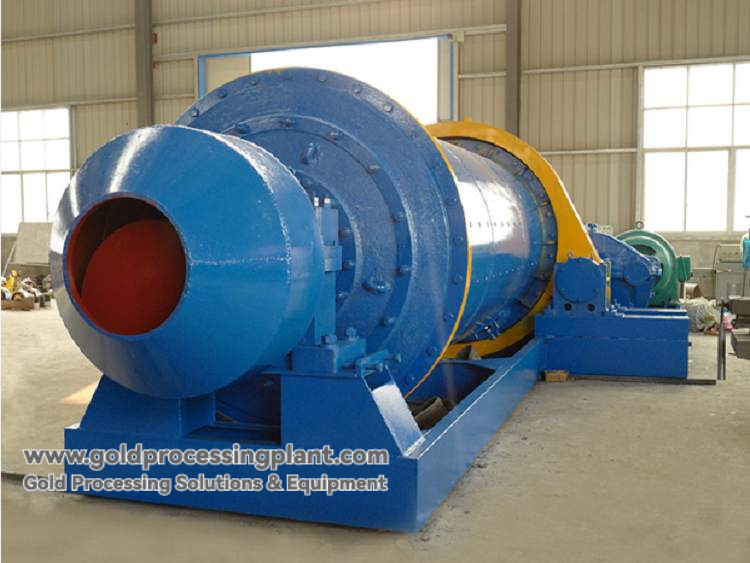
2. Grinding and Classification Module. Ball mill (first stage: grate type + second stage: overflow type, or single-stage configuration) + spiral classifier or hydrocyclone in a closed-circuit system; the grinding fineness is determined based on the gold liberation degree.The grinding module imposes high demands on foundation load-bearing capacity and alignment; it is typically supplied in a modular configuration consisting of “equipment + base + local piping,” with the foundation still poured on-site.
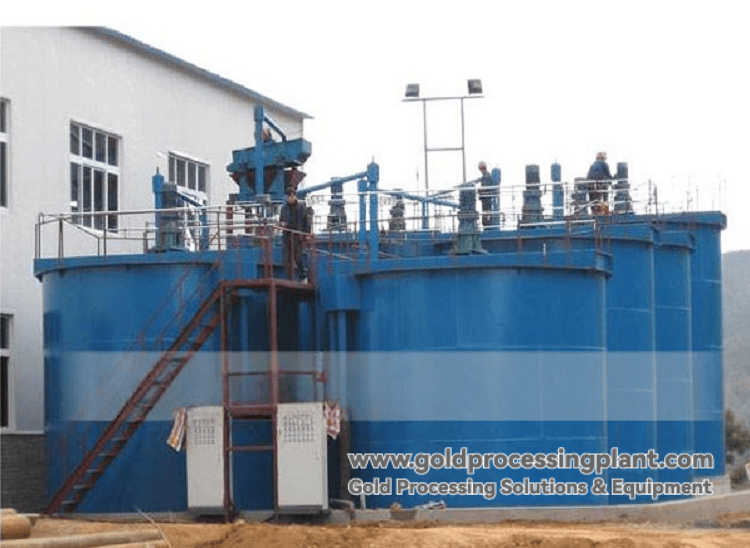
3. Leaching and Adsorption Module (CIP/CIL Core). Multiple leaching tanks connected in series (with agitation and aeration), activated carbon adsorption system, carbon separation screen, carbon recovery unit, and high-efficiency dual-impeller carbon-in-leach (CIL) tank. The CIL process combines leaching and adsorption, features a compact layout, and requires fewer tanks;CIP involves leaching followed by adsorption, allowing for a more thorough leaching period; it is suitable for ores with slower leaching rates or those requiring staged control. This module features dense piping and numerous valves and instruments, making it the most suitable component for factory pre-integration.
4. Desorption and Electrolysis Module. Gold-bearing carbon, after acid washing, enters the desorption column (at ambient temperature and pressure or high temperature and pressure). The desorption solution is electrolyzed to produce gold slurry, which is then sent to a smelting furnace to produce refined gold. This module can be fully integrated into a skid-mounted unit.
5. Concentration and Dewatering Module. High-efficiency thickeners, plate-and-frame filter presses (for dry tailings discharge and concentrate dewatering), and dewatering screens, along with flocculant dosing and recirculating water systems.
6. Power Distribution and Control Module. Soft-start/variable-frequency drive configurations, voltage stabilizers, PLC control systems, instruments, and cable trays. For overseas projects, diesel generator sets must also be integrated as the primary or backup power source to address power instability.
III. CIP or CIL? Determine the Module Based on the Ore
The core difference between CIP and CIL lies in whether leaching and adsorption occur in the same tank:
-
CIL (Carbon-in-Leach): Leaching and activated carbon adsorption occur simultaneously; activated carbon is added in the final tank and moves forward in a countercurrent flow. This process is compact, requires fewer tanks, and involves relatively lower capital investment. It is suitable for small- to large-scale processing plants and is the standard choice for conventional ore gold deposits.
-
CIP (Carbon-in-Pulp): Leaching is first completed in a series of tanks, and the leached pulp then enters the adsorption tank where activated carbon is added. This process allows for a more thorough leaching time and finer-grained stage-by-stage control, making it suitable for ores with faster leaching rates or large-scale processing plants; it is also a more reliable option for ores with slower leaching kinetics.
The selection is based on ore test data: leaching rate curves, gold occurrence patterns, associated elements (arsenic, carbon, and antimony require pretreatment), and the degree of slurry muddiness. For high-clay ores, enhanced ore washing and de-silting are required, along with optimized agitation and aeration configurations; otherwise, neither CIL nor CIP will operate smoothly.If the process route is chosen incorrectly, modularization will only accelerate the implementation of that error—therefore, testing and process design must precede module manufacturing.
IV. EPC Turnkey Solutions: How to Define Scope of Work?
For GoldProcessingPlant\'s EPC turnkey projects, the core principle is “We take full responsibility for what falls under our purview and provide advance disclosure for areas requiring client cooperation”:
We are responsible for: process design and technical solutions (ore property analysis, process determination, reagent regimes); engineering design and drawings (site layout plans, equipment layout diagrams, civil engineering requirements); manufacturing of core equipment and supporting supplies (crushing, grinding, flotation/gravity separation, CIL/CIP leaching and adsorption, concentration and dewatering, power distribution and control), on-site installation technical guidance, integrated commissioning and personnel training, after-sales service and spare parts supply.
The client is responsible for: civil construction (organized according to our civil engineering requirements drawings; complete architectural and structural construction drawings must be provided by a locally qualified design institute), organizing local installation workers (our engineers will provide on-site guidance on installation procedures), on-site “three utilities and one leveling” as well as conditions for hoisting and commissioning, and local compliance procedures.
Why This Division of Labor Is More Cost-Effective: Sending a large number of workers from China to overseas sites—including airfare, visas, room and board, plus high daily wages—would significantly drive up costs;By having the client organize local general installation workers and our engineers provide on-site technical guidance, we ensure construction standards are met while saving substantial labor costs. If the client truly lacks local construction resources, a turnkey solution can be negotiated separately and stipulated in the contract.
Why modularization is a natural fit for EPC: Modules are prefabricated at our own manufacturing facilities, with process engineers and mechanical engineers collaborating as a single team to ensure module interfaces are reserved according to drawings; on-site, the same team coordinates installation guidance and integrated commissioning, ensuring an unbroken chain of responsibility—so issues are not shifted to the design institute, equipment manufacturer, or construction crew.
V. How Should the Project Schedule Be Planned?
A typical rock-type gold mine project takes approximately 8–15 months from the start of process design to production commencement. Key milestones:Process design, equipment selection, and quotation: approximately 7–15 days → Engineering drawing design: approximately 20–30 days → Equipment manufacturing: 60–120 days → Logistics: 30–60 days → Installation and commissioning: 60–150 days.The value of modularization lies in “interleaving”: once the core process parameters (grinding fineness, number of leaching stages, leaching time) are finalized, modules can be sent to the factory for manufacturing without waiting for the complete set of drawings to be finalized; the client can simultaneously proceed with “utility connections and site leveling” and plant foundation construction based on civil engineering drawings;For overseas projects, it is essential to allow for a buffer period (approximately 30 days) for customs clearance and inland transportation, and to set aside additional flexibility for these transitional handover phases. For difficult-to-process ores, remote mining areas, or projects involving a large volume of non-standard customization, additional buffer time should be added to this schedule.
VI. Quality Assurance and Cooperation Models
GoldProcessingPlant operates two major in-house manufacturing bases in Shandong and Jiangxi, covering an area of approximately 50,000 square meters with 20,000 square meters of modern, standardized factory space. The facilities are equipped with large-scale CNC machining centers and laser cutters, and feature equipment testing platforms and mineral processing test centers. The company adheres to the ISO 9001 quality management system, and its products are CE-certified, with an annual production capacity exceeding 500 units.Projects span major gold-producing regions including Africa, South America, Central Asia, and Southeast Asia, with processing capacities ranging from 30 to 5,000 metric tons per day.
Collaboration involves no mandatory bundling: clients may opt for mineral processing trials and process validation only; purchase process designs or engineering drawings only; procure individual units or complete equipment sets only; or request on-site commissioning by engineers only. Alternatively, a comprehensive EPC turnkey solution is available. Initial trial and design fees can be fully offset against the cost of subsequent equipment or EPC contracts.Recovery rate targets are set based on ore characteristics and process conditions; commissioning objectives are specified in the contract, and reasonable acceptance criteria are agreed upon based on the same ore source and operating conditions. The warranty period is 12 months; after expiration, we provide long-term spare parts supply and process optimization recommendations.
For modular gold processing plants at rock gold mines, the modules are the form, the process is the core, and the EPC contract provides full accountability. First, understand the ore; then, determine the process; configure modules according to the process; and have the same team commission the plant until gold is produced—this is the correct approach to a turnkey CIP/CIL production line solution.GoldProcessingPlant—Understand the ore first, then configure the equipment.