High-Efficiency CIL/CIP Gold Extraction Solutions for High-Clay Gold Ore | Professional Mineral Processing Technologies to Boost Recovery Rates
High-Clay Gold Ore: High-Efficiency CIL/CIP Gold Extraction Solutions | Professional Mineral Processing Technologies to Boost Recovery Rates
High-clay gold ores are notorious “troublesome cases” in gold processing plants.When the slurry becomes too viscous, it\'s impossible to agitate properly, leachate cannot penetrate, and activated carbon gets coated in mud—so even though the gold is clearly present in the ore, recovery rates simply won\'t improve. Many mine operators have simply copied the CIL/CIP processes used for conventional gold ores, only to end up with tank bottoms caking, clogged pipelines, and chemical consumption doubling—forcing them to retrofit the system as soon as production begins.It\'s not that cyanide leaching can\'t be used for high-clay gold ores; rather, the “clay” variable must be addressed first before deciding between CIL or CIP. This article begins by explaining the mechanisms by which clay interferes with gold extraction, then systematically outlines the process solutions, equipment configurations, and implementation key points for high-clay gold ores to help mine owners avoid detours.
I. Why Is Gold Extraction Difficult in High-Clay Gold Ore?
The core issue with high-clay gold ores lies not in the “gold,” but in the “clay.” High concentrations of clay minerals (such as montmorillonite, kaolinite, and illite) introduce four major interferences in cyanide leaching:
First, the viscosity of the slurry increases, impairing agitation and mass transfer. As clay absorbs water and swells, the apparent viscosity of the slurry rises significantly, creating “dead zones” within the leaching tanks. This makes it difficult for cyanide and dissolved oxygen to distribute evenly across the surface of every ore particle, resulting in poorer leaching kinetics and extended leaching times.
Second, interference from clay coating and adsorption. Fine clay particles coat the surface of gold particles, forming a clay film that hinders the leaching of gold cyanide complexes; simultaneously, due to their large specific surface area, clay particles adsorb a portion of the already dissolved gold cyanide complexes, resulting in the loss of “already dissolved gold.”
Third, it affects thickening and solid-liquid separation. High-clay-content slurries settle slowly and have poor compressibility; the overflow from the thickener is turbid, washing efficiency is low, and the clarity of the precious metal solution fails to meet standards, significantly reducing the effectiveness of subsequent activated carbon adsorption or zinc powder displacement.
Fourth, activated carbon “poisoning.” Fine silt and organic matter in the slurry clog the pores of the activated carbon and coat its active sites, reducing its gold-holding capacity; silty materials also enter the desorption electrolysis system with the slurry, affecting desorption efficiency and the quality of the gold-bearing slurry.
The cumulative result of these four factors is low leaching rates, low adsorption rates, high reagent consumption, and high equipment failure rates. Therefore, for CIL/CIP schemes involving high-clay gold ores, the first step is not selecting leaching tanks, but rather “treating the slurry.”
II. Overall Approach to the CIL/CIP Process for High-Clay Gold Ore
GoldProcessingPlant\'s gold extraction solution for high-clay gold ores follows the overall logic of “treat the clay first, then leach, control parameters, and stabilize adsorption,” which is specifically divided into four stages:
Stage 1: Enhanced Ore Washing and Desliming. An ore washing operation is conducted after crushing and before grinding. A cylindrical or spiral ore washer is used to separate and disperse the clay from the ore, supplemented by a trommel screen or high-frequency vibrating screen for desliming and classification.The fate of the separated fine slurry is determined by its gold grade: low-grade slurry is sent directly to the tailings treatment system to avoid unnecessary consumption of leaching reagents; high-grade slurry is concentrated separately and fed into the leaching system to prevent gold loss with the slurry.If this step is executed properly, both the slurry viscosity in subsequent leaching tanks and reagent consumption will be significantly reduced.
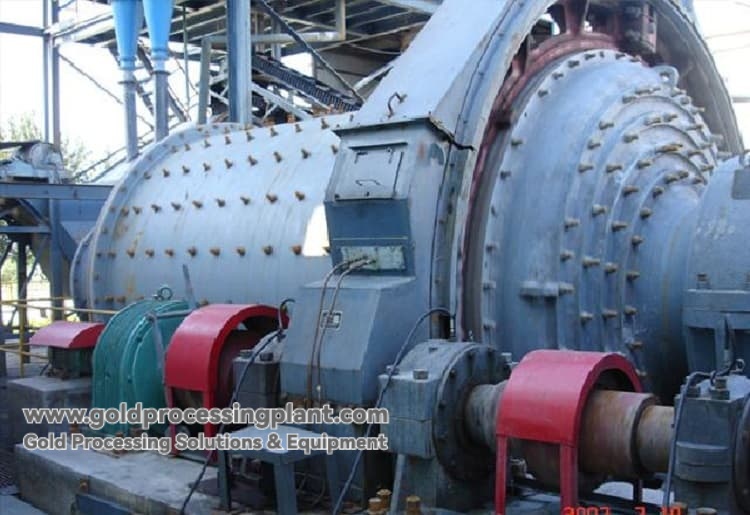
Step 2: Optimize grinding fineness to avoid over-grinding and sludging. High-clay ores inherently have a high clay content; excessive grinding during this stage will only exacerbate the sludging problem.Pilot tests should be conducted to determine a grinding fineness that balances gold liberation and mud control. Equipment such as grid-type ball mills—which feature forced discharge and are less prone to over-grinding—should be used in conjunction with hydrocyclone classification to promptly separate already liberated fine particles and reduce the need for repeated grinding.
Step 3: Selection of CIL or CIP Process and Parameter Optimization. Once mud control is adequately addressed, select either the CIL (simultaneous leaching and adsorption) or CIP (leaching followed by adsorption) process based on the ore characteristics.Ore with high clay content often exhibits slow leaching rates; the CIP process, which completes leaching before entering the adsorption tank, allows for a more thorough leaching time and is more suitable for ores with poor leaching kinetics. If the leaching rate is acceptable after improving the pulp conditions, the CIL process is more compact, requires fewer tanks, and is more economical for small- and medium-sized processing plants.Key parameters: Maintain pH at 10–11 to prevent cyanide volatilization losses;appropriately increase the cyanide concentration and employ staged dosing; ensure adequate aeration and agitation intensity in the leaching tanks, selecting a high-efficiency dual-impeller agitation configuration if necessary; use activated carbon in a counter-current flow with staged addition, regularly test the gold-holding capacity, and replace it promptly to avoid “carbon poisoning.”
Step 4: Enhance Concentration, Washing, and Clarification of Precious Liquids. Solid-liquid separation is difficult for high-clay-content slurries; high-efficiency thickeners must be installed (with flocculants added as necessary) to ensure washing efficiency;The precious liquid entering the adsorption or displacement stage must be clarified; excessive suspended solids will significantly deplete the capacity of activated carbon or zinc powder. On the tailings side, filter presses are used to achieve dry discharge, which not only meets environmental requirements but also recovers process water.
III. Special Circumstances: What to Do When Clay Content Is Too High?
If the clay content is extremely high, making agitation leaching difficult to operate stably, or if the mining area is remote and the ore grade is low, a pelletization and heap leaching scheme may be considered:After crushing the ore to an appropriate particle size, cement or lime is added as a binder to form pellets, improving the permeability of the ore pile, after which leachate is sprayed onto an impermeable liner.The heap leaching process is simple and requires low investment, but its leaching recovery rate is lower than that of agitated leaching. The leaching cycle typically lasts 30–90 days, making it suitable for low-grade, oxidized, high-clay gold deposits or dispersed ore bodies. The decision to pursue heap leaching should be made only after verifying permeability and leaching recovery rates through column leaching tests.
IV. Core Equipment Configuration for CIL/CIP in High-Clay Gold Deposits
Implementation of the plan depends on the equipment. GoldProcessingPlant\'s turnkey configurations for high-clay gold deposits typically include:
Ore Washing and Desliming Section: Cylindrical ore washers/screw ore washers, trommel screens (including mobile units), high-frequency vibrating screens, and hydrocyclones (for classification, desliming, and concentration).
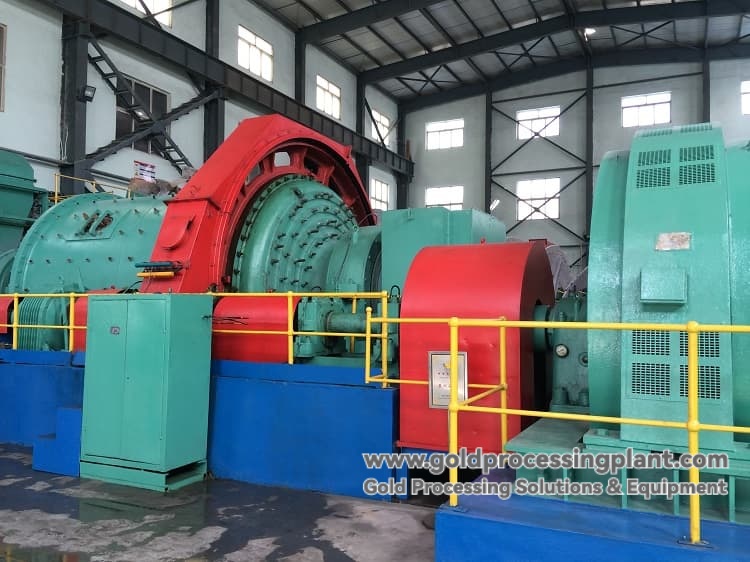
Crushing and Grinding Section: Jaw crusher for primary crushing, cone crusher for secondary and tertiary crushing, grid-type ball mill + spiral classifier or hydrocyclone for closed-circuit grinding.
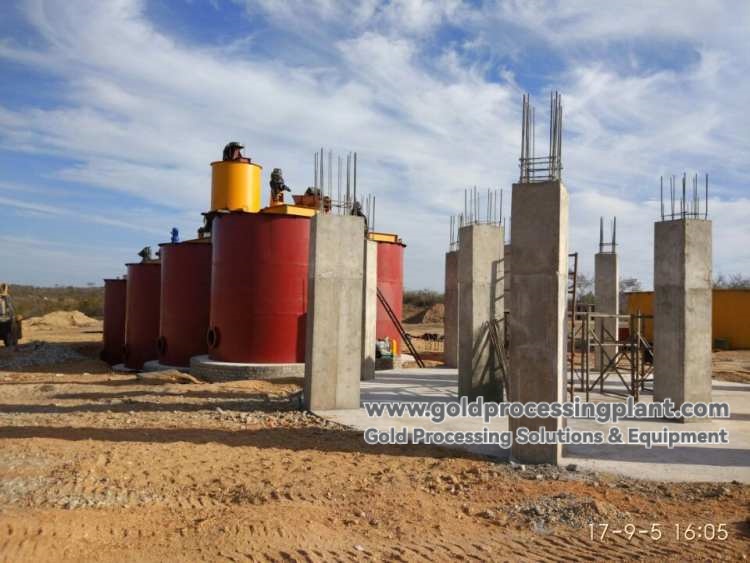
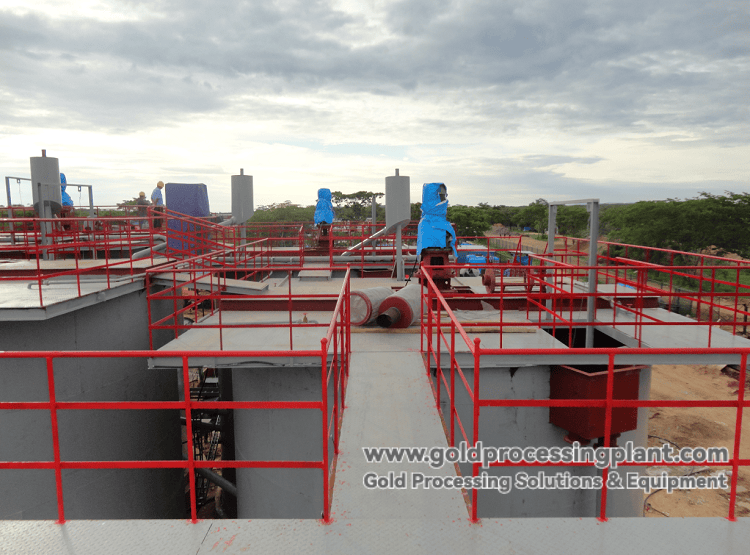
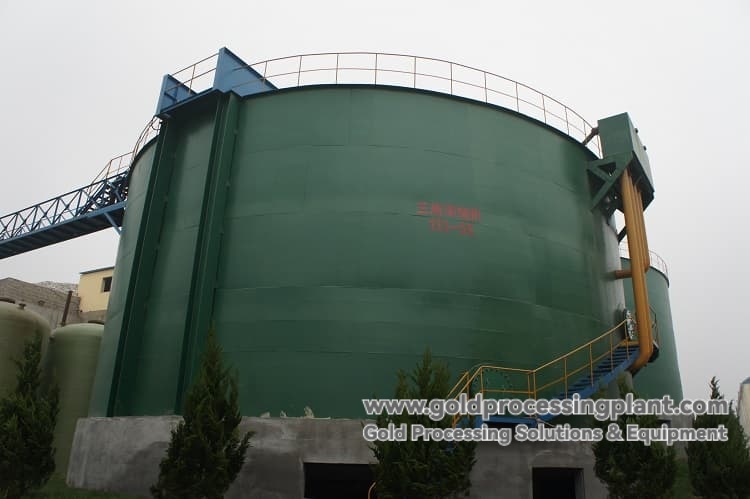
Leaching and Adsorption Section: Leaching tanks (with agitation and aeration), high-efficiency dual-impeller carbon-in-leach (CIL) tanks, activated carbon adsorption system, carbon-retaining screen (to prevent activated carbon loss with the slurry), carbon recovery unit, ambient-temperature/atmospheric-pressure or high-temperature/high-pressure desorption and electrolysis equipment, and gold smelting furnace.Under high-clay conditions, the agitation method, aeration method, and anti-sludge design of the leaching tanks must be specifically configured.
Concentration and Dewatering Section: High-efficiency thickeners, plate-and-frame filter presses (for dry tailings discharge and concentrate dewatering), and dewatering screens.
Auxiliary systems: Flocculant dosing units, slurry pumps, carbon recovery pumps, and circulating water systems.
GoldProcessingPlant operates two major in-house manufacturing bases in Shandong and Jiangxi, where the aforementioned core equipment is manufactured in-house. Process engineers and mechanical engineers collaborate as a unified team to ensure equipment is manufactured according to process drawings, thereby preventing interface mismatches. For special operating conditions such as high clay content and severe corrosion, equipment materials, agitation structures, and motor power can be customized to meet non-standard requirements.
V. Cooperation Models and Project Timelines
GoldProcessingPlant does not impose mandatory bundled packages; clients can flexibly choose based on their current stage:
- Mineral Processing Tests Only: Conduct ore washing and desliming tests, CIL/CIP comparison tests, and column leaching tests on representative ore samples; the report includes an equipment selection list and a preliminary budget.
- Purchase of Process Design/Engineering Drawings Only: We provide process flow diagrams, equipment configuration lists, plant layout plans, and civil engineering requirement drawings.
- Equipment Procurement Only: Supply individual units or complete sets, configured based on ore characteristics rather than stock availability.
- On-site Commissioning by Engineers Only: Engineers will be stationed on-site to guide installation, lead individual equipment commissioning, and conduct integrated commissioning with actual feed material; civil engineering and general installation workers will be organized locally by the client.
- EPC Turnkey Project: Comprehensive coordination of design, equipment, installation guidance, commissioning, and training; responsible for achieving production targets.
Preliminary testing and design fees may be fully offset against the subsequent equipment or EPC contract. For standard projects, the timeline from the start of process design to production commencement is approximately 8–15 months; however, for high-clay ore projects—which have more stringent requirements for the ore washing and desliming stages as well as leaching parameter commissioning—it is recommended to allow for a more generous buffer period for testing and commissioning.
VI. Quality Assurance: Targets Are Based on Ore Characteristics; Commitments Are Stipulated in the Contract
The recovery rate of high-clay gold ores is influenced by multiple factors, including the types and content of clay minerals, the state of gold occurrence, grain size distribution, and associated elements; any absolute commitment made without reference to ore sample data is unreliable.GoldProcessingPlant commits to the following: Through rigorous process validation and tailored design, we will develop a process for your high-clay gold ore that achieves the highest recoverable rate feasible under the specific conditions of that ore;Commissioning targets are specified in the contract, with reasonable acceptance criteria agreed upon based on the same ore source and operating conditions; During the warranty period, we provide free replacement of spare parts for equipment quality issues; after the warranty expires, we continue to supply spare parts long-term and offer process optimization recommendations—whether due to changes in ore properties, fluctuations in reagent costs, or variations in recovery rates, we will continue to work with you to fine-tune the process.
Our projects span major global gold-producing regions, including Africa, South America, Central Asia, and Southeast Asia, with processing capacities ranging from 30 to 5,000 metric tons per day. We handle rock gold, placer gold, difficult-to-process ores, and tailings reprocessing. The challenges of extracting gold from high-clay, highly silty oxidized ores are precisely our area of specialized expertise.
When extracting gold from high-clay gold deposits, you\'re not just selecting a CIL/CIP system—you\'re choosing a team that first understands the clay, then the gold, and provides end-to-end support from ore sample to gold production. GoldProcessingPlant—understand the ore first, then select the equipment.