Antimony-Bearing Gold Ore Manufacturer—Specializing in the Mining and Supply of Antimony-Bearing Gold Ore—Quality Guaranteed
Antimony-Bearing Gold Ore Manufacturer—Specializing in the Mining and Supply of Antimony-Bearing Gold Ore—Quality Guaranteed
Among the many types of gold ores, antimony-bearing gold ore is widely recognized as one of the “toughest nuts to crack.” Since gold is associated with stibnite, conventional cyanide leaching recovery rates typically range from only 20% to 50%. Many mine owners have replaced their equipment several times and tested various reagents, yet their recovery rates remain stubbornly low.As a professional antimony-bearing gold ore producer, GoldProcessingPlant starts with the characteristics of the ore and employs a combined “pretreatment + cyanidation” process to help antimony-bearing gold ore projects turn dormant gold into tangible profits.This article systematically explains how to process, build, and ensure the stable operation of antimony-bearing gold ore projects—covering ore characteristics, processing challenges, process solutions, equipment configurations, and partnership models.
I. Why Is It Difficult to Process Antimony-Bearing Gold Ore?
A typical characteristic of antimony-bearing gold ores is the association of gold with stibnite (Sb₂S₃). The challenges in processing this type of ore are primarily reflected in three aspects:
First, the form in which gold occurs is complex. Gold in antimony-bearing gold ores may exist in three forms: first, microscopic gold associated with stibnite; second, invisible gold encapsulated within sulfides; and third, coarse-grained gold in a free state. Different forms of occurrence require different recovery methods, and it is difficult to completely recover all three forms of gold using a single process.
Second, antimony minerals interfere with cyanide leaching. In an alkaline cyanide environment, stibnite consumes large amounts of cyanide and dissolved oxygen. At the same time, antimony sulfides form a passivation layer on the surface of gold particles, hindering the formation and diffusion of gold-cyanide complexes.This is the fundamental reason why the conventional cyanide leaching recovery rate for antimony-bearing gold ores is typically only 20%–50%.
Third, antimony itself is a “double-edged sword.” On the one hand, antimony interferes with gold recovery; on the other hand, it is a valuable by-product metal. If one focuses solely on gold and treats antimony as an impurity, it is tantamount to throwing away a portion of the profits; if gold and antimony can be recovered together, the project\'s economic viability will improve significantly.
GoldProcessingPlant\'s experience with numerous difficult-to-process gold ore projects containing arsenic, carbon, and antimony demonstrates that antimony-bearing gold ores are not “hopeless”; rather, it is essential to first thoroughly understand the ore\'s properties, then determine the process route, and finally select equipment based on the process—this sequence must not be reversed.
II. Recommended Process Routes for Antimony-Bearing Gold Ore
For antimony-bearing gold ores, GoldProcessingPlant recommends a “pretreatment + cyanidation” approach, which is divided into three specific options:
Path 1: Flotation + Concentrate Pretreatment + Cyanidation. First, flotation is used to concentrate stibnite and gold-bearing sulfides into an antimony-gold concentrate, significantly reducing the feed volume for subsequent pretreatment;The concentrate is then subjected to pre-treatment using proprietary reagents, roasting, alkaline leaching, or pressurized oxidation to release encapsulated elements and eliminate interference from antimony, followed by cyanidation to recover gold. The purpose of flotation is not to directly produce gold, but rather to achieve “enrichment and feed reduction,” making subsequent pre-treatment more economical.
Path 2: Alkaline leaching pretreatment + cyanidation. For ores with high antimony content and coarse stibnite distribution, antimony can first be selectively leached using an alkaline sodium sulfide system to expose the gold. The antimony leachate can then be further processed to recover antimony, while the antimony leach residue is subjected to cyanidation to extract gold.This route is suitable for projects where the combined recovery value of gold and antimony is high.
Route 3: Combined flotation and smelting. If the antimony-gold concentrate has a high grade and controllable impurities, it can be sent directly to a smelter for processing, where gold and antimony are recovered together during smelting, while the beneficiation plant is responsible only for flotation enrichment. This route features a short process flow and lower investment costs, but concentrate sales channels and pricing methods must be established in advance.
The specific route chosen depends on the antimony content and its occurrence, the grain size of the gold particles, the types of associated elements, the project scale, and the funding schedule.GoldProcessingPlant\'s approach is as follows: First, we take representative ore samples for process validation, letting the test data speak for itself; then, we issue a proposal document that includes equipment selection and pricing, rather than making arbitrary decisions based on templates.
III. How Should Equipment Be Configured for an Antimony-Bearing Gold Ore Processing Plant?
Once the process flow is determined, there is a basis for equipment configuration. The core equipment of an antimony-bearing gold ore processing plant typically includes:
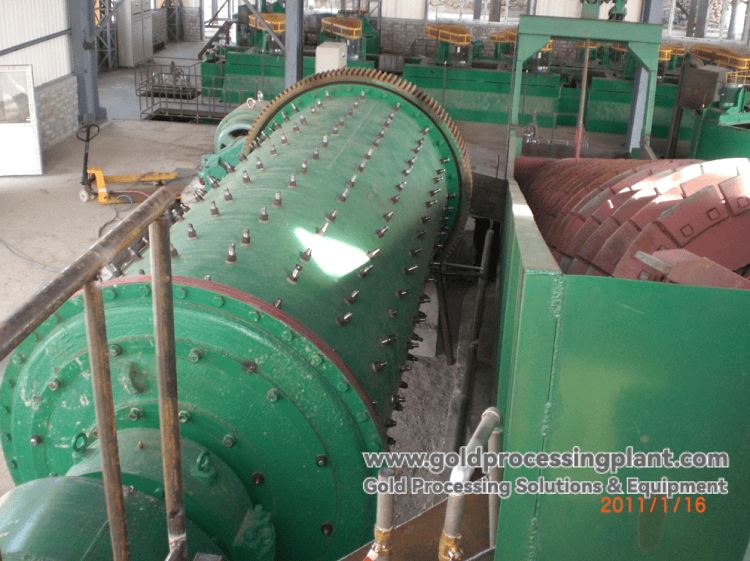
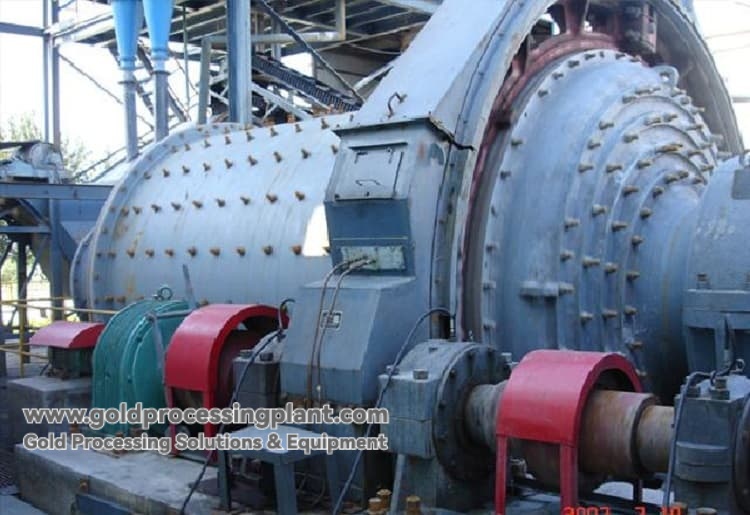
Crushing and Grinding Section: Jaw crushers handle primary crushing, while cone crushers handle secondary and tertiary crushing, adhering to the principle of “more crushing, less grinding” to reduce grinding energy consumption;A ball mill combined with a spiral classifier or hydrocyclone forms a closed-circuit grinding system. The grinding fineness is determined by the liberation degree of gold and antimony minerals—if ground too coarsely, gold will not be liberated; if ground too finely, slime formation increases and reagent consumption rises. This balance must be determined through testing.
Flotation Section: Commonly used SF-type (self-aspirating) and XCF/KYF-type (air-agitated, preferred for large-scale operations) flotation cells are combined to form roughing, scavenging, and concentrating units.The key to flotation of gold-antimony ores lies in the inhibitor and collector regime—it must ensure that stibnite and gold-bearing sulfides float to the top while minimizing gangue carryover as much as possible.
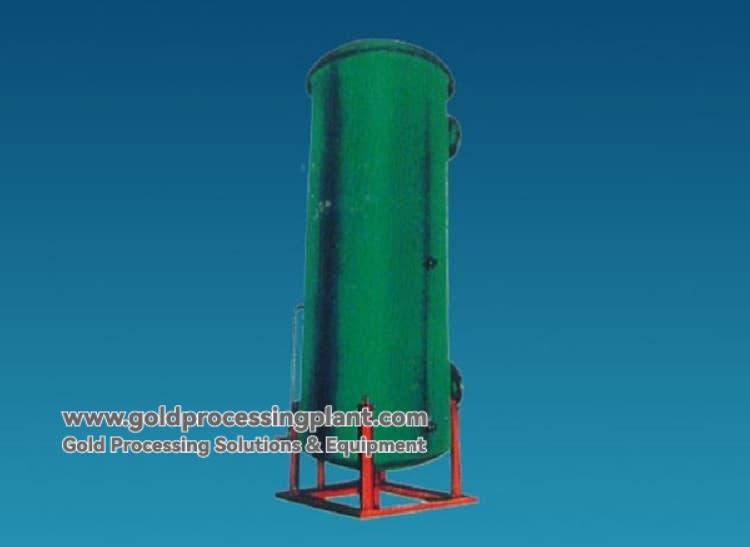
Pre-treatment Section: Depending on the process route, this section is equipped with agitated leaching tanks (for alkaline leaching), roasting equipment, or a pressurized oxidation system. Equipment selection and material requirements for this section are stringent; as the antimony system is highly corrosive to equipment, flow-through components must undergo anti-corrosion upgrades.
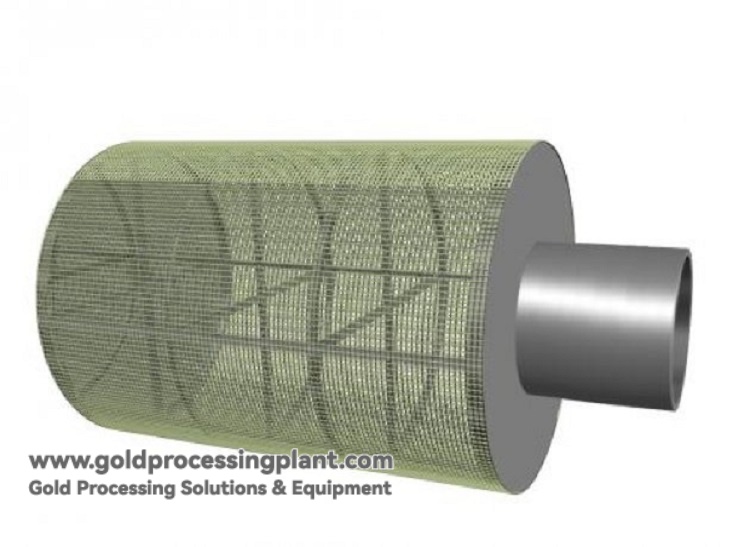
Cyanide Leaching Section: Complete CIL (carbon-in-leach) or CIP (carbon-in-pulp) systems, including leaching tanks, activated carbon adsorption systems, gold-bearing carbon separation screens, desorption and electrolysis equipment, and smelting furnaces.Before antimonite ore enters the cyanidation process, it must be confirmed that pretreatment has been properly carried out; otherwise, reagents will be wasted.
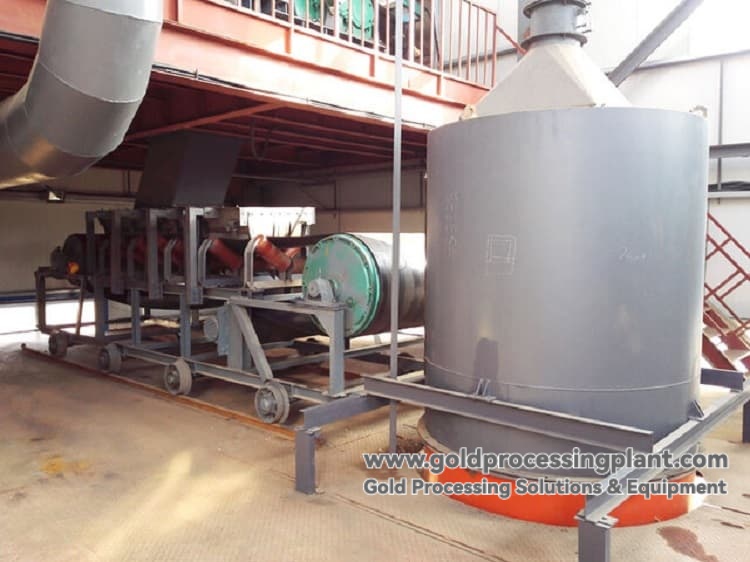
Concentration and Dewatering Section: Thickening machines and filter presses are used for concentrate dewatering and dry tailings disposal; tailings treatment must also comply with environmental protection requirements.
GoldProcessingPlant operates two major in-house manufacturing bases in Shandong and Jiangxi, China, where core equipment—including crushing, grinding, flotation, leaching and adsorption, and concentration and dewatering equipment—is manufactured in-house. Process engineers and mechanical engineers collaborate within the same team, and equipment is manufactured strictly according to process drawings to avoid discrepancies such as “mismatches between design drawings and equipment dimensions.”To address the corrosiveness of antimony-containing systems, flow-through components can be customized with corrosion-resistant stainless steel or internal anti-corrosion coatings.
IV. How Can We Collaborate on Antimony-Bearing Gold Ore Projects?
GoldProcessingPlant does not require bundled packages; our service model offers flexible, phased options:
- Mineral Processing Testing/Process Validation Only: We conduct chemical analysis and recoverability tests on representative ore samples. The report includes an equipment selection list and a preliminary budget, facilitating the assessment of investment scale.
- Purchase of Process Design and Engineering Drawings Only: We provide process flow diagrams, equipment configuration lists, plant layout plans, and civil engineering requirement drawings for use in independent procurement and construction.
- Equipment Procurement Only: We supply both individual units and complete sets of equipment, configured based on ore characteristics and process requirements—not based on inventory.
- On-site Commissioning by Engineers Only: We dispatch engineers to supervise installation, lead individual equipment commissioning, and conduct integrated trial runs with actual feed material. Civil engineering and general installation workers are organized locally by the client, saving significant costs on dispatched labor.
- EPC Turnkey Project: We provide comprehensive coordination of process design, equipment manufacturing, installation guidance, and commissioning training, and assume responsibility for the final production targets.
Upfront payments for ore beneficiation testing and design fees can be fully offset against the equipment cost when a subsequent equipment or EPC contract is signed. For standard gold mining projects, the timeline from the start of process design to production commencement is approximately 8–15 months; projects involving difficult-to-process ores, such as those containing antimony, require additional time for testing and commissioning.
V. Quality Assurance: No Unrealistic Promises
The recovery rate for antimony-bearing gold ore is determined by the ore\'s inherent characteristics—antimony content, gold occurrence state, grain size distribution, and associated elements—each of which influences the final performance metrics.GoldProcessingPlant does not promise unrealistic absolute figures; instead, we commit to the following: through rigorous process design, we will develop a process for your antimony-bearing gold ore that achieves the highest possible recovery rate under the specific conditions of that ore, while striving for excellence in equipment selection and process control;Commissioning targets are specified in the contract, with reasonable acceptance criteria agreed upon based on the same ore source and operating conditions; during the warranty period, we provide free replacement of spare parts for equipment quality issues, and after the warranty expires, we continue to supply spare parts long-term while offering technical consultation and process optimization recommendations.
Our projects span Africa (Ghana, Mali, Tanzania, Sudan), South America (Peru, Colombia),Central Asia (Russia, Kazakhstan), and Southeast Asia—covering processing capacities ranging from 30 to 5,000 metric tons per day and encompassing rock gold, placer gold, difficult-to-process ores, and tailings reprocessing. “Tough nuts to crack”—such as ores containing arsenic, carbon, and antimony—are precisely the areas where we specialize.
For producers of antimony-bearing gold ore, the choice is not just about the equipment—it\'s about selecting a team that takes responsibility for every step of the journey from ore to refined gold and guarantees every performance metric. GoldProcessingPlant—First, we understand the ore; then, we select the right equipment.